
Table of Contents >> Show >> Hide
- Why Spanish Basics Are Friendlier Than They Look
- 1. Build a Survival Kit of High-Use Spanish Phrases
- 2. Train Your Mouth Before You Chase Fancy Grammar
- 3. Practice Tiny Conversations Instead of Memorizing Endless Lists
- 4. Speak Every Day, Even If It Is Messy
- Common Beginner Mistakes to Avoid
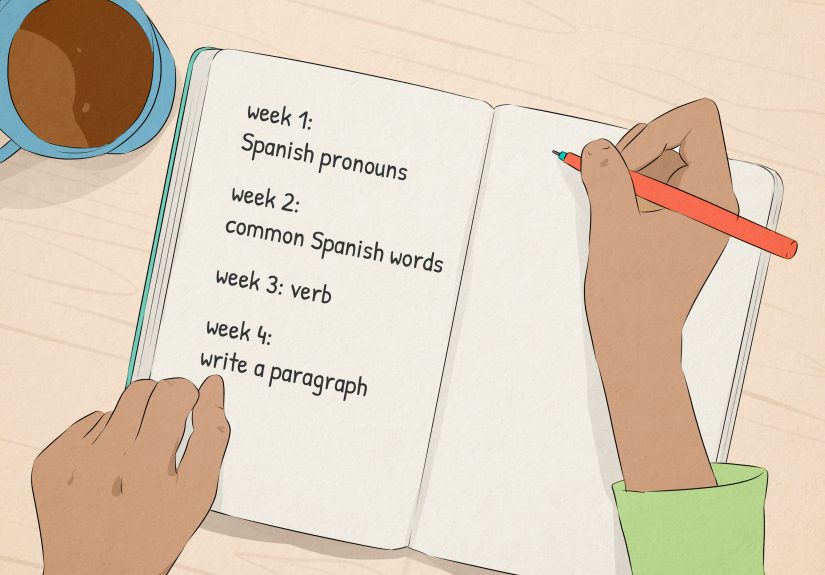
- A Simple Beginner Plan for the First 30 Days
- Experiences Beginners Often Have When Learning to Speak Spanish
- Final Thoughts
If learning to speak Spanish feels a little like trying to juggle tacos, grammar charts, and your own anxiety at the same time, welcome to the club. The good news is that beginner Spanish is far more approachable than many English speakers expect. You do not need a dramatic movie monologue, a perfect rolled r, or a suitcase stamped in twelve countries. You need a smart method, a small set of useful phrases, and the courage to sound slightly awkward for a while. That last part is not a bug. It is the entire process.
Spanish basics become easier when you stop treating the language like a museum exhibit and start treating it like a tool. Real speaking begins with everyday communication: saying hello, asking simple questions, introducing yourself, ordering food, apologizing, clarifying, and surviving the moment when your brain leaves the chat. This guide breaks that process into four practical ways to start speaking Spanish now, not “someday when you finally memorize every verb chart ever invented.”
Why Spanish Basics Are Friendlier Than They Look
For many beginners, Spanish is one of the most approachable languages to start speaking. The sound system is more consistent than English, the vowel sounds are clearer, and many Spanish and English words are relatives, not strangers pretending not to know each other at the grocery store. Words like animal, hospital, doctor, color, and important already give learners a head start.
That does not mean Spanish is magically effortless. You still need practice, repetition, listening, and actual speaking. But it does mean that beginners often make progress faster when they focus on communication instead of chasing perfection. So let’s do exactly that.
1. Build a Survival Kit of High-Use Spanish Phrases
Your first goal is not to “know Spanish.” That is like saying your first gym goal is to become a Greek statue by Tuesday. Your first goal is to function. Learn the phrases that help you open conversations, keep them going, and rescue yourself when things fall apart.
Start with phrases you can use every day
Memorize a core set of expressions that you can actually say out loud without your soul exiting your body. Useful beginner phrases include:
- Hola. Hello.
- Buenos días. Good morning.
- ¿Cómo estás? How are you?
- Me llamo… My name is…
- Mucho gusto. Nice to meet you.
- ¿Habla inglés? Do you speak English?
- No entiendo. I do not understand.
- ¿Puede repetir, por favor? Can you repeat, please?
- ¿Qué significa…? What does … mean?
- Gracias. Thank you.
- De nada. You are welcome.
- Perdón. Excuse me / Sorry.
This kind of phrase bank is powerful because it gives you immediate speaking ability. Even if your grammar is shaky, you can greet someone, introduce yourself, ask for help, and stay in the conversation a little longer. That is a win. Language learning is built on many tiny wins, not one dramatic “aha” moment with choir music in the background.
Think in chunks, not individual words
Many beginners waste time memorizing isolated vocabulary like chair, window, and spoon, then discover they still cannot hold a basic conversation. Learn useful chunks instead. A chunk is a ready-made phrase your mouth can grab quickly. Examples include quiero… (I want…), necesito… (I need…), me gusta… (I like…), and voy a… (I am going to…).
With just a few chunks, your speaking expands fast:
- Quiero agua. I want water.
- Necesito ayuda. I need help.
- Me gusta la música. I like music.
- Voy a estudiar. I am going to study.
That is real communication. Not elegant poetry, sure. But neither are most Tuesday morning emails.
2. Train Your Mouth Before You Chase Fancy Grammar
If you want to speak Spanish basics more naturally, pronunciation deserves early attention. Not because you must sound native, but because clear pronunciation helps people understand you faster. And being understood is the entire point of speaking.
Master the five Spanish vowels
One of the nicest things about Spanish is that its vowel sounds are much steadier than English. In beginner terms, the vowels usually sound like this:
- a like “ah”
- e like “eh”
- i like “ee”
- o like “oh”
- u like “oo”
English vowels tend to slide around. Spanish vowels are more disciplined. They show up, do their job, and go home. If you learn to keep them short and clean, your Spanish already starts sounding better.
Respect the rhythm of the language
Spanish often sounds smoother and more syllable-based than English. Beginners improve quickly when they pronounce words in clean syllables instead of smashing them together like leftover puzzle pieces. For example:
- ca-sa
- ha-blar
- a-mi-go
- gra-cias
Clapping syllables may feel silly, but silly is underrated. Silly works. Say the word slowly, separate the beats, then speed it up while keeping the sound clean.
Do not panic about every difficult sound
Yes, the rolled r exists. Yes, some learners treat it like a personal enemy. But you do not need to master every tricky sound on day one. Focus first on making your vowels clear, speaking at a moderate pace, and stressing the right syllable. A listener will forgive a weak trill long before they forgive mumbling.
A smart beginner rule is this: speak a little slower than feels cool. Fast, blurry Spanish is not impressive. Clear Spanish is.
3. Practice Tiny Conversations Instead of Memorizing Endless Lists
If your study routine is mostly flashcards and silent reading, you may know a lot about Spanish without being able to speak much Spanish. Speaking grows through interaction. That interaction can be with another person, with an audio clip, or even with yourself in your kitchen while making coffee like a very dedicated language nerd.
Use mini-dialogues
Small conversations teach structure, rhythm, and response patterns. Try this beginner exchange:
A: Hola. ¿Cómo te llamas?
B: Me llamo Alex. ¿Y tú?
A: Me llamo Sam. Mucho gusto.
B: Igualmente.
Now switch names. Change the question. Add where you are from. Add what you like. The point is not to memorize one perfect script like an overprepared actor auditioning for a two-line role. The point is to learn the pattern so you can reuse it in real situations.
Ask and answer the same topic multiple ways
Take one topic and practice five variations. Example: talking about likes.
- Me gusta el café. I like coffee.
- No me gusta el té. I do not like tea.
- Me gusta mucho la música. I really like music.
- ¿Te gusta bailar? Do you like dancing?
- Sí, me gusta. Yes, I like it.
This method is far more useful than memorizing random nouns with zero context. You are teaching your brain how conversation moves.
Borrow real-life situations
Practice conversations for places you might actually use Spanish:
- At a café
- At a store
- Meeting a neighbor
- Traveling
- Asking for directions
- Talking about your family or job
For example, a simple café exchange can do a lot of heavy lifting:
Quiero un café, por favor.
¿Grande o pequeño?
Pequeño, gracias.
That is basic Spanish, but it is useful Spanish. And useful Spanish tends to stick.
4. Speak Every Day, Even If It Is Messy
The biggest difference between people who “study Spanish” and people who eventually speak it is not genius. It is regular output. Daily speaking practice beats occasional heroic study sessions every single time.
Create a five-minute speaking habit
Do something simple and repeatable:
- Introduce yourself out loud every morning
- Describe what you are doing: Estoy cocinando. Estoy trabajando.
- Name objects around you
- Read a short Spanish dialogue aloud
- Repeat after audio and mimic the rhythm
Five focused minutes every day adds up. Your mouth becomes less hesitant. Your listening improves. Common phrases move from “I vaguely remember this from Tuesday” to “I can say this without rebooting my brain.”
Use shadowing
Shadowing means listening to a short audio clip and repeating it immediately, trying to copy pronunciation, pacing, and melody. It is one of the easiest ways to sound more natural. Start with very short lines. Pause often. Repeat shamelessly. Your neighbors may think you are rehearsing for a bilingual one-person show, but progress has a price.
Let mistakes happen in public
This is the emotional part of learning to speak Spanish basics. You will mix up words. You will say something too literally. You may accidentally sound formal when you meant casual, or casual when you meant human resources should get involved. Keep going.
Beginners improve when they treat mistakes as data, not personal tragedy. If someone corrects you kindly, congratulations: you just got a free lesson. If someone still understands you, even better. Communication happened.
Common Beginner Mistakes to Avoid
- Waiting too long to speak: Speaking is not the reward you earn after studying. Speaking is part of the study.
- Obsessing over grammar first: Grammar matters, but basic communication matters sooner.
- Learning too many random words: Prioritize phrases, verbs, and conversation patterns.
- Speaking too fast: Slow and clear beats fast and confusing.
- Quitting because you feel awkward: Awkwardness is stage one, not a sign you are failing.
A Simple Beginner Plan for the First 30 Days
If you want structure, here is a practical way to begin:
Week 1: Greetings and introductions
Learn how to say hello, goodbye, your name, and basic courtesy phrases. Practice one short conversation daily.
Week 2: Pronunciation and useful verbs
Focus on vowels, syllables, and high-use expressions with verbs like ser, estar, tener, querer, and gustar.
Week 3: Everyday situations
Practice ordering, asking for help, introducing people, and describing simple preferences.
Week 4: Daily speaking routine
Speak out loud every day for five to ten minutes. Record yourself once or twice. Notice progress instead of hunting for perfection.
Experiences Beginners Often Have When Learning to Speak Spanish
One of the most common beginner experiences is the shock of understanding more than you can say. You hear hola, gracias, buenos días, and maybe even a full beginner dialogue, and part of your brain goes, “Great, I am basically bilingual now.” Then someone asks a follow-up question at normal speed and your confidence leaves through the nearest window. This is completely normal. Receptive skills often grow before speaking feels comfortable. It does not mean you are failing. It means your brain is building the map before your mouth learns the roads.
Another common experience is discovering that pronunciation changes everything. Many beginners spend days memorizing vocabulary, only to realize that the words come out sounding strangely English when spoken aloud. Then they start paying attention to vowels, rhythm, and syllables, and suddenly even simple Spanish begins to sound more natural. This is a huge turning point. It feels less like translating and more like actually participating in the language.
There is also the unforgettable first real-world success. Maybe it is ordering coffee, asking where the restroom is, greeting a Spanish-speaking coworker, or introducing yourself at a language exchange. The conversation might only last fifteen seconds, but it feels enormous. Why? Because it turns Spanish from a study subject into a lived skill. You stop saying, “I am learning Spanish,” and start thinking, “I used Spanish.” That mental shift matters more than people realize.
Of course, beginner experiences are not all heroic music and cinematic breakthroughs. Sometimes they are deeply humbling. You may confuse embarazada with “embarrassed,” accidentally ask for something in the wrong form, or freeze when someone responds too quickly. Many learners also discover that they know the sentence perfectly in private, but the second another human appears, their brain becomes decorative. This is also normal. Live speaking adds pressure, timing, memory, and listening all at once. It is a lot. That is why repetition and low-stakes practice help so much.
Many beginners also experience a strange but encouraging pattern: the same phrases keep coming back. At first this feels boring. Then it becomes reassuring. Language learning depends on repetition. The tenth time you say ¿Cómo estás? is not glamorous, but it is useful. The fiftieth time you say no entiendo, por favor, or me gusta, those phrases start to feel automatic. And automatic language is the foundation of confident speaking.
Finally, there is the experience nearly every successful learner shares: progress arrives in layers, not fireworks. One week you notice that you can pronounce words more clearly. Another week you stop translating every tiny phrase. Later, you answer a question without rehearsing first. Then one day you realize you have been speaking Spanish basics all along, just in small, steady pieces. That is how real skill grows. Not in a dramatic overnight transformation, but in consistent, practical moments that add up until the language begins to feel like yours.
Final Thoughts
If you want to speak Spanish basics, keep it practical. Learn a survival set of phrases. Train your pronunciation early. Practice tiny conversations. Speak every day, even when it feels clumsy. That is the formula. Not flashy. Not mysterious. Just effective.
Spanish rewards consistency. The more often you hear it, say it, and use it in real situations, the less intimidating it becomes. So start small, stay curious, and remember: every fluent speaker once sounded like a beginner with excellent intentions and questionable confidence. You are in good company.






 Close
Close