
Table of Contents >> Show >> Hide
- What Makes a Kitchen “After” Feel Like a Mic-Drop Moment?
- Plan Like a Pro (So the “After” Doesn’t Turn Into “After… What Happened?”)
- 33 Before-and-After Kitchen Makeovers
- 1) The Cabinet Paint Glow-Up
- 2) Two-Tone Cabinets for Instant Architecture
- 3) Cabinet Refacing Instead of Full Replacement
- 4) The “New Hardware, Who Dis?” Update
- 5) Goodbye, Clunky Soffit
- 6) Open Shelving (But Make It Low-Drama)
- 7) The “Glass Front” Compromise
- 8) Subway Tile, Upgraded
- 9) The Slab Backsplash “One Piece = Wow” Move
- 10) Peel-and-Stick Backsplash for the Commitment-Phobic
- 11) Quartz Countertops for “Always Looks Clean” Energy
- 12) Butcher Block Island = Warmth on a Budget
- 13) The Waterfall Edge “Modern Anchor”
- 14) Swap the Sink for a Workstation Upgrade
- 15) Faucet + Soap Dispenser: Small Change, Big “After”
- 16) Vent Hood as a Statement Piece
- 17) Lighting Layering (a.k.a. Stop Living in a Cave)
- 18) Swap the “Builder Basic” Pendants
- 19) New Floors, New Mood
- 20) Add a Rug (Yes, Really)
- 21) Pantry Cabinet = Storage That Changes Your Life
- 22) Pull-Outs Everywhere
- 23) The Coffee Bar Corner
- 24) Beverage Station for Entertaining
- 25) Peninsula to Island Conversion
- 26) Add Seating Without Losing Prep Space
- 27) The Wall-Removal “Hello, Light” Transformation
- 28) Galley Kitchen That Feels Twice as Wide
- 29) Small Kitchen Vertical Strategy
- 30) The “Work Zones” Layout Fix
- 31) Universal Design, Stylish Edition
- 32) “Integrated” Look Without the Luxury Tax
- 33) The “One Bold Choice” Kitchen
- Real-World Experience: What Renovation Actually Feels Like (And Why That’s Good News)
- Final Pep Talk
A kitchen makeover is basically a magic trick you perform on your own home: you wave a paintbrush, swap a light fixture,
and suddenly your “meh” kitchen becomes the one everyone mysteriously ends up standing in during parties. The best part?
“Before-and-after” doesn’t have to mean “gut it to the studs.” Some of the most dramatic transformations come from
smart, targeted updatesespecially when you focus on how the kitchen works, not just how it looks.
Below you’ll find 33 makeover blueprints inspired by real-world renovation patterns shared across major U.S. home and design
outlets. Think of them as remixable ideas: steal the parts that fit your space, skip the ones that don’t, and end up with a
kitchen that feels like you (but with better lighting and fewer regrets).
What Makes a Kitchen “After” Feel Like a Mic-Drop Moment?
Most jaw-dropping makeovers do three things at once: (1) improve function, (2) increase perceived brightness, and (3) simplify
visual chaos. In other words, they fix the daily annoyances and make the room feel bigger, cleaner, and more intentional.
- Function: better workflow, smarter storage, fewer bottlenecks.
- Light: layered lighting + reflective surfaces = instant “new kitchen” energy.
- Focus: one or two standout features (hood, island, backsplash) and the rest supports them.
Plan Like a Pro (So the “After” Doesn’t Turn Into “After… What Happened?”)
Budget reality check (with your future self in mind)
In the U.S., kitchen remodel costs swing widely based on size and scope. A practical way to stay sane is to decide which
lane you’re in: refresh (cosmetic), replace (new finishes + some upgrades), or reconfigure
(layout changes, plumbing/electrical moves). If you’re doing more than paint-and-hardware, build in a contingency fund for
surprises behind walls, under floors, or inside that one cabinet that has always smelled “vintage.”
If resale value matters, minor kitchen remodels often perform better than ultra-luxury overhauls because buyers love “updated”
but don’t always pay extra for “imported stone blessed by mountain monks.” Translation: spend where you’ll feel it daily
(storage, lighting, durability) and choose timeless finishes for the big-ticket items.
Workflow: triangles, zones, and the “don’t-make-me-sidestep” rule
Classic kitchen planning emphasizes spacing between the sink, cooktop, and fridge (the “work triangle”), but modern kitchens
also rely on zones: prep, cooking, cleanup, coffee/beverages, and storage. A great makeover respects how you actually move:
if two people cook, design for passingnot shoulder-checking.
Lighting is the cheapest “after” you can buy
Many “before” kitchens suffer from one overhead light trying to do the emotional labor of three fixtures. The fix is layered lighting:
ambient (overall), task (work areas), and accent (mood). Even a small upgradelike under-cabinet LEDscan make countertops feel
more expensive and your knife skills look more confident than they are.
33 Before-and-After Kitchen Makeovers
1) The Cabinet Paint Glow-Up
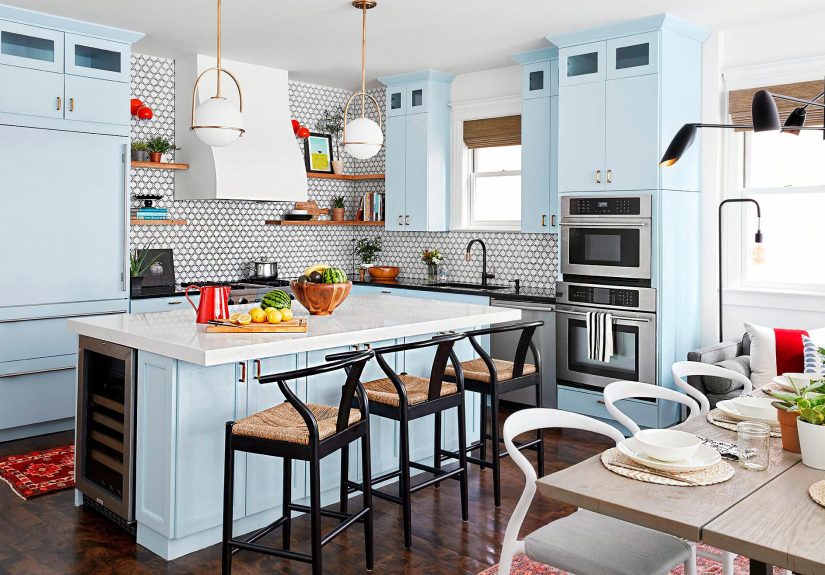
Before: stained cabinets + tired hardware. After: painted cabinets (warm white, greige, or moody green) with modern pulls. Steal this: match hardware finish to your faucet.
2) Two-Tone Cabinets for Instant Architecture
Before: one-color everything. After: uppers light, lowers darker (or a wood island). Steal this: keep counters simple to avoid visual overload.
3) Cabinet Refacing Instead of Full Replacement
Before: solid cabinet boxes, dated doors. After: new doors/veneers + hinges + pulls. Steal this: upgrade interior organizers while you’re at it.
4) The “New Hardware, Who Dis?” Update
Before: tiny knobs doing nothing for morale. After: bar pulls or mixed knobs/pulls. Steal this: size pulls to drawers so they look intentional.
5) Goodbye, Clunky Soffit
Before: soffit above cabinets collecting dust and regret. After: cabinets extended to the ceiling with crown molding. Steal this: use the top shelf for seasonal stuff.
6) Open Shelving (But Make It Low-Drama)
Before: heavy upper cabinets. After: a short run of open shelves for daily dishes. Steal this: keep shelf styling to 2–3 repeating materials.
7) The “Glass Front” Compromise
Before: solid uppers that feel bulky. After: a couple glass-front cabinets to lighten the room. Steal this: add interior cabinet lighting for sparkle.
8) Subway Tile, Upgraded
Before: no backsplash (or a tired 4-inch strip). After: classic subway tile with contrasting grout or a stacked layout. Steal this: run tile to the hood for height.
9) The Slab Backsplash “One Piece = Wow” Move
Before: lots of grout lines. After: a continuous slab backsplash (stone or quartz). Steal this: choose subtle veining for easier everyday maintenance.
10) Peel-and-Stick Backsplash for the Commitment-Phobic
Before: blah wall behind the range. After: renter-friendly tile look in a weekend. Steal this: pick a pattern with movement to hide splatters.
11) Quartz Countertops for “Always Looks Clean” Energy
Before: laminate seams and burn marks. After: quartz in a light neutral. Steal this: choose a slightly matte finish for fewer fingerprints.
12) Butcher Block Island = Warmth on a Budget
Before: cold, flat surfaces everywhere. After: butcher block on the island, stone on perimeter. Steal this: use a darker oil for a richer look.
13) The Waterfall Edge “Modern Anchor”
Before: island looks like a random rectangle. After: waterfall countertop ends create a sculptural focal point. Steal this: keep the rest of finishes quiet.
14) Swap the Sink for a Workstation Upgrade
Before: shallow sink that splashes like it’s mad at you. After: deep single-bowl or workstation sink with accessories. Steal this: add a pull-down faucet for flexibility.
15) Faucet + Soap Dispenser: Small Change, Big “After”
Before: mismatched faucet and plastic soap bottle. After: coordinated faucet, air-gap cover, and built-in soap dispenser. Steal this: pick one metal finish and commit.
16) Vent Hood as a Statement Piece
Before: tiny microwave-hood combo. After: a real hood with a plaster, wood, or metal surround. Steal this: center it visually with symmetrical cabinets.
17) Lighting Layering (a.k.a. Stop Living in a Cave)
Before: one overhead fixture casting shadows on prep areas. After: recessed + pendants + under-cabinet LEDs. Steal this: put them on separate switches.
18) Swap the “Builder Basic” Pendants
Before: generic pendants with no personality. After: sculptural pendants that echo cabinet hardware. Steal this: keep bulb color warm for a welcoming feel.
19) New Floors, New Mood
Before: cracked tile or dated vinyl. After: wide-plank wood look, durable tile, or quality LVP. Steal this: run flooring continuously into nearby spaces for flow.
20) Add a Rug (Yes, Really)
Before: hard surfaces feel a little sterile. After: a washable runner in a high-traffic zone. Steal this: choose low-pile so chairs don’t get stuck.
21) Pantry Cabinet = Storage That Changes Your Life
Before: snacks scattered across three zip codes. After: tall pantry cabinet (or two) with pull-outs. Steal this: use clear bins so you see what you own.
22) Pull-Outs Everywhere
Before: deep cabinets where gadgets go to disappear. After: roll-out shelves, trash pull-out, and spice drawers. Steal this: prioritize the cabinets you use daily.
23) The Coffee Bar Corner
Before: coffee stuff colonizing your main counter. After: a dedicated station with mugs, beans, and a drawer for pods/tools. Steal this: add a small appliance garage door.
24) Beverage Station for Entertaining
Before: guests crowding the sink zone. After: mini-fridge or beverage drawers + glass storage. Steal this: place it outside the main work path.
25) Peninsula to Island Conversion
Before: peninsula blocks movement. After: island improves circulation and adds seating. Steal this: leave enough clearance so drawers open comfortably.
26) Add Seating Without Losing Prep Space
Before: nowhere to sit except “on the couch, far away.” After: overhang seating or a compact banquette. Steal this: choose stools that tuck fully under.
27) The Wall-Removal “Hello, Light” Transformation
Before: closed-off kitchen with a cave vibe. After: opened sightlines and shared light with living areas. Steal this: keep one upper run for storage so it’s not all open shelves.
28) Galley Kitchen That Feels Twice as Wide
Before: dark cabinets + narrow passage. After: lighter uppers, reflective backsplash, and slimmer hardware. Steal this: use consistent cabinet fronts for a calm look.
29) Small Kitchen Vertical Strategy
Before: not enough storage, ever. After: ceiling-height storage, rails, and a narrow pull-out pantry. Steal this: treat the backsplash as a functional zone (hooks/rails).
30) The “Work Zones” Layout Fix
Before: prep area miles from the sink. After: prep zone near sink, cooking zone with landing space, dedicated cleanup spot. Steal this: group tools where you use them.
31) Universal Design, Stylish Edition
Before: tight clearances and hard-to-reach storage. After: better lighting, easier hardware, and thoughtful spacing. Steal this: choose D-shaped pullsthey’re comfy and timeless.
32) “Integrated” Look Without the Luxury Tax
Before: appliances visually dominate. After: cohesive finishes and panels where it makes sense (like dishwasher). Steal this: align appliance fronts with cabinet lines for polish.
33) The “One Bold Choice” Kitchen
Before: safe neutrals everywhere. After: a bold cabinet color, dramatic tile, or standout stonebalanced by simple counters and walls. Steal this: bold doesn’t mean busy; pick one star.
Real-World Experience: What Renovation Actually Feels Like (And Why That’s Good News)
The glamorous “after” photos rarely mention the most authentic part of a kitchen makeover: you will, at some point, eat dinner
next to a toaster on a folding table and call it “temporary.” That’s not failureit’s the normal middle chapter. Homeowners often
describe renovation as a mix of excitement and decision fatigue: you’ll start out confident (“I know what I like!”) and then,
three showroom visits later, find yourself debating whether “warm white” is emotionally different from “soft white.” (It is. Allegedly.)
One of the most common lived experiences is realizing that timelines aren’t just about constructionthey’re about the sequence of
choices. Cabinets, counters, and appliances have lead times, and the order matters. Many people learn the hard way that a kitchen isn’t
a set of independent upgrades; it’s a system. A sink choice affects faucet placement, which affects backsplash height, which affects
window trim, which somehow affects your personality for a week. The upside is that once you accept it’s a chain reaction, you can plan
smarter: decide your “non-negotiables” early (storage, lighting, durable counters), and treat the rest like adjustable knobs.
Another real-world lesson: a kitchen makeover isn’t only visualit’s behavioral. When storage is designed around habits, life gets easier.
People who add pull-outs, pantry zones, or a dedicated coffee station often say the kitchen stays cleaner with less effort because the “home”
for each item is obvious. That’s why some of the best transformations aren’t the fanciestthey’re the ones that reduce daily friction.
If you’ve ever moved three things just to unload the dishwasher, you already understand this on a spiritual level.
There’s also the “unexpected win” effect. Many homeowners expect to love the new counters, but end up obsessing over something smaller:
under-cabinet lighting that makes evenings cozy, a sink that doesn’t splash, or an island outlet that finally ends the extension-cord era.
These upgrades feel tiny on paper, but huge in real life because they change how the kitchen performs every single day.
Finally, the most comforting experience-based truth: you don’t have to get every choice perfect for the makeover to be a success.
Great kitchens are layered over time. You can start with the high-impact basicspaint, lighting, hardware, storage improvementsand
let the room evolve. If you make decisions that support function, durability, and a consistent style story, your kitchen will still
feel like a glow-up… even if your first “after” meal is takeout eaten off paper plates because the dishes are still in a box labeled
“kitchen-ish.”
Final Pep Talk
Your best “after” isn’t about copying a photoit’s about building a kitchen that supports your routines, your people, and your future self.
Start with function and lighting, choose a few visual anchors, and let the rest be simple. That’s how you get a kitchen that looks amazing
and feels easy to live in.






 Close
Close