
Table of Contents >> Show >> Hide
- Design Principles That Make Outdoor Entertaining Feel Effortless
- Layouts That Keep the Party Moving (and the Cook Smiling)
- 1. The Straight-Line “All-In-One Wall”
- 2. The L-Shape That Creates a Natural Hangout Corner
- 3. The U-Shape for Serious Hosts
- 4. The Island Kitchen That Faces Your Guests
- 5. The Two-Station Setup: Cook Here, Serve There
- 6. The “Indoor-Outdoor Pass-Through” Concept
- 7. The Galley Layout for Narrow Side Yards
- 8. The “Patio Edge” Kitchen That Protects Your Lounge Space
- Cooking Features That Turn a Backyard Into a Destination
- 9. A Built-In Grill With Proper Landing Space
- 10. Add a Side Burner for Sauces and Sides
- 11. Install a Pizza Oven for “Instant Party” Energy
- 12. A Smoker Station for Slow-Cooked Showpieces
- 13. A Prep Sink to Stop the Indoor Back-and-Forth
- 14. Outdoor-Rated Vent Hood (When Your Setup Needs It)
- 15. A Built-In Griddle for Crowd-Friendly Menus
- 16. A Rotisserie or Infrared Zone for Restaurant-Level Results
- Serving, Sipping, and Snacking: Where Great Parties Actually Happen
- Comfort and Weather-Proofing: The Difference Between “Nice” and “Actually Used”
- Materials and Storage That Don’t Quit After One Season
- Practical Add-Ons That Make Entertaining Easier
- of Real-World Hosting Lessons From Outdoor Kitchens
- Conclusion
Outdoor kitchens are basically a social magnet with a grill. The minute you move the cooking outside, people stop hovering in your indoor kitchen like hungry raccoons and start spreading outchatting, sipping, snacking, and “helping” (read: taste-testing). A well-planned outdoor setup makes entertaining easier because you’re not running inside every five minutes for tongs, ice, or the one cutting board that mysteriously disappears at parties.
The trick is to design for flow: prep, cook, serve, and cleanwithout guests crowding the chef like it’s a live cooking show. Think in zones, plan utilities early (power, gas, water, lighting), and choose materials that can handle sun, rain, grease splatter, and the occasional “whoops” with a red wine glass.
Design Principles That Make Outdoor Entertaining Feel Effortless
Before we jump into the ideas, keep three sanity-saving principles in mind:
- Zones beat “one big counter.” Even a compact outdoor kitchen works better when prep space isn’t fighting for elbow room with the grill lid.
- Traffic should go around, not through. Give yourself a cook’s lane so you’re not playing human pinball when burgers come off the heat.
- Weather is the boss. Shade, wind, and rain decide how often you’ll actually use the spaceso design like you plan to entertain more than once a year.
Layouts That Keep the Party Moving (and the Cook Smiling)
1. The Straight-Line “All-In-One Wall”
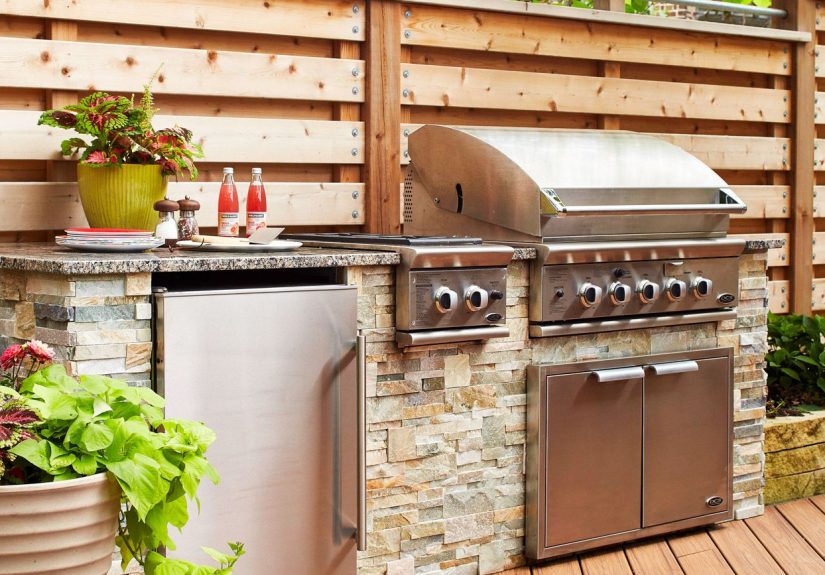
Perfect for narrow patios: grill centered, prep counter on one side, landing/serving space on the other. Add a backsplash panel (tile, stone, or stainless) to protect the wall and make cleanup less dramatic.
2. The L-Shape That Creates a Natural Hangout Corner
An L-shape gives you separation between prep and cooking while creating an “open” side where guests can gather without blocking you. It’s the outdoor equivalent of a kitchen peninsulaonly with better air circulation and fewer crumbs underfoot.
3. The U-Shape for Serious Hosts
If you regularly entertain, a U-shape forms a contained cook zone with tons of counter space. It also makes it easy to add a sink and beverage fridge without turning the area into a cluttered obstacle course.
4. The Island Kitchen That Faces Your Guests
Flip the typical setup: put the cooking surface where you can face the patio seating. You’ll stay in the conversation while still minding the flamesbecause nobody wants “interactive” entertainment involving smoke.
5. The Two-Station Setup: Cook Here, Serve There
Separate your hot zone (grill, smoker, pizza oven) from a cool serving zone (bar, drinks, snacks). This keeps crowds away from heat and creates a natural flow: guests self-serve while you focus on cooking.
6. The “Indoor-Outdoor Pass-Through” Concept
If your indoor kitchen has a window or door facing the backyard, align the outdoor prep/serving counter right outside it. It becomes a pass-through for trays, ice, and refillsreducing the number of indoor laps you run like you’re training for a marathon.
7. The Galley Layout for Narrow Side Yards
Two parallel runsone side for cooking and storage, the other for serving or seatingwork surprisingly well in slim spaces. Keep enough clearance so two people can pass without performing a synchronized sidestep.
8. The “Patio Edge” Kitchen That Protects Your Lounge Space
Build the kitchen along the edge of the patio so smoke and heat drift outward instead of into your seating area. Bonus: it keeps grease splatter away from cushions, which is a gift to your future self.
Cooking Features That Turn a Backyard Into a Destination
9. A Built-In Grill With Proper Landing Space
The glamorous part is the grill. The practical part is counter space next to it for trays, tools, and plates. Give yourself generous landing areas so you’re not balancing steaks on a paper towel like a carnival trick.
10. Add a Side Burner for Sauces and Sides
A side burner keeps you from sprinting inside to simmer BBQ sauce, sauté onions, or boil corn. It also lets you cook for mixed dietsone pan for veggies while the main grill handles proteins.
11. Install a Pizza Oven for “Instant Party” Energy
Pizza ovens create built-in entertainment. People love watching pizzas launch and rotate, and you can feed a crowd in waves. Keep a nearby prep ledge for stretching dough and staging toppings.
12. A Smoker Station for Slow-Cooked Showpieces
Dedicate a corner to a smoker or kamado-style cooker with heat-safe surfaces around it. This is the “set it and forget it” hero for hostingbrisket, ribs, pulled porkwhile you actually enjoy your guests.
13. A Prep Sink to Stop the Indoor Back-and-Forth
A sink outside is a game-changer: wash produce, rinse hands, and fill pitchers without tracking dirt and grease indoors. If full plumbing isn’t realistic, consider a simplified hand-wash setup and keep food prep mostly on clean, portable boards.
14. Outdoor-Rated Vent Hood (When Your Setup Needs It)
If your kitchen is tucked under a roof or pergola, ventilation matters. Smoke management keeps the space comfortable, protects finishes, and prevents your guests from “seasoning” themselves with eau de charcoal.
15. A Built-In Griddle for Crowd-Friendly Menus
Griddles shine for breakfast parties, smash burgers, fajitas, and stir-fry-style dinners. You can cook lots of small portions fastideal for guests who graze instead of sit down all at once.
16. A Rotisserie or Infrared Zone for Restaurant-Level Results
If you love cooking, add a feature that upgrades outcomes: rotisserie chicken, crisped edges on steaks, faster searing. It’s the difference between “backyard BBQ” and “wait, you made this?”
Serving, Sipping, and Snacking: Where Great Parties Actually Happen
17. A Bar-Ledge Counter That Invites Conversation
Extend the counter with an overhang so stools can tuck in. It creates a “front row” for guests without them standing in the cook lane. Add foot rails for comfortpeople will linger longer.
18. A Beverage Fridge (Because Ice Runs Are a Buzzkill)
Outdoor-rated beverage fridges keep drinks accessible and reduce traffic indoors. Stock it with water, soda, and a few crowd-pleasers so guests can self-serve and you can stop playing bartender.
19. A Dedicated Drink-Making Nook
Carve out a small “bar station” with a cutting board drawer, a space for glasses, and a bin for citrus and napkins. Even if you’re serving mocktails, it feels elevated and makes hosting smoother.
20. A Built-In Cooler Drawer or Ice Bin
Cooler storage built into the island keeps ice close to the action. It’s also great for bottled drinks during big gatheringsless fridge door-opening, more steady chilling.
21. A Buffet-Style Serving Counter
Give yourself a long, uncluttered counter where you can lay out food in waves. Add outlets for warming trays (outdoor-safe and properly protected) and you’ve got an effortless serve-and-reset system.
22. A “Snack Shelf” for Low-Heat Hosting
Not every hangout needs a full dinner. Add a small shelf or ledge near seating for chips, salsa, fruit platters, and easy bitesperfect for casual entertaining that still feels intentional.
Comfort and Weather-Proofing: The Difference Between “Nice” and “Actually Used”
23. Pergola or Roof Cover for Shade and Light Rain
A covered kitchen keeps the cook comfortable and extends your entertaining season. Add lighting under the structure so the party doesn’t end just because the sun clocked out.
24. Ceiling Fan or Mounted Fan for Hot Nights
Air movement makes summer gatherings dramatically more pleasant. Fans also help discourage bugs from treating your buffet like a VIP lounge.
25. Outdoor Heaters or a Fire Feature Nearby
For cooler evenings, add heat near seatingtabletop fire, built-in fire pit, or outdoor heaters. Keep flames and fuel sources safely placed away from foot traffic and anything flammable.
26. Wind Protection With Screens or Planting
Wind can wreck cooking (and candle-lit ambiance). Use privacy screens, a low wall, or strategic landscaping to calm breezes without fully enclosing the space.
27. Task Lighting + Ambient Lighting (Both Matter)
Task lighting makes cooking safer and easier; ambient lighting makes guests want to stay. Combine under-counter or under-shelf lights with string lights, sconces, or soft landscape lighting for a balanced glow.
Materials and Storage That Don’t Quit After One Season
28. Weather-Resistant Cabinetry That Matches Your Lifestyle
Choose materials designed for outdoorsstainless steel, powder-coated aluminum, or quality polymer options. If you live near the coast, corrosion resistance becomes even more important.
29. Durable Countertops Made for Sun, Heat, and Spills
Outdoor-friendly surfaces include stone (like granite), poured concrete, and certain porcelain or sintered surfaces. Prioritize UV resistance, heat tolerance, and easy cleanupbecause entertaining shouldn’t require a chemistry degree.
30. A Trash-and-Recycling Pullout (The Unsung Hero)
Outdoor parties generate napkins, packaging, and leftovers. A dedicated pullout keeps your counters clean and prevents the dreaded “bag hanging off a chair” situation.
31. Smart Storage for Tools, Spices, and Serving Ware
Use drawers for grill tools, sealed bins for spices, and a dedicated cabinet for platters and trays. Add hooks or a magnetic strip for frequently used items so you’re not rummaging mid-party like you lost your keys.
32. A Style Theme That Makes It Feel Like an Outdoor “Room”
Finish strong: coordinate materials with your home, add planters, incorporate a rug (outdoor-rated), and choose furniture that invites lingering. When your outdoor kitchen feels like a real room, people treat it like the heart of the gatheringnot just the place where the hot dogs happen.
Practical Add-Ons That Make Entertaining Easier
- Outlets where you need them: for phone charging, a blender, or a slow cookerinstalled safely for outdoor use.
- Easy-clean surfaces: avoid fussy finishes near heat and grease.
- Thoughtful seating: mix stools at the bar with lounge seating nearby so guests can choose their vibe.
- Plan for sound: even a small speaker zone helps the party feel intentional.
- Safety basics: keep a fire extinguisher handy and maintain clear space around hot appliances.
of Real-World Hosting Lessons From Outdoor Kitchens
People imagine outdoor kitchens as a “big reveal” projectgrand opening, applause, fireworks, maybe a slow-motion flip of a burger. In real life, the best outdoor kitchens become beloved because they make hosting feel less like work and more like hanging out with food nearby. Over and over, hosts mention the same lesson: if the cook is isolated, the party feels split. That’s why layouts that face the seating area get used more often. When the person grilling can keep eye contact, laugh at the same jokes, and hand over a warm plate without disappearing indoors, the energy stays steady.
Another common discovery: the “drink zone” is the real crowd-puller. You can build the fanciest grill station in the world, but guests will gather wherever the beverages and snacks live. Hosts who add a small beverage fridge, a cooler drawer, or even a tidy counter for cups and citrus report fewer interruptions. Nobody’s knocking on the back door asking, “Where’s the ice?” while you’re trying to pull food off the heat. A simple self-serve setup also makes gatherings feel more relaxedguests don’t wait to be taken care of; they just settle in.
Weather is the next teacher. People often realize after a few get-togethers that shade and lighting matter as much as appliances. A pergola, umbrella, or covered section becomes the “default” spot on hot afternoons, while layered lighting keeps the space inviting after sunset. The hosts who planned for night usetask lighting for cooking, softer lighting for loungingtend to entertain more often because the backyard still feels welcoming at 8:30 p.m., not like a dim campsite with one lonely porch bulb.
Storage creates its own set of “aha” moments. Many outdoor kitchen owners start by carrying everything outside: tools, trays, spices, napkins, serving spoons, and that one bottle opener that vanishes every time. The first time they install weather-resistant drawers or cabinets, entertaining gets dramatically easier. Suddenly, you can keep the basics outdoors, so hosting doesn’t require a packing list. Even small upgradeshooks for utensils, a drawer for towels, a bin for matches or lighters (stored safely and away from heat)reduce stress.
Finally, seasoned hosts learn that outdoor entertaining works best when it’s flexible. Some parties are full dinners; others are casual “snack nights.” The outdoor kitchens that get the most love are the ones that can handle both. A clear serving counter, a comfortable seating mix, and a layout that doesn’t punish the cook for being the cookthose are the details that turn a backyard kitchen into a true gathering place. In other words: build for how people actually behave at parties. They’ll hover, graze, laugh, wander, and come back for seconds. Your job is to make that feel easyand maybe keep the chips from disappearing in the first ten minutes.
Conclusion
The best outdoor kitchen ideas aren’t just about equipmentthey’re about making entertaining smoother. When you plan for zones, traffic flow, comfort, and storage, your outdoor kitchen becomes the place where people naturally gather. Start with a layout that fits your space, add the features you’ll truly use, and finish with lighting and seating that encourage guests to linger. Then enjoy the best part: hosting without feeling like you need a headset and a stage manager.





 Close
Close