
Table of Contents >> Show >> Hide
- Before You Write: Confirm You Actually Have News
- Way 1: The Classic “Media-Ready” Press Release (Inverted Pyramid)
- Way 2: The Feature-Style Press Release (Story-First)
- Way 3: The Digital-First Press Release (SEO + Multimedia)
- Press Release Writing Tips That Work in Any Style
- Common Press Release Mistakes (and How to Avoid Them)
- Quick Comparison: Which Way Should You Use?
- FAQ
- of Real-World “Experience” That Helps (Without the Fairy Tales)
- Conclusion
Press releases have one job: make it ridiculously easy for someone else (a reporter, editor, producer, creator, or
partner) to understand your news and decide whether it matters to their audience. Not your mom. Not your sales team.
Their audience.
The tricky part? There isn’t one “perfect” way to write a press releasebecause different kinds of news need
different kinds of packaging. A funding announcement reads differently than an event invite. A crisis update isn’t
written like a product launch. And a release meant to rank on Google should behave differently than one designed for
a newsroom inbox at 6:42 a.m.
Below are three practical (and commonly used) ways to write a press release, plus examples, checklists, and the
real-world stuff people only learn after their fifth “Can we add one more quote?” revision.
Before You Write: Confirm You Actually Have News
A press release isn’t an “announcement-shaped wish.” It’s a news document. If the best headline you can write is
“Company Is Excited to Be Excited,” your release might be a blog post, a newsletter, or a LinkedIn update instead.
Quick “Is this news?” test
- Timely: Did something change today (or this week), not “sometime this quarter”?
- Specific: Can you point to a concrete outcome: launch, milestone, data, partnership, event, hire, award?
- Relevant: Would anyone outside your company care?
- Verifiable: Can you back it up with facts, numbers, customer proof, or an independent source?
Once you’ve got real news, choose the writing approach that matches your goal.
Way 1: The Classic “Media-Ready” Press Release (Inverted Pyramid)
This is the press release format most journalists expect: headline, dateline, a strong lead, then details in
descending order of importance. Think: “If someone reads only the first paragraph, they still get the story.”
Use this when
- You’re pitching traditional media (news sites, TV, radio, trade publications).
- Your news is straightforward and fact-driven (launch, partnership, funding, award, acquisition).
- You want your release to be easily “lifted” into a news story with minimal rewriting.
Structure that works (and keeps editors happy)
- Headline: Clear, specific, and active. (No mystery novels.)
- Optional subheadline: Adds context or a key stat.
- Dateline: City, state, and date.
- Lead paragraph: The 5Ws (who, what, when, where, why) and the “so what.”
- Body paragraphs: Details, supporting info, proof points, and context.
- Quote(s): Adds insight (not just “We’re thrilled”).
- Call to action (CTA): What to do next (register, request a demo, read the report).
- Boilerplate: A short “About” paragraph with who you are and what you do.
- Media contact: Real person, real email, real phone number.
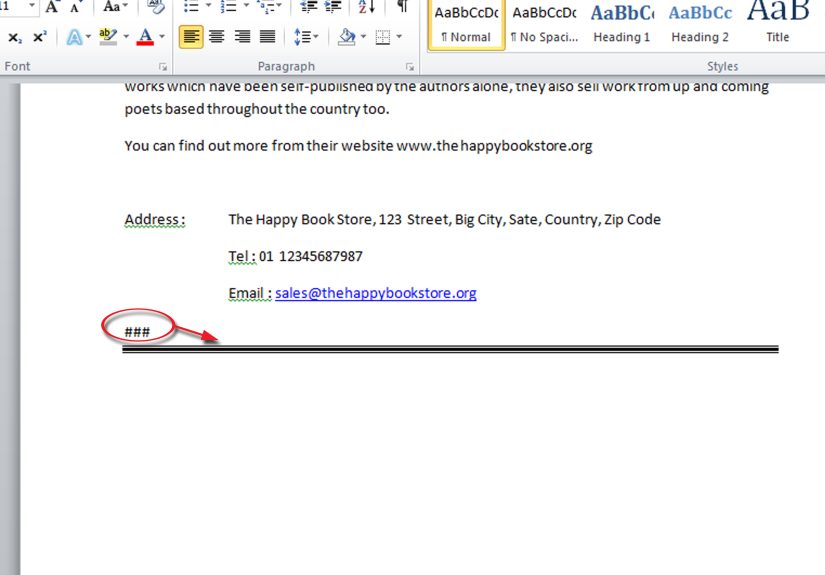
- End mark: Often “###” or “-30-” (optional but traditional).
Classic release example (short + realistic)
Scenario: A startup launches a new feature with measurable value.
Headline
BrightCart Launches One-Click Returns to Cut Refund Time by 40%
Dateline + Lead
NEW YORK, NY January 28, 2026 BrightCart, a returns management platform for ecommerce brands,
today announced One-Click Returns, a new feature designed to reduce customer refund processing time by up to 40%
for merchants using BrightCart’s automated workflow.
Body
One-Click Returns allows shoppers to initiate returns without creating an account, using a secure link tied to the
original order. Merchants can set rules by product category, price threshold, and customer history to automatically
approve eligible returns and generate shipping labels.
In a pilot program with 18 mid-market brands, BrightCart reported faster return approvals and fewer customer service
tickets related to return status updates. The feature is available today for BrightCart Pro customers.
Quote
“Returns shouldn’t feel like a scavenger hunt,” said Jordan Lee, BrightCart’s co-founder and CEO. “We built One-Click
Returns so shoppers can finish the process in minutesand so brands can stop spending their day answering ‘Where’s my
refund?’ emails.”
CTA + Boilerplate + Contact
Learn more: Visit BrightCart’s product page or request a demo.
About BrightCart: BrightCart helps ecommerce brands automate returns and exchanges with flexible
rules, analytics, and integrations that reduce support load and improve customer experience.
Media Contact:
Avery Chen, Communications Lead
[email protected]
(212) 555-0199
###
Pro tips for the classic format
- Lead with facts, not adjectives. “New feature reduces time by 40%” beats “Innovative solution.”
- Keep paragraphs short. If it looks like a novel, it will be treated like one (skipped).
- Make quotes earn their keep. A quote should add perspective, meaning, or a decision pointnot repeat the lead.
- Respect journalistic style. Clarity, accuracy, and brevity are your best friends.
Way 2: The Feature-Style Press Release (Story-First)
Sometimes the “news” isn’t a single hard fact. It’s a story: a trend, a human outcome, a customer transformation, or
a report with insights. In those cases, a feature-style press release can work better than a strict inverted pyramid.
Use this when
- You’re sharing research, a report, a big customer story, or a trend with data.
- You want deeper coverage (profiles, explainers, trade features) rather than a short news brief.
- Your announcement has emotion or human impact that’s easy to illustrate.
How it’s different
- You still include the essentials (what happened, when, who, and why), but you lead with a hook.
- You build context earlywhat’s changing in the world, and why now.
- You use narrative proof (a customer moment, a problem scene, a before/after).
Feature-style structure
- Hook: A vivid problem, trend, or surprising stat.
- Nut graph: The “what this story is about” paragraph (the point of the release).
- Details: What you did or found, plus what it means.
- Proof: Data + a concrete example.
- Quote: Adds insight or explains impact.
- Next steps: Link to full report, assets, or interviews.
- Boilerplate + contact
Feature-style example (for a research report)
Scenario: A company releases a workplace study.
Headline: New Survey Finds 62% of Remote Workers Lose an Hour a Day to “Tool Switching”
Lead hook: The average remote employee toggles between apps so often that it costs them roughly five
hours per weektime that could be spent actually doing the work those apps were supposed to support.
Nut graph: Today, WorkStack published its 2026 Remote Workflow Report, surveying 1,500 U.S. full-time
employees to understand how collaboration tools impact focus, productivity, and burnout.
Proof: The report found that teams using more than six daily tools reported higher meeting volume and
slower task completionespecially for cross-functional projects. WorkStack recommends consolidating workflows and
setting “communication windows” to reduce interruptions.
Quote: “The problem isn’t remote workit’s remote chaos,” said a WorkStack research lead. “When every
update lives in a different place, people spend their day hunting for context instead of creating it.”
Next step: Download the full report, request charts, or schedule an interview with the research team.
Why editors like this approach
- It gives them a story angle they can run with.
- It provides context beyond “Company did a thing.”
- It makes the release feel like the start of coverage, not the end of marketing.
Way 3: The Digital-First Press Release (SEO + Multimedia)
A lot of press releases now live online firston your newsroom page, in your email newsletter, and on distribution
platforms. That means your release may need to work for humans and search engines, while still being usable
for reporters. Digital-first writing is about clarity, scannability, and assets.
Use this when
- You want the release to rank for branded searches or category terms (product launches, reports, events).
- You’ll distribute on your website, social channels, and a newsroom page.
- You have visuals that make coverage easier (images, charts, demo video, logos).
What “digital-first” changes
- Add a short summary near the top (1–2 sentences) for skimmers.
- Use subheads and bullets so mobile readers don’t bounce.
- Include keyword phrases naturally (e.g., “press release distribution,” “press release format,” “news release”).
- Make your CTA clickable and specific (a landing page that matches the release topic).
- Attach assets (logos, product screenshots, executive headshots, data tables).
Digital-first mini template (copy-and-customize)
Headline: What happened + who it’s for + why it matters
Summary: Two sentences that say the release in plain English.
Lead: Dateline + 5Ws + the strongest proof point.
Example section blocks
Key highlights
- One sentence benefit
- One data point or milestone
- Availability/date
What’s new
Explain the feature, product, event, or reportusing concrete language and a reader-friendly press release format.
Quotes
One executive quote + one customer/partner quote (if you have it).
Assets
- Product screenshots
- Company logo pack
- Short demo video
- One-page fact sheet
CTA
Link to the exact page a reader needs next: register, download, request a demo, or view the newsroom kit.
Boilerplate + Media contact
Same as classic, but include a newsroom link if you have one.
Press Release Writing Tips That Work in Any Style
1) Write like a journalist, not a brochure
Press releases perform better when they read like ready-to-publish news. That means simple sentences, factual claims,
and details that can be verified. Save the “world-class, groundbreaking, revolutionary” vocabulary for your internal
pep rallies.
2) Make your first paragraph do the heavy lifting
Your lead paragraph should answer the essentials quickly. If a reader has to scroll to find what’s being announced,
you’re asking them to do homework. Reporters do not assign homework to themselves.
3) Use quotes with purpose
A strong quote adds insight: why a decision was made, what changes for customers, or what the industry context is.
Avoid filler quotes that simply restate facts. If your quote can be replaced with “We are excited,” it can also be
replaced with silence.
4) Keep it tight
Many effective news releases land in the few-hundred-words range, especially for straightforward announcements.
Longer is fine when you have real substance (research, complex launches, regulated industries), but “long” should
never mean “lost.”
5) Don’t forget the boring parts (they’re secretly the most important)
- Boilerplate: One consistent “About” paragraph that explains who you are.
- Media contact: A real human (or a monitored inbox) with phone + email.
- Accuracy check: Names, titles, dates, pricing, availability, and claims.
6) Match distribution to your goal
A press release can be shared through a wire service, emailed to a curated media list, posted in your newsroom,
included in a newsletter, and amplified on social media. The writing should anticipate the channel: scannable for
web, clean and printable for editors, and direct for email.
Common Press Release Mistakes (and How to Avoid Them)
Mistake: Writing a press release like an ad
If every sentence praises your company, you’ll sound like a commercial that accidentally became a document. Fix it by
swapping adjectives for proof: numbers, availability, scope, customer outcomes, independent validation.
Mistake: Hiding the news behind a “warm-up” paragraph
Don’t start with your origin story. Start with the announcement. If you must include background, place it later or
in the boilerplate.
Mistake: Making journalists hunt for basics
Always include the media contact and keep it obvious. If an editor wants to follow up, they should not need a
scavenger map, a password, and three Slack invites.
Mistake: Overstuffing quotes
Quotes aren’t a second press release inside your press release. Keep them crisp, specific, and quotable. One great
sentence beats four paragraphs of “thrilled to announce.”
Quick Comparison: Which Way Should You Use?
- Classic / Inverted Pyramid: Best for straightforward announcements and quick media pickup.
- Feature-Style / Story-First: Best for reports, trends, and deeper narrative coverage.
- Digital-First / SEO + Assets: Best for online discoverability, scannability, and multimedia support.
FAQ
What’s the difference between a press release and a media pitch?
A press release is the formal news document with the full details. A media pitch is the short, personalized message
you send to a journalist explaining why this story fits their audience and why now. Often, the pitch points to the
release as supporting material.
Do I need AP style?
You don’t need to memorize a stylebook to write a strong news release, but you do need to write with journalistic
clarityconsistent grammar, clean punctuation, accurate titles, and no hype. The more your release resembles
professional news writing, the easier it is to publish.
What should I include in the media contact block?
At minimum: name, role/title, email, and phone number. If your audience is national or global, consider including a
time zone or availability window so follow-ups don’t vanish into the void.
of Real-World “Experience” That Helps (Without the Fairy Tales)
Let’s talk about what tends to happen in the real worldwhere press releases are written at 11:57 p.m., approved by
committee, and then judged by someone who has 40 other emails marked “urgent.” The biggest lesson communication teams
learn is this: the release isn’t for you. It’s for the reader who doesn’t know your internal acronyms, doesn’t share
your product obsession, and is not emotionally invested in your Q1 roadmap.
In practice, the best releases often start as a blunt internal note: “Here’s what changed, here’s who it affects,
here’s proof.” Then someone translates that into a clean press release format with a headline that says the news in
one breath. Teams that skip this “truth first” stage usually end up with vague headlines and fluffy leadsbecause
they’re trying to make the announcement feel bigger than it is. Ironically, that makes it feel smaller, because
editors can’t grab onto anything concrete.
Another common real-life moment: the quote battle. Someone wants a quote that sounds inspirational. Someone else
wants a quote that repeats the feature list. Experienced PR people push for a quote that explains meaning: why this
matters now, what problem it solves, or what customers can do differently tomorrow morning. When quotes are written
that way, journalists can actually use themand using your quote is the fastest way for your message to survive
editing.
Distribution experience matters, too. Releases that perform well in inboxes usually have subject lines that match the
headline and lead with a proof point (a result, a stat, or a clear “what’s new”). Releases that perform well online
usually have scannable formatting, natural keywords, and a landing page that delivers exactly what the release
promises. Nothing kills momentum like a CTA that goes to a generic homepage and forces people to play “Find the
Thing We Just Announced.”
Finally, teams learn that speed is good, but accuracy is sacred. Misspell a partner’s name, get a date wrong, or
overclaim a benefit, and your “big news” becomes a correction emailaka the least glamorous sequel in PR history.
A quick pre-send checklist (facts, links, names/titles, contact info, availability, and one clear “so what”) saves
more reputation than any “revolutionary” adjective ever will.
Conclusion
Writing a press release gets easier when you stop thinking of it as a performance and start treating it like a
service. Your goal is to hand the reader a story they can understand fast, verify easily, and share confidently.
Pick the approach that fits your announcement: the classic inverted pyramid for quick pickup, the feature-style
release for narrative depth, or the digital-first release for search-friendly reach and assets. Then write with
clarity, proof, and respect for the reader’s timeand your press release will do what it’s supposed to do: open
doors.





 Close
Close