
Table of Contents >> Show >> Hide
- Why Barn Spiders Get Misidentified So Often
- Way 1: Identify a Barn Spider by Its Web and Where You Found It
- Way 2: Identify a Barn Spider by Body Shape, Color, and Markings
- Way 3: Identify a Barn Spider by Its Behavior
- Common Look-Alikes That Confuse People
- Are Barn Spiders Dangerous?
- Final Thoughts: Put the Clues Together
- Real-Life Experiences With Barn Spiders: What People Actually Notice First
- Conclusion
Note: Clean HTML body only, with SEO tags in JSON format at the end.
Spot a big spider near your porch light and suddenly everyone becomes an amateur detective. “Is it dangerous?” “Is it planning a hostile takeover of the shed?” “Did Charlotte from Charlotte’s Web have cousins in my garage?” Fair questions, all of them. The good news is that a barn spider is usually much easier to identify than people think. You do not need a lab coat, a magnifying visor, or the emotional resilience of a reality show contestant. In most cases, you just need to pay attention to three things: the web, the body, and the spider’s habits.
In everyday American usage, “barn spider” usually refers to a large brown orb-weaver, often associated with Araneus cavaticus, the spider that inspired Charlotte. But people also use the name loosely for similar orb-weavers found on barns, porches, eaves, sheds, and entryways. That is why practical identification matters. If it looks like a spooky monster but acts like a polite insect-control contractor, you are probably dealing with a barn spider or a close orb-weaving relative.
This guide walks through three reliable ways to identify a barn spider, plus the most common mistakes people make. By the end, you should be able to look at that web outside your back door and say, with confidence, “Ah yes, that’s probably a barn spider,” instead of delivering a dramatic monologue to a can of bug spray.
Why Barn Spiders Get Misidentified So Often
Barn spiders confuse people for one very simple reason: they know how to make an entrance. Their webs can appear overnight in places you definitely planned to walk through with your face. The spiders themselves often seem huge, especially in dim light, and their round abdomens, banded legs, and earthy coloring can vary enough to make one spider look like several different species. Add in a healthy dose of “all spiders are terrifying” and identification gets messy fast.
Still, barn spiders follow a pattern. They are orb-weavers, which means their webs are the classic wheel-shaped kind most people imagine when they hear the word “spiderweb.” They are usually found outdoors, often on or near structures. They tend to be most noticeable in late summer and fall. And despite their intimidating size, they are generally shy, beneficial, and not interested in picking a fight with you unless you insist on turning the interaction into a contact sport.
Way 1: Identify a Barn Spider by Its Web and Where You Found It
Look for a classic orb web
The easiest clue is the web. Barn spiders are orb-weavers, so they build the kind of web that looks like nature hired a geometry teacher. The web is usually circular or wheel-shaped, with spokes radiating from the center and spiral threads connecting them. If the web looks messy, tangled, or like someone tossed fishing line into a corner and gave up halfway through, you are probably not looking at a barn spider.
A true orb web is elegant, organized, and annoyingly efficient at catching flying insects. That is part of why barn spiders love places near lights, doors, windows, porches, and outbuildings. Exterior lighting attracts moths and other bugs, and where the buffet goes, the spider follows. In spider terms, this is not loitering. It is smart real estate strategy.
Check the location
Barn spiders commonly build webs on barns, homes, porches, eaves, railings, sheds, fences, and other sturdy outdoor structures. You may also find them in shaded areas around buildings, or stretched between a house and nearby vegetation. If you keep walking into webs between your porch post and shrubbery before sunrise, congratulations: you are now part of the local orb-weaver commute.
Unlike many house spiders, barn spiders are not usually indoor residents. They are outdoor spiders that just happen to appreciate architecture. If a spider is living deep in a basement corner with a chaotic cobweb, that points away from a barn spider. If it is outdoors with a big circular web attached to a structure, that points toward one.
Notice the timing
Barn spiders are often most noticeable in late summer and early fall, when females are large and the webs seem to appear everywhere. Some barn spiders and close relatives build or rebuild webs in the evening, then take them down or leave them less obvious by morning. So if the web appears overnight like a silk-based jump scare, that is another strong clue.
During the day, the spider may hide nearby rather than lounging dramatically in the center of the web. At night, however, it is often easier to spot the spider in position, waiting for prey. In other words, the web is the billboard, but the schedule matters too.
Way 2: Identify a Barn Spider by Body Shape, Color, and Markings
Look for a large, rounded abdomen
Barn spiders and similar orb-weavers usually have a plump, swollen-looking abdomen. This is one of their signature features. Seen from above, the body often looks round, oval, or slightly bulbous rather than sleek and narrow. That rounded shape is a helpful clue because many people confuse orb-weavers with spiders that have a flatter or more elongated body.
The overall size can seem dramatic, especially when the legs are spread. A barn spider may look like it could file taxes and judge your landscaping choices, but much of that visual impact comes from leg span and the surprise factor. The body itself is typically moderate in size, though mature females can be impressively chunky.
Expect earthy colors, not flashy fashion
A classic barn spider usually wears practical colors: brown, tan, yellow-brown, rusty brown, orange-brown, or muted cream. Some individuals look drab and dusty, while others show more contrast. This is one reason people miss them during the day. They blend nicely into wood, bark, siding, and shadowy corners.
That drab look helps separate a barn spider from some better-known orb-weavers, like the black-and-yellow garden spider. Garden spiders are the show-offs in the family. Barn spiders are more like the quiet cousin in a brown sweater who still somehow built a spectacular web overnight.
Check the legs and patterning
Many barn spiders have banded legs, with alternating light and dark sections. The abdomen may have mottled, marbled, spotted, or leaf-like markings rather than one crisp bold symbol. Do not expect every spider to look identical. Orb-weavers are famous for variation, and barn spiders can range from plain brown to more patterned yellow-brown individuals.
If you get a good view, focus on the total impression rather than one tiny marking. A large round abdomen, muted brown or yellow-brown tones, hairy banded legs, and an outdoor orb web together make a convincing case. Identification is often about the combo platter, not one lonely breadcrumb.
Way 3: Identify a Barn Spider by Its Behavior
Watch when the spider is active
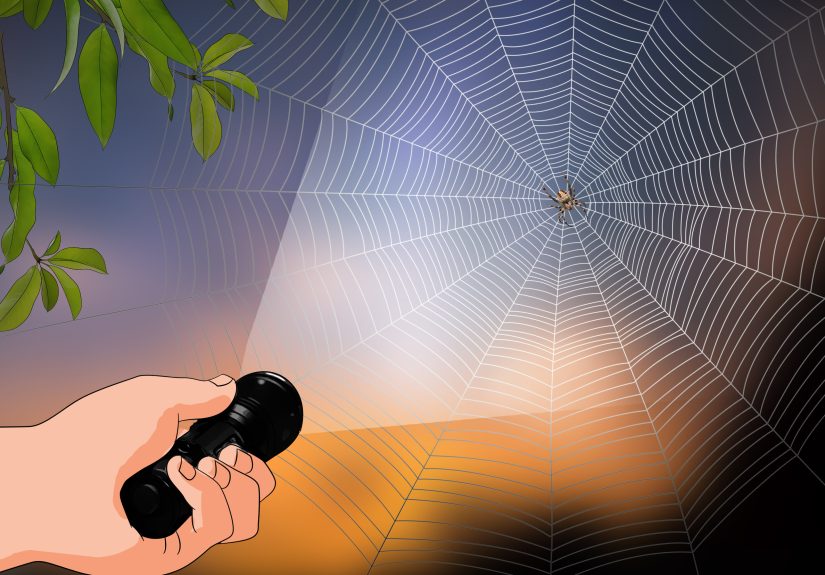
Barn spiders are often nocturnal. That means they may be hidden during the day and more visible at dusk or after dark. If you shine a flashlight toward a porch or doorway at night and see a large brown spider sitting in the middle of a fresh orb web, that is a strong behavioral clue.
Some people assume a spider out at night is automatically more dangerous. Not here. For a barn spider, nighttime is just work hours. The flying insects come to the lights, the web is open for business, and the spider clocks in.
Notice whether it stays with the web
Barn spiders are web-dependent hunters. They do not roam around the floor chasing prey like wolf spiders, and they do not hide indoors in random shoes as a lifestyle choice. They generally stay close to the web or a retreat line near it. If you see a spider repeatedly associated with the same web zone around a structure, that is another useful sign.
When disturbed, orb-weavers may drop from the web, hide, or vibrate the web rather than attack. That dramatic shaking some people witness is not a threat display worthy of an action movie. It is more like the spider yelling, “This is stressful and I would like to become visually confusing now.”
Consider what it is doing for your yard
Barn spiders eat insects. Lots of them. Moths, flies, beetles, and other flying visitors end up trapped in the web. That makes barn spiders helpful backyard predators. If the spider is stationed in a big orb web outside and clearly catching nuisance insects, it is doing exactly what barn spiders are supposed to do.
This behavior also helps distinguish them from spiders that hunt without webs or build very different kinds of webs. A barn spider is not trying to invade your home. It is running a highly specialized pest-control service with zero paperwork and questionable customer greeting skills.
Common Look-Alikes That Confuse People
Black-and-yellow garden spiders
These are orb-weavers too, but they are much flashier. They often have bold black and yellow coloring and may add a zigzag silk pattern in the center of the web. If your spider looks like it dressed for a parade, it is probably not the classic barn spider.
Grass spiders and funnel weavers
These spiders build sheet-like webs with a funnel retreat, not round orb webs. Their bodies are usually more elongated, and they often sit in or near the funnel rather than in the center of a circular web. If the web looks like a tiny silk tunnel, scratch barn spider off the list.
House spiders
House spiders usually build messy, irregular cobwebs in corners and indoor spaces. Barn spiders prefer outdoor setups and more symmetrical engineering. If the web looks like abstract art in your basement, you are likely looking at something else.
Random big brown spider panic
Sometimes people identify spiders using the ancient scientific method known as “It startled me, therefore it must be evil.” Try to resist that instinct. A large brown spider in a web outdoors is far more likely to be a harmless orb-weaver than some cinematic villain with a vendetta.
Are Barn Spiders Dangerous?
In general, barn spiders and other orb-weavers are not considered dangerous to people. Bites are uncommon, and when they do happen, they are usually linked to handling or accidentally pressing the spider against skin. A barn spider would strongly prefer that you admire its web from a respectful distance and stop trying to make introductions happen.
These spiders are beneficial, shy, and much more interested in catching insects than in dealing with humans. The biggest risk for most people is walking into the web and performing a panicked interpretive dance on the porch. Understandable, yes. Dignified, not always.
Final Thoughts: Put the Clues Together
If you want to identify a barn spider with confidence, do not focus on one trait alone. Look at the full picture. Is the web a classic circular orb? Is it attached to a barn, porch, shed, eave, or other outdoor structure? Is the spider brown or yellow-brown with a large rounded abdomen and banded legs? Does it seem most active at night and stay close to the web? If you can answer yes to most of those questions, you are probably looking at a barn spider or a very close orb-weaving cousin.
That is the real trick. Identification is not magic. It is pattern recognition with better lighting. The next time you spot one outside your door, you can skip the panic and appreciate the craftsmanship. Sure, the spider may still be creepy in the very specific way that only spiders can be. But it is also fascinating, useful, and honestly a better engineer than most of us before coffee.
Real-Life Experiences With Barn Spiders: What People Actually Notice First
The funniest thing about barn spiders is that most people do not notice the spider first. They notice the web when it is already too late. Usually this happens at dawn, while carrying groceries, taking the dog out, watering tomatoes, or walking outside with the kind of confidence only a person who has not yet face-planted into a spiderweb can have. Then comes the full-body panic shuffle, the dramatic hand waving, and the universal sentence: “What was that?” If you live around porches, sheds, barns, deck railings, or garden paths, this is practically a seasonal ritual.
Once the adrenaline calms down, people often realize the spider itself is not behaving like a villain at all. The barn spider usually drops away, freezes, or disappears into a nearby retreat. It does not charge. It does not chase. It does not leap onto a nearby rocking chair and begin planning your downfall. It just wants the disturbance to stop so it can get back to the insect-catching business it was enjoying five seconds earlier.
Another common experience is noticing how much larger the spider looks at night. Porch lights, shadows, and that giant round web create excellent horror-movie optics. A spider that would look merely “pretty big” in daylight suddenly looks like it pays property taxes after sunset. But when people come back in the morning and actually observe it, they notice the telltale orb web, the rounded abdomen, the brown coloring, and the fact that the spider is staying put rather than wandering around like an indoor pest.
Gardeners and homeowners also describe a shift that happens after the first few encounters. At first the reaction is pure alarm. After a while, it turns into reluctant respect. You begin to notice that the same corner of the porch has fewer moths. The area near the shed has a neat, symmetrical web every evening. The spider is basically a tiny night-shift contractor working pest control with excellent consistency and absolutely no interest in your opinions.
Parents often have the most entertaining experiences because barn spiders turn into backyard biology lessons almost immediately. One child thinks the spider is horrifying, another thinks it is amazing, and an adult ends up crouching beside a flower bed saying things like, “See how the web is circular? That means it is an orb-weaver.” Suddenly the porch becomes a field lab. It is one of those rare moments when nature shows up uninvited but still manages to be educational.
And then there are the people who start naming them. This is how you know fear has officially evolved into acceptance. Once the spider on the barn light has been called Charlotte, Gladys, or Sir Websalot, the relationship has changed. You are no longer dealing with a random scary creature. You are dealing with a weirdly talented outdoor neighbor who works nights and catches bugs for free.
That is what makes barn spiders memorable. They surprise people, sure, but they also reward observation. The more closely you look, the less mysterious they become. Instead of just seeing “big spider,” you start seeing patterns: the wheel-shaped web, the evening routine, the rounded body, the useful role in the yard. And that is really the best experience tied to identifying a barn spider. The fear shrinks, the curiosity grows, and suddenly you are the person calmly explaining to everyone else why the giant spider on the porch is probably one of the good guys.
Conclusion
Identifying a barn spider gets much easier when you stop judging it solely by its ability to startle you. Focus on the three practical clues: its orb-shaped web, its rounded brown or yellow-brown body, and its nocturnal, web-centered behavior around outdoor structures. Put those pieces together, and the mystery fades fast. What looked like a backyard menace is usually just a hardworking orb-weaver doing excellent pest control with theatrical timing.






 Close
Close