
Table of Contents >> Show >> Hide
- What You’ll Learn
- A Quick Reality Check: Squatter vs. Trespasser vs. Tenant
- Way #1: Treat It Like a Safety + Documentation Problem (Not a Personal Duel)
- Way #2: Get the Right Person to Pull the Legal Lever (Owner, HOA, City)
- Step 1: Identify the owner (legally and politely)
- Step 2: Share what you’ve documented (and what you haven’t)
- Step 3: Encourage the lawful process (and warn them off the “DIY eviction” trap)
- Know this: some states have special “unauthorized occupant” remedies
- Neighborhood-friendly script (email/text) to the owner/agent
- Way #3: Make Squatting Harder on Your Block (Prevention That Doesn’t Feel Paranoid)
- What NOT to Do (AKA “How People Accidentally Make It Worse”)
- FAQ: The Questions Everyone Asks (Usually at 11:47 PM)
- Conclusion: The Calm, Effective Game Plan
- Real-World Neighborhood Experiences (What It Feels Like When This Happens)
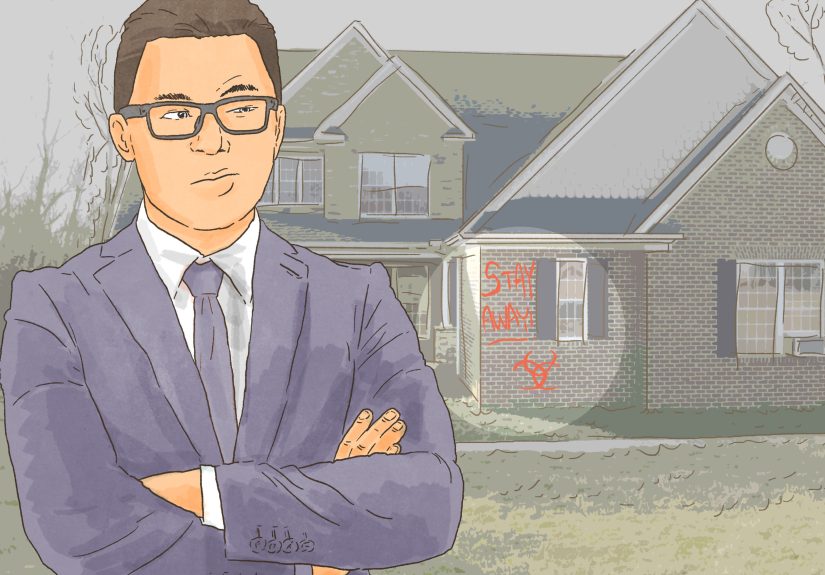
You notice lights flickering in a house that’s been “for sale” since the last presidential administration. The lawn is suddenly mowed (badly),
there’s a new “curtain” made of a bedsheet, and someone is charging a phone on the porch like it’s a solar farm.
Welcome to the neighborhood mystery: squatters (or… maybe not squatters at all).
This guide covers lawful, neighbor-friendly ways to handle suspected squatting in the United Stateswithout turning your block into a reality TV pilot.
We’ll keep it practical, safety-first, and focused on what actually works (and what can backfire spectacularly).
Disclaimer: This is general information, not legal advice. Laws and procedures vary by state and city. If you’re the owner, landlord, or HOA, talk to a local attorney or your local housing court/self-help center.
A Quick Reality Check: Squatter vs. Trespasser vs. Tenant
The word “squatter” gets tossed around the way people say “gluten” when they mean “carbs.”
In practice, the label matters because it can change what police can do and whether the situation is treated as
criminal trespass or a civil eviction.
Three common scenarios
- Trespasser: Someone breaks in and is there briefly with no claim to be allowed. This often stays in criminal territory.
-
Squatter / unauthorized occupant: Someone moves into a vacant place and claims they “have a right” to be there (even if the claim is nonsense).
They may try to establish “residency” with mail, utilities, or a shady-looking paper. -
Tenant / holdover: Someone who had permission at some point (lease, oral agreement, paid rent, stayed as a guest too long) and now won’t leave.
That’s usually an eviction process, not a “just remove them” situation.
Also: “squatters’ rights” is mostly slang for adverse possessiona legal concept that can (in rare cases) award ownership after long, strict requirements
like open and continuous possession for a set number of years (the timeframe varies widely by state). The big takeaway:
adverse possession is slow. The problem you’re dealing with in your neighborhood is usually far more immediate: safety, nuisance, and getting the right process started quickly.
Way #1: Treat It Like a Safety + Documentation Problem (Not a Personal Duel)
Your #1 job as a neighbor is to keep people safe and create a clean record of what’s happening.
That record is what helps law enforcement, code enforcement, property owners, insurers, and courts act faster.
Step 1: Safety first (no hero auditions)
- Don’t confront suspected squatters alone. Period.
- If you see a break-in in progress or immediate danger, call 911.
- Otherwise, use your local non-emergency police number and report suspicious activity calmly and specifically.
Step 2: Document what you can (without stalking)
Think “boring, court-friendly facts,” not “dramatic neighborhood lore.”
- Dates/times of unusual activity (people entering through windows, forced doors, new locks installed overnight).
- Visible property damage, busted windows, broken gates, trash piles.
- Vehicle info parked long-term (plate number, make/model) only if visible from public space.
- Noise, threats, fires, weapons, drug activityreport immediately (don’t “collect evidence” like you’re filming a documentary).
Step 3: Loop in the agencies that actually move the needle
“Squatters” often become a multi-agency issue. Depending on what’s happening, these reports can help:
- Police: trespass, break-ins, threats, suspected criminal activity.
- Fire department: unsafe electrical hookups, open flames, or obvious fire hazards.
- Code enforcement / building department: unsafe occupancy, trash accumulation, illegal dumping, dangerous structures.
- Public health / sanitation: vermin, sewage, hazardous waste conditions.
Mini example: “Vacant house suddenly has activity”
Let’s say a vacant home suddenly has nightly foot traffic, a new padlock, and a broken window boarded with cardboard.
You report the broken window and unsafe boarding to code enforcement, the suspected break-in to non-emergency police,
and you keep a simple log of dates/times when activity spikes. A week later, the owner finally noticesand now there’s a paper trail that’s hard to ignore.
Bonus: if your neighborhood has a community policing officer or neighborhood liaison, ask for guidance.
You’re not asking them to “solve it instantly.” You’re asking: “What’s the right channel and what details are most helpful?”
Way #2: Get the Right Person to Pull the Legal Lever (Owner, HOA, City)
Here’s the awkward truth: neighbors usually can’t “evict” anyone.
The fastest progress typically happens when you connect the situation to the people with legal standing:
the property owner, their authorized agent/property manager, or sometimes an HOA or city attorney handling nuisance properties.
Step 1: Identify the owner (legally and politely)
If the house looks vacant, find the owner through:
- County tax assessor / property appraiser / recorder website (public records in most places).
- HOA records (if applicable).
- “For sale” listing agent (if still posted).
Step 2: Share what you’ve documented (and what you haven’t)
When you contact the owner/agent, keep it simple:
- What you observed (dates/times, visible damage, patterns).
- Which agencies you contacted (police report numbers, code case numbers, if available).
- Photos only if taken from public areas and only of property conditions (not close-ups of people).
Step 3: Encourage the lawful process (and warn them off the “DIY eviction” trap)
In many jurisdictions, even unauthorized occupants may end up requiring a formal processoften an eviction/unlawful detainer pathbefore they can be physically removed.
Courts and legal aid resources routinely warn against “self-help” actions like changing locks, shutting off utilities, removing doors/windows, or tossing belongings.
Those shortcuts can turn the owner into the one in trouble.
Know this: some states have special “unauthorized occupant” remedies
Procedures change fast. For example:
-
Florida: A “limited alternative remedy” was created to remove unauthorized persons from residential real property
under certain conditions, involving a sworn complaint submitted to the sheriff. (Some sheriff’s offices publish their complaint forms and requirements.) -
Texas: Recent legislation has focused on speeding up squatter-related removals and tightening timelines in eviction cases,
including provisions that reference quicker action when a property owner submits a sworn complaint and requirements for quicker court timelines. - New York City: Tenant protections include the principle that removal requires the housing court process and an eviction executed by an authorized marshal/sheriff.
Neighborhood-friendly script (email/text) to the owner/agent
Hi I’m a neighbor at [Your Street]. Over the past [X days/weeks], there’s been repeated activity at [address],
which has appeared vacant. I observed [brief facts: broken window, new lock, nightly entry, trash accumulation] on [dates/times].
I reported [issue] to [agency] on [date] (case/report # if you have it).I’m reaching out in case you weren’t aware. If you have a property manager or security contact, they may want to inspect the home
and get legal guidance on the appropriate next steps. Let me know the best person to coordinate with.
The goal is to move the situation from “neighborhood frustration” to “owner + agencies + paperwork,” because that’s how things actually get resolved.
Way #3: Make Squatting Harder on Your Block (Prevention That Doesn’t Feel Paranoid)
Squatters often target properties that look abandoned: overgrown yards, no lights, mail piled up, broken fences.
Neighborhood prevention is basically: remove the signals that nobody’s watching.
Focus on visible upkeep
- Ask the owner/agent to keep the lawn trimmed, lights on timers, and windows secured.
- Report serious code issues early (broken doors/windows, standing water, hazardous debris).
- If the owner is absent, encourage them to use a licensed property manager for regular check-ins.
Community coordination that works
- Create a small neighbor group chat for objective updates (not rumor Olympics).
- Share non-emergency numbers and the correct reporting channels for code enforcement.
- If your area offers it, request extra patrols or a “vacant property watch” check.
Security upgrades (for owners) that reduce risk without escalating conflict
- Reinforce doors/locks, secure ground-floor windows, add motion lights.
- Use cameras where allowed by law (aimed at entrances, not neighbors’ private spaces).
- Remove hidden access points (loose boards, broken basement windows, unsecured garages).
If the occupants appear unhoused (and not dangerous)
Sometimes the “squatter problem” includes real hardship. You can still protect your neighborhood while staying human:
- Use outreach options if available (local homeless outreach teams, social services) rather than direct confrontation.
- Keep boundaries clear: help is not the same as allowing unsafe conditions or criminal activity to continue.
What NOT to Do (AKA “How People Accidentally Make It Worse”)
When emotions run high, people reach for shortcuts. Unfortunately, the shortcuts are often illegal, risky, or both.
Here are the classics to avoid:
- Don’t change locks or cut utilities to “flush them out.” In many places that’s an illegal lockout/self-help eviction.
- Don’t threaten or harass. That can turn into criminal charges or civil liability.
- Don’t sign anything presented by occupants (leases, “proof of residency,” payment plans) without legal advice.
- Don’t pay “cash for keys” as a neighbor. Owners sometimes do it strategicallybut it can also incentivize copycats if handled poorly.
- Don’t spread unverified claims online about specific people. Defamation is not the neighborhood vibe.
FAQ: The Questions Everyone Asks (Usually at 11:47 PM)
1) Can police remove squatters immediately?
Sometimesespecially if it’s clearly a break-in/trespass and the occupant has no plausible claim to be there.
But if the person appears to have established residency (mail, utilities, a “lease,” time in the property),
many departments treat it as a civil matter requiring the owner to follow an eviction process.
Some states/cities have special “unauthorized occupant” procedures that can involve law enforcement after specific paperwork is filed.
2) How long does it take for someone to get “squatters’ rights”?
True adverse possession claims generally require years of open, continuous possession and other strict elements.
The required time varies widely by state. In most real-life neighborhood situations, the urgent issue isn’t someone magically becoming the owner next Tuesday
it’s safety, property damage, and getting the lawful process started quickly.
3) What if the “squatters” were actually tenants or guests?
If they had permission at any pointformal lease, verbal agreement, rent payments, long-term guest statusthe situation often falls into landlord-tenant rules.
That typically means notice requirements, court filings, and a sheriff/constable/marshal executing removal after the court process (not the owner or neighbors).
4) What if it’s an HOA neighborhood?
HOAs usually can’t evict, but they can:
enforce property maintenance rules, communicate with owners, levy fines, pursue nuisance abatement, and coordinate with city departments.
In practice, HOAs can be very effective at pushing an absentee owner to act quickly.
Conclusion: The Calm, Effective Game Plan
Dealing with squatters in your neighborhood is frustrating because it feels like a problem that’s happening to everyone,
but only a few people (owners, courts, certain agencies) have the keys to resolve it. Your best move is to be the neighbor who helps the process, not the chaos.
- Way #1: Prioritize safety, report appropriately, and document facts.
- Way #2: Get the owner/agent/HOA/city engaged so legal steps can start fast.
- Way #3: Reduce “vacancy signals” and strengthen neighborhood prevention systems.
Do those three things, and you’ll go from “group chat panic” to “problem contained and moving through channels.”
Not glamorousjust effective. Which, honestly, is the highest form of neighborhood luxury.
Real-World Neighborhood Experiences (What It Feels Like When This Happens)
If you’ve never dealt with suspected squatters on your street, you might imagine it looks like a movie: dramatic music, shadowy figures, and a
tense showdown at sunset. In reality, it’s usually a slow-burn weirdness that starts with tiny “huh” moments.
The first sign is often the property “waking up”. A house that’s been dark for months suddenly has porch lights on at odd hours.
The trash bin appears (mysteriously) on pickup day. A neighbor notices the side gate is open again, even though it’s been chained forever.
It’s subtle enough that people second-guess themselvesnobody wants to be the person who calls the police because someone… checks the mail.
Then comes the pattern: a couple of cars you’ve never seen before, parking overnight. Curtains made of blankets.
A “new roommate” vibe that doesn’t match the fact the place was listed as vacant. At this stage, neighborhoods split into two emotional camps:
(1) the “Mind your business” team and (2) the “I have a spreadsheet” team. The truth is you need a little of both:
mind your safety, but do your paperwork.
The next common experience is discovering that the system is allergic to shortcuts. Neighbors call non-emergency police,
and the response can be frustratingly procedural: “Do you know who owns the property?” “Is it a civil issue?” “Do they have a lease?”
This is where documentation and ownership contact information become gold. A calm, factual report plus a property owner who can verify
“no one has permission” changes the entire tone of the conversation. It’s also when neighborhoods learn the difference between
“a person is inside” and “we can remove the person right now.”
Another frequent storyline: the absentee owner. Many blocks have at least one property that’s in probate, foreclosure, out-of-state ownership,
or “managed” by a company that answers the phone like it’s 1996 and they just discovered voicemail. Neighbors often find that once
they locate the correct owner/agentand provide clear observationsthings move faster. Not instantly. But faster than shouting into the void.
Some neighborhoods report the stress of secondary problems: trash buildup, rats, loud late-night activity, small fires, theft from nearby yards,
and the uneasy feeling that the property is becoming a magnet. Even when nothing criminal is confirmed, uncertainty can make people anxious.
In these situations, coordinated reporting to code enforcement (for sanitation and safety) plus police reports (for specific incidents) becomes a pressure valve.
It’s not about “getting someone in trouble”; it’s about reducing hazards while the legal process grinds forward.
Finally, there’s the most humanand complicatedexperience: realizing the occupants might be unhoused, not masterminds.
Neighbors often feel conflicting emotions: compassion, fear, frustration, guilt, anger, and “why is my recycling bin now a community resource?”
The healthiest outcomes usually come from a dual approach: keep firm boundaries and rely on lawful channels, while also considering outreach resources
if your city has them. You can care about people and still insist your neighborhood stays safe and habitable. Both can be true.
If you take nothing else from these lived-through patterns, take this:
the neighborhoods that resolve squatting situations fastest aren’t the loudestthey’re the ones that stay calm, document facts, involve the right authorities,
and get the owner to act. Boring? Yes. Effective? Absolutely.





 Close
Close