
Table of Contents >> Show >> Hide
- The 2025 design mood in one sentence
- Trend 1: Bold patterns are back (and they brought friends)
- Trend 2: Statement ceilings (a.k.a. the “fifth wall” finally gets attention)
- Trend 3: Color drenching (and paint drenching) for instant atmosphere
- Trend 4: Textured walls and tactile finishes
- Trend 5: Detail work returnsmolding, paneling, and “quiet craftsmanship”
- Trend 6: Curves, arches, and softer silhouettes
- Trend 7: Mixed metals, patina, and the return of silver/chrome
- Trend 8: Nature, but make it design-forward
- Trend 9: Nostalgia and vintage findsespecially lighting
- Trend 10: Wellness-first homes (cozy zones, calmer bedrooms, better sleep)
- Trend 11: Smart home upgrades that disappear (in a good way)
- Quick-start plan: Refresh your home in a weekend (no demolition required)
- Conclusion
- Experience Notes: What These Trends Feel Like in Real Homes (Extra)
If 2024 was the year we politely nodded at beige, 2025 is the year we lovinglybut firmlywalk it to the door. The big shift? Homes aren’t trying to look “perfect” anymore. They’re trying to feel like you: warm, expressive, a little layered, and (ideally) comfortable enough to nap in for “five minutes” that somehow becomes a whole lifestyle.
Design pros keep pointing to the same theme: the return of personality. Pattern is louder, ceilings are getting their long-overdue glow-up, and color is back in a big wayjust more nuanced and intentional than a random “paint it red” impulse at 10:47 p.m. on a Tuesday.
Below are the 2025 interior design trends that are showing up everywherefrom showhouses and designer forecasts to real-life living rooms that still contain laundry baskets (because realism is also trending).
The 2025 design mood in one sentence
Cozy, character-rich rooms with bold pattern, elevated ceilings, tactile surfaces, and smarter (but quieter) tech.
Trend 1: Bold patterns are back (and they brought friends)
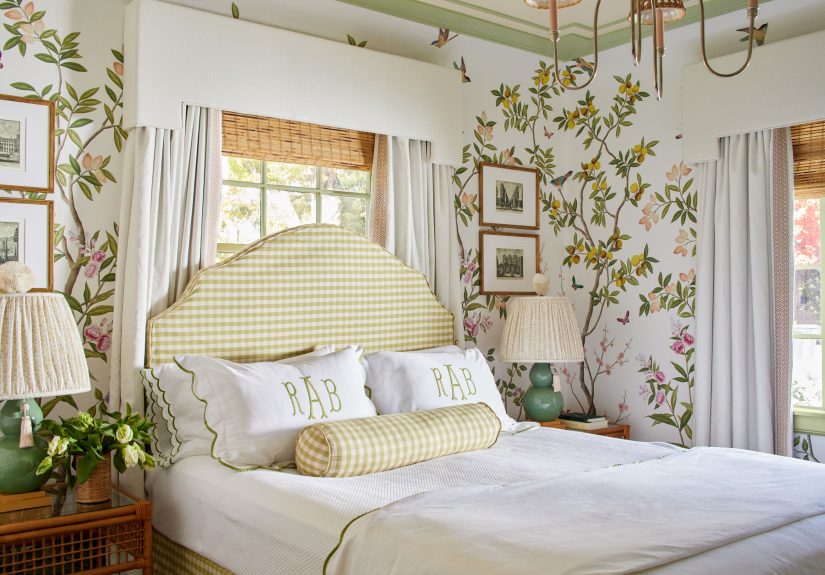
Pattern in 2025 isn’t a “tiny floral pillow” situationit’s murals, large-scale prints, stripes, organic motifs, and wallpaper that acts like art. Think: a powder room wrapped in a graphic botanical, a stair wall that becomes a hand-painted landscape, or a dining nook with a punchy geometric that makes takeout feel like a reservation.
How to try it without panic-ordering five gallons of primer
- Start small: Powder rooms, entryways, and upstairs hallways are low-commitment, high-impact.
- Pick one “hero” pattern: If the wallpaper is doing the talking, let the sofa whisper.
- Repeat one color: Pull a single hue from the pattern into trim, art, or textiles so it feels intentional.
Design reality check
Bold pattern works best when it’s paired with breathing roomsolid textiles, simple furniture silhouettes, and lighting that doesn’t compete. The goal is “wow,” not “my eyes need a snack and a nap.”
Trend 2: Statement ceilings (a.k.a. the “fifth wall” finally gets attention)
In 2025, ceilings are stepping into the spotlight with wallpaper, color, sheen, and decorative details. Designers are treating the ceiling like a canvas: bold paint, high-gloss finishes that bounce light, murals overhead, and trim work that adds architecture where builder-basic left us emotionally unfulfilled.
Ceiling ideas that read “designer,” not “accident”
- Wallpapered ceilings: Especially beautiful in bedrooms, dining rooms, and cozy dens.
- High-gloss paint: Reflects light and feels dramaticbest with strong trim or moldings.
- Decorative medallions and moldings: A classic detail that’s returning with fresh energy.
- Extend the wall treatment upward: Carry wallpaper or color a few inches onto the ceiling for a wrapped effect.
Pro tip: If you’re nervous, choose a ceiling color that’s slightly lighter or darker than the walls. It adds dimension without screaming for attention like a karaoke mic.
Trend 3: Color drenching (and paint drenching) for instant atmosphere
Color drenching is the move where you paint walls, trim, and often the ceiling the same shadecreating a cocooned, immersive room. In 2025, it’s less about novelty and more about mood: deep greens, inky blues, earthy reds, warm browns, smoky plums, and complex ochres that make a space feel intentional and lived-in.
Where it works best
- Small rooms: Powder rooms, studies, and guest rooms get major drama with minimal square footage.
- Rooms with great trim: Drenching highlights architectural lines instead of chopping them up.
- Spaces that need warmth: North-facing rooms or areas that feel “flat” suddenly have depth.
If full-on drenching feels intense, try a “near-drench”: paint walls and trim the same color, but keep the ceiling a softer tint. It’s the design equivalent of easing into cold water instead of cannonballing.
Trend 4: Textured walls and tactile finishes
2025 is obsessed with surfaces you can feel. Smooth, blank walls are getting upgraded with plaster looks, limewash, Roman clay, wood paneling, and richly textured wallpapers. The goal is depthsubtle shadow play, soft movement, and finishes that feel handmade instead of mass-produced.
Easy ways to add texture (without turning your home into a construction zone)
- One textured feature wall: A plaster-look finish behind a bed or sofa adds instant character.
- Grasscloth-style wallpaper: Warm, natural, and forgivinggreat for offices and bedrooms.
- Fluted details: Try fluted cabinet doors, a ribbed island panel, or a console with reeded fronts.
Texture is also the secret to making “neutral” rooms feel expensive. A creamy palette with layered materials reads sophisticated, not sterile.
Trend 5: Detail work returnsmolding, paneling, and “quiet craftsmanship”
Design is leaning back into architectural detail: crown molding, wainscoting, ceiling trim, carved paneling, and historic-inspired millwork. The vibe is “heritage,” but with cleaner lines and more daring color choices than the traditional rooms you remember from your aunt’s formal dining room.
Where to add detail for maximum payoff
- Entryways: A paneled wall or trim detail makes the whole home feel elevated.
- Staircases: Trim grids or molding frames turn “pass-through” areas into design moments.
- Ceilings: Medallions, beams, or coffering bring drama overhead.
These details also pair beautifully with modern furnitureespecially when you paint them in a bold, saturated shade. Old-meets-new is having a very good year.
Trend 6: Curves, arches, and softer silhouettes
Hard corners are still allowed (this is not a ban), but 2025 continues the move toward curved furniture and rounded edges. Curved sofas, barrel chairs, arched mirrors, scalloped lampshades, and soft-edged coffee tables make rooms feel more welcoming and less “showroom.”
Quick styling win
If your room is very rectangularboxy sofa, square rug, straight-lined shelvesadd one curved element. A round ottoman or arched mirror instantly balances the geometry and makes the space feel designed, not assembled.
Trend 7: Mixed metals, patina, and the return of silver/chrome
Matching every metal finish is fading. Instead, designers are mixing brass, blackened steel, bronze, and yeschrome and silver accents that feel fresh again. Patina is a feature, not a flaw: unlacquered finishes that age over time add character, especially paired with warm woods and textured walls.
A simple rule that keeps mixed metals from looking messy
Pick a “lead” metal (about 70% of visible hardware/fixtures) and a supporting one (about 30%). Then repeat each at least twice in the roomlike a chorus in a good song.
Trend 8: Nature, but make it design-forward
Biophilic design is evolving beyond “add a plant.” In 2025, it’s about natural materials, mineral-inspired colors, and organic shapes: stone, jute, cane, wood grain, rough-edged ceramics, and lighting that mimics natural forms (think: water droplets, cascading shapes, and petal-like silhouettes).
Practical ways to bring it in
- Swap in natural textures: Jute rugs, linen drapes, woven shades, cane-front cabinets.
- Use nature-inspired hues: Olive, plum, ochre, and warm earth tones feel grounded.
- Choose “imperfect” materials: Stone veining, wood knots, handmade potterylet it look real.
Trend 9: Nostalgia and vintage findsespecially lighting
Nostalgia isn’t about copying a decade; it’s about referencing it. Vintage and vintage-inspired pieces are being mixed into contemporary rooms to create depth and story. Lighting is a headline here: decorative pendants, sculptural chandeliers, and statement fixtures that look like artbecause overhead lighting deserves better than “one sad boob light.”
How to do vintage without looking like a movie set
- Use one anchor vintage piece: A lamp, mirror, or sideboard with personality.
- Pair it with modern basics: Clean-lined sofa + vintage lighting is a winning combo.
- Repeat the tone: If you bring in warm vintage wood, echo that warmth in textiles.
Trend 10: Wellness-first homes (cozy zones, calmer bedrooms, better sleep)
Wellness design keeps expanding in 2025, and it’s not just about spa bathrooms. People want bedrooms that actually encourage rest: soothing colors, layered lighting, less visual clutter, and materials that feel comforting. “Cozy” is becoming a design strategy, not just a vibe.
Bedroom upgrades that make a real difference
- Layer your lighting: Overhead + bedside + a soft accent lamp beats one bright ceiling light.
- Choose calming color stories: Warm neutrals, earthy greens, muted plums, gentle browns.
- Hide the chaos: Closed storage and cord control instantly make a room feel restful.
It’s still your room, so personality staysjust in “intentional doses.” Think: art you love, not ten random prints you bought in a panic.
Trend 11: Smart home upgrades that disappear (in a good way)
Smart tech in 2025 is less about flashy gadgets and more about whole-home benefits: comfort, health, security, and ease. The best upgrades fade into the backgroundone platform to control systems, lighting that follows daily rhythms, better air filtration, and devices that solve problems instead of creating new ones.
Tech that feels worth it in real life
- Smart lighting: Adjustable warmth and brightness throughout the day helps mood and function.
- Health-forward systems: Air purification and water filtration are becoming common “quiet luxuries.”
- Security upgrades: Video doorbells and remote monitoring add peace of mind.
- Design-friendly entertainment: TVs that display art when idle reduce the “big black rectangle” effect.
- Maintenance helpers: Smarter systems that reduce waste and prevent problems are gaining traction.
The guiding idea is simple: if it doesn’t make life easier, it’s not a flexit’s just another thing to update.
Quick-start plan: Refresh your home in a weekend (no demolition required)
- Pick one “big move”: Patterned wallpaper in a small room, or a painted ceiling in a hallway.
- Choose a color story: One main color + two supporting neutrals. Repeat them across the space.
- Add texture: Swap in one woven shade, a nubby throw, or a textured wallcovering.
- Upgrade lighting: A statement pendant or sculptural lamp changes everything.
- Edit clutter: Store what you can’t style. (Yes, even if it’s a “collection.”)
- Finish with one curve: A round mirror, arched lamp, or curved chair softens the room instantly.
Conclusion
The 2025 interior design trends all point to the same destination: homes that feel personal, warm, and alive. Bold patterns bring energy. Stunning ceilings add drama. Texture and craftsmanship make spaces feel elevated. And smart techwhen it’s subtlesupports comfort without stealing the show.
If you take one lesson into the year, make it this: trends are optional, but intention is always in style. Pick the ideas that fit your home and your life, then make them yours.
Experience Notes: What These Trends Feel Like in Real Homes (Extra)
In real-life spaces (the ones with backpacks by the door and a mysterious pile of “things that need to go upstairs”), these trends don’t show up as perfect magazine spreads. They show up as small decisions that change how a room feels at 7 a.m. and at 9 p.m. Bold pattern, for example, isn’t just “visual interest”it’s mood. A mural-style wallpaper in a breakfast nook can make a rushed weekday feel slightly more special, like the room is telling you, “Yes, you’re eating cereal, but you’re doing it with ambience.”
Statement ceilings are similar: you notice them more than you expect. A painted ceiling in a hallway turns a transitional space into a moment. Wallpaper overhead in a bedroom can make the room feel tucked-in and intentionalalmost like a boutique hotel effect, but without the “Where’s the light switch?” confusion. The key is scale: ceilings work best when the rest of the room isn’t trying to compete. If everything is shouting, nobody is listening.
Color drenching is the trend that surprises people most once it’s done. Beforehand, it can sound intenselike you’re about to live inside a paint chip. But afterward, the room often feels calmer, not louder, because the eye stops bouncing between trim, walls, and ceiling. The space reads as one complete thought. And if you choose a complex, earthy shade (a deep olive, a smoky plum, a warm brown), it can feel like the room is giving you a hug. A stylish hug. Not a weird one.
Texture is the unsung hero that makes “cozy” look expensive. In everyday use, a textured wall finish hides minor scuffs better than flat paint, woven shades soften harsh light, and natural materials add warmth even when the room is simple. A cane-front cabinet or a jute rug doesn’t just look goodit breaks up the “smooth, shiny, screen-filled” feeling modern homes can accidentally collect over time. It’s like giving your space a little more human energy.
And then there’s the practical side of trends: the ones that actually make life easier. Layered lighting matters when you’re trying to work, relax, and scroll responsibly in the same room (we all have goals). Smart lighting that warms up in the evening can make a space feel calmer without you having to think about it. Closed storage and hidden cords can make a bedroom feel more restful instantlybecause your brain does, in fact, notice chaos even when you pretend it doesn’t.
The most successful 2025 rooms tend to share one thing: they’re designed for how people actually live. They’re expressive, but not exhausting. Cozy, but not cluttered. Bold, but still functional. If you’re testing these trends at home, the best “experience filter” is simple: does the space feel better to be in? If yes, congratulationsyou’re not just following trends. You’re upgrading your everyday life.





 Close
Close