
Table of Contents >> Show >> Hide
- The Young Inventor Behind the Ocean Cleanup Idea
- How the “Ocean Cleans Itself” Concept Works
- The Great Pacific Garbage Patch: The Bigger Target
- Why Ocean Plastic Is So Difficult to Remove
- From Early Dream to Modern Cleanup Systems
- Why Japan Was a Smart Place to Test the Idea
- What Makes the Idea So Appealing?
- The Limits of “Cleaning Up” the Ocean
- Experience Section: What This Story Teaches Us About Big Environmental Ideas
- Conclusion: A Clever Idea, A Bigger Mission
Every so often, the internet hands us a headline that sounds like it escaped from a superhero origin story: a 20-year-old inventor has a plan to make the ocean clean itself, and Japan is helping launch it. No cape, no laser dolphins, no billionaire cave. Just a young Dutch inventor named Boyan Slat, a big plastic problem, and a deceptively simple question: what if we stopped chasing trash across the ocean and let the ocean bring the trash to us?
That question became the foundation of The Ocean Cleanup, a nonprofit engineering project that aims to remove floating plastic from the world’s oceans while also stopping new plastic from reaching the sea through rivers. The idea gained global attention because it flipped the usual cleanup model upside down. Instead of sending fleets of boats to hunt for bottles, nets, and floating debris, Slat proposed using ocean currents, wind, and floating barriers to concentrate plastic into collection zones. In other words, make nature do some of the heavy lifting. Finally, the ocean gets an unpaid internship.
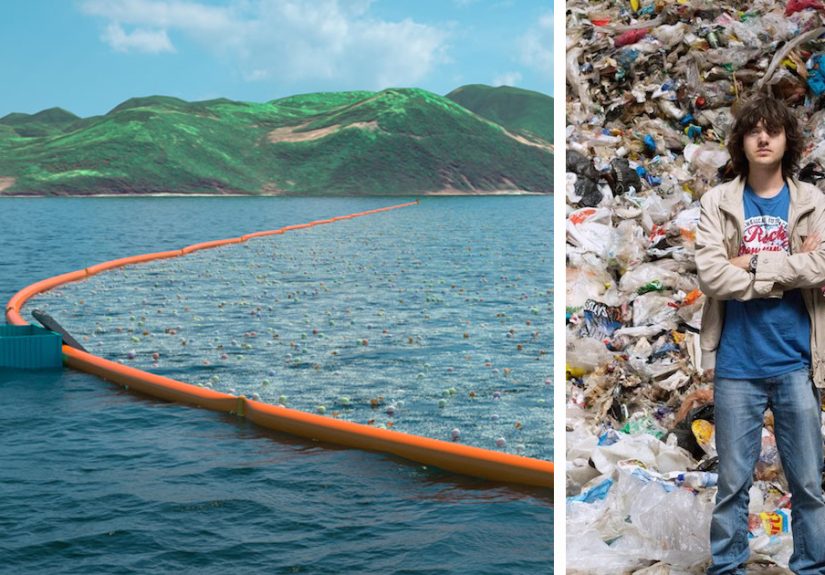
The headline about Japan refers to an early pilot planned near Tsushima Island, located between Japan and South Korea. In 2015, The Ocean Cleanup announced a coastal pilot involving a large floating boom system intended to capture plastic carried by currents near the island. It was an ambitious test, and at the time, it symbolized something bigger than one cleanup device: it showed that young inventors, engineers, scientists, local governments, and environmental advocates were starting to treat ocean plastic not as an impossible mess, but as a problem that could be designed against.
The Young Inventor Behind the Ocean Cleanup Idea
Boyan Slat was not a typical founder in a tailored suit presenting a safe little startup pitch about selling reusable bamboo socks to people with too many tote bags. He was a teenager fascinated by engineering and deeply bothered by plastic pollution. The story often begins with a diving trip in Greece, where he reportedly saw more plastic bags than fish. Many people would have come home, complained, and maybe bought a metal straw. Slat came home and started designing.
At age 17, he presented the concept publicly in a TEDx talk. By 19, he had founded The Ocean Cleanup and released a feasibility study. By 20, his project had attracted worldwide media attention, technical scrutiny, crowdfunding support, and the kind of public excitement usually reserved for space launches and extremely dramatic phone updates.
The reason the idea spread so quickly is easy to understand. Ocean plastic is a giant, ugly, slow-motion disaster. It injures wildlife, breaks into microplastics, travels across borders, and turns coastlines into unwanted recycling bins. Slat’s concept offered a rare combination: it was bold, visual, and easy to explain. Floating barriers would sit in the path of debris, guide plastic into a collection area, and allow water and marine life to pass beneath. The ocean’s own movement would help gather the mess.
How the “Ocean Cleans Itself” Concept Works
The phrase “make the ocean clean itself” is catchy, but it needs a little translation. The ocean is not suddenly going to wake up, put on rubber gloves, and mutter, “Fine, I’ll do it myself.” The concept is about passive cleanup technology: using natural forces such as currents and wind to move plastic toward floating collection systems.
Floating Barriers Instead of Giant Nets
Traditional ocean cleanup is difficult because plastic is spread across enormous areas. The Great Pacific Garbage Patch, for example, is not a cartoon island of trash where you can park a garbage truck and start loading. Government agencies and ocean scientists have repeatedly explained that these “garbage patches” are broad zones where debris is mixed by wind, waves, and currents. Much of the debris is small, dispersed, and not always visible from the surface.
Slat’s early design imagined long floating booms that could concentrate buoyant plastic without dragging nets across the seafloor. The system was intended to act almost like an artificial coastline. Floating plastic meets the barrier, follows its shape, and gathers in a collection area where it can be removed. Water continues moving. Fish and many other animals can pass below. That was the theory, and like all theories involving the open ocean, the ocean had notes.
Why Tsushima, Japan Mattered
The planned deployment near Tsushima Island was important because the area experiences heavy marine debris accumulation. Tsushima sits in waters where currents can carry trash from surrounding regions, leaving local communities to deal with waste that often did not originate there. For a pilot project, that made it a practical testing ground: real plastic, real currents, real weather, and real consequences for local coastlines.
The proposed installation was described as a large floating structure with a boom and platform system. At the time, reports noted that the boom would span about 2,000 meters, making it one of the longest floating structures of its kind. For comparison, that is not a “cute little science fair project.” That is a serious piece of marine engineering, the kind of thing that makes clipboard people very alert.
The Great Pacific Garbage Patch: The Bigger Target
The Japan pilot was never the end goal. It was part of a larger ambition: cleaning plastic from ocean accumulation zones, especially the Great Pacific Garbage Patch, the largest known concentration of floating ocean plastic. Located between Hawaii and California, the patch is created by the North Pacific Gyre, a system of currents that tends to concentrate floating debris over time.
One of the biggest myths about the Great Pacific Garbage Patch is that it looks like a floating landfill. It does not. You cannot stroll across it while holding a sad sandwich. Instead, it is a vast, shifting soup of plastic fragments, discarded fishing gear, bottles, crates, ropes, and microplastics spread across a huge area. That makes cleanup much harder than the phrase “garbage patch” suggests.
Research associated with The Ocean Cleanup has estimated that the Great Pacific Garbage Patch contains more than 1.8 trillion pieces of plastic, with a total mass around 100,000 metric tons. The organization also reports that much of the mass is made up of larger debris, including fishing gear and hard plastics. That matters because larger pieces can break down into smaller microplastics over time. Removing plastic while it is still large is like catching a problem before it becomes glitter. And as anyone who has dealt with glitter knows, once it spreads, civilization itself is at risk.
Why Ocean Plastic Is So Difficult to Remove
Cleaning the ocean sounds simple until you remember that the ocean is, inconveniently, ocean-sized. It moves constantly. It changes shape. It has storms, saltwater corrosion, marine life, shipping traffic, and waves that treat human machinery like chew toys. A cleanup system has to survive harsh conditions while capturing plastic efficiently and avoiding harm to wildlife.
Plastic Breaks Down, But It Does Not Really Go Away
Plastic in the ocean does not biodegrade like a banana peel. Sunlight, waves, and abrasion can break larger plastic into smaller pieces, but those pieces often persist as microplastics. These fragments can be consumed by marine animals and may move through food webs. The U.S. Environmental Protection Agency has warned that plastic pollution puts marine species at higher risk of ingestion, suffocation, and entanglement. In simple terms: plastic is bad seafood seasoning.
Wildlife Safety Is a Real Concern
The Ocean Cleanup has also faced criticism from scientists and environmental writers. Some experts worry that floating cleanup systems may affect marine life, especially organisms that live at the ocean surface, known as the neuston. Others argue that cleanup projects can distract from the most important solution: preventing plastic from entering the environment in the first place.
These concerns are not small details. They are central to whether a cleanup system is truly helpful. The Ocean Cleanup has responded over the years by changing designs, adding monitoring systems, using marine animal safety measures, and publishing updates on environmental impact. The broader lesson is clear: innovation is not magic. It is testing, failing, redesigning, and listening when the ocean or the scientists say, “Actually, no.”
From Early Dream to Modern Cleanup Systems
The original Japan pilot headline belongs to the early chapter of The Ocean Cleanup story. Since then, the organization has gone through several design generations. Some early systems struggled. One full-scale system launched in 2018 had technical problems and had to be repaired. Critics had a field day, and to be fair, the ocean did not exactly roll out a welcome mat.
But the project continued. Later systems improved plastic retention and durability. The organization developed System 002, also known as “Jenny,” and then moved toward the larger System 03, designed to clean more efficiently in the Great Pacific Garbage Patch. The group also expanded its strategy beyond ocean gyres by targeting rivers, because rivers are major pathways by which plastic reaches the sea.
Stopping Plastic Before It Reaches the Ocean
One of the most practical shifts in The Ocean Cleanup’s work has been the development of Interceptor systems for rivers. These systems are designed to catch plastic waste before it enters the ocean. That matters because cleaning plastic at the source is often more efficient than trying to recover it after it has scattered across thousands of miles of open water.
The organization has reported deployments in multiple countries and has launched a 30 Cities Program aimed at cutting river-based plastic emissions significantly by focusing on major urban waterways. This approach recognizes a hard truth: ocean cleanup cannot only be about the ocean. It has to include cities, waste systems, packaging choices, storm drains, rivers, and the everyday places where plastic begins its grand and terrible vacation.
Why Japan Was a Smart Place to Test the Idea
Japan’s role in the story is more than a geographic footnote. Island nations and coastal communities often experience the consequences of marine debris directly. Trash can wash ashore from distant places, affecting fisheries, tourism, wildlife, and local cleanup budgets. Tsushima, in particular, has long dealt with large volumes of marine litter arriving on its coastline.
Testing a floating cleanup structure near Tsushima made sense because the region offered a real-world challenge. Laboratory tanks are polite. The ocean is not. A pilot in Japanese waters could help engineers understand how the system handled currents, storms, biofouling, maintenance needs, debris composition, and local operations. It also showed the importance of partnerships. A device alone cannot solve marine pollution; it needs permits, local support, waste handling plans, monitoring, and long-term funding.
What Makes the Idea So Appealing?
The appeal of Slat’s invention comes from its optimism. Ocean plastic is one of those problems that can make people feel helpless. The scale is huge, the images are heartbreaking, and the solutions can sound like homework: reduce consumption, improve waste systems, change packaging, support policy, recycle better, stop littering. All important, yes. All exciting? Not always.
The Ocean Cleanup added a new emotional ingredient: visible action. People could look at a floating barrier and understand the idea immediately. It made cleanup feel possible. That does not mean it is the only solution, or even the most important solution in every location. But it gave the public a powerful symbol of engineering applied to environmental repair.
The Limits of “Cleaning Up” the Ocean
Even the best cleanup technology cannot give humanity permission to keep throwing plastic into rivers and seas. That would be like mopping the bathroom while the bathtub is still overflowing and congratulating yourself on your moisture management strategy.
Ocean cleanup must work alongside prevention. That means reducing unnecessary single-use plastics, improving waste collection, redesigning packaging, holding producers accountable, investing in recycling and reuse systems, and strengthening international rules on plastic pollution. It also means supporting local cleanup workers and communities who deal with marine debris every day.
The most realistic future is not one miracle machine. It is a network of solutions: river barriers, better municipal waste systems, smarter product design, coastal cleanups, fishing gear recovery, public education, and policy reform. Slat’s idea belongs inside that larger toolbox. It is a very interesting tool, but it is still a tool.
Experience Section: What This Story Teaches Us About Big Environmental Ideas
The story of the 20-year-old inventor and the Japan launch offers a useful experience-based lesson for anyone interested in innovation, sustainability, or simply not living on a planet wrapped in snack packaging. Big environmental ideas rarely arrive fully polished. They arrive messy, hopeful, criticized, tested, and revised. That is not a weakness. That is how serious solutions grow.
One experience many people have when first learning about ocean plastic is emotional whiplash. At first, the problem feels distant. Then you see a beach covered in bottles, a turtle tangled in fishing line, or a storm drain carrying wrappers into a river, and suddenly the issue becomes personal. The ocean stops being a postcard and becomes a mirror. It reflects what we buy, discard, ignore, and normalize.
Slat’s idea is inspiring because it shows how curiosity can become action. He did not begin with a perfect answer. He began with a question. That matters. Many useful inventions start when someone looks at a familiar problem and refuses to accept the usual shrug. Why chase plastic if currents already move it? Why not intercept trash in rivers before it reaches the sea? Why not test, measure, fail, and improve?
For students, entrepreneurs, and environmental advocates, the experience lesson is simple: bold ideas need both imagination and humility. Imagination gets people excited. Humility keeps the project honest. The Ocean Cleanup has faced setbacks and criticism, and those critiques are valuable. Environmental work must be measured not by how futuristic it looks in a video, but by whether it reduces harm in the real world.
There is also a personal habit lesson here. Most people will not build a 2,000-meter floating boom. That is fine. Your garage probably has zoning limits. But people can still reduce plastic use, support river and beach cleanups, choose reusable products, dispose of waste properly, and push companies and governments to build better systems. Individual action alone will not solve ocean plastic, but individual action can create cultural pressure. Culture changes markets. Markets influence policy. Policy changes infrastructure. Infrastructure keeps trash out of the sea.
The Japan launch story also reminds us that environmental solutions are global by nature. Plastic does not respect borders. A bottle discarded in one place can become a problem for a coastline somewhere else. That is why international cooperation matters. Tsushima’s marine debris challenge is not only Japan’s problem. The Great Pacific Garbage Patch is not only America’s problem. Ocean plastic is a shared bill for decades of convenience.
In the end, the most valuable experience connected to this topic is the shift from despair to responsibility. The ocean does not need our guilt nearly as much as it needs our competence. Cleanups, prevention, engineering, policy, and everyday behavior all have roles to play. Boyan Slat’s early idea captured attention because it made people imagine a cleaner ocean. The next step is making that imagination boringly normal: less plastic entering waterways, more trash intercepted upstream, smarter materials, better laws, and coastlines where the weirdest thing you find in the sand is just someone’s lost flip-flop.
Conclusion: A Clever Idea, A Bigger Mission
The headline “20-Year-Old Inventor’s Idea For How To Make Ocean Clean Itself Will Be Launched In Japan” captures a remarkable moment in environmental innovation. It tells the story of Boyan Slat, The Ocean Cleanup, and an early plan to test floating cleanup technology near Tsushima Island. But the bigger story is still unfolding.
What began as a teenager’s bold concept has become a global experiment in ocean engineering, river interception, data-driven cleanup, and environmental accountability. The technology has evolved. The criticism has sharpened it. The mission has expanded from cleaning ocean garbage patches to stopping plastic in rivers and coastal areas before it reaches open water.
No single invention will save the ocean by itself. But ambitious ideas can change what people believe is possible. Slat’s floating cleanup concept did exactly that. It turned ocean plastic from a depressing symbol of human carelessness into an engineering challenge that thousands of people could understand, debate, support, improve, and scale. The ocean may not be able to clean itself alone, but with smarter systems and fewer bad habits from us land mammals, it may finally get some backup.







 Close
Close