
Table of Contents >> Show >> Hide
- Why Horror Icon Interviews Are So Funny
- 18 Hauntingly Hilarious Interviews With Horror Icons
- 1. Jamie Lee Curtis: The Scream Queen Who Does Not Need to Pretend
- 2. Robert Englund: Freddy Krueger, Fedora Defender
- 3. Bruce Campbell: The Chin That Launched a Thousand Chainsaws
- 4. Tony Todd: Candyman Goes to a Haunted Attraction
- 5. Cassandra Peterson: Elvira, Mistress of the One-Liner
- 6. Kane Hodder: Jason Voorhees, Professional Nice Guy
- 7. Brad Dourif and Jennifer Tilly: Chucky’s Family Therapy Session
- 8. Tobin Bell: Jigsaw Explains Himself Again
- 9. Matthew Lillard: Stu Macher, Chaos in Human Form
- 10. Neve Campbell: Sidney Prescott Keeps Her Boundaries
- 11. John Carpenter: The Master of Horror Would Rather Make Music
- 12. Doug Bradley: Pinhead Meets Lemmy
- 13. Barbara Crampton: The Lovecraft Legend With a Second Act
- 14. David Howard Thornton: Art the Clown Says Nothing, Gets Everything Across
- 15. Lin Shaye: The Psychic Who Knows the Further Has Bad Real Estate
- 16. Bill Moseley: The Man Who Makes Maniacs Sound Musical
- 17. Jordan Peele: Comedy Walks Into a Nightmare
- 18. The Horror Documentary Roundtable: When Icons Start Comparing Notes
- What These Interviews Reveal About Horror Legends
- Experience Section: What It Feels Like to Watch Horror Icons Be Funny
- Conclusion
Horror icons are supposed to make us scream, hide behind throw pillows, and briefly reconsider walking down dark hallways. Yet when the cameras stop rolling and the interviews begin, many of these terrifying legends turn out to be funny, warm, oddly practical people who can make a room laugh while casually describing fake blood, demon dolls, chainsaws, clown makeup, and a career spent being recognized by strangers in grocery stores.
That is the strange magic of horror icon interviews. The performer who haunted your childhood might be the same person cracking jokes about makeup glue, convention photos, low-budget chaos, or the suspicious glamour of being paid to scream professionally. These conversations reveal the human beings under the masks, wigs, fangs, scars, and sinister hats. They also prove something horror fans already know: fear and comedy are cousins. One jumps out of the closet. The other slips on a banana peel inside it.
Below are 18 hauntingly hilarious interviews with horror icons, built from real career reflections, genre press conversations, convention stories, and behind-the-scenes anecdotes. Think of it as a haunted house tour where every monster stops to tell you a joke before chasing you into the gift shop.
Why Horror Icon Interviews Are So Funny
The best horror movie interviews are funny because they pull back the curtain without ruining the magic. Robert Englund can explain Freddy Krueger’s wardrobe choices and still make Freddy feel dangerous. Jamie Lee Curtis can admit she is not personally obsessed with horror while remaining the eternal scream queen. Bruce Campbell can talk about pain, practical effects, and cult fame with the cheerful expression of a man who has been hit with every prop in Michigan.
These interviews matter because they show how horror is made: with craft, timing, bruises, improv, patience, and occasionally someone in monster makeup terrifying an innocent waiter. Behind every iconic scary movie is a group of artists trying not to laugh until the director yells cut.
18 Hauntingly Hilarious Interviews With Horror Icons
1. Jamie Lee Curtis: The Scream Queen Who Does Not Need to Pretend
Jamie Lee Curtis has given some of the most honest horror interviews because she refuses to play a fake fan just to please the room. Known worldwide as Laurie Strode from Halloween, Curtis has openly discussed her complicated relationship with the genre. That honesty is what makes her funny: she is horror royalty who can look at the castle, thank everyone for the crown, and still say, politely, “This is not exactly my weekend hobby.” Her interviews are charming because she respects horror’s power while keeping a sharp, self-aware distance from the fanfare.
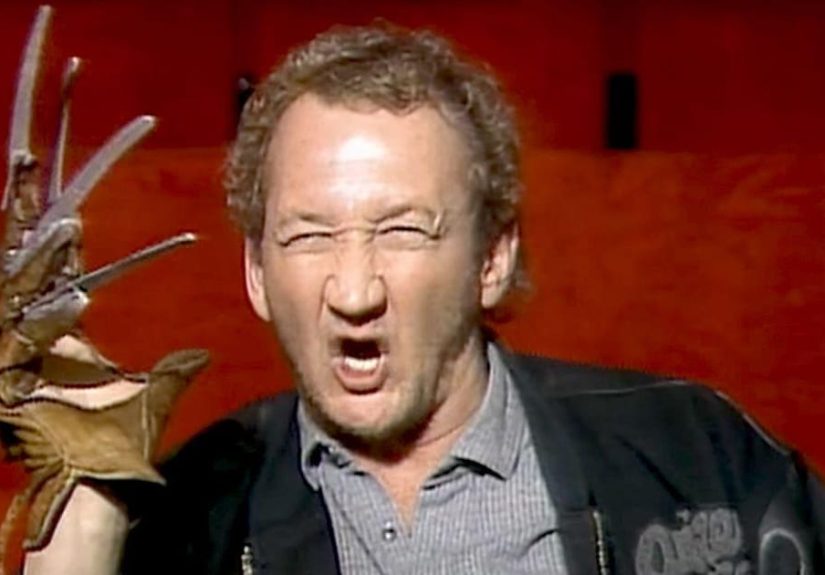
2. Robert Englund: Freddy Krueger, Fedora Defender
Robert Englund’s interviews are a gift to horror fans because he remembers everything: the makeup, the glove, the voice, the swagger, and even the wardrobe debates. One of his best stories involves defending Freddy’s fedora when others worried it might remind viewers of Indiana Jones. Imagine telling Freddy Krueger his hat is too adventurous. Englund’s humor comes from his theatrical precision. He understands that Freddy is terrifying because he is funny, cruel, stylish, and impossible to ignore. The man turned a burned dream demon into a vaudeville nightmare with knives.
3. Bruce Campbell: The Chin That Launched a Thousand Chainsaws
Few horror icons interview better than Bruce Campbell. Whether discussing The Evil Dead, Evil Dead II, Ash vs Evil Dead, or his absurd Marvel cameos, Campbell brings the confidence of a man who has been covered in gallons of blood and survived with sarcasm intact. His interviews often feel like survival manuals for low-budget filmmaking: keep moving, sell the gag, do not complain about the goo, and remember that dignity is optional when a demon hand is attacking your face. Campbell’s deadpan charm makes every behind-the-scenes disaster sound like a union-approved slapstick routine.
4. Tony Todd: Candyman Goes to a Haunted Attraction
Tony Todd’s interviews about horror theme parks are both spooky and hilarious. As the voice and presence behind Candyman, Todd carries enough gravitas to make a whisper feel like thunder. Yet he has also described visiting haunted attractions and teasing scare actors because he knows the “no touching” rule. That is comedy gold: Candyman walking through a maze, daring monsters to break workplace policy. Todd’s interviews reveal how much he appreciates craft, stillness, atmosphere, and performance. He is not easily scared, but he is deeply impressed by people who try.
5. Cassandra Peterson: Elvira, Mistress of the One-Liner
Cassandra Peterson’s Elvira interviews are master classes in horror comedy branding. Elvira is spooky, glamorous, sarcastic, and permanently ready to roast a terrible B-movie. Peterson has spoken for years about building the character through television hosting, stage shows, and Halloween events. The humor comes from the contrast: she is surrounded by fog, coffins, and gothic spectacle, yet she delivers jokes with sitcom timing. Elvira proves that horror does not always need to whisper in the dark. Sometimes it can wink, adjust its wig, and enter in a black Thunderbird.
6. Kane Hodder: Jason Voorhees, Professional Nice Guy
Kane Hodder’s interviews create one of horror’s funniest contradictions. On screen, he is among the most intimidating Jason Voorhees performers ever. Off screen, he is thoughtful, funny, and famously generous with fans. In career conversations, Hodder often discusses stunt work, physical performance, and the challenge of giving personality to a silent killer behind a hockey mask. The humor is in the absurd job description: “Today, emote through breathing, posture, and machete handling.” Hodder makes Jason feel like an acting role, not just a body count in work boots.
7. Brad Dourif and Jennifer Tilly: Chucky’s Family Therapy Session
Interviews around the Child’s Play and Chucky universe are delightfully strange because the franchise has become almost domestic. Brad Dourif’s voice made Chucky a killer doll with the energy of a furious lounge comic, while Jennifer Tilly brought Tiffany a sparkling blend of danger and camp. Documentaries and interviews about Chucky often feel like family reunions where the family member everyone discusses is a plastic murderer. The funniest part is how sincerely everyone treats the doll as a co-worker. In horror, even your smallest colleague may require multiple puppeteers and a tiny knife.
8. Tobin Bell: Jigsaw Explains Himself Again
Tobin Bell interviews are fascinating because he approaches John Kramer with the seriousness of a Shakespearean engineer who has lost all faith in customer service. The Saw franchise is full of impossible traps, moral speeches, and grimy rooms that look like abandoned plumbing nightmares. Bell, however, speaks about Jigsaw with calm intelligence. That contrast creates dry comedy: the audience is thinking about reverse bear traps, while Bell is discussing character motivation. His continued interest in John Kramer proves that even horror’s most judgmental villain apparently has more professional development modules to complete.
9. Matthew Lillard: Stu Macher, Chaos in Human Form
Matthew Lillard’s Scream interviews are pure electricity. He has the energy of someone who might answer a serious question, improvise a joke, and accidentally knock over the chair. His reflections on Stu Macher, the legacy of Scream, and returning to the franchise show how much affection he has for the role. The humor is natural because Stu was already part slasher villain, part theater kid, part human fire alarm. Lillard’s interviews remind fans that Scream worked because it understood horror rules and then laughed while breaking them.
10. Neve Campbell: Sidney Prescott Keeps Her Boundaries
Neve Campbell’s interviews may not always be laugh-out-loud silly, but they contain a grounded humor horror fans appreciate. Sidney Prescott has survived more Ghostface attacks than most people survive awkward family dinners. Campbell’s conversations about leaving and returning to Scream show a performer who understands her value and the character’s importance. The lightly funny part is how normal she sounds while discussing a life spent being chased through kitchens, theaters, campuses, and suburban houses by people in discount ghost costumes. Sidney remains horror’s most exhausted group-project leader.
11. John Carpenter: The Master of Horror Would Rather Make Music
John Carpenter interviews are funny because he has perfected the art of the short answer. Many filmmakers wrap every thought in velvet. Carpenter often sounds like a man who would rather be playing video games, making synth music, or not explaining why The Thing is brilliant for the millionth time. His dry style has become part of his legend. He changed horror with Halloween, composed unforgettable themes, and then casually moved into music as if creating nightmares was simply one department of his overall coolness.
12. Doug Bradley: Pinhead Meets Lemmy
Doug Bradley’s Pinhead is elegant, severe, and not someone you would invite to game night unless the board game were cursed. Yet Bradley’s interviews and stories often reveal a warm, witty performer behind the Cenobite makeup. One especially memorable anecdote involves his connection with Lemmy Kilmister during the “Hellraiser” music video era. The image of Pinhead and Lemmy sharing space is already absurdly perfect: pain, pleasure, rock music, and probably the least relaxing poker table in history. Bradley’s humor comes from the dignity with which he discusses the ridiculous.
13. Barbara Crampton: The Lovecraft Legend With a Second Act
Barbara Crampton interviews are essential because she speaks with insight about horror’s past and future. From Re-Animator and From Beyond to modern work like Suitable Flesh, she has watched the genre evolve from gooey cult chaos to critically respected storytelling. Her conversations about gender-flipped Lovecraftian roles, career resurgence, and better parts for women are thoughtful, but there is also a playful awareness of horror’s outrageous side. Few performers can discuss artistic agency and body-hopping madness in the same breath without making it sound perfectly reasonable.
14. David Howard Thornton: Art the Clown Says Nothing, Gets Everything Across
David Howard Thornton’s interviews around Art the Clown are funny because Art does not speak, but somehow never shuts up. Thornton uses mime, facial expression, and twisted physical comedy to turn Art into a modern horror icon. The Terrifier phenomenon is grotesque, controversial, and oddly slapstick, like a silent-film clown wandered into a splatter movie and refused to leave. Recent fan-circuit stories, including his in-character public appearances, show how completely horror audiences embrace the absurdity. Art is disgusting, but Thornton’s craft is pure comic precision wearing a nightmare face.
15. Lin Shaye: The Psychic Who Knows the Further Has Bad Real Estate
Lin Shaye’s interviews about Insidious reveal why Elise Rainier became the soul of that franchise. Shaye speaks about vulnerability, listening, and spiritual courage with real care. Still, there is a quiet humor in how Elise keeps returning to a supernatural dimension that looks like the world’s worst basement. Shaye can make a tiny line feel heroic and a ghost-hunting scene feel intimate. Her interviews are warm reminders that horror icons do not always need knives or masks. Sometimes they need glasses, empathy, and the patience to deal with demons who never respect boundaries.
16. Bill Moseley: The Man Who Makes Maniacs Sound Musical
Bill Moseley interviews often feel like conversations with a charming professor who happens to specialize in cinematic lunatics. From Chop Top in The Texas Chainsaw Massacre 2 to Otis in Rob Zombie’s Firefly films, Moseley has built a career out of characters who are funny, frightening, and several miles past socially acceptable. His interviews often highlight music, performance rhythm, and genre loyalty. The humor is that Moseley can discuss monstrous characters with the politeness of someone recommending a restaurant. He makes horror madness sound like craft, because for him, it is.
17. Jordan Peele: Comedy Walks Into a Nightmare
Jordan Peele’s interviews matter because he understands that comedy and horror use the same engine: timing. Before Get Out, many people knew him primarily as a comedian. After Get Out, audiences realized he could weaponize discomfort, silence, and awkward social behavior into full-blown terror. His conversations about horror often show deep genre knowledge, but also the comic instincts of someone who knows exactly when an audience is holding its breath. Peele’s work proves that the scariest room is sometimes the one where everyone is smiling too hard.
18. The Horror Documentary Roundtable: When Icons Start Comparing Notes
Some of the funniest horror icon interviews happen in documentaries and oral histories, when multiple legends begin comparing scars, props, makeup sessions, and fan encounters. Shows and films about scary movie history often gather directors, actors, effects artists, and scream queens in one place. The result is less like a lecture and more like a monster support group. Someone remembers a difficult shoot. Someone else remembers a ridiculous costume. A third person admits they did not know the film would become iconic. Horror history becomes a campfire story told by the people who built the campfire, then set it on fire for the shot.
What These Interviews Reveal About Horror Legends
They Know the Joke Without Killing the Scare
The best horror icons understand that humor does not weaken horror. It sharpens it. Freddy Krueger’s jokes make him more disturbing. Chucky’s insults make him more alive. Elvira’s camp makes old horror feel welcoming. Bruce Campbell’s bravado makes the Deadites even more fun to fight. Horror fans love terror, but they also love personality. A silent shadow can scare you once. A monster with timing can haunt pop culture forever.
They Respect the Craft Behind the Chaos
These interviews also show how much work goes into fear. Makeup can take hours. Costumes can be painful. Stunts can be dangerous. Voice performances can define an entire franchise. A single mask, hat, glove, doll, or line reading can change cinema history. The funniest stories often come from the least glamorous details: glue, sweat, fake blood, missed meals, squeaky props, and actors trying to stay serious while dressed like nightmares.
They Love the Fans, Even When the Fans Are Weird
Horror fandom is passionate, loyal, and occasionally unhinged in the most affectionate way. Fans ask about death scenes. They request photos with machetes. They debate whether a villain really died. They bring dolls, masks, tattoos, posters, and theories that require flowcharts. In interviews, horror icons often speak about that community with genuine gratitude. The genre survives because fans treat these characters not as disposable monsters, but as strange old friends who keep returning every October.
Experience Section: What It Feels Like to Watch Horror Icons Be Funny
Watching interviews with horror icons is a unique experience because it gently rewires your relationship with fear. The first time you see the actor behind a terrifying role laugh about it, your brain has to process two truths at once. Yes, that character frightened you. Yes, the person who played them is now telling a delightful story about makeup appliances, lunch breaks, or being recognized while buying cereal. That contrast is not disappointing. It is oddly comforting.
For many fans, these interviews become part of the ritual of loving horror. You watch the movie first, preferably at night, preferably with someone who pretends not to be scared and then jumps higher than everyone else. Afterward, you search for cast interviews, oral histories, and convention panels. Suddenly the monster has a backstory outside the story. You learn how the mask was made, how the actor found the voice, how the director solved a budget problem, or how a scene that looked deadly was actually filmed in a room full of tired crew members trying not to laugh.
That behind-the-scenes knowledge does not make the horror less powerful. In many cases, it makes the movie better. Once you know how much physical control Kane Hodder brought to Jason, you notice the breathing. Once you hear Robert Englund talk about Freddy’s silhouette, you understand why the hat matters. Once you listen to Lin Shaye discuss Elise’s vulnerability, you see that the character’s strength comes from compassion, not special effects. Interviews turn passive viewing into active appreciation.
There is also a social experience attached to these conversations. Horror fans love sharing interview clips the way other people share recipes. “Have you heard the Freddy restaurant story?” “Did you see that Elvira interview?” “Did you know Bruce Campbell said that?” These stories become fan currency. They make conventions livelier, podcasts richer, and Halloween watch parties much more entertaining. Horror is often described as a genre about isolation, but horror fandom is intensely communal. We gather around scary stories, then gather again around funny stories about how those scary stories were made.
The most enjoyable part is realizing that horror icons are often the least pretentious people in entertainment. They know their work involves rubber heads, fake intestines, haunted dolls, demon voices, clown suits, and dramatic screaming. Instead of running from the absurdity, they embrace it. That is why their interviews are so satisfying. They honor the fear while admitting that the job can be ridiculous. In a world that often takes itself too seriously, there is something refreshing about an actor saying, in essence, “Yes, I played a supernatural killer, and yes, the makeup was itchy.”
Ultimately, these hauntingly hilarious interviews remind us why horror lasts. The scares bring us in, but the personalities keep us there. We return to these icons not only because they frightened us, but because they became part of our cultural imagination. They are monsters, survivors, scream queens, killers, psychics, clowns, hosts, directors, and storytellers. Most importantly, they are artists with great stories. Some stories chill the blood. Others make us laugh loud enough to wake the dead.
Conclusion
Horror icon interviews are the perfect after-midnight snack for scary movie fans: a little spooky, a little silly, and surprisingly nourishing. They show that the people behind our favorite nightmares are often witty craftspeople who understand exactly why fear works. Jamie Lee Curtis brings honesty. Robert Englund brings theatrical mischief. Bruce Campbell brings heroic sarcasm. Tony Todd brings elegance. Cassandra Peterson brings camp. Tobin Bell brings unnerving calm. Matthew Lillard brings glorious chaos. Together, they prove that horror is not just about screams. It is about timing, personality, memory, and the weird joy of being scared on purpose.
The next time you revisit a classic horror movie, do yourself a favor: watch an interview afterward. You may discover that the masked killer had back pain, the demon doll had a better work schedule than the actors, and the scariest person on screen is actually very funny in real life. That does not ruin the nightmare. It makes the nightmare worth inviting back.





 Close
Close