
Table of Contents >> Show >> Hide
- Quick mindset: what “inviting” actually means
- A 15-minute front entrance audit (do this before you buy anything)
- 18 front entrance ideas for a welcoming, high-curb-appeal entry
- 1) Paint (or refinish) the front door in a confidence color
- 2) Upgrade the door hardware (because tiny details do big work)
- 3) Install entry lighting that feels warm, not “parking lot”
- 4) Make your house numbers visible, modern, and easy to read
- 5) Add symmetry with matching planters (instant polish)
- 6) Layer greenery at different heights for depth
- 7) Replace a sad doormat with one that actually welcomes people
- 8) Try the “layered mat” look for texture and style
- 9) Add a seasonal wreath (not just for December)
- 10) Refresh the trim for a crisp, clean frame
- 11) Define the walkway with edging, lighting, or planted borders
- 12) Update the mailbox so it matches the vibe
- 13) Add a small bench or chair (even if nobody sits there)
- 14) Create a “package landing zone” that doesn’t look like a warehouse
- 15) Use one statement accessory instead of five random ones
- 16) Upgrade the doorbell with a smart option (or at least a working one)
- 17) Add overhead character with an awning, pergola, or simple cover
- 18) Clean like you mean it: pressure wash, sweep, and de-cobweb
- Three easy “front entrance formulas” (pick one and run with it)
- A tiny maintenance routine that keeps your entrance looking “always ready”
- Experiences and real-world moments that prove these ideas work (and why)
- Conclusion: your best front entrance is the one that feels like “you”
Your front entrance is basically your home’s handshake. Is it confident and welcoming… or damp, dimly lit, and
suspiciously sticky like a movie-theater armrest? The good news: you don’t need a full renovation to make a
strong first impression. A few smart upgradessome purely aesthetic, some practicalcan make guests feel at ease
before they even ring the bell (or before their thumb hovers over the “delivered” photo of your package).
Below are 18 front entrance ideas that work across stylesmodern, farmhouse, traditional, bungalow, you-name-it.
Each one is designed to boost curb appeal, improve function, and create that “come on in” vibe without turning
your porch into a clutter museum.
A 15-minute front entrance audit (do this before you buy anything)
Walk from the street to your door like you’ve never been there beforebecause your guests haven’t. Notice what
your eyes look for (and what annoys you). Then do this quick check:
- Night test: Is the entry bright enough to find keys and see steps?
- Trip test: Any wobbly pavers, curled mat corners, or surprise step edges?
- Clutter test: Are shoes, empty planters, or packages stealing the spotlight?
- Style test: Do the finishes match (or are you mixing five metals like it’s a cooking show)?
Keep what’s working, fix what’s not, and then pick a few of the ideas below that fit your space and budget.
18 front entrance ideas for a welcoming, high-curb-appeal entry
1) Paint (or refinish) the front door in a confidence color
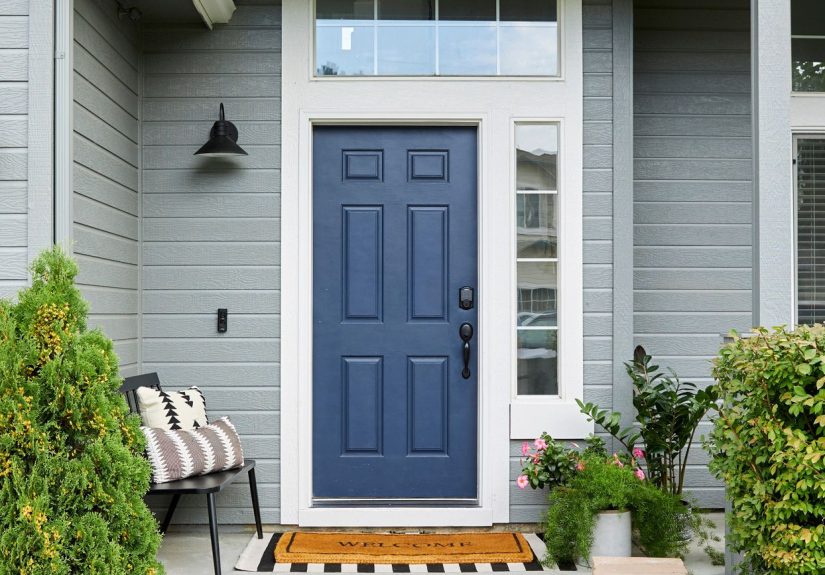
A fresh front door color is the fastest “wow” upgrade. Choose a shade that complements your exterior (not fights it).
If you’re nervous, go classic: deep navy, charcoal, forest green, warm red, or a rich stain that shows wood grain.
2) Upgrade the door hardware (because tiny details do big work)
Swap a tired knob for a modern handle set, add a handsome deadbolt, or replace a dated knocker. Matching finishes
instantly make the entrance feel intentionallike you planned it, not like you inherited it.
3) Install entry lighting that feels warm, not “parking lot”
Great porch lighting is both flattering and functional. Aim for a warm glow that feels welcoming and helps guests
see steps and keyholes. Bonus points for dusk-to-dawn bulbs or smart timers so your home looks inviting even when you’re out.
4) Make your house numbers visible, modern, and easy to read
House numbers shouldn’t be a scavenger hunt. Choose a bold font, high contrast, and a location that’s visible from
the street (especially for deliveries and emergency services). Mount them near lighting when possible.
5) Add symmetry with matching planters (instant polish)
Two planters flanking the door create a balanced, high-end looklike eyebrows for your house (in a good way).
Use evergreens for year-round structure, then swap seasonal flowers or branches as accents.
6) Layer greenery at different heights for depth
One plant is nice. A tall plant plus a medium planter plus a small accent feels designed. Try a slim tree or tall
grass, a fuller leafy plant, and a low pot with trailing greenery to soften hard edges.
7) Replace a sad doormat with one that actually welcomes people
Your doormat is literally the welcome sign. Choose something durable, sized appropriately (not a tiny stamp), and
styled to match your home. Keep the message simplehumor is fine, but maybe avoid anything that threatens guests with chores.
8) Try the “layered mat” look for texture and style
Place a larger outdoor rug under a smaller doormat to add pattern and warmth. This works especially well on a
plain concrete stoop. Just make sure both layers lie flat and are outdoor-rated so they don’t become a slip hazard.
9) Add a seasonal wreath (not just for December)
A wreath is an easy way to make an entry feel alive. Think eucalyptus, olive branches, dried florals, spring blooms,
or even a minimal evergreen hoop. Choose something that suits your home’s style and won’t disintegrate in bad weather.
10) Refresh the trim for a crisp, clean frame
Trim is the eyeliner of your exterior: subtle, but it sharpens everything. Touch up chipped paint, clean scuffs,
and consider a high-contrast trim color to make the doorway popespecially if your siding is neutral.
11) Define the walkway with edging, lighting, or planted borders
A clear path feels inviting because it guides people confidently to the door. Add simple edging, low plant borders,
or subtle path lights. If your walkway is cracked or uneven, fixing that often improves the “first impression” more than décor ever could.
12) Update the mailbox so it matches the vibe
A rusty mailbox can undo your best efforts. Paint it, replace it, or upgrade to a style that complements your home.
If your mailbox is near the door, make it part of the “entry set” by matching finishes with hardware and lighting.
13) Add a small bench or chair (even if nobody sits there)
Seating makes a front entrance feel livable and friendly. A simple bench can also be practicalsetting down bags,
holding packages, or giving you a place to wrestle shoes after a muddy walk. Keep it proportional to your space.
14) Create a “package landing zone” that doesn’t look like a warehouse
If you get frequent deliveries, plan for them. A bench with storage, a discreet box, or a sheltered corner keeps
packages tidy and less visible from the street. Function can be beautifuljust don’t let cardboard become your porch’s main décor theme.
15) Use one statement accessory instead of five random ones
A single standout elementan oversized planter, a sculptural lantern, or a bold outdoor rugoften looks more
elevated than a pile of small trinkets. If your porch feels busy, edit it down to one hero piece and a supporting cast.
16) Upgrade the doorbell with a smart option (or at least a working one)
A smart doorbell can improve security and convenience, but even a basic, working doorbell makes your entrance
feel cared for. If the button is cracked or the chime doesn’t work, this tiny fix pays off every time someone visits.
17) Add overhead character with an awning, pergola, or simple cover
If your entry feels flat, adding a small awning or architectural detail creates depth and a sense of arrival.
It can also provide practical weather protection. Even modest overhead elements can make a home feel more welcoming and “finished.”
18) Clean like you mean it: pressure wash, sweep, and de-cobweb
Nothing says “inviting first impression” like a clean front step. Wash the door, wipe light fixtures, remove cobwebs,
sweep corners, and refresh mulch if you have beds nearby. It’s not glamorousbut it’s shockingly effective.
Three easy “front entrance formulas” (pick one and run with it)
Budget (under a weekend)
- Clean + sweep + wipe the door and fixtures
- New doormat + simple wreath
- Two matching planters (even affordable ones) with fresh greenery
Mid-range (noticeable upgrade)
- Front door paint + updated hardware
- Better porch light (or add a second fixture)
- New house numbers with strong contrast
“We’re committing” (big curb appeal energy)
- Refresh trim + upgrade lighting + coordinated hardware finishes
- Defined walkway edges or repaired pavers
- Architectural detail like an awning or pergola
A tiny maintenance routine that keeps your entrance looking “always ready”
Do these once a week (it takes less time than choosing a streaming show):
- Shake out the mat and sweep the stoop.
- Wipe fingerprints off the door and handle.
- Remove dead leaves, empty boxes, and “mystery items.”
- Check lighting (bulbs, timers, and any motion sensors).
Experiences and real-world moments that prove these ideas work (and why)
Most front-entrance makeovers don’t fail because someone picked the “wrong” wreath. They fail because real life
shows up: rain, sun, packages, pets, kids, muddy shoes, and that one windy day when your doormat tries to become a kite.
So here are a few practical, experience-based patterns that come up again and again in front entry projects and
curb-appeal case studiesthings people only notice after they start using the space daily.
1) Lighting changes everything after 6 p.m. In daylight, almost any entrance looks “fine.”
After dark, the same entrance can feel unwelcoming, unsafe, or hard to navigate. Homeowners who add better porch
lighting often say it’s the upgrade they feel the mostbecause it improves daily routines (finding keys, greeting
guests, taking out trash) and makes the home look warmer from the street. The best part is that lighting is both
design and function, so it rarely feels like “wasted money.”
2) The “delivery era” demands a plan. If packages regularly appear at your door, the entrance can
look cluttered even when you’re tidy. A bench, a small covered corner, or a discreet delivery box keeps the entry
feeling intentional instead of chaotic. People also notice they worry less about weather damage and visibility from
the streetso the entrance feels calmer, not like it’s constantly bracing for the next drop-off.
3) Symmetry is the shortcut to “designer.” Two matching planters or lights don’t just add décor;
they add structure. Many homeowners are surprised at how “finished” the entry looks when both sides of the door
feel balanced. Even if you can’t do perfect symmetry (because of a window, a wall, or a quirky layout), you can
create visual balance by matching height and weightlike a tall planter on one side and a wall-mounted
feature plus a medium pot on the other.
4) Cleaning is the secret weapon nobody posts about. Fresh paint is great, but a clean threshold
is what makes paint look expensive. When people pressure wash a walkway or scrub a dingy stoop, the entire entrance
suddenly reads “maintained,” which is the core of an inviting first impression. It’s also the one upgrade that
makes every other upgrade look betterlike a filter, but for your house.
5) House numbers become urgent the moment they’re needed. Most people don’t think about house
numbers until a guest calls from the street saying, “I’m… near a house. Possibly yours.” Clear, high-contrast
numbers reduce friction for visitors, deliveries, and emergency services. It’s one of those upgrades that feels
boring right up until it becomes wildly helpful.
If you take nothing else from these experiences, take this: the most inviting front entrances aren’t the fanciest.
They’re the ones that are easy to approach, easy to use, and obviously cared for. Style is the cherry on topand
yes, you’re allowed to choose a fun cherry.
Conclusion: your best front entrance is the one that feels like “you”
An inviting front entrance doesn’t require a massive remodel. Start with the basicscleanliness, lighting, and
visibilitythen add warmth with color, greenery, and one or two intentional details. Pick a few upgrades that
match your home’s style and your real life (including weather, deliveries, and how often you want to maintain plants).
The goal isn’t perfection. It’s a front door that feels welcoming, functional, and confidently you.







 Close
Close