
Table of Contents >> Show >> Hide
If your writing leans on the phrase in conclusion every time you wrap things up, you are not alone. It is the sweatpants of conclusion transitions: reliable, comfortable, and not exactly exciting. The good news is that English gives you plenty of smarter, fresher options. Whether you are finishing an essay, closing a presentation, ending a business email, or tying a bow on a casual conversation, the right concluding phrase can make your final point sound more polished, more natural, and more memorable.
In this guide, you will find 17 different ways to say in conclusion, broken into formal and casual choices. You will also see when to use each phrase, what tone it creates, and example sentences that show it in action. By the end, you will know exactly which closing transition belongs in a research paper, which one fits a friendly blog post, and which one should stay far away from your professor unless you are feeling brave.
Why Replace “In Conclusion” at All?
There is nothing grammatically wrong with in conclusion. It is clear, familiar, and useful. The problem is that it can feel predictable. In academic or professional writing, repeating the same transition again and again makes your ending sound formulaic. In casual writing, it can sound too stiff, as if you are closing a text message like a courtroom argument.
A better alternative can do one of three things: match the tone of the piece, emphasize your final takeaway, or make your ending sound more natural. Sometimes the strongest move is not a giant signpost at all. Instead of announcing the ending with a trumpet blast, you can simply guide the reader there with a phrase that feels smoother and more specific.
Formal Ways to Say “In Conclusion”
These options work best in essays, reports, presentations, professional writing, and other situations where you want a polished tone.
1. In Summary
Best for: essays, reports, presentations, and academic writing.
Why it works: It tells the reader you are briefly restating the main ideas without sounding overly dramatic.
Example: In summary, clear communication, realistic deadlines, and strong leadership were the three main reasons the project succeeded.
2. To Summarize
Best for: structured writing and speeches.
Why it works: This phrase is direct and organized. It sounds slightly more active than in summary.
Example: To summarize, the data shows that remote work improved employee satisfaction without reducing productivity.
3. To Conclude
Best for: formal speeches, essays, and presentations.
Why it works: It is close to in conclusion, but a bit cleaner and less repetitive.
Example: To conclude, renewable energy investment is no longer optional for companies planning long-term growth.
4. In Closing
Best for: speeches, presentations, and professional remarks.
Why it works: It sounds polished and confident, especially when you are speaking to an audience.
Example: In closing, I want to thank the entire team for their resilience and creativity throughout this process.
5. Overall
Best for: academic writing, reviews, and business communication.
Why it works: It suggests a balanced judgment after considering the full picture.
Example: Overall, the policy improved access to services, though some implementation problems remain.
6. Ultimately
Best for: persuasive writing and analysis.
Why it works: It signals the final, most important takeaway. It sounds thoughtful rather than mechanical.
Example: Ultimately, success depends less on talent alone and more on consistency over time.
7. In the Final Analysis
Best for: formal essays, opinion pieces, and analytical writing.
Why it works: It sounds serious and reflective, making it useful when you are weighing evidence.
Example: In the final analysis, the benefits of early intervention far outweigh the short-term costs.
8. Taking Everything into Account
Best for: nuanced conclusions and balanced arguments.
Why it works: It signals that you have considered multiple factors before reaching a conclusion.
Example: Taking everything into account, the smaller marketing budget still delivered an impressive return on investment.
9. All Things Considered
Best for: formal but readable writing.
Why it works: It sounds thoughtful and slightly less stiff than some other academic closers.
Example: All things considered, the revised proposal offers the most practical solution.
10. On the Whole
Best for: reviews, evaluations, and reflective writing.
Why it works: It communicates an overall judgment while leaving room for minor exceptions.
Example: On the whole, the seminar was informative, engaging, and worth the time investment.
Casual Ways to Say “In Conclusion”
These options are better for blog posts, friendly emails, conversational writing, social captions, and relaxed presentations. Some can work in light business settings, but use your judgment. If your audience expects a suit and tie, do not show up in linguistic flip-flops.
11. To Wrap Things Up
Best for: blog posts, casual presentations, and friendly emails.
Why it works: It feels natural and warm, like you are guiding the reader to the finish line rather than pointing at a giant EXIT sign.
Example: To wrap things up, meal planning saves time, reduces stress, and helps you waste less food.
12. Bottom Line
Best for: business talk, blog writing, and practical advice.
Why it works: It cuts straight to the main takeaway. It is crisp, memorable, and confident.
Example: Bottom line: if you want better sleep, your evening routine matters more than your alarm clock.
13. At the End of the Day
Best for: conversation, opinion writing, and informal speaking.
Why it works: It sounds natural and reflective, though it can feel overused if you lean on it too often.
Example: At the end of the day, people stay loyal to brands that make life easier, not just louder.
14. Long Story Short
Best for: storytelling, casual writing, and conversation.
Why it works: It is playful and efficient. It tells your audience you are about to deliver the distilled version.
Example: Long story short, we switched tools, trained the team, and finished the job two weeks early.
15. In the End
Best for: blogs, reflective writing, and general conversation.
Why it works: It is simple, natural, and flexible. It works well when your tone is thoughtful but not overly formal.
Example: In the end, the simpler design turned out to be the stronger one.
16. The Takeaway Is
Best for: educational content, presentations, and practical advice.
Why it works: It sounds modern and reader-focused. Instead of announcing a conclusion, it highlights the lesson.
Example: The takeaway is that small habits matter more than occasional bursts of motivation.
17. That’s the Gist
Best for: very casual writing and conversation.
Why it works: It sounds relaxed, human, and a little witty. It is not for academic papers unless you enjoy living dangerously.
Example: That’s the gist: keep the message short, clear, and impossible to misunderstand.
How to Choose the Right Alternative
Match the Tone
If you are writing a research paper, go with phrases like in summary, to conclude, or in the final analysis. If you are writing a blog post or newsletter, to wrap things up, bottom line, or the takeaway is will usually sound more natural.
Match the Purpose
Not every ending does the same job. Some conclusions summarize. Others evaluate. Others drive home one final lesson. If you are recapping key points, use to summarize or in summary. If you are offering a judgment, use overall, all things considered, or on the whole. If you want impact, ultimately or bottom line can hit harder.
Match the Audience
Your English teacher, your manager, your blog readers, and your best friend do not all want the same ending. A phrase that sounds polished in a boardroom may sound robotic in a lifestyle article. Meanwhile, long story short can charm readers in a casual post but look out of place in a formal report.
Common Mistakes to Avoid
Using a Casual Phrase in Formal Writing
Bottom line and that’s the gist can be great, but not every essay or professional document wants that much personality. Know your setting before you hit send.
Repeating the Same Transition Everywhere
If every paragraph, email, and speech ends with in conclusion, your writing starts to sound copy-pasted. Variety helps your voice feel more natural.
Announcing the End Without Adding Value
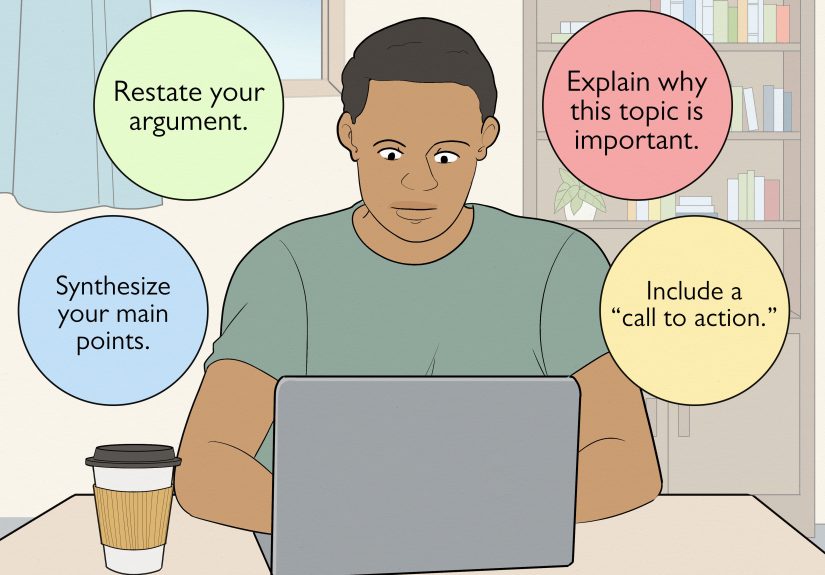
A conclusion should do more than wave goodbye. The final sentence or paragraph should reinforce the point, show why it matters, or leave the reader with a strong last impression.
Forgetting That No Signpost Can Be Better
Sometimes the cleanest ending uses no transition phrase at all. Instead of saying in conclusion, you can restate the main idea in a fresh way and end with confidence. That often feels more sophisticated than waving a linguistic flag that says, “Attention everyone, I am concluding now.”
Examples by Situation
For an Academic Essay
In summary, early childhood education provides social, cognitive, and economic benefits that extend far beyond the classroom.
For a Business Presentation
In closing, our recommendation is to launch the pilot program in two regions before scaling nationally.
For a Blog Post
To wrap things up, decluttering works best when you focus on one drawer, one shelf, or one small win at a time.
For Friendly Advice
Bottom line: drink water, go to bed earlier, and stop pretending coffee counts as a personality trait.
Real-World Writing Experiences Related to This Topic
One of the most interesting things about conclusion phrases is how quickly they shape the reader’s impression of the writer. In school settings, students often start with in conclusion because it feels safe. It is the phrase many people learn first, so they use it like training wheels. That is not a bad thing. In fact, it is often helpful early on because it teaches structure. But as writing improves, readers begin noticing tone more than formula. A student who changes in conclusion to in summary or ultimately often sounds more confident right away, even when the rest of the paragraph stays almost the same.
In workplace writing, the difference can be even bigger. Imagine a manager ending a project update with in conclusion. It works, but it can feel stiff. Replace it with overall or bottom line, and suddenly the message feels more practical and modern. That small shift matters because business readers usually want clarity, speed, and decision-ready language. They are not reading for dramatic flair. They are reading to understand the point before their next meeting eats their soul.
Content creators and bloggers have a different experience. Their biggest challenge is sounding organized without sounding robotic. A blog post that ends with in conclusion can feel like it took a sharp turn into textbook territory. That is why phrases like to wrap things up, the takeaway is, or in the end tend to feel more natural online. They preserve structure, but they also sound like a real person is still talking. For web writing especially, that human tone can improve readability and keep the final section from feeling like an obligation.
Casual speech offers another lesson. Most people do not say in conclusion in everyday conversation unless they are joking, debating, or being delightfully dramatic. In real life, people are much more likely to say so basically, long story short, at the end of the day, or that’s the gist. These phrases feel conversational because they match the rhythm of speech. They help listeners understand that a point is being wrapped up without making the speaker sound as if they just approached the podium at a formal conference.
Another common experience is realizing that the best ending sometimes uses no set phrase at all. Many strong writers revise their conclusions by removing the transition entirely and letting the final sentence carry the weight. Instead of announcing the finish, they deliver a strong final idea. This often happens in op-eds, feature articles, and polished essays, where subtlety can sound more mature than a standard transition. In other words, part of becoming a better writer is not just learning more ways to say in conclusion; it is learning when you do not need to say it at all.
So the real experience behind this topic is growth. Most writers begin with obvious signals, move toward more flexible phrasing, and eventually learn how to end with intention. That progression is normal. It is also useful. Once you understand how different closing phrases feel, you stop choosing them by habit and start choosing them by purpose. And that is when your conclusions begin sounding less like templates and more like your actual voice.
Final Thoughts
The best alternative to in conclusion depends on your audience, your tone, and the job your ending needs to do. Formal writing often benefits from phrases like in summary, to conclude, or in the final analysis. Casual writing sounds more natural with choices like to wrap things up, bottom line, or long story short. The key is not just to sound different. It is to sound right.
Choose a closing phrase that fits the moment, and your ending will feel smoother, smarter, and much more memorable. That way, your reader finishes your piece thinking, “Well said,” instead of, “Ah yes, the mandatory in conclusion has arrived.”






 Close
Close