
Table of Contents >> Show >> Hide
- What Makes a Fighter Plane “That Wasn’t”?
- 1. Northrop YF-23 Black Widow II
- 2. Boeing X-32
- 3. Lockheed YF-12
- 4. North American XF-108 Rapier
- 5. Republic XF-103
- 6. McDonnell XF-85 Goblin
- 7. Northrop XP-79 Flying Ram
- 8. McDonnell XP-67 Moonbat
- 9. Fisher P-75 Eagle
- 10. Bell XP-83
- 11. Convair XF-92A
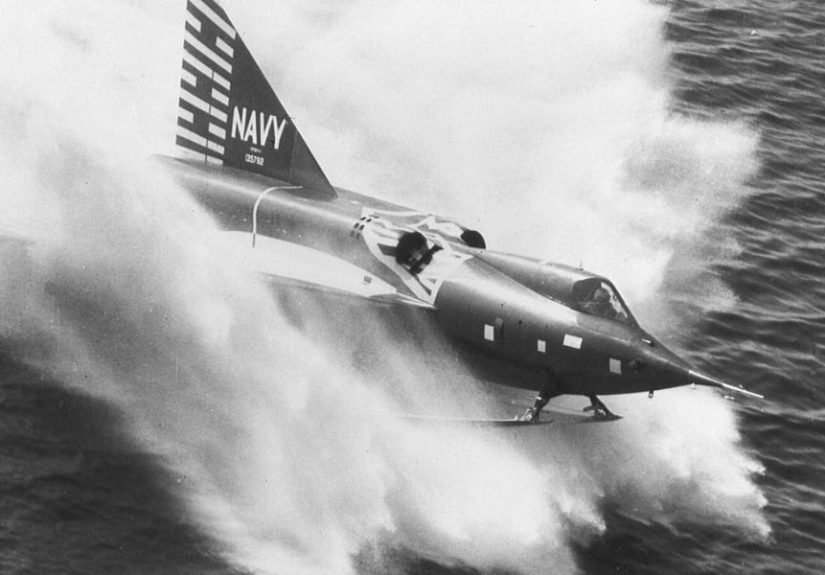
- 12. Grumman XF10F Jaguar
- Why These American Fighter Planes Failed
- What These Canceled Fighter Aircraft Gave Aviation
- Experience and Reflections: What These “Almost Fighters” Teach Us
- Conclusion
American aviation history is full of famous fighters: the P-51 Mustang, F-86 Sabre, F-14 Tomcat, F-15 Eagle, F-16 Fighting Falcon, and F-22 Raptor all got their moment in the spotlight. But hiding behind those legends is a stranger, funnier, and sometimes more fascinating cast of aircraft that almost made it. These were the American fighter planes that weren’t: prototypes, experimental aircraft, canceled interceptors, competition losers, and engineering moonshots that looked brilliant on paper until reality walked into the hangar carrying a clipboard.
Some failed because technology was not ready. Some lost competitions. Some arrived just as military priorities changed. A few were so odd that even test pilots probably looked at them and thought, “Well, today’s going to be spicy.” Yet these canceled American fighter planes were not useless. Many helped shape later aircraft, proving ideas about stealth, delta wings, swing wings, jet escort fighters, high-speed interceptors, and carrier aviation. In other words, they did not become frontline fighters, but they still left fingerprints all over U.S. aviation history.
What Makes a Fighter Plane “That Wasn’t”?
For this article, “fighter planes that weren’t” means American fighter or interceptor designs that never became operational frontline aircraft in the way their designers hoped. Some flew as prototypes. Some existed as mockups. Others were canceled after testing, beaten in competitions, or overtaken by better aircraft. The result is a parade of bold ideas, brilliant engineering, and occasional aerodynamic comedy.
1. Northrop YF-23 Black Widow II
The Northrop YF-23 may be the most beloved “almost fighter” in American aviation history. Built for the U.S. Air Force Advanced Tactical Fighter competition, it faced the Lockheed YF-22 in a contest that would decide the future of American air superiority. The YF-23 looked like something that escaped from a classified dream: sleek, stealthy, diamond-winged, and almost suspiciously futuristic.
Two prototypes flew, and the design emphasized stealth and speed. It had a distinctive profile and avoided thrust vectoring, partly to reduce complexity and radar signature. In 1991, the Air Force selected the YF-22, which became the F-22 Raptor. The YF-23 did not lose because it was bad; it lost because military aircraft competitions are not beauty contests, even when one aircraft looks like it was designed by a sci-fi art department with excellent taste.
2. Boeing X-32
The Boeing X-32 was Boeing’s entry in the Joint Strike Fighter competition against Lockheed Martin’s X-35. The contest aimed to create a family of aircraft for the Air Force, Navy, Marine Corps, and allied users. That was a tall order: one aircraft family had to satisfy multiple missions, different runways, aircraft carriers, and short takeoff/vertical landing needs. No pressure, just the future of tactical aviation.
The X-32 flew in 2000 and completed a test program demonstrating key capabilities. But in 2001, the Pentagon chose the Lockheed Martin X-35, which evolved into the F-35 Lightning II. The X-32 became famous partly for its unusual appearance, especially its large chin intake. Aviation fans have been roasting it ever since, which is unfair but also difficult to resist. Still, the X-32 was a serious prototype, not a meme with landing gear.
3. Lockheed YF-12
The Lockheed YF-12 was essentially a high-speed interceptor cousin of the A-12/SR-71 family. If most fighter prototypes were athletes, the YF-12 was a track star wearing sunglasses indoors. It was designed for extreme altitude and speed, intended to intercept threats long before they reached American airspace.
The aircraft achieved remarkable records in the 1960s and later served in NASA research. However, it never became an operational military fighter. Cost, changing priorities, and the shifting strategic environment worked against it. The YF-12 proved that Mach 3 interceptor technology was possible, but “possible” and “practical enough to buy in quantity” are two very different conversations, especially when the bill arrives wearing a suit.
4. North American XF-108 Rapier
The XF-108 Rapier was planned as a large, long-range, high-speed interceptor. North American Aviation imagined it as a Mach 3 guardian of the skies, designed to meet enemy bombers far from U.S. targets. It shared some development logic with the XB-70 Valkyrie program, another ambitious North American project from the age when engineers looked at heat, speed, and budget limits and said, “But what if we simply ignored fear?”
The problem was timing. By the late 1950s, ballistic missiles were becoming a greater strategic concern than bomber fleets. The Rapier never flew; the program was canceled in 1959 after reaching the mockup stage. It remains one of the great “paper eagles” of American fighter design: impressive, expensive, and doomed by a changing world.
5. Republic XF-103
The Republic XF-103 was another Cold War dream of speed. It was envisioned as a powerful interceptor capable of extremely fast performance at high altitude. The design included advanced materials and a complex propulsion concept for its time. On paper, it sounded like a rocket scientist and a fighter pilot had shaken hands over too much coffee.
But the XF-103 never became a production aircraft, and it never flew as a completed fighter. The technology was extremely challenging, costs grew, and the Air Force’s needs continued to evolve. Like many ambitious interceptors of the era, it was aimed at a future that kept changing before the aircraft could arrive.
6. McDonnell XF-85 Goblin
The McDonnell XF-85 Goblin may be the strangest little fighter on this list, and that is not an insult. It was a parasite fighter designed to ride inside a bomber and launch when needed to defend it. The idea came from a real problem: long-range bombers could fly farther than conventional escort fighters. The Goblin was supposed to solve that by becoming a tiny airborne bodyguard.
Only two prototypes were built. Testing showed that the aircraft could fly, but recovering it back to the carrier aircraft was extremely difficult. The Goblin was compact, clever, and brave in concept, but the practical challenges were enormous. It was canceled in 1949. Today, it is remembered as one of aviation’s most charming “what were they thinking?” machines.
7. Northrop XP-79 Flying Ram
The Northrop XP-79 was a radical flying-wing fighter project from World War II. Its pilot was intended to fly in a prone position, lying forward rather than sitting upright. The design also used unconventional construction ideas, including magnesium structure. If that sounds unusual, congratulations: your common sense is working properly.
The XP-79B jet-powered prototype flew in 1945 but crashed during testing, and the program was canceled. The aircraft’s nickname, “Flying Ram,” reflected an early concept involving reinforced structure, though the project evolved over time. What matters most is that the XP-79 showed Northrop’s willingness to test unusual flying-wing fighter ideas long before stealth aircraft made flying wings fashionable again.
8. McDonnell XP-67 Moonbat
The McDonnell XP-67 Moonbat looked like it belonged in a pulp magazine cover: smooth, blended, twin-engine, and dramatically weird. It was designed as a long-range interceptor during World War II, with an aerodynamic shape intended to reduce drag. The concept was advanced, and the aircraft’s appearance still makes aviation fans stop scrolling.
Unfortunately, beauty did not equal success. The XP-67 suffered from performance shortfalls and technical problems, especially with its engines. The only completed prototype was destroyed after an engine fire, and the program was canceled. The Moonbat remains a reminder that advanced styling cannot rescue an aircraft if the mechanical pieces refuse to cooperate. Even in aviation, vibes are not thrust.
9. Fisher P-75 Eagle
The Fisher P-75 Eagle was General Motors’ attempt to answer an urgent World War II need for a high-climbing interceptor. The idea was to speed development by using major components and proven ideas from other aircraft, combined with a powerful engine. In theory, it was a clever shortcut. In practice, it was more like building a championship racehorse from spare parts and optimism.
The P-75 did fly, and a small number were built. But by the time it matured, the military need had changed, and existing fighters were already performing well. The aircraft offered no decisive advantage, and the program was canceled. The P-75 is one of the best examples of a fighter that missed its moment.
10. Bell XP-83
The Bell XP-83 was an early jet escort fighter developed near the end of World War II. At the time, the U.S. military was still learning what jet fighters should be. Designers wanted range, speed, and reliability, but early jet engines often delivered disappointment with a side order of maintenance drama.
The XP-83 first flew in 1945, but it was underpowered compared with the rapidly advancing jet designs that followed. Technology moved quickly after the war, and aircraft that seemed promising one year could feel outdated the next. The XP-83 never entered production, but it belongs in the story of how American designers learned to build practical jet fighters.
11. Convair XF-92A
The Convair XF-92A was not a successful operational fighter, but it was historically important. It became the first jet aircraft to fly with a delta-wing configuration in the United States. That triangular wing shape would later influence aircraft such as the F-102 Delta Dagger and F-106 Delta Dart.
Originally connected to interceptor thinking, the XF-92A became more valuable as a research aircraft than as a combat design. It helped engineers understand delta-wing behavior at high speed and during landing. The XF-92A is a perfect example of a fighter that “wasn’t” in one sense but absolutely mattered in another. It did not become the star, but it taught the star how to walk.
12. Grumman XF10F Jaguar
The Grumman XF10F Jaguar was a Navy prototype with variable-sweep wings, meaning the wings could change angle for different phases of flight. That idea would later become famous on aircraft such as the F-14 Tomcat. In the early 1950s, however, the technology was still difficult to tame.
The Jaguar suffered from handling and mechanical problems, and only one prototype flew. It never entered service. Still, its research helped move swing-wing concepts forward. In aviation history, that is a respectable legacy: the Jaguar did not become the Navy’s big cat, but it helped sharpen the claws for later designs.
Why These American Fighter Planes Failed
Looking across these 12 American fighter planes that weren’t, a few patterns appear. First, technology often lagged behind ambition. The XF-103, XP-79, XF10F, and XP-67 all reached for ideas that were difficult to execute with the materials, engines, and control systems available at the time.
Second, military requirements changed quickly. The XF-108 Rapier was aimed at a bomber-interceptor problem that became less central as missile strategy evolved. The P-75 Eagle was built for an urgent wartime need, but by the time it was ready, better options already existed.
Third, competitions create winners and losers. The YF-23 and X-32 were not embarrassing failures. They were serious aircraft that lost to designs judged more suitable for broader development. In a competition, second place can still represent brilliant engineering. Unfortunately, nobody builds 2,000 copies of “almost.”
What These Canceled Fighter Aircraft Gave Aviation
These experimental American fighter aircraft helped engineers learn what worked, what did not, and what might work later. The XF-92A advanced delta-wing knowledge. The XF10F explored variable-sweep wings. The YF-23 pushed stealth design thinking. The X-32 contributed lessons from the Joint Strike Fighter era. The YF-12 expanded high-speed research and influenced understanding of extreme flight conditions.
Even the oddballs mattered. The XF-85 Goblin showed the limits of parasite fighter concepts. The XP-79 showed how radical pilot position and flying-wing concepts could create more problems than they solved. The XP-67 demonstrated that smooth aerodynamics still needed dependable engines. Failure, in aviation, is rarely wasted. It is just research wearing a slightly dented helmet.
Experience and Reflections: What These “Almost Fighters” Teach Us
Spending time with these American fighter planes that weren’t feels a little like walking through a museum after closing time. The famous aircraft get the big banners and heroic lighting, but the prototypes in the corner often tell the better stories. They show the messy, human side of engineering: the guesses, risks, compromises, and moments when a brilliant idea meets an inconvenient test result.
One experience that stands out when studying canceled fighter aircraft is how often “failure” depends on the angle from which you view it. The YF-23 failed to win the Advanced Tactical Fighter competition, yet it remains one of the most admired stealth prototypes ever built. The XF-92A did not become a combat aircraft, yet its delta-wing research helped shape later interceptors. The XF10F Jaguar never served on carriers, but the lessons from variable-sweep wing testing echoed into later naval aviation. These aircraft did not reach the destination printed on the original brochure, but they still traveled somewhere important.
There is also a surprisingly practical lesson here for anyone who builds, writes, designs, codes, studies, or creates anything ambitious: timing matters. The P-75 Eagle was not canceled simply because it was a ridiculous idea. It was canceled because the problem it was built to solve had changed. The XF-108 Rapier faced a similar fate on a grander Cold War scale. A project can be impressive and still arrive at the wrong party after the snacks are gone.
Another takeaway is that prototypes are allowed to look strange. In fact, they often should. The XF-85 Goblin, with its tiny parasite-fighter body, looks almost cartoonish today, but it came from a serious strategic problem. The XP-79’s prone pilot position seems bizarre, yet it reflected real thinking about pilot endurance and aircraft control. Not every unusual idea deserves production, but unusual ideas are how engineers find the edges of possibility. Sometimes the edge is a breakthrough. Sometimes it is a very expensive lesson with wings.
For aviation fans, these aircraft are especially satisfying because they sit between imagination and reality. They were not just drawings in a notebook. Many flew. Test pilots climbed into them. Engineers measured them, modified them, argued over them, and tried again. That makes them more compelling than pure fantasy. They were close enough to touch history, but not close enough to rewrite it.
The best way to appreciate these canceled American fighter planes is not to laugh at them as failures, even when one looks like an angry metal tadpole. Instead, see them as experiments in public memory. Every successful fighter carries invisible parts of aircraft that failed before it: a wing idea, a control lesson, a cautionary tale, a manufacturing shortcut that did not work, or a design philosophy that needed another decade to mature. The fighter planes that weren’t helped create the fighter planes that were.
Conclusion
The story of the 12 American fighter planes that weren’t is not just a list of canceled aircraft. It is a tour through ambition, uncertainty, and the high cost of innovation. The YF-23, X-32, YF-12, XF-108, XF-103, XF-85, XP-79, XP-67, P-75, XP-83, XF-92A, and XF10F all represent moments when American aviation tried something bold and did not get the expected result.
Some were too early. Some were too complicated. Some lost to better-rounded competitors. Some were overtaken by changing military needs. But each one helped answer a question that designers needed answered. In aviation, the runway to success is often paved with prototypes that never made it past the “almost” stage. And honestly, history would be much less interesting without them.
Note: This article is based on real historical information synthesized from reputable U.S. aviation, museum, aerospace, and military-history resources. It is written as general educational content for web publication.





 Close
Close