
Table of Contents >> Show >> Hide
- Why 100% Linen Feels Different (In a Good Way)
- Why Peach Works in the Bedroom
- Shopping Checklist: What to Look for in a 100% Linen Duvet Cover
- 1) Confirm it’s truly 100% linen (not “linen-feel”)
- 2) Washed/garment-washed linen for softness
- 3) Fabric weight (GSM) for drape and durability
- 4) Closures and interior ties (tiny details, huge quality-of-life upgrade)
- 5) Size accuracy (because “almost queen” is not a real size)
- 6) Safety and materials transparency
- Linen vs. Cotton Duvet Covers: The Honest Comparison
- Care and Keeping It Looking Great (Without Turning Laundry Day Into a Saga)
- How to Style a Peach Linen Duvet Cover So It Looks Designer, Not Dessert
- Who a Peach 100% Linen Duvet Cover Is Perfect For
- FAQ: Quick Answers Before You Click “Add to Cart”
- Real-World Experiences: Living With a Peach Linen Duvet Cover (About )
- Conclusion
If your bed could talk, it would probably ask for two things: (1) better snacks (rude), and (2) a duvet cover that
doesn’t feel like it’s trapping it in a polyester sleeping bag. Enter the 100% linen duvet cover in peach
a combination that’s equal parts practical and “yes, I have my life together” energy.
Linen has a reputation for being breathable, durable, and effortlessly relaxed (like it just came back from a coastal
vacation). Peach brings warmth and a soft glow that makes your whole bedroom look friendlierwithout screaming
“I tried too hard.” In this guide, we’ll break down what makes linen special, what to look for when shopping,
how to care for it, and how to style peach linen bedding so it looks elevated instead of like a thrift-store fruit basket.
Why 100% Linen Feels Different (In a Good Way)
Linen comes from flaxand that matters
Linen is made from the fibers of the flax plant. Those fibers are naturally strong and structured, which is why linen
tends to hold up for years and gets softer over time instead of giving up after a few wash cycles. When you see
“100% linen” on a duvet cover label, you’re getting the full linen experiencebreathability, texture, and
that signature relaxed look.
Breathability and moisture management
Linen is famous for sleeping “cool,” largely because the weave and fiber structure allow airflow and help manage moisture.
Translation: it’s a solid pick if you run warm, live in a humid climate, or wake up feeling like you just fought a blanket
in a wrestling match.
That doesn’t mean linen is only for summer. Many people find it works year-round because it balances comfort across temperature swings
especially when you layer it with the right duvet insert weight.
Durable now, softer later
Linen can feel a bit crisp at first, depending on how it’s finished. But with regular washing, it tends to soften noticeably.
The payoff is a duvet cover that feels better the longer you own itlike a favorite T-shirt that magically became “bedwear.”
Why Peach Works in the Bedroom
Peach sits in that sweet spot between pink and orangewarm, bright, and surprisingly calming when it’s muted.
In a bedroom, peach can read as cozy and welcoming rather than “bubblegum.” It also plays nicely with both modern and classic styles:
minimal, farmhouse, coastal, mid-century, and even that “I swear this is minimalism” maximalist look.
Easy color pairings that look intentional
- Peach + crisp white: clean, airy, hotel-ish (in the best way).
- Peach + navy: high contrast, polished, and great for a more grown-up vibe.
- Peach + sage/olive: earthy and calmlike your room drinks herbal tea.
- Peach + warm neutrals: sand, oatmeal, tan, and wood tones for a soft, layered look.
- Peach + terracotta/rust: warm-on-warm, perfect for boho or Mediterranean-inspired rooms.
Shopping Checklist: What to Look for in a 100% Linen Duvet Cover
1) Confirm it’s truly 100% linen (not “linen-feel”)
Some products use “linen” as a vibe instead of a fiber content. For a true 100% linen duvet cover,
look for fiber content that reads “100% linen” (or “100% flax linen”). If it’s a blend (like linen-cotton), it can still be nice
just different in texture and performance.
2) Washed/garment-washed linen for softness
If you want linen that feels more comfortable right out of the package, look for descriptors like
“garment-washed,” “pre-washed,” or “stonewashed.” These finishes are commonly used
to create that lived-in softness earlier, rather than waiting for time and laundry to do the work.
3) Fabric weight (GSM) for drape and durability
Linen duvet covers often mention fabric weight in GSM (grams per square meter). Higher GSM typically means a denser, weightier fabric
with more structure and potential durabilitywhile lower GSM can feel lighter and airier. There’s no single “best” weight.
If you love a breezy, floaty bed, lighter may be your thing. If you want a more substantial drape, go higher.
4) Closures and interior ties (tiny details, huge quality-of-life upgrade)
The best duvet covers stay put and don’t turn your duvet insert into a migrating blob. Look for:
- Interior corner ties: help anchor the insert so it doesn’t bunch.
- Closure type: buttons feel classic; zippers can be faster and more secure. Either can work well if well-made.
- Thoughtful openings: wider openings make duvet insertion less of an upper-body workout.
5) Size accuracy (because “almost queen” is not a real size)
Duvet cover sizing can vary by brand, and inserts can be slightly oversized or undersized. Check the product dimensions and compare
them to your insert. If your insert is on the fluffier side or “oversized,” a cover that’s slightly generous can make your bed look
fuller and help reduce corner stress.
6) Safety and materials transparency
If you’re sensitive to chemicals or simply want more peace of mind, look for textiles tested for harmful substances
(common examples include widely recognized third-party textile safety labels). Also check whether dyes are described as low-impact
or whether the brand is clear about where and how the linen is made.
Linen vs. Cotton Duvet Covers: The Honest Comparison
Choosing between linen and cotton isn’t about “best,” it’s about what you want your bed to do for you.
Here’s a practical way to think about it:
Choose linen if you want:
- Breathability and a naturally textured feel
- A relaxed, slightly rumpled aesthetic (wrinkles includedmore on that soon)
- Fabric that becomes softer over time
- Strong, long-lasting fibers
Choose cotton if you want:
- Immediate softness (especially with certain weaves/finishes)
- A smoother, more “crisp” look (depending on the weave)
- More options at lower price points
- A classic bedding feel that’s familiar from day one
If you’re specifically drawn to a peach linen duvet cover, you’re probably also drawn to the “effortless” look.
Linen delivers that naturallycotton can too, but it often needs a specific weave or styling to get there.
Care and Keeping It Looking Great (Without Turning Laundry Day Into a Saga)
Wash settings that protect the fibers
Linen generally does best with a gentle approach: cool to lukewarm water, mild detergent, and a cycle that reduces harsh agitation.
High heat and aggressive spinning can increase wrinkles and may contribute to shrinkage over time.
Skip the fabric softener (linen doesn’t need it)
Linen tends to soften naturally with washing, and many care guides recommend avoiding fabric softeners. If you want extra softness,
dryer balls (like wool dryer balls) can help reduce stiffness and improve airflow in the dryer.
Drying tips: less heat, fewer regrets
- Best: line dry or air dry when possible.
- Also fine: tumble dry low, then remove promptly.
- Wrinkle hack: take it out slightly damp and smooth it on the bed to finish drying.
Wrinkles: make peace with themor manage them
Linen wrinkles. That’s not a bug; it’s the personality. If you love the “relaxed luxury” look, wrinkles are part of the charm.
If you prefer a neater finish, you can minimize them by using a gentle cycle, avoiding over-drying, and smoothing the fabric while damp.
You can iron linen if you want a crisper look, but most people choose linen specifically to stop chasing perfection.
Stains happen. Linen survives.
A duvet cover is basically a bodyguard for your insert. If you spill coffee, drip skincare, or your snack life gets a little too bold,
treat stains early. Spot treat with mild detergent, wash promptly, and avoid bleach unless the care label specifically allows it.
(Peach bedding deserves kindness.)
How to Style a Peach Linen Duvet Cover So It Looks Designer, Not Dessert
Start with simple layers
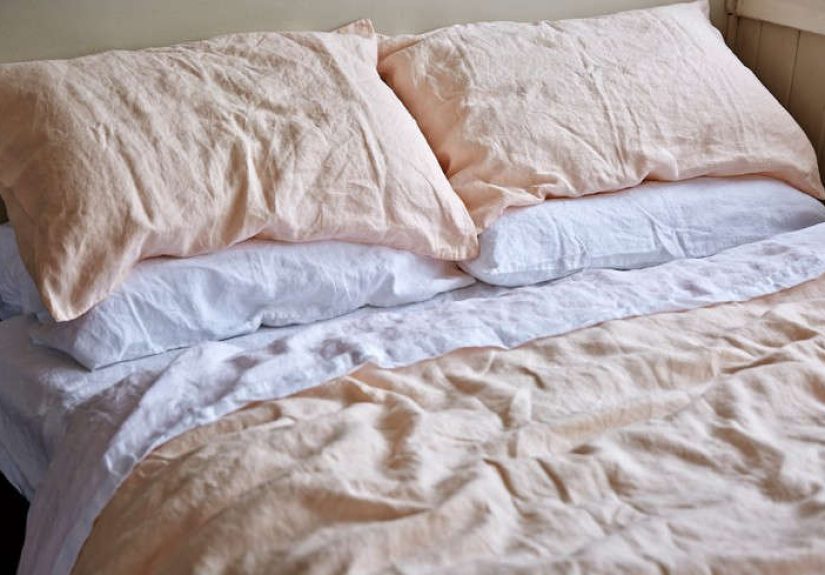
Let peach be the “hero” and keep the supporting cast calm: white sheets, cream quilts, or a neutral blanket folded at the foot.
Then add 1–2 accent colors (like navy or sage) through pillows, a throw, or art.
Texture makes peach feel sophisticated
Peach can feel playful, so texture is how you make it feel elevated. Linen already adds texture, but you can layer in:
knit throws, matte ceramic lamps, natural wood, woven baskets, or a subtle rug. The goal is cozy, not candy-coated.
Seasonal tweaks (without buying a whole new bedroom)
- Spring/Summer: white + peach + light wood + a breezy throw.
- Fall: add rust, tan, or olive accentssuddenly it’s warm and grounded.
- Winter: layer with a heavier insert and add deeper tones (navy, chocolate, forest green).
Who a Peach 100% Linen Duvet Cover Is Perfect For
This is your match if:
- You like breathable bedding and a relaxed look
- You’re okay with natural wrinkles (or you actively love them)
- You want bedding that gets softer over time
- You want a warm color that still feels calm and grown-up
You might pause if:
- You want a perfectly crisp, smooth bed with minimal texture
- You dislike any wrinkling, ever, under any circumstances
- You prefer instant “buttery soft” from day one and don’t want a break-in period
FAQ: Quick Answers Before You Click “Add to Cart”
Does linen feel scratchy?
It can feel crisp at first, especially if it’s not pre-washed. Most people find it softens with washing and use.
If you want softness immediately, choose garment-washed linen.
Will a peach linen duvet cover fade?
All dyed textiles can fade gradually over time, especially with hot water and high heat drying. Cooler wash temps, mild detergent,
and gentler drying help preserve color.
Do I need a top sheet with a duvet cover?
It’s personal preference. A top sheet can reduce how often you wash the duvet cover, but many people skip it for a simpler bed setup.
How often should I wash a duvet cover?
Many bedding experts recommend washing frequently enough to remove oils and sweatoften weekly or every other week depending on your habits,
pets, allergies, and climate. If you use a top sheet, you may stretch that schedule.
Real-World Experiences: Living With a Peach Linen Duvet Cover (About )
A peach linen duvet cover has a funny way of changing how you feel about your bedroom. Not in a dramatic “my life is now a montage” way,
but in small, oddly satisfying moments. Like noticing your bed looks styled even when you didn’t do anything specialbecause linen’s natural
texture does some of the decorating for you. The first week can be an adjustment if you’re used to super-smooth fabrics. Linen has that
gently structured feel, like it’s reminding you it’s made from a plant and not a chemistry experiment. But then the wash-and-wear magic
starts happening.
The biggest difference many people notice is how the bed “breathes.” If you’ve ever woken up warm and slightly annoyed at your bedding,
linen can feel like a quiet upgrade. It doesn’t cling the same way some fabrics do, and it tends to feel airy when you move around at night.
In humid weather, it can be especially appreciatedbecause your bedding stops feeling like it’s competing with the air for who can feel
heavier. Pair it with a lighter duvet insert and you get that hotel-sheet vibe without needing to blast the AC like you’re refrigerating
the entire neighborhood.
Peach, specifically, is a surprisingly practical color. It’s warm, but not intense. It brightens the bed without making the room feel louder.
In morning light, peach can look soft and glowy; at night, it can lean cozy and candlelit. It’s also forgivingless stark than white, less
moody than dark colors, and it hides minor lint better than you’d expect (not all heroes wear capes; some wear duvet covers). If your room has
lots of neutrals, peach adds personality without fighting your furniture. If your room already has color, peach can act like a bridge shade
it plays well with blues, greens, and warm woods.
There’s also the “wrinkle reality.” Linen wrinkles, and at first you might think, “Did my bed just look better when I tried less?”
That’s the point. The rumpled look reads intentionallike you’re living in a magazine spread where nobody owns an iron. If you’re the type
who needs things crisp, you can smooth it while slightly damp or pull it from the dryer early and flatten it on the bed. But most people
settle into the linen mindset: your bed looks inviting, not pressed for a job interview.
Over a few weeks, peach linen becomes a comfort object in the best sense: familiar, soft, and easy. The cover starts to drape more fluidly,
the fabric feels less “new,” and the color becomes part of the room’s personality. It’s one of those upgrades that doesn’t shout,
but you notice it every single dayespecially when you crawl into bed and think, “Oh. This is nice.” And that’s a pretty excellent
return on investment for something you use roughly one-third of your life.
Conclusion
A 100% linen duvet cover in peach is one of those rare bedding choices that looks good, feels good, and keeps getting better.
Linen brings breathability, durability, and an easygoing texture that doesn’t demand perfection. Peach brings warmth and softness that can
make a bedroom feel brighter without being loud. Choose the right weight and finishing (garment-washed if you want instant comfort),
look for smart construction like corner ties, and care for it gentlycool wash, low heat, and prompt removaland you’ll have bedding that
feels like an upgrade every time you walk into the room.







 Close
Close