
Table of Contents >> Show >> Hide
History is full of brilliant inventors, brave reformers, and people who somehow made powdered wigs look like a smart idea. It is also full of villains. Not cartoon villains with twirly mustaches and conveniently timed thunderclaps, but real rulers, conquerors, and tyrants whose decisions left entire countries scarred. These are the names that still echo through classrooms, museums, memorials, and late-night “how did this happen?” conversations.
This list of terrifying historic villains is not about who had the best dramatic entrance. It is about power used with cruelty, fear turned into policy, and ambition so unchecked it became a nightmare for millions. Some of these figures built empires. Some built police states. Some mastered propaganda, while others relied on raw terror. All of them show the same uncomfortable truth: evil in history usually does not arrive wearing a sign that says “bad guy.” It often shows up as order, pride, destiny, revenge, or national greatness.
Below are 10 historic villains whose reputations still chill the room. Some are infamous for genocide, some for political terror, and some for ruling through brutality so extreme that their names became shorthand for cruelty itself.
1. Adolf Hitler
The dictator who turned ideology into catastrophe
Adolf Hitler remains the most infamous villain of the modern age, and for good reason. As the dictator of Nazi Germany, he built a regime around racism, antisemitism, propaganda, militarism, and total control. He did not merely exploit public anger in Germany after World War I; he weaponized it. By presenting himself as the answer to national humiliation and economic crisis, he gained power and then dismantled democracy from the inside.
Under Hitler’s rule, Nazi Germany launched World War II and carried out the Holocaust, the systematic murder of six million Jews along with the persecution and killing of millions of other people targeted by the regime. Hitler’s terrifying legacy lies not only in the scale of destruction but in the cold efficiency with which his government organized it. His story is a warning about how hatred, pseudoscience, and authoritarian politics can become deadly when enough people mistake cruelty for strength.
2. Joseph Stalin
The architect of fear behind the Iron Curtain
Joseph Stalin ruled the Soviet Union with a style of leadership that made paranoia look like state policy, because that is exactly what it became. Stalin helped transform the USSR into an industrial and military power, but the human cost was staggering. His regime relied on purges, forced labor camps, political repression, censorship, and terror on a national scale.
Millions died during Stalin’s rule through famine, imprisonment, executions, and brutal state campaigns against perceived enemies. What makes Stalin especially terrifying is that he did not just punish opposition. He turned suspicion into a governing system. Neighbors feared neighbors. Officials feared mistakes. Citizens feared saying the wrong thing at the wrong time to the wrong person, which, as it turns out, is a terrible way to build trust in government. Stalin’s legacy survives as one of the clearest examples of how a dictatorship can devour its own people while claiming to protect them.
3. Pol Pot
The radical revolutionary who tried to erase society
Pol Pot, leader of the Khmer Rouge in Cambodia, pursued one of the most extreme social experiments in modern history. His regime sought to create a radically agrarian communist state by emptying cities, destroying institutions, banning religion, crushing intellectual life, and forcing people into labor camps. In effect, he tried to reset society to year zero, which sounds alarming because it absolutely was.
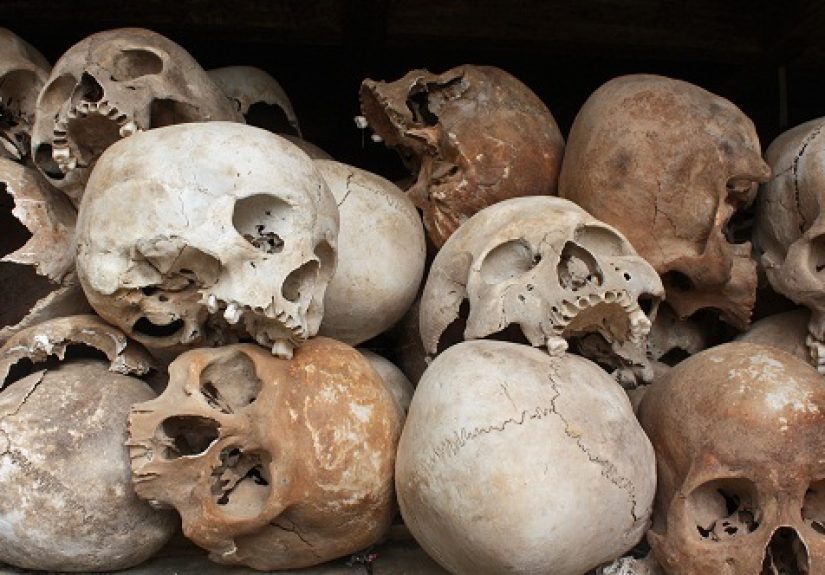
The result was mass suffering on a horrific scale. Between starvation, disease, forced labor, and executions, roughly 1.5 to 2 million Cambodians died during Khmer Rouge rule. Pol Pot’s terror was not only physical but ideological. Ordinary signs of education or individuality could place a person in danger. Glasses, foreign languages, and professional backgrounds became suspicious. His rule stands as a grim lesson in what happens when purity politics meets absolute power and human beings are treated like obstacles to a political fantasy.
4. King Leopold II
The monarch who treated a colony like private property
King Leopold II of Belgium did not always appear in older popular histories with the same infamy as twentieth-century dictators, but he belongs on any serious list of historic villains. In the late nineteenth century, he gained personal control of the Congo Free State and oversaw a system of forced labor and violent exploitation tied to the rubber trade. This was not colonial mismanagement in the gentle euphemistic sense. It was organized plunder backed by terror.
Under Leopold’s rule, Congolese communities were brutalized, families were torn apart, and millions are believed to have died from violence, starvation, disease, and the destruction of social life. What makes Leopold especially chilling is the distance between image and reality. He cultivated the appearance of a civilized European monarch while presiding over one of the most notorious colonial atrocities in history. He is a reminder that villainy does not always arrive screaming. Sometimes it wears a crown, funds a public relations campaign, and calls theft “progress.”
5. Idi Amin
The Ugandan ruler whose regime became synonymous with terror
Idi Amin seized power in Uganda in 1971 and quickly developed a reputation for extreme brutality, erratic behavior, and violent repression. His regime was marked by mass killings, political persecution, and economic destruction. He expelled tens of thousands of Asians from Uganda in 1972, a move that devastated commerce and deepened national instability.
Estimates vary, but hundreds of thousands of civilians were killed during Amin’s rule. He cultivated a larger-than-life persona, mixing theatrical self-promotion with ruthless violence. That combination made him both bizarre and frightening, a leader who seemed to enjoy spectacle while ordinary people paid the price. Amin’s place among terrifying historic villains comes from the way his government fused fear, ego, and lawlessness into daily life. When power stops pretending to be accountable, cruelty becomes routine very quickly.
6. Vlad the Impaler
The prince whose name became a legend of cruelty
Vlad III of Wallachia, better known as Vlad the Impaler, has one of history’s most unforgettable nicknames, and unfortunately he earned it. Ruling in the fifteenth century amid constant threats from rival nobles, neighboring powers, and the Ottoman Empire, Vlad became known for using extreme violence to intimidate enemies and maintain control. His preferred method of punishment helped turn him into a figure of legend and later inspired part of the Dracula myth.
Now, history around Vlad is tangled with propaganda, political enemies, and folklore, so separating fact from embellishment takes care. Still, the core image remains clear: he ruled through fear and made cruelty part of his public identity. Vlad is terrifying not because he was a supernatural monster, but because he was a very human ruler who learned that fear could be more useful than loyalty. History has seen that strategy before, and it almost never ends well for everyone else.
7. Ivan the Terrible
Russia’s first tsar and master of state terror
Ivan IV, known as Ivan the Terrible, was the first ruler of Russia to take the title of tsar. His reign began with reforms that strengthened the state, but it later descended into suspicion, violence, and repression. The turning point came as Ivan grew increasingly distrustful and unstable, launching policies that targeted perceived traitors and enemies with ruthless force.
His oprichnina, a state policy backed by a separate territory and loyal enforcers, became a symbol of terror. Entire communities could be punished, property seized, and rivals destroyed. Ivan’s historical image combines political brutality with personal volatility, making him a classic example of how a ruler’s fear can become a nation’s problem. He is remembered not just as a harsh monarch, but as a warning about what happens when absolute authority merges with deep paranoia.
8. Nero
The Roman emperor remembered for excess and bloodshed
Nero has been a byword for tyranny for nearly two thousand years. As Roman emperor, he became notorious for political murders, extravagance, persecution, and a style of rule that seemed to treat the empire like a stage set built for his ego. Ancient sources are not always neutral, so historians debate some details, including the famous story that he “fiddled while Rome burned.” What is much less disputed is that Nero’s reign was marked by violence, self-indulgence, and deadly power struggles.
He has long been linked to the murder of family members and the persecution of Christians after the Great Fire of Rome. Even when later stories exaggerated his image, they did so because he already represented the kind of ruler people feared most: vain, impulsive, theatrical, and armed with imperial authority. Nero is proof that a government can become terrifying even when its leader seems more interested in applause than responsibility.
9. Attila the Hun
The invader Europe remembered as the Scourge of God
Attila ruled the Huns in the fifth century and became one of the most feared enemies of the late Roman world. He extracted tribute, led devastating campaigns, and attacked both Eastern and Western Roman territories. His name carried such terror that later generations transformed him into a near-apocalyptic figure, a storm on horseback with a kingdom attached.
Like many ancient conquerors, Attila is partly known through the eyes of enemies, so some of his monstrous image was shaped by hostile sources. Even so, the fear he inspired was real. Cities prepared for destruction. Empires paid to delay him. His legend shows how historical villains are often remembered not just for what they did, but for the panic that followed their approach. If your reputation makes entire civilizations sweat, you have probably secured a memorable place in history.
10. Genghis Khan
The conqueror whose empire was built by war and fear
Genghis Khan is one of history’s most complicated figures. He was a brilliant military strategist and the founder of the Mongol Empire, which became the largest contiguous land empire in history. He also led campaigns that destroyed cities, crushed resistance, and spread terror across vast regions. To some, he is a nation-builder and military genius. To others, he is one of history’s most terrifying conquerors. Both views exist because history, inconveniently, enjoys nuance.
For an article on terrifying historic villains, Genghis belongs here because fear was part of the Mongol method. Stories of overwhelming speed, harsh retaliation, and total destruction often traveled faster than the army itself. That psychological impact mattered. It made surrender more likely and resistance more dangerous. Even when historians recognize his administrative achievements and long-term influence, his rise cannot be separated from the violence that carried it forward.
Why These Historic Villains Still Matter
The real lesson is not that monsters existed, but that systems enabled them
It is easy to imagine these villains as freak exceptions to normal history, but that would be too comforting. Most of them gained power because institutions failed, elites cooperated, fear was useful, propaganda worked, or conquest was rewarded. They did not rule in empty space. They ruled among bureaucrats, soldiers, merchants, supporters, and bystanders. That is what makes them so unsettling.
These terrifying historic villains also matter because they reveal different forms of evil. Hitler and Pol Pot show the danger of ideological extremism. Stalin and Ivan the Terrible reveal how paranoia can become policy. Leopold II and Idi Amin expose the cruelty of exploitation and arbitrary power. Nero, Vlad, Attila, and Genghis demonstrate how spectacle, fear, and violence can shape a leader’s legacy for centuries.
Studying them is not about admiring darkness or treating history like a true-crime playlist in a toga. It is about recognizing patterns: dehumanization, unchecked authority, mythmaking, scapegoating, and the seductive promise that one ruthless person can solve everything. History’s answer to that fantasy is usually expensive, tragic, and written in ruins.
Experiences That Bring the Topic to Life
What it feels like to confront terrifying historic villains in the real world
Reading about terrifying historic villains in a list is one thing. Encountering their legacies through museums, memorials, survivor testimony, and preserved historical sites is something else entirely. The emotional experience is often quieter than people expect. There is no dramatic soundtrack. No villain walks into the room wearing a cape and announcing a five-point plan for ruining civilization. Instead, you find ordinary objects: a prison photograph, a government decree, a train schedule, a ration card, a school notebook, a family portrait taken before everything went wrong. That quietness is what makes it hit harder.
In Holocaust museums and memorials, for example, the name Hitler stops being just a headline-sized symbol of evil and becomes a chain of human consequences. The experience is not simply “learning facts.” It is seeing how bureaucracy, propaganda, and prejudice were turned into a machine that affected real families, neighborhoods, schools, and futures. The horror becomes specific. A shoe is not just a shoe. A suitcase is not just a suitcase. Suddenly, history is not abstract anymore, and that shift can stay with a person for years.
The same is true when learning about Pol Pot through Cambodian survivor accounts or photographs from sites tied to the Khmer Rouge. The terror becomes deeply personal. You begin to understand that one of the most frightening things about historic villains is how thoroughly they can invade daily life. Food, clothing, work, language, education, religion, family relationships, even the simple act of asking a question can become dangerous. That realization changes the way you read history. It stops feeling like a timeline and starts feeling like a warning.
Even ancient villains create powerful experiences when encountered through ruins, chronicles, and cultural memory. Reading about Nero while standing in Rome, or learning about Vlad the Impaler in the context of Eastern European history, reminds you that villainy is not only measured by body counts. It is also measured by atmosphere: fear in public life, instability, intimidation, and the constant sense that power has slipped free from morality. Historical sites often preserve that atmosphere in subtle ways. A fortress wall, a burned layer of earth, or a memorial plaque can say more than a hundred dramatic speeches.
There is also a strange emotional contradiction in studying these figures. On one hand, people feel curiosity. On the other, they feel disgust, sadness, or disbelief. That mix is normal. Human beings want to understand how someone becomes so destructive, especially when that person was not born with a flashing neon sign that said “future tyrant.” In that sense, the experience of learning about terrifying historic villains is not just about the villains themselves. It is about confronting the fragility of institutions, the vulnerability of ordinary people, and the dangerous speed with which fear can be normalized.
That is why these historical experiences matter. They move the topic beyond trivia and into moral memory. They remind readers that the real nightmare is not that history produced monsters. It is that many of those monsters rose in societies that thought they were too civilized, too intelligent, or too stable to let it happen. History, as always, had other ideas.
Conclusion
The most terrifying historic villains are not memorable merely because they were cruel. They are memorable because their cruelty reshaped the world. Some used ideology, others conquest, others state terror, and others raw spectacle. But all of them reveal the same dangerous pattern: when power faces too few limits, human beings become expendable very quickly.
Studying these figures does more than revisit dark chapters of world history. It sharpens our ability to recognize dehumanization, propaganda, and abusive leadership before they harden into systems. That is the real value in looking back at terrifying historic villains. History cannot promise that the same mistakes will never return, but it can at least stop us from claiming we were not warned.






 Close
Close