
Table of Contents >> Show >> Hide
- What Is an Icebox Latch, Exactly?
- Why Icebox Latches Are Everywhere Again
- The 10 Easy Pieces
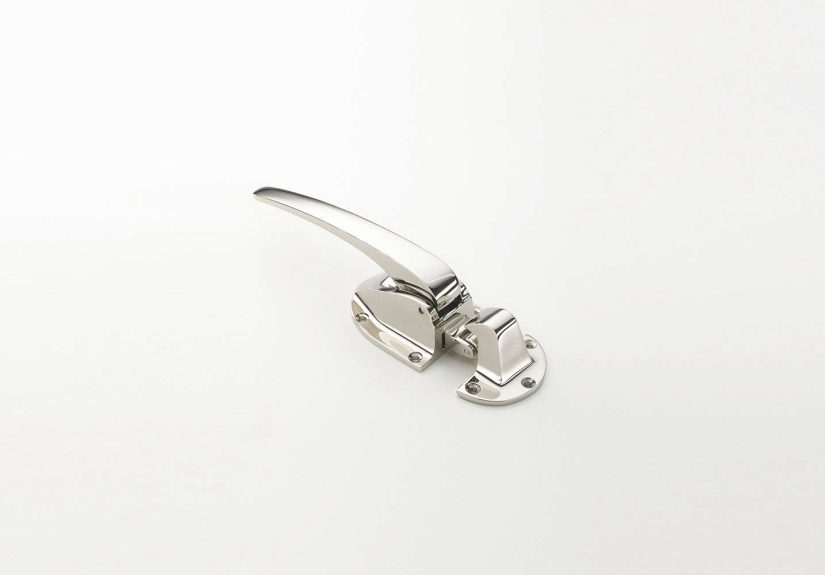
- 1) The Clean Chrome Classic (Richelieu-style metal latch)
- 2) The “House Jewelry” Upgrade (Sun Valley Bronze–level statement latch)
- 3) The Precision-Made Traditionalist (Wilmette/Icebox Hinges-style billet brass)
- 4) The Affordable Thumb Latch (Top Knobs-style cabinet thumb latch)
- 5) The European-Inspired Solid Brass Latch (Rejuvenation-style)
- 6) The Restoration-Friendly Reproduction (House of Antique Hardware–style offset latch)
- 7) The “Made for Projects” Hardware Set (D. Lawless/Hoosier & icebox hardware style)
- 8) The Boutique, Old-House Specialist Latch (Historic houseparts-style)
- 9) The Appliance-Panel Illusionist (Icebox hardware for modern refrigeration panels)
- 10) The Industrial-Iron Take (Cliffside-style icebox cabinet latch)
- How to Choose the Right Icebox Latch (So You Don’t Buy Twice)
- Installation Basics (A Tiny Project That Can Eat Your Weekend)
- Safety Sidebar: Icebox Latches Are CharmingOld Latch-Type Fridges Are Not
- Real-Life Experiences with Icebox Latches (The Part Where Things Get Relatable)
- Conclusion
There are two kinds of people in this world: the “let it swing” crowd, and the “I want a door that closes like it means it” crowd.
If you’re reading this, you’re probably in Group Twomaybe because your pantry door has a mind of its own, maybe because you’re restoring
an antique icebox, or maybe because you simply enjoy the oddly satisfying snap of a well-made latch. (No judgment. Some of us pay for
crunchy ice; you’re investing in crunchy hardware.)
Icebox latches are one of those small, old-school details that instantly make cabinetry feel consideredlike the kitchen has a handshake.
They’re practical, tactile, and just a little bit dramatic in the best way. And the good news: you don’t need a museum-worthy antique to get
the look. Today’s icebox-style latches range from “budget-friendly charm” to “this latch has its own skincare routine.”
What Is an Icebox Latch, Exactly?
Historically, an “icebox” was the pre-electric refrigerator: a piece of furniture designed to hold a block of ice (and your hopes for fresh butter).
Because iceboxes needed to seal tightly, they often used a lever-style latch paired with a keeper (the receiving plate) to pull a door snug.
That basic languagelever, keeper, satisfying closurestill defines the icebox latch today.
Modern icebox-style cabinet latches usually include:
- A handle/lever you press or lift to release.
- A latch body mounted to the door.
- A keeper/catch mounted to the frame that the latch grabs onto.
- Optional offset to accommodate overlay doors (common on traditional cabinetry).
- Left-hand/right-hand configurations depending on hinge side and swing.
The magic is mechanical: rather than relying on magnets alone, an icebox latch gives you positive closureespecially useful for
pantry doors, tall cabinets, mudroom lockers, and any “high-traffic” door that loves to pop open at the worst possible time.
Why Icebox Latches Are Everywhere Again
1) They make cabinets feel “built,” not bought
Exposed hinges and latches read as classic craftsmanship. Even on brand-new cabinetry, an icebox latch adds the impression of substance
like your pantry might contain imported olive oil and a well-organized life plan.
2) They’re deeply satisfying to use
A good latch has a little resistance, a clean release, and a confident close. It’s the hardware equivalent of closing a hardcover book.
Quietly satisfying. Slightly addictive.
3) They solve real problems
If you’ve got a door that drifts open, a cabinet that won’t stay shut, or kids/pets who treat storage like a scavenger hunt,
a mechanical latch adds control. (Not total controlthis is still a householdbut some control.)
The 10 Easy Pieces
Below are ten approachable icebox-latch styles and sourcesspanning finishes, price points, and vibesplus what each is best at.
Consider this your shortcut to “traditional kitchen hardware” without spending three weeks falling down the cabinet-hardware rabbit hole
at 1:00 a.m. (Again: no judgment.)
1) The Clean Chrome Classic (Richelieu-style metal latch)
If you want instant retro energythink bright, crisp, and diner-adjacentchrome is your friend. A streamlined metal latch in chrome
works beautifully on painted cabinets (white, navy, sage) and pairs well with simple cup pulls. It’s also a great choice when you want the
latch to feel “period-inspired” without leaning too ornate.
2) The “House Jewelry” Upgrade (Sun Valley Bronze–level statement latch)
This is for the homeowner who says, “Sure, the backsplash was expensive… but have you seen the latch?”
Premium bronze latches can be sculptural and heirloom-grade. They’re especially popular on pantry doors, beverage cabinets, and feature
cabinetry where you want hardware to read like a design elementnot an afterthought.
3) The Precision-Made Traditionalist (Wilmette/Icebox Hinges-style billet brass)
For traditional kitchens and appliance panels, a billet-brass latch with crisp machining and hand-finished details gives you that
old-world silhouette with modern consistency. These are often chosen when you’re coordinating a full hardware “set” across cabinetry
and integrated refrigeration panels for a cohesive, custom look.
4) The Affordable Thumb Latch (Top Knobs-style cabinet thumb latch)
If you want the feel of an icebox latch with a simpler install and a friendlier budget, thumb latches are a smart move.
They read traditional, they’re easy to use, and they make sense on secondary doors: linen cabinets, laundry storage, or a hardworking pantry.
Think of it as the “weekday latch”reliable, not fussy, still charming.
5) The European-Inspired Solid Brass Latch (Rejuvenation-style)
A refined brass latch with a classic profile is the safe bet that never looks like a trend. It complements exposed hinges, shaker doors,
inset cabinetry, and warm metal palettes (brass + bronze + aged nickel). If your goal is “timeless,” this is the lane.
Bonus: solid brass latches tend to age gracefullyespecially unlacquered finishes that develop patina over time.
6) The Restoration-Friendly Reproduction (House of Antique Hardware–style offset latch)
Restoring an antique icebox or building a vintage-inspired piece? Reproduction latches designed specifically for icebox proportions and
door overlays are your best friend. Look for correct offsets (commonly around the 3/8-inch neighborhood) and choose left-hand/right-hand
to match your door swing. This category is all about getting the “period-correct” geometry right.
7) The “Made for Projects” Hardware Set (D. Lawless/Hoosier & icebox hardware style)
Many makers and DIYers use icebox hardware on furniture projects: a coffee cabinet that looks like an antique cooler, a bar cabinet with
vintage swagger, or built-ins that need a little mechanical authenticity. This style often pairs well with matching icebox hinges for a
cohesive, old-fashioned lookespecially on freestanding pieces.
8) The Boutique, Old-House Specialist Latch (Historic houseparts-style)
If you’re matching hardware to an older home, boutique suppliers often stock latches in finishes that feel “right” for historic interiors:
polished nickel, antique brass, unlacquered brass, and occasionally the kind of patina that looks like it has stories.
These are also great when you want a latch that won’t look out of place next to mortise locks, transom hardware, or vintage plumbing fixtures.
9) The Appliance-Panel Illusionist (Icebox hardware for modern refrigeration panels)
Some hardware is designed specifically to make a modern refrigerator look like an antique iceboxespecially on high-end integrated units.
In these cases, you may choose a fully functional latch, or a “fixed handle” version that keeps the look without changing how the appliance door
actually operates. This is where planning matters: you’re coordinating clearance, swing, and daily usability (because nobody wants to wrestle
their fridge before coffee).
10) The Industrial-Iron Take (Cliffside-style icebox cabinet latch)
Want the icebox silhouette, but with a more rugged, workshop-meets-pantry feel? Iron finishes (or darkened metals) make latches feel grounded.
They pair well with stained wood, white oak cabinetry, soapstone, brick, and anything that whispers “heritage.” This is the latch for people
who own at least one cast-iron pan they refuse to replace (and they’re right to refuse).
Quick tip: If you love one latch, consider repeating it in a small “set”like all tall pantry doorsrather than putting a latch on
every single cabinet. A little goes a long way, and your future self will appreciate fewer tiny handles to align.
How to Choose the Right Icebox Latch (So You Don’t Buy Twice)
Door style: inset vs. overlay (and why offset matters)
Many icebox latches come in offset configurations to accommodate overlay doors. Translation: the latch geometry needs to reach the frame correctly.
If you’re working with inset cabinetry, you may need a different latch style (or a different keeper) than you’d use for a standard overlay door.
Measure your door-to-frame relationship before you fall in love with a latch profile.
Handing: left-hand vs. right-hand
The hinge side and swing direction determine which hand you need. This sounds obvious until you’re holding a latch at the cabinet like a detective,
whispering “left… no, wait… YOUR left or MY left?” A safe approach: stand facing the cabinet. If the hinges are on your left, you typically need a
left-hand latch (and vice versa). When in doubt, check the supplier’s diagrams.
Finish: polished, satin, unlacquered, living
Polished brass is bright and classic; satin brass is calmer; polished nickel is crisp and timeless; darker metals feel grounded. Unlacquered finishes
will age naturally, which can look gorgeousbut only if you’re okay with change. If the phrase “patina journey” makes you smile, go unlacquered.
If it makes you nervous, choose a protected finish.
Functional vs. “decorative” operation
On cabinetry, you want a real latch that keeps doors closed. On integrated appliances, you may want the look without interfering with seals, magnets,
or manufacturer operation. Many premium icebox hardware options can be configured for standard operation or modified for inactive/fixed use.
Installation Basics (A Tiny Project That Can Eat Your Weekend)
Installing an icebox latch is straightforward, but it demands alignment. The latch and keeper have to meet cleanly, or you’ll get a closure that feels
crunchy in the bad way.
What you’ll need
- Painter’s tape (for marking without regret)
- Pencil and ruler
- Drill/driver and small pilot bit
- Screwdriver (hand-tightening prevents stripped screws)
- Optional: self-centering/Vix bit for clean holes
How to place it (the “measure twice, latch once” method)
- Mock it up. Tape the latch on the door where your hand naturally reachestypically near the door edge and around handle height.
- Mark the latch first. Install the latch body on the door before committing to the keeper location.
- Close the door gently. Mark where the latch tongue meets the frame.
- Position the keeper. Align it to catch smoothly, then mark holes.
- Drill pilots. Especially on hardwoods. This is how you avoid snapped screws and new vocabulary words.
- Fine-tune. Tighten fully only after you confirm smooth action.
Pro move: If you’re doing multiple latches, create a simple placement template (cardboard works) so everything lines up consistently.
Your cabinets will look intentional, not “installed during halftime.”
Safety Sidebar: Icebox Latches Are CharmingOld Latch-Type Fridges Are Not
A cabinet latch is not a hazard. But old, abandoned latch-type refrigerators and freezers absolutely can be.
The U.S. Consumer Product Safety Commission has long warned about child entrapment and suffocation risks in older, latch-type appliances and ice boxes:
the door can close and become difficult or impossible to open from the inside, and seals/insulation can muffle sound. If you’re dealing with an old unit
in storage or disposal, safety guidance typically emphasizes disabling the latch and/or removing the door entirely before discarding or storing the appliance.
Bottom line: enjoy the vintage look on cabinetrybut treat old latch-type appliances with serious respect if they’re no longer in service.
Stylish hardware is fun. Preventable tragedy is not.
Real-Life Experiences with Icebox Latches (The Part Where Things Get Relatable)
The first time I installed an icebox latch, I thought it would be a 20-minute jobbecause I live in the fantasy world where every project takes exactly
as long as the product listing suggests. In reality, I spent those first 20 minutes just holding the latch up to the door, moving it one-quarter inch
left, then one-quarter inch right, like I was trying to tune an old radio to “perfect vibes.”
Here’s what surprised me: the latch placement is less about symmetry and more about ergonomics. On a pantry door, you reach differently than you do on a
base cabinet. On a tall cabinet, you might instinctively grab higher. The best placement is the one your hand finds without thinkingbecause nobody wants
to “hunt” for the latch while juggling a box of cereal and a cup of coffee that’s already having a rough morning.
Then came the offset lessonthe one that should be printed on a label and taped to every DIYer’s forehead. My doors were overlay, and the latch I bought
assumed a different overlay depth. Translation: the keeper and latch didn’t line up like a happy couple; they lined up like strangers avoiding eye contact.
The fix wasn’t dramatic, but it was humbling: I had to swap to the correct offset and re-mark everything. After that, I became the kind of person who says
“What’s your overlay?” at parties. (I don’t get invited to as many parties now. Worth it.)
The best part of icebox latches, though, is the daily payoff. That gentle “click” becomes a tiny punctuation mark in your routine. Pantry closed. Day moving.
And if you’ve ever had a cabinet door that creeps open just enough to snag your sleeve, you’ll understand the deep peace of a door that stays put.
Especially in high-traffic zonesmudrooms, laundry rooms, snack cabinetswhere doors get a lot of sloppy, one-handed closes.
One more honest moment: if you’re doing multiple latches, do yourself a favor and work methodically. I tried to install three in one afternoon with the
confidence of someone who had watched exactly two videos and felt “basically certified.” By latch number three, I was rushingand that’s when alignment gets
wonky. A keeper that’s off by even a hair can make the latch feel stiff, or it can wear the finish where metal rubs metal. The fix is simple (loosen, adjust,
re-tighten), but you’ll save time by slowing down in the first place.
The final (and most satisfying) experience: watching the hardware age. Polished brass is beautiful on day one, but the real charm shows up laterwhen the latch
develops character and starts to look like it belongs. It’s the opposite of “brand new.” It’s “meant to be here.” And that’s the whole point: icebox latches
don’t just keep a door closed. They add a little story to the roomone click at a time.
Conclusion
Icebox latches are a small upgrade with outsized impact: they add function, texture, and that old-fashioned “built to last” feeling that makes cabinetry look
intentional. Whether you choose a simple chrome latch for retro flair, a classic solid-brass latch for timeless warmth, or a statement piece that doubles as
design jewelry, the best icebox latch is the one that fits your door geometry, matches your daily habits, and makes you smile every time it clicks shut.
Pick one great style, install it carefully, and enjoy the simplest luxury in the kitchen: a door that closes like it has standards.





 Close
Close