
Table of Contents >> Show >> Hide
- 1. The Classic Maya: Cities Lost Beneath the Jungle
- 2. The Indus Valley Civilization: The Cities With No Obvious Kings
- 3. The Ancestral Puebloans: The Cliff Dwellers Who Moved On
- 4. Cahokia: America’s Forgotten Ancient Metropolis
- 5. The Minoans: Palace Builders of the Aegean
- 6. The Hittite Empire: The Superpower That Broke Apart
- 7. The Mycenaeans: Greece Before Classical Greece
- 8. Angkor: The Hydraulic City That Could Not Outsmart Water Forever
- 9. Tiwanaku: The High-Altitude Power Near Lake Titicaca
- 10. The Norse Greenlanders: Vikings at the Edge of the World
- Common Patterns Behind Vanished Civilizations
- Experiences and Reflections: What Vanished Civilizations Teach Modern Readers
- Conclusion
History is full of cliffhangers. Some civilizations built cities, invented writing systems, engineered water networks, raised stone monuments, traded across continents, and thenpoofseemed to vanish from the spotlight like a magician with excellent timing and terrible record-keeping. But here is the twist: most “vanished civilizations” did not disappear in a single dramatic puff of dust. Their governments collapsed, their cities emptied, their trade routes broke, or their people migrated and blended into new communities.
That makes the mystery even better. Instead of one easy answeraliens, curses, angry volcanoes, or a very bad Tuesdaywe usually find a messy recipe: drought, famine, war, political stress, disease, shifting rivers, exhausted farmland, and leaders who probably held too many meetings and not enough solutions. Below are ten ancient civilizations that mysteriously vanished, declined, or transformed so completely that historians and archaeologists are still piecing together their stories.
1. The Classic Maya: Cities Lost Beneath the Jungle
The Maya are often described as a civilization that “vanished,” but that is only half true. Maya people are very much alive today, with millions of descendants across Mexico, Guatemala, Belize, Honduras, and El Salvador. What collapsed was the Classic Maya political world, especially the great lowland cities that flourished between about A.D. 250 and 900.
At their height, Maya kingdoms built towering pyramids, tracked astronomical cycles, created a sophisticated writing system, and carved royal histories into stone. Then many southern lowland cities stopped building monuments, royal dynasties faded, and populations moved away. The jungle eventually swallowed sites such as Tikal, Copán, and Calakmul, giving later explorers the spooky feeling that an entire world had gone missing.
Why did the Maya decline?
The answer appears to be a chain reaction. Severe droughts likely damaged maize agriculture and strained reservoirs. Rival kingdoms fought each other. Elite competition became expensive, and common people may have decided that supporting palace politics was no longer a great career move. When food, faith, and government all wobble at once, even a brilliant civilization can lose its balance.
2. The Indus Valley Civilization: The Cities With No Obvious Kings
The Indus Valley Civilization, also called the Harappan Civilization, thrived in what is now Pakistan and northwest India. From roughly 2600 to 1900 B.C., its people built remarkably planned cities such as Harappa and Mohenjo-daro. Streets followed grids. Homes had drainage systems. Standardized bricks appeared across vast distances. Honestly, some modern cities could take notes.
Yet the Indus civilization remains deeply mysterious. Its script has not been fully deciphered, and archaeologists have found few signs of giant palaces or obvious royal tombs. Unlike Egypt or Mesopotamia, where rulers practically shouted their importance in stone, the Indus world kept its political secrets close.
Why did the Indus Valley Civilization vanish?
The decline seems to have been gradual rather than sudden. Climate change likely weakened monsoon rains, rivers shifted, and long droughts may have reduced crop yields. Major cities shrank as people moved into smaller settlements. Trade with Mesopotamia declined. The civilization did not explode; it slowly decentralized, like a company closing its headquarters and sending everyone to remote work thousands of years early.
3. The Ancestral Puebloans: The Cliff Dwellers Who Moved On
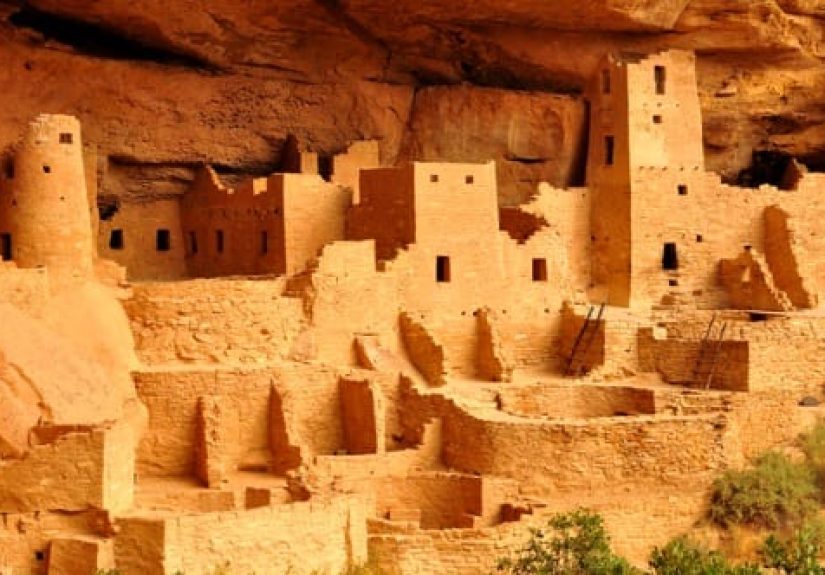
In the American Southwest, Ancestral Puebloan communities built extraordinary settlements at places such as Mesa Verde, Chaco Canyon, and other parts of the Four Corners region. Their architecture included cliff dwellings, great houses, kivas, roads, and ceremonial spaces that still impress visitors today.
By about A.D. 1300, many major settlements had been left behind. To early outsiders, this looked like a disappearance. But Pueblo perspectives and archaeological evidence tell a different story: the people migrated. Their descendants include modern Pueblo communities such as the Hopi, Zuni, Acoma, and Rio Grande Pueblo peoples.
Why did they leave?
Drought played a major role, especially in the late 1200s. Farming became harder, resources grew scarce, and social tensions may have increased. But migration was not simply failure. For Pueblo people, movement can be part of cultural continuity. The lesson is important: an empty building is not proof of an extinct people. Sometimes it means the people made a hard, intelligent decision to survive somewhere else.
4. Cahokia: America’s Forgotten Ancient Metropolis
Near present-day St. Louis, Cahokia was once one of the largest urban centers north of Mexico. Around A.D. 1050 to 1200, it had massive earthen mounds, plazas, neighborhoods, and a huge central structure now called Monks Mound. At its peak, Cahokia may have held tens of thousands of people and influenced a wide Mississippian cultural network.
Then the city declined. By the 1300s, Cahokia had largely emptied. Because it left no written records, archaeologists have had to reconstruct its story from mound construction, pottery, burials, food remains, soil evidence, and settlement patterns.
Why did Cahokia collapse?
Older theories blamed deforestation, overfarming, flooding, or resource depletion. Newer research suggests the picture is more complicated. Political tension, changing climate, social inequality, disease, or shifts in regional alliances may all have contributed. Cahokia reminds us that a city can be powerful and still fragile if its success depends on keeping many moving parts working at once.
5. The Minoans: Palace Builders of the Aegean
The Minoan civilization flourished on Crete during the Bronze Age. Its people built grand palace complexes at Knossos, Phaistos, Malia, and Zakros. They painted colorful frescoes, traded across the Mediterranean, and developed scripts including Linear A, which remains undeciphered. If ancient civilizations had Instagram, the Minoans would have dominated with dolphins, bull-leaping, and dramatic palace architecture.
Their decline is tied to one of history’s most famous natural disasters: the eruption of Thera, modern Santorini. The eruption devastated nearby islands, likely caused tsunamis, and disrupted Aegean trade. But the Minoans did not vanish immediately after the volcano. Their decline unfolded over time, and Mycenaean Greeks later gained influence on Crete.
What ended Minoan dominance?
Volcanic disaster, earthquakes, economic disruption, and mainland Greek pressure may have combined. The Minoans did not simply disappear; their culture was absorbed, transformed, and partly carried forward. Still, their palaces and undeciphered writing leave behind a mystery with just enough elegance to keep archaeologists happily arguing.
6. The Hittite Empire: The Superpower That Broke Apart
The Hittites ruled a powerful empire in Anatolia, in what is now Turkey, during the Late Bronze Age. They were major players in the ancient Near East and even challenged Egypt. Their capital, Hattusa, had massive walls, gates, temples, archives, and all the confidence of an empire that assumed the future had already RSVP’d.
Around 1200 B.C., the Hittite Empire collapsed. Hattusa was abandoned or destroyed, central authority disappeared, and the empire fragmented into smaller Neo-Hittite states. This happened during the wider Late Bronze Age collapse, when several eastern Mediterranean powers suffered severe disruption.
Why did the Hittites fall?
No single cause explains it. Tree-ring evidence points to severe drought. Famine, internal conflict, invasions, trade disruption, and pressure from neighboring powers likely added to the crisis. The Hittite case is a classic example of systems collapse: when food supply, diplomacy, military strength, and political legitimacy all fail together, even a mighty empire can fold like a cheap camping chair.
7. The Mycenaeans: Greece Before Classical Greece
Before Athens, Sparta, and Socrates, there were the Mycenaeans. This Bronze Age Greek civilization flourished from about 1600 to 1100 B.C. They built fortified palaces, used Linear B writing, traded widely, and inspired later Greek legends about heroes, kings, and the Trojan War.
Then the palace system collapsed. Major centers such as Mycenae, Pylos, and Tiryns declined or were destroyed. Writing disappeared in much of Greece for centuries. Population patterns shifted, trade weakened, and the region entered what scholars often call the Greek Dark Age.
What caused the Mycenaean collapse?
Possible causes include earthquakes, internal rebellion, invasion, drought, famine, and the breakdown of international trade networks. The Mycenaeans were part of a connected Bronze Age world, and that connection was both their strength and their weakness. When the larger system cracked, palace economies that depended on central control could not easily improvise.
8. Angkor: The Hydraulic City That Could Not Outsmart Water Forever
Angkor, the heart of the Khmer Empire in Cambodia, was one of the largest urban complexes of the preindustrial world. Its temples, including Angkor Wat, are architectural masterpieces. But Angkor was not just stone towers and dramatic sunrise photos. It was also a vast engineered landscape of reservoirs, canals, embankments, and rice fields.
That water system helped make Angkor powerful. It also made Angkor vulnerable. When climate patterns shifted, the same infrastructure that once supported growth became difficult to manage.
Why did Angkor decline?
Evidence suggests that long droughts followed by intense monsoon floods damaged Angkor’s hydraulic network. Political changes and military pressure from Ayutthaya also played a role. The city was not completely abandoned overnight, but its role as the empire’s center faded. In other words, Angkor did not lose to water alone; it lost to water, politics, maintenance problems, and perhaps the ancient version of “we’ll fix the drainage next budget cycle.”
9. Tiwanaku: The High-Altitude Power Near Lake Titicaca
Tiwanaku was a major Andean civilization centered near Lake Titicaca in present-day Bolivia. It reached its height between about A.D. 500 and 900 and influenced a wide region of the southern Andes. Its people built monumental stone structures, developed raised-field agriculture, and created a powerful religious and political center.
By around A.D. 1000 to 1100, Tiwanaku’s central authority declined. The city lost influence, and its political system broke apart. The ruins still stand, including impressive stone gateways and platforms, but the civilization’s internal history is difficult to reconstruct because it left no long written narrative like those of later empires.
Why did Tiwanaku vanish?
Climate stress is one leading explanation. Prolonged drought may have lowered lake levels and damaged agricultural systems that depended on careful water management. As food production became less reliable, political authority may have weakened. Tiwanaku shows how environmental change can hit especially hard in places where farming is ingenious but finely tuned to local conditions.
10. The Norse Greenlanders: Vikings at the Edge of the World
Around A.D. 985, Norse settlers from Iceland established colonies in Greenland. For nearly 500 years, they farmed, raised livestock, hunted seals, traded walrus ivory, built churches, and maintained contact with Europe. Then, by the 1400s, the Norse Greenland settlements were gone.
Their disappearance has fascinated historians because the evidence is hauntingly quiet. Farms were abandoned. Trade faded. Written contact with Europe stopped. Later expeditions found Inuit communities in Greenland, but no surviving Norse colony.
What happened to the Norse Greenlanders?
The likely causes include cooling climate during the Little Ice Age, shorter growing seasons, sea ice that made trade harder, declining demand for walrus ivory, isolation, and possible conflict or competition. The Norse adapted in some ways, but perhaps not enough. Their story is a reminder that toughness is admirable, but flexibility is better. Even Vikings need a Plan B.
Common Patterns Behind Vanished Civilizations
When we compare these vanished civilizations, several patterns appear. First, climate change is a repeat offender. Droughts, floods, cooling temperatures, and shifting rivers damaged agriculture and water systems. Second, political systems often became too rigid. Centralized palace economies, elite rivalries, or expensive rituals could make societies less able to respond quickly.
Third, trade networks were both helpful and risky. Long-distance trade brought wealth, ideas, and prestige goods. But when trade collapsed, cities that depended on imported resources suffered. Fourth, migration is often mistaken for disappearance. People moved, reorganized, intermarried, adopted new languages, and carried traditions into new communities.
The biggest takeaway is that civilizations rarely vanish because of one cause. They decline when several pressures arrive at once. A drought alone may be survivable. A war alone may be survivable. A trade crisis alone may be survivable. But drought plus war plus political distrust plus food shortages plus a leader saying “everything is fine” while the reservoir cracks? That is how history gets dramatic.
Experiences and Reflections: What Vanished Civilizations Teach Modern Readers
Reading about vanished civilizations can feel like exploring a giant museum after closing time. Everything is quiet, the statues stare back, and you begin to wonder what daily life felt like before the lights went out. The most powerful experience is realizing that these people were not vague shadows in old textbooks. They worried about harvests, repaired homes, argued with neighbors, taught children, celebrated festivals, buried loved ones, and tried to make smart choices with incomplete informationexactly like us, except with fewer phone chargers and more stone tools.
One experience related to this topic is visiting ancient ruins or even looking closely at high-quality photographs of them. A ruined wall is not just a wall. It is evidence of planning, labor, belief, and community. At Mesa Verde, the cliff dwellings show how people adapted architecture to landscape. At Angkor, canals and reservoirs reveal a civilization thinking on a massive scale. At Cahokia, earthen mounds prove that North America had complex urban life long before European contact. These places make history feel less like a timeline and more like a conversation across centuries.
Another useful experience is comparing ancient collapse with modern life. The Indus Valley depended on water management and stable climate patterns. So do modern cities. Angkor struggled when its infrastructure could not handle extreme swings between drought and flood. Many cities today face the same challenge, only with traffic cones, budget hearings, and weather apps. The Norse Greenlanders lived at the edge of environmental possibility, and their choices show how culture can both support survival and limit adaptation.
There is also a humbling emotional experience in studying these civilizations. We like to imagine that technology makes us immune to collapse. Ancient people probably had their own version of that confidence. The Maya had astronomy and reservoirs. The Romans had roads. The Hittites had armies and archives. Angkor had engineering brilliance. None of those achievements guaranteed permanence. Civilization is not a trophy locked in a case; it is a living system that requires maintenance, flexibility, fairness, and trust.
For writers, travelers, students, and curious readers, vanished civilizations offer a perfect mix of mystery and meaning. They invite questions with no easy answers: When should a society stay and rebuild? When should it migrate? How much stress can a political system handle before people stop believing in it? How do ordinary families experience the fall of something powerful? These questions turn archaeology into more than the study of old stones. They make it a mirror.
The best lesson may be this: disappearance is often transformation wearing a spooky costume. The Classic Maya did not vanish. Pueblo peoples did not vanish. Rapa Nui people did not vanish, despite older myths of total collapse. Even when cities emptied, human stories continued. Languages changed, traditions moved, and descendants carried memory forward. History is not only about ruins; it is about resilience.
So the next time someone says, “This civilization mysteriously vanished,” imagine an archaeologist gently raising one eyebrow. The mystery is real, but the people were real too. They were not props in a disaster movie. They were problem-solvers, farmers, engineers, artists, parents, rulers, rebels, and migrants. Their worlds changed, sometimes brutally. Yet many of their descendants, ideas, and cultural echoes remain. The past did not vanish completely. It left cluesand it expects us to pay attention.
Conclusion
The story of the world’s vanished civilizations is not a simple parade of doom. It is a study in adaptation, pressure, and human choice. From the Classic Maya and the Indus Valley to Cahokia, Angkor, Tiwanaku, and Norse Greenland, the same lesson repeats: no society is too advanced to face limits. Water, food, climate, politics, trade, and trust matter. When those systems fail together, even the greatest cities can fall silent.
But silence is not the same as absence. Many “lost” civilizations survive through descendants, traditions, languages, architecture, and memory. Their ruins are not just warnings; they are invitations to think more wisely about our own future. If ancient history had a slogan, it might be: maintain your infrastructure, respect the climate, listen to ordinary people, and never assume the good times are guaranteed. Also, maybe do not build your entire survival plan around one fragile system. History has seen that movie, and the ending is rarely cheerful.






 Close
Close