
Table of Contents >> Show >> Hide
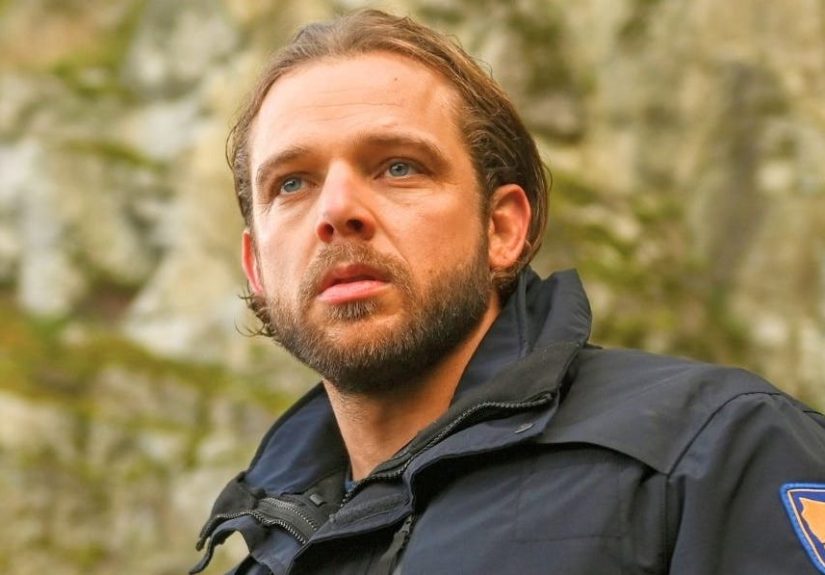
- So… will Max Thieriot be in “Sheriff Country”?
- What is “Sheriff Country,” and why does it connect to “Fire Country” so neatly?
- The character math: how Bode fits into Mickey’s story
- What’s confirmed vs. what’s a reasonable guess
- Why a cameo can be easier than you think (even with busy schedules)
- What could limit Max Thieriot’s appearances after the pilot?
- How CBS-style franchises typically handle crossovers
- What to watch for if you’re “cameo hunting” (without ruining your own fun)
- FAQ
- Viewer Experiences: The Fun (and Slightly Chaotic) Reality of a Shared TV Universe
- Final take
Shared-universe TV is basically the entertainment version of a group chat: someone says “I’m in the neighborhood,”
and suddenly your favorite character is popping into a different show with the same zip code and twice the drama.
So if you’ve been wondering whether Max Thieriot (a.k.a. the face of Fire Country) will show up in
Sheriff Country, you’re asking the right questionand you’re asking it at the exact moment TV franchises
love to turn “maybe” into “surprise cameo.”
Let’s break down what’s officially confirmed, what’s likely, and what’s still living in the
land of “fans connecting red string on a corkboard.”
So… will Max Thieriot be in “Sheriff Country”?
Yesat least once. The most reliable reporting and network-facing information points to Thieriot
reprising his Fire Country role as Bode in the pilot episode of Sheriff Country.
In other words: you don’t have to squint at a crowd scene and whisper “is that him?”the connection is designed
to be seen.
What’s not as firmly nailed down (publicly, anyway) is how often he’ll appear after that. The smart expectation:
occasional crossover visits when the story benefits, rather than a full-time second address.
What is “Sheriff Country,” and why does it connect to “Fire Country” so neatly?
Sheriff Country expands the same small-town Northern California world viewers already know from Fire Countrybut
it shifts the “emergency-of-the-week” lens from wildland fires to law enforcement cases. The lead character,
Sheriff Mickey Fox, is positioned right at the intersection of community, family, and trouble,
which makes crossovers feel natural instead of forced.
Mickey isn’t just “a sheriff somewhere.” She’s tied directly into the Fire Country family web, which means
the shows don’t need a contrived excuse for characters to cross paths. In a shared universe, “family” is basically
a golden ticket for crossoversno one questions it when a relative shows up, because relatives always show up.
Usually at the worst possible moment.
The character math: how Bode fits into Mickey’s story
If you’re trying to predict crossovers, think like a writer: who has believable reasons to share scenes?
In this case, the family ties do a lot of the heavy lifting.
Why Bode makes story sense in “Sheriff Country”
-
Jurisdiction overlap: Fires and crimes don’t politely take turns. A case can start with an accident,
end with an arrest, and involve both first responders and deputies. -
Emotional overlap: Mickey’s family storyline is part of the show’s engine, and Bode fits into that
engine without needing a “special guest star” label slapped on his forehead. -
Community overlap: Edgewater is the kind of town where everyone is two degrees away from everyone else.
In small towns, “crossover” is just Tuesday.
Translation: if Sheriff Country wants a familiar face for a high-stakes rescue, a tense family conversation,
or a case that brushes up against Cal Fire, Bode is one of the easiest pieces to move onto the board.
What’s confirmed vs. what’s a reasonable guess
Confirmed (the “you can quote this at your group chat” tier)
-
Thieriot is expected to appear as Bode in the pilot.
That’s the cleanest answer to the headline question. -
“Sheriff Country” is built as an expansion of the “Fire Country” universe.
Crossovers aren’t an accident herethey’re part of the design.
Likely (the “writers would be silly not to consider it” tier)
- One or two crossover moments per seasonespecially around sweeps, finales, or big story arcs.
-
“Case-of-the-week” overlap episodes where a crime scene, missing person, or disaster response requires
both departments to collaborate.
Not confirmed (the “fun to speculate, don’t bet rent” tier)
- A sustained multi-episode arc where Bode becomes central to Mickey’s cases for weeks at a time.
- A formal “crossover event night” every year (possible, but networks don’t always announce these far in advance).
Why a cameo can be easier than you think (even with busy schedules)
Fans often assume crossovers are a logistical nightmareand sometimes they are. But modern TV has learned a few tricks:
keep the guest appearance tight, write scenes that can be shot efficiently, and use the fact that audiences don’t need
a character to appear for 20 minutes to feel the impact.
Three practical reasons crossovers happen
-
Brand continuity: Launching (and sustaining) a spinoff is easier when viewers see a familiar anchor.
The pilot is the perfect place for that anchor. -
Story efficiency: A single scene can clarify relationships, stakes, and shared history faster than
an entire monologue. -
Audience momentum: If a Friday-night block is built around both shows, crossovers keep viewers from
channel-surfing into oblivion.
What could limit Max Thieriot’s appearances after the pilot?
Even in a shared universe, shows still need their own identity. If Bode appeared constantly, Sheriff Country risks
feeling like “Fire Country: Badge Edition” instead of its own series. Also, starring in one show and guesting in another
is a balancing actespecially when production schedules get intense.
The most common “crossover brakes”
- Story focus: Mickey’s cases and family conflicts have to drive the main plot, not orbit someone else’s.
- Scheduling: Lead actors have limited time for extra filming days, even when everyone’s friendly.
- Creative restraint: Franchises work best when crossovers feel special, not routine.
The sweet spot is usually: strategic appearances that make the universe feel connected without turning
the spinoff into a perpetual guest-star parade.
How CBS-style franchises typically handle crossovers
Networks have learned that audiences love crossoversbut only when they’re easy to follow. That’s why many franchises
treat guest spots like a seasoning: enough to enhance the meal, not so much that you can’t taste anything else.
What that suggests for “Sheriff Country”
- Expect crossovers to be story-motivated (a case, a family emergency, a shared threat), not just “hello!”
- Expect them to be accessible: you shouldn’t need a spreadsheet to understand why someone is there.
- Expect them to be timed: premieres, midseason pivots, and finales are prime crossover real estate.
What to watch for if you’re “cameo hunting” (without ruining your own fun)
If you enjoy spotting crossovers the way some people enjoy spotting celebrity cameos in animated movies, here are a few
spoiler-light clues that often signal a familiar face is incoming:
- Cases involving the Leones or anything that tangles with Cal Fire decision-making.
- Episodes that mention Edgewater’s “history” or unresolved family conflicts.
- Big public incidents (standoffs, rescues, disasters) where multiple agencies naturally show up.
The pilot is already designed to establish the tone and connectionsso if you’re looking for the “handshake” between
shows, that’s where it’s most likely to be loud and clear.
FAQ
Is “Sheriff Country” a direct continuation of “Fire Country”?
Not exactly. It’s a spinoff in the same world, with its own lead and its own weekly engine. Think of it as a neighboring
lane on the same highwaysometimes you’re side-by-side, but you’re still driving your own car.
Does Bode have a reason to be in Mickey’s world?
Yes. The family ties and the small-town setting make it believable for Bode to intersect with Mickey’s cases and personal
storyespecially when emergencies and investigations overlap.
Will other “Fire Country” characters appear too?
Crossovers are part of the premise, so it’s reasonable to expect familiar faces to pop up when the story calls for it
but the spinoff’s main cast will still do most of the week-to-week heavy lifting.
Do I have to watch both shows to understand what’s happening?
Ideally, no. Franchises usually design spinoffs so new viewers can jump in without homework, while longtime fans get
bonus layers. You can treat crossover moments as “extra credit.”
Viewer Experiences: The Fun (and Slightly Chaotic) Reality of a Shared TV Universe
If you’ve ever watched a spinoff premiere live, you know the vibe: it’s part excitement, part curiosity, and part
“okay, are we doing this together or not?” A shared universe turns a normal episode into an eventbecause you’re not
just meeting new characters, you’re scanning for familiar ones like you’re at a high school reunion and trying to
remember who always borrowed your pencil.
One of the most common fan experiences around a spinoff like Sheriff Country is the “pilot watch party mindset.”
Even if you’re watching alone, you’re not really alonebecause social feeds, comment sections, and group chats turn the
premiere into a real-time conversation. People aren’t only reacting to the plot; they’re reacting to the connections.
The first time the show references an established family relationship, you can almost hear the collective “Aha!” across
the internet.
Then there’s the cameo anticipation roller coaster. Fans tend to experience it in three phases:
(1) confident predictions (“He’ll show up in the first ten minutes, obviously”),
(2) mid-episode doubt (“Wait… did the promo trick us?”),
and (3) final-scene panic (“If he appears now I will spill my snack everywhere”).
Even when the appearance is short, it can feel hugebecause it signals that the universe is connected on purpose,
not just in theory.
Another surprisingly relatable experience is the “new show, new tone” adjustment. A spinoff set in the same town can
still feel different: the urgency of firefighting storylines isn’t the same as the tension of investigations, interrogations,
and small-town politics. Viewers often end up appreciating the contrast. You might love Fire Country for its
big, emotional rescues and high-risk action, while Sheriff Country scratches the itch for mystery, motives, and
the slow reveal of what people in town are hiding behind polite smiles.
And here’s the big one: shared universes make fans feel rewarded for paying attention. When you recognize a name, catch a
reference, or understand why two characters have history without a long explanation, it’s satisfying. It turns you into an
“insider” without requiring you to memorize a complicated timeline. The best part? You don’t actually need to be right about
every prediction to enjoy it. Half the fun is the speculation itselfdebating what’s possible, what’s probable, and what would
be an absolutely unhinged twist (said with affection).
If Thieriot’s Bode appears in the pilot (as expected), the experience for many viewers will be less “cameo for cameo’s sake”
and more “okay, this world is real and connected.” That’s the emotional job of a crossover: it reassures longtime fans while
welcoming new ones. It’s also a promisespoken or unspokenthat when the town of Edgewater gets messy (and it will), these
characters don’t live in separate bubbles. They live in the same place, with the same consequences. Which is thrilling…
and also, for the residents of Edgewater, probably exhausting.






 Close
Close