
Table of Contents >> Show >> Hide
- What Is a Wellness Community (And What It’s Not)
- Why Wellness Communities Are Taking Off Right Now
- The Business Case: Wellness Is Becoming a Value Driver
- What Wellness Communities Actually Build (The “Amenity Stack”)
- Real U.S. Examples: What Wellness Looks Like on the Ground
- The Catch: Wellness Communities Have Real Challenges
- What Buyers Should Look For (So You Don’t Pay Extra for a Fancy Sign)
- Experiences That Make the Trend Feel Real (A 500-Word Composite “Week in the Life”)
- Conclusion
Real estate has always sold a feeling. For decades, that feeling was “good schools,” “short commute,” and “a kitchen island big enough to land a small aircraft.”
Now? Buyers are shopping for something slightly more radical: a life that doesn’t require a calendar invite to breathe deeply.
Enter wellness communitiesneighborhoods designed to make healthy choices feel embarrassingly convenient. Not “there’s a treadmill somewhere near the leasing office”
convenient, but “you accidentally walked 8,000 steps because the trail to coffee is nicer than the road” convenient.
This isn’t just a lifestyle flex. It’s becoming a serious, measurable real estate strategydriven by demand, supported by research, and increasingly reflected in value.
In other words: wellness is moving from the spa brochure to the site plan.
What Is a Wellness Community (And What It’s Not)
A wellness community is a residential neighborhood or master-planned development intentionally designed to support physical health, mental well-being, and social connection.
Think of it as preventive care you can walk to.
The “not” part matters. A wellness community is not just luxury amenities with a eucalyptus candle budget. It’s an ecosystem:
walkability, green space, clean-air strategies, healthy food access, water quality, community programming, and design choices that lower friction between residents and healthier habits.
Many developers and planners borrow from evidence-based frameworkslike health-focused community standards and healthy building guidanceto avoid “wellness-washing”
(the architectural equivalent of putting “handcrafted” on a bag of chips).
Why Wellness Communities Are Taking Off Right Now
1) The post-pandemic “my home is my everything” reset
The pandemic didn’t invent wellness, but it did move it from “nice-to-have” to “non-negotiable.” People became acutely aware that their built environment affects sleep,
stress, movement, and mental claritybecause they spent a lot of time staring at it.
That shift helped accelerate wellness-focused real estate development and investment. When buyers treat their home as a daily health platform,
communities that support that goal become more than trendythey become practical.
2) Longevity is the new luxury
Aging populations aren’t just looking for bigger homes; they’re looking for longer independence. Wellness communities appeal to retirees and active adults,
but also to families who want routines that don’t collapse the moment life gets busy.
Design that supports mobility, social engagement, and access to services (without requiring a 25-minute drive and a minor emotional breakdown in traffic)
is increasingly attractive across age groups.
3) The loneliness economy (yes, that’s a thing)
A quiet home is greatuntil it’s too quiet. Wellness communities lean into “soft social infrastructure”: shared gardens, walkable retail,
community classes, volunteer programs, and outdoor gathering spaces that make connection more likely without forcing awkward icebreakers.
In plain English: you’re more likely to know your neighbors’ namesand less likely to live next to someone for five years and only recognize their dog.
The Business Case: Wellness Is Becoming a Value Driver
Wellness is increasingly showing up in the numbers, not just the marketing copy. Industry research and realtor reporting have pointed to
price premiums and stronger demand for homes and communities that prioritize wellness features. Translation: buyers pay for benefits they can feel.
For developers and investors, wellness communities can also support:
- Stronger differentiation in crowded suburban and master-planned markets
- Retention (people stay when their daily life is easier and better)
- Operational resilience through smart landscape, shade, and stormwater strategies
- Brand liftespecially when paired with third-party standards and transparent performance goals
There’s also a simple reality: wellness amenities often replace “dead space” with “useful space.” A shaded loop trail gets used daily.
A giant decorative fountain gets photographed twice and then becomes a very expensive bird bath.
What Wellness Communities Actually Build (The “Amenity Stack”)
Make movement the default
The most powerful fitness feature isn’t a gymit’s a neighborhood layout that makes walking and biking feel safe, direct, and pleasant.
Public health guidance emphasizes designing communities so people can reach everyday destinations via connected routessidewalks, paths, and “complete streets” thinking.
Wellness communities typically include trails, traffic-calmed streets, micro-mobility options, parks that aren’t an afterthought,
and mixed-use nodes so “errands” don’t automatically mean “car keys.”
Prioritize indoor air quality and healthy materials
Healthy homes aren’t just about vibes; they’re about systems. Many wellness-forward projects focus on ventilation, filtration, moisture control,
low-toxicity materials, and cleaner finishesfeatures that can support comfort and reduce common indoor irritants.
This is where wellness moves from “spa” to “science”: better air, better sleep, fewer headaches, fewer “why does my living room smell like a wet basement?” moments.
Build healthy food access into the plan
Wellness communities often pair walkability with food: farmers markets, community gardens, edible landscaping, or “agrihood” features
that make fresh food easier to getand more fun to talk about than your neighbor’s fantasy football team.
In practice, this can look like farm-to-table programming, CSA pickup points, orchard-style landscaping, or simply zoning and leasing decisions
that prioritize grocers and healthier dining options in mixed-use centers.
Use nature as infrastructure (not decoration)
Green space isn’t just prettyit can support mental restoration, social connection, heat reduction, and stormwater management.
Agencies and research organizations have documented social and environmental benefits of green infrastructure, including stronger neighborhood ties
and cooling impacts through trees and vegetation.
Wellness communities bake this into their blueprint: shaded trails, tree canopies, pocket parks, rain gardens, and restorative landscapes.
It’s not landscaping as “curb appeal.” It’s landscaping as “daily therapy that doesn’t bill your insurance.”
Design for calmwithout turning life into a silent retreat
Mental wellness features can include quieter street design, sound buffering, dedicated meditation or reflection spaces, lighting strategies,
and programming like yoga, mindfulness workshops, or nature-based gatherings.
The goal isn’t to eliminate stimulation. It’s to give residents easy off-ramps from stress: a place to decompress, reset, and re-enter the world as a slightly nicer person.
Back it up with standards and accountability
To avoid “wellness theater,” some projects align with third-party frameworks that focus on evidence-based concepts at the community scale.
These frameworks typically address multiple dimensionsair, water, movement, thermal comfort, materials, mental health, community connection, and resilience.
The win: clearer goals, stronger credibility, and fewer arguments in the design meeting that begin with “trust me, I saw it on Instagram.”
Real U.S. Examples: What Wellness Looks Like on the Ground
Lake Nona (Orlando, Florida): wellness as an innovation district
Lake Nona is a large master-planned community known for combining residential living with health, education, and life sciences momentum.
The positioning is intentional: a place to live, work, and access health-oriented institutions in one connected district.
Developments like this show a key evolution: wellness isn’t just an amenity package; it’s a place-based identity tied to healthcare access,
walkable nodes, and a “live well” brand that extends beyond the home.
Serenbe (near Atlanta, Georgia): biophilic living with food at the center
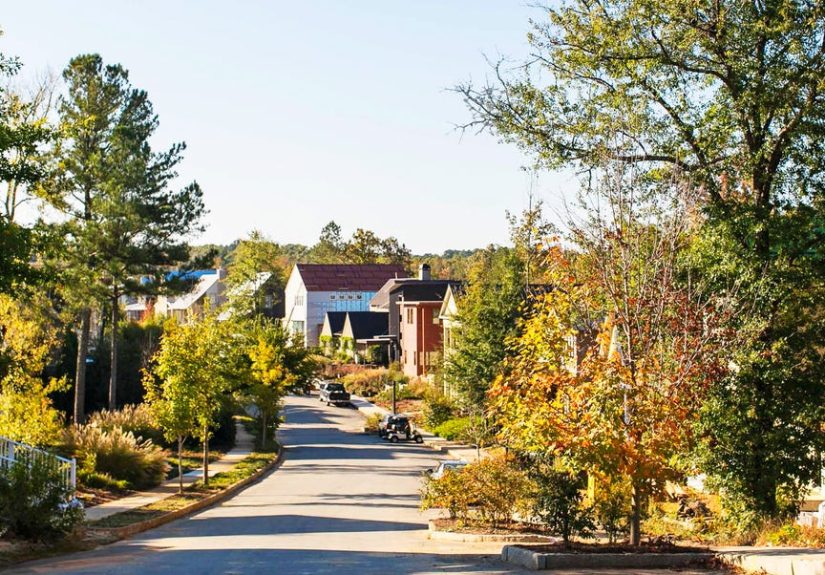
Serenbe is often cited as a wellness-focused community built around preserved nature, trails, and farm-oriented programming.
It’s designed to make walking feel easier than driving and to put fresh food and outdoor living into daily routines.
It also demonstrates a crucial idea: wellness communities don’t have to look futuristic.
Sometimes the “innovation” is simply planning a neighborhood that makes people spend more time outsidetogether.
The Catch: Wellness Communities Have Real Challenges
Affordability and “green gentrification”
If wellness becomes a luxury product only, it risks deepening health inequities. Health-focused community design needs to consider access:
who gets the parks, the shade, the safe sidewalks, and the healthy food options?
Many planning and real estate organizations increasingly emphasize health and social equity togetherbecause a “healthy community”
that excludes most people isn’t actually healthy. It’s a gated smoothie.
Maintenance and operations (the unglamorous part that matters)
Trails need upkeep. Trees need care. Stormwater features need maintenance. Programming needs a budget and staff.
The long-term success of a wellness community depends as much on operations as on design.
The best projects treat wellness like a service model: design + programming + measurement + iteration.
The worst treat it like a ribbon-cutting moment and hope the yoga lawn manages itself.
Privacy and health tech
As communities add sensors, air-quality dashboards, smart access, and app-based programming, resident trust matters.
Transparent policies and opt-in systems help prevent “welcome homeplease accept these 37 tracking cookies” energy.
What Buyers Should Look For (So You Don’t Pay Extra for a Fancy Sign)
- Layout: Can you safely walk to anything usefulcoffee, a park, a market, a friend’s house?
- Nature coverage: Is there meaningful shade and green infrastructure, or just a few heroic shrubs?
- Indoor health: Ask about ventilation, filtration, moisture control, and low-tox material choices.
- Programming: Are there recurring community events, classes, clubs, or health-oriented services?
- Accountability: Is the community aligned with a recognized framework or third-party standard?
- Access: Are wellness benefits integrated for all residents, not just the people in the “premier tier” building?
If a salesperson can only describe wellness with the words “luxury” and “vibes,” ask for details.
If they can talk about trails, shade, air, food, and community programming like they’ve actually read the plan,
you’re probably looking at something real.
Experiences That Make the Trend Feel Real (A 500-Word Composite “Week in the Life”)
Here’s what living in a wellness community often feels likenot as a single person’s story, but as a composite of common, realistic experiences residents describe:
small design decisions nudging your week toward healthier defaults, without turning your life into a self-improvement boot camp.
Monday: You start the week with a simple win: you walk to coffee. Not because you’re training for a marathon,
but because the path is shaded, the crossings feel safe, and the storefronts are close enough that driving would feel… silly.
You return home with caffeine and a surprising number of steps, plus the mild pride of someone who “worked out” without putting on workout clothes.
Tuesday: The air feels better indoors. It’s not magical; it’s mechanical. Good filtration, decent ventilation,
and a home that doesn’t trap humidity like a secret. You notice it most at nightsleep comes easier, and you wake up less “stuffy.”
Wellness, it turns out, can be a quiet background feature rather than a dramatic lifestyle announcement.
Wednesday: You bump into neighborscasually, repeatedly, and without awkward scheduling.
The community’s best “amenity” might be the layout: benches in the right places, a loop trail everyone uses, a small event lawn that actually hosts events.
Conversation happens naturally. You learn a few names. You also learn who has a dog that believes every human exists for belly rubs.
Thursday: A farmers market or CSA pickup is part of the routine. Sometimes you buy vegetables; sometimes you buy one vegetable and seven baked goods,
because wellness is a journey and you are bravely exploring the pastry aisle. Still, the access is real: healthy food shows up where you already are,
rather than requiring a strategic weekend expedition.
Friday: Stress spikes (because life), but you have an off-ramp: a quiet garden, a pocket park, a short trail through trees.
Ten minutes outside resets your mood in a way doomscrolling never has. You’re not “escaping”; you’re recalibrating.
The environment gives your nervous system a chance to unclench.
Saturday: You join a classyoga, cycling, a walking club, a community run, a gardening workshop.
The point isn’t the class itself; it’s the ease. The barrier to entry is low, the vibe is friendly, and the social layer makes you more likely to show up again.
It’s wellness through belonging, not willpower.
Sunday: You realize your week included more movement, more outdoor time, and more human connectionwithout a dramatic life overhaul.
That’s the hidden genius of wellness communities: they don’t demand perfection.
They simply make the healthier choice the path of least resistance… literally.
Conclusion
Wellness communities are taking off because they solve real problems with real design: stress, inactivity, isolation, climate discomfort,
and the growing desire to invest in longevity. They meet buyers where they arebusy, tired, optimistic, and still hoping their home can be a place
that restores them instead of draining them.
The next era of real estate won’t be defined only by square footage and finishes. It’ll be defined by outcomes:
how a community helps people sleep, move, connect, and thrive. The developers who get this right won’t just sell homes.
They’ll sell a better default setting for daily life.






 Close
Close