
Table of Contents >> Show >> Hide
- What High Inflation Really Means
- Why Stocks Care About Inflation in the First Place
- 1. High Inflation Usually Pushes Interest Rates Higher
- 2. Inflation Can Squeeze Corporate Profit Margins
- 3. Inflation Reduces Consumer Purchasing Power
- 4. High Inflation Creates Fed Uncertainty
- 5. Inflation Can Increase Market Volatility
- 6. High Inflation Makes Bonds More Competitive With Stocks
- 7. Inflation Hurts Long-Duration Growth Stocks More
- 8. Inflation Can Lead to Slower Economic Growth
- Do Any Stocks Benefit From High Inflation?
- What History Teaches Investors About Inflation and Stocks
- How Investors Typically Respond to High Inflation
- Specific Example: Why a Hot Inflation Report Can Hit Stocks
- Why Inflation Expectations Matter So Much
- High Inflation vs. Good Inflation: There Is a Difference
- What Businesses Can Do During High Inflation
- Investor Experience: What High Inflation Feels Like in the Market
- Conclusion
- SEO Tags
Inflation is a little like glitter. At first, it does not look too dangerous. A few prices go up here, a few grocery bills look rude there, and everyone tells themselves it will wash off. Then suddenly it is everywhere: in wages, rent, shipping, gasoline, borrowing costs, corporate earnings calls, and your favorite sandwich that now costs as much as a small office chair.
The stock market notices. In fact, the stock market notices inflation the way a cat notices a cucumber. It may not panic every single time, but when inflation stays high, surprises investors, or forces the Federal Reserve to keep interest rates elevated, stocks often get jumpy. That is because high inflation does more than make life expensive. It changes how investors value companies, how consumers spend money, how businesses plan, and how much risk people are willing to take.
This article explains why the stock market does not like high inflation, how inflation affects stock prices, why growth stocks can be especially sensitive, and why some sectors hold up better than others. We will keep the math light, the analysis useful, and the economic jargon on a short leash.
What High Inflation Really Means
Inflation is the rate at which prices rise over time. A little inflation is normal in a growing economy. The Federal Reserve generally aims for 2% inflation over the longer run because modest price increases can support steady spending, wage growth, and business investment.
High inflation is different. It means prices are rising fast enough to create uncertainty. Consumers wonder if they should buy now before prices climb again. Companies wonder whether suppliers will raise costs next quarter. Investors wonder whether the Fed will raise or hold interest rates. Everyone starts forecasting, hedging, repricing, and occasionally staring into the fridge like the answer is hiding behind the mustard.
Inflation becomes especially uncomfortable when it is broad-based. If only one item gets expensive, people can adjust. If everything from housing to transportation to food to labor costs rises at the same time, corporate profits can get squeezed and household budgets can get thinner. That is when Wall Street starts reaching for the antacid.
Why Stocks Care About Inflation in the First Place
A stock is not just a little digital rectangle in a brokerage account. It represents ownership in a company. When investors buy stocks, they are paying for a claim on future earnings and cash flows. The word “future” is doing a lot of work here.
Inflation affects the future in several ways. It can reduce the value of future profits, increase borrowing costs, pressure profit margins, weaken consumer demand, and make the economy harder to predict. Markets dislike uncertainty because uncertainty makes valuation harder. And when valuation gets harder, investors often demand a lower price before they are willing to buy.
That is the heart of the issue: high inflation makes tomorrow’s money less attractive and tomorrow’s business conditions less clear. The stock market is basically a giant voting machine for tomorrow, and inflation keeps spilling coffee on the ballot.
1. High Inflation Usually Pushes Interest Rates Higher
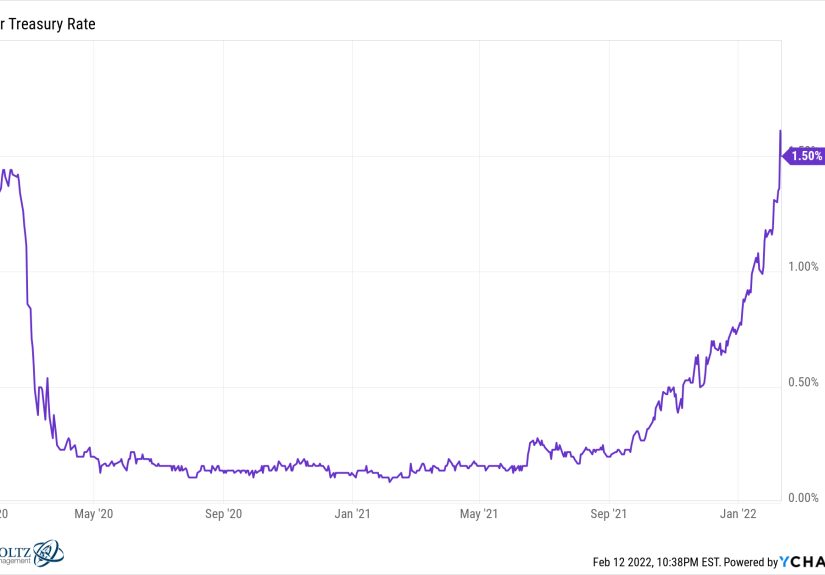
The most important reason stocks dislike high inflation is that inflation often leads to higher interest rates. When inflation runs above target, the Federal Reserve may raise rates or keep them higher for longer to cool demand. Higher rates make borrowing more expensive for households and businesses.
For consumers, higher rates can mean more expensive credit cards, auto loans, and mortgages. For companies, they can mean higher costs to finance factories, technology, inventory, acquisitions, and everyday operations. For investors, higher rates create competition for stocks because safer assets, such as Treasury bills or money market funds, may suddenly offer more attractive yields.
Higher Rates Change the Stock Market’s Math
Stock prices are heavily influenced by discounted future cash flows. In plain English, investors estimate how much money a company may earn in the future, then discount those profits back to today’s value. When interest rates rise, that discount rate rises too. The result is simple but painful: future profits are worth less today.
This is why high-growth stocks can struggle when inflation and interest rates climb. Many fast-growing companies are valued based on profits expected years down the road. If those future profits are discounted at a higher rate, the current stock price can fall even if the company is still growing. It feels unfair, but markets are not famous for emotional tenderness.
2. Inflation Can Squeeze Corporate Profit Margins
Companies do not magically avoid inflation. They pay for raw materials, energy, rent, shipping, technology, insurance, and labor. When those costs rise, businesses face an uncomfortable choice: absorb the higher costs and accept lower profit margins, or raise prices and risk losing customers.
Some companies have pricing power. They sell products or services customers keep buying even after price increases. Think essential household goods, certain software services, medical products, or strong consumer brands. Other companies do not have that luxury. If they raise prices too much, customers leave, delay purchases, or switch to cheaper alternatives.
This is why inflation does not hurt every stock equally. A company with strong margins, low debt, loyal customers, and flexible pricing can often handle inflation better than a company with thin margins, heavy borrowing, and price-sensitive customers.
The Margin Problem in Real Life
Imagine a restaurant chain. Food costs rise. Wages rise. Rent rises. Utility bills rise. Delivery fees rise. Even the napkins seem to have hired an agent. The company can raise menu prices, but only so much before customers decide to eat at home. If sales slow while costs keep rising, profits fall. If profits fall, investors may lower the stock’s valuation.
Now multiply that story across airlines, retailers, manufacturers, homebuilders, and smaller businesses. Inflation becomes more than an economic statistic. It becomes a profit-margin obstacle course.
3. Inflation Reduces Consumer Purchasing Power
Consumer spending is a major driver of the U.S. economy. When inflation rises faster than wages, households lose purchasing power. People may still spend, but more of their money goes toward necessities like food, rent, utilities, and fuel. That leaves less room for travel, entertainment, electronics, dining out, furniture, and other discretionary purchases.
This matters for stocks because many public companies depend on healthy consumer demand. If consumers pull back, revenue growth can slow. If revenue slows while costs remain high, earnings forecasts may be cut. And if earnings forecasts fall, stock prices often follow.
The market watches consumer behavior closely during high inflation periods. Are shoppers trading down to cheaper brands? Are credit card balances rising? Are retailers discounting more heavily? Are travel and dining companies still seeing demand? These clues help investors estimate whether inflation is simply annoying or starting to damage the economy.
4. High Inflation Creates Fed Uncertainty
The stock market can live with bad news if it understands the rules. What it hates is confusion. High inflation creates confusion because it makes Federal Reserve policy harder to predict.
If inflation is high but the economy is strong, the Fed may keep rates high to prevent prices from heating further. If inflation is high but the economy is weakening, the Fed faces a harder choice. Cutting rates could support growth but risk making inflation worse. Holding rates high could fight inflation but increase recession risk.
This policy tug-of-war can make investors nervous. Markets start reacting to every inflation report, jobs number, wage reading, oil-price move, and Fed speech. One month, investors celebrate because inflation looks cooler. The next month, they sulk because gasoline prices jump or wage growth looks sticky. It is not a market cycle; it is an emotional cardio class.
5. Inflation Can Increase Market Volatility
High inflation often brings higher volatility because it changes expectations quickly. Investors may rotate out of growth stocks and into value stocks. Bond yields may jump. Commodity prices may rise. Currencies may move. Earnings expectations may get revised. The entire market becomes more sensitive to surprises.
Academic research has found that inflation risk can be negatively related to aggregate U.S. stock returns, partly because inflation uncertainty feeds market volatility. That does not mean stocks always fall when inflation rises. Markets are more complicated than a simple “inflation up, stocks down” button. But it does mean unexpected or persistent inflation can become a serious headwind.
6. High Inflation Makes Bonds More Competitive With Stocks
Stocks are risky assets. Investors buy them because they expect higher long-term returns than safer alternatives. But when interest rates rise, safer assets can offer better yields. Treasury bills, high-quality bonds, certificates of deposit, and money market funds may suddenly look more appealing.
When investors can earn a respectable return from lower-risk assets, they may demand better prices before buying stocks. This can push stock valuations lower, especially for expensive companies trading at high price-to-earnings ratios.
This is one reason inflation can compress market multiples. A company might still be profitable, growing, and well managed, but if investors are no longer willing to pay 30 times earnings, the stock can decline. In that case, the business did not necessarily break. The price investors were willing to pay changed.
7. Inflation Hurts Long-Duration Growth Stocks More
In market language, “duration” refers to how far into the future investors expect the payoff. Growth stocks often have long duration because investors are paying for profits expected many years ahead. Value stocks often have shorter duration because they may already generate steady cash flows today.
When inflation pushes rates higher, long-duration assets can suffer more. That is why technology and speculative growth stocks may sell off sharply during periods of rising inflation expectations. Their future earnings are still possible, but those earnings are discounted more heavily.
This does not mean all growth stocks are doomed during inflation. High-quality growth companies with strong balance sheets, real profits, and durable competitive advantages can still perform well. But companies relying on cheap capital, distant profits, or optimistic assumptions may find the market less forgiving.
8. Inflation Can Lead to Slower Economic Growth
One of the market’s biggest fears is not inflation alone. It is inflation plus slowing growth. That combination is often called stagflation, and investors dislike it for obvious reasons. Prices rise, consumers feel squeezed, companies struggle with costs, and the central bank has limited room to cut rates.
Energy-driven inflation can be especially tricky. When oil and gasoline prices rise, consumers pay more to drive, ship goods, heat homes, and produce materials. Unlike inflation caused by strong demand, energy inflation can act like a tax on the economy. It lifts costs while reducing spending power.
For the stock market, this is a rough mix. Earnings may slow, margins may narrow, and policy support may be limited. That is why oil shocks and inflation scares often create fast rotations across sectors.
Do Any Stocks Benefit From High Inflation?
Yes, some areas of the market can benefit from inflation, or at least hold up better. Energy companies may benefit when oil and gas prices rise. Materials producers may gain from higher commodity prices. Some real estate assets can adjust rents over time. Certain financial companies may benefit from higher rates, depending on the yield curve and credit conditions.
Companies with pricing power also tend to fare better. If a business can raise prices without losing many customers, inflation may be less damaging. This is why investors often favor firms with strong brands, essential products, recurring revenue, and low capital needs during inflationary periods.
However, “inflation hedge” does not mean “guaranteed winner.” Energy stocks can fall if oil prices reverse. Banks can struggle if higher rates lead to loan losses. Real estate can suffer when financing costs climb. Inflation changes the opportunity set, but it does not remove risk. The stock market is still the stock market, which means it occasionally behaves like a raccoon trapped in a spreadsheet.
What History Teaches Investors About Inflation and Stocks
History suggests that stocks can beat inflation over long periods because companies can grow, innovate, raise prices, and produce real earnings. But over shorter periods, high inflation can be painful. The market cares not only about inflation itself but also about whether inflation is expected, whether it is accelerating, and how the Fed responds.
Moderate inflation in a healthy economy is usually manageable. High and rising inflation is the bigger problem. It forces investors to question earnings quality, discount rates, consumer resilience, and central-bank policy. When all four are under review at once, stock prices can become choppy.
The best historical lesson is not that investors should fear every inflation report. It is that valuation matters, balance sheets matter, pricing power matters, and diversification matters. Inflation tends to expose weak assumptions. If a company’s value depends on cheap debt, perfect margins, and customers who never complain about prices, high inflation may introduce reality with a baseball bat.
How Investors Typically Respond to High Inflation
During high inflation periods, investors often shift their focus. Instead of paying any price for growth, they may prefer companies with current profits, strong cash flow, reasonable valuations, and the ability to pass along higher costs. They may also look at sectors tied to commodities, infrastructure, energy, or defensive consumer demand.
Bond positioning can also change. If rates are rising, long-term bonds may be more vulnerable to price declines. Shorter-duration fixed income, Treasury Inflation-Protected Securities, and cash-like instruments may attract more attention. Investors may also watch inflation expectations through Treasury markets because expectations can matter as much as current inflation readings.
For long-term investors, the key is not to panic every time inflation appears in a headline. The key is to understand what kind of inflation is happening, whether it is likely to persist, and how it affects earnings, rates, and valuation.
Specific Example: Why a Hot Inflation Report Can Hit Stocks
Suppose investors expect inflation to cool, and the market rallies because traders believe the Fed may cut interest rates later in the year. Then a new inflation report comes in hotter than expected. Energy prices jump, shelter inflation stays firm, and core prices do not cool much.
Suddenly, investors change their assumptions. Rate cuts look less likely. Bond yields rise. The discount rate applied to future earnings increases. Growth stocks fall. Consumer stocks weaken because households may feel more pressure. Small-cap stocks struggle because many smaller companies rely more heavily on borrowing. Defensive sectors may outperform because investors want stability.
Nothing mystical happened. The market simply repriced the future. That is what stocks do. Sometimes gracefully. Sometimes like a shopping cart with one bad wheel.
Why Inflation Expectations Matter So Much
Markets do not only react to today’s inflation. They react to expected inflation. If investors believe inflation will cool soon, stocks may look through a temporary price spike. But if investors believe inflation will stay high, the market may adjust more aggressively.
Inflation expectations affect wage negotiations, bond yields, business planning, and consumer behavior. If everyone expects prices to rise, workers may demand higher wages, companies may raise prices early, and lenders may demand higher interest rates. That can make inflation harder to bring down.
This is why central banks care so much about credibility. If investors trust that the Fed will return inflation toward target, markets may remain calmer. If that trust weakens, volatility can rise.
High Inflation vs. Good Inflation: There Is a Difference
Not all inflation is equally bad for stocks. Inflation caused by strong demand can be manageable if wages are rising, companies are selling more, and profits are expanding. In that environment, modest price increases may reflect a healthy economy.
Inflation caused by supply shocks is harder. If oil prices, shipping costs, or imported goods prices surge, companies may face higher expenses without stronger demand. That kind of inflation can squeeze both consumers and businesses.
The market’s reaction depends on the source, speed, and persistence of inflation. A temporary price shock may be annoying. A long-lasting inflation regime can reshape portfolios, valuations, and economic policy.
What Businesses Can Do During High Inflation
Strong companies do not simply complain about inflation on earnings calls and hope investors bring tissues. They adapt. They renegotiate supplier contracts, improve productivity, adjust pricing, reduce waste, automate processes, and focus on higher-margin products.
Some companies also use inflation as a stress test. If a business can protect margins when costs rise, that tells investors something valuable. It suggests the company has operational discipline, brand strength, or strategic flexibility.
Weak companies, on the other hand, may struggle. If a firm cannot raise prices, cannot cut costs, and has expensive debt, inflation can expose problems quickly. This is why high inflation often separates market leaders from companies that were floating comfortably on cheap money.
Investor Experience: What High Inflation Feels Like in the Market
Watching the stock market during high inflation can feel like trying to read a restaurant menu while someone keeps changing the prices. One day, investors are excited because earnings look solid. The next day, bond yields rise and everyone decides those same earnings are suddenly less impressive. Nothing about the company may have changed overnight, but the market’s valuation lens has changed.
A common experience for investors is confusion. They may see a company report higher revenue and still watch the stock fall. That can happen when sales growth is mostly caused by price increases rather than stronger demand. If costs are rising just as fast, profit margins may not improve. Investors care about revenue, but they care even more about what turns into profit after expenses have finished eating at the buffet.
Another experience is sector rotation. During high inflation, money often moves quickly from one part of the market to another. Growth stocks may struggle while energy, materials, value stocks, or defensive businesses perform better. Then inflation data cools, and the rotation can reverse. For everyday investors, this can feel like the market is changing teams every week and forgot to send the schedule.
High inflation also tests patience. Long-term investors know that stocks have historically been one of the better ways to build wealth over time, but that does not make short-term volatility fun. When prices at the grocery store are rising and a portfolio is falling, the emotional pressure doubles. Investors may feel tempted to sell everything, sit in cash, and wait until the economy looks perfect. The problem is that markets often recover before the news feels comfortable.
One useful lesson from inflationary periods is that quality matters. Companies with strong balance sheets, durable demand, and pricing power often give investors more confidence. They may not avoid every decline, but they usually have more tools to handle rising costs. A business that can raise prices carefully, keep customers, manage debt, and maintain cash flow is better positioned than one depending on low rates and optimistic forecasts.
Another lesson is that diversification earns its keep when inflation surprises markets. A portfolio concentrated in one style, sector, or theme can swing dramatically when inflation expectations shift. Owning a mix of assets and sectors may feel boring during a roaring bull market, but boring can be beautiful when volatility arrives wearing muddy boots.
Finally, high inflation teaches investors to separate headlines from fundamentals. Inflation reports matter, Fed policy matters, and interest rates matter. But the long-term value of a stock still depends on the business behind it. Does the company solve a real problem? Can it earn attractive returns on capital? Can it manage costs? Can it survive tighter financial conditions? Inflation makes these questions more urgent, but they are always the right questions.
Conclusion
The stock market does not like high inflation because high inflation attacks stocks from several directions at once. It can push interest rates higher, reduce the present value of future earnings, squeeze corporate margins, weaken consumer spending, increase volatility, and make Federal Reserve policy harder to predict.
That does not mean inflation automatically destroys the stock market. Some companies can adapt, some sectors can benefit, and long-term investors can still find opportunities. But high inflation makes the investing environment more selective. It rewards strong balance sheets, real profits, pricing power, and disciplined management. It punishes fragile assumptions, excessive debt, and valuations built on the fantasy that money will stay cheap forever.
In simple terms, the market dislikes high inflation because it makes the future more expensive, less predictable, and harder to value. And when the future gets foggy, investors usually ask for a discount.







 Close
Close