
Table of Contents >> Show >> Hide
- Trust starts with how vaccines are tested (aka, the “no shortcuts” part)
- Trust grows after rollout, when the microscope gets even stronger
- I trust risk math, not “perfect safety” fantasies
- I trust transparencyeven when it’s uncomfortable
- I trust the science of mRNA (and I’m not impressed by scary-sounding rumors)
- I trust what we’ve seen in the real world: fewer worst-case outcomes
- I trust the constant arguing among scientists (yes, really)
- Common questions (and the honest answers that keep my trust intact)
- Bottom line: my trust is evidence-based, not brand-based
- My “Why I Trust the COVID Vaccine” Experiences (Extra ~)
Trust is a funny thing. I’ll happily trust a stranger to hand me a latte with my name spelled wrong (it’s tradition),
but I want receipts for anything that affects my health. The COVID vaccine is one of those “show me the work” topics.
And honestly? The work is thereclinical trials, safety monitoring, real-world results, and a long paper trail that
reads like the world’s most intense group project.
This isn’t “blind faith.” It’s more like, “I read the label, checked who inspected the factory, looked at the reviews,
and then called my friend who actually understands immunology.” Here’s why that combination adds up to trust.
Trust starts with how vaccines are tested (aka, the “no shortcuts” part)
The COVID vaccines used in the U.S. didn’t get a free pass. They went through the same core steps vaccines always do:
preclinical research, phased clinical trials, and then ongoing review once they’re in the real world. That last part
matters because some rare side effects only show up when millions of people get vaccinated (rare events are sneaky like that).
One reason I trust the process is that the U.S. regulator (the FDA) doesn’t just approve a vaccine and walk away.
It evaluates data for safety and effectiveness, and it updates vaccine formulas as the virus evolvessimilar to how
seasonal flu shots are updated. For example, the FDA issued guidance for a 2025–2026 COVID-19 vaccine formula aimed at
matching more current strains. The point isn’t perfection; it’s staying relevant in a world where viruses don’t sit still.
Clinical trials also set the tone: you’re looking for strong protection against serious illness, plus a safety profile
that makes sense for broad use. Peer-reviewed trial data for mRNA vaccines (like Pfizer-BioNTech and Moderna) and
ongoing effectiveness studies help anchor the discussion in numbersnot vibes, not viral posts, not your uncle’s
“I saw a thread” moment.
Trust grows after rollout, when the microscope gets even stronger
Here’s the part many people miss: the safety review doesn’t end when the first doses go into arms. It ramps up.
The U.S. uses multiple safety monitoring systems that work like overlapping security cameras. If one camera misses something,
another might catch it. That redundancy is a feature, not a bug.
What monitoring looks like in real life
-
VAERS (Vaccine Adverse Event Reporting System): An early-warning system co-managed by the CDC and FDA.
Anyone can report an event after vaccination. Importantly, a VAERS report doesn’t automatically mean the vaccine caused it
it’s a “hey, look here” signal, not a final verdict. -
V-safe: A smartphone-based check-in tool that lets vaccinated people report how they felt after the shot.
It’s designed to collect real-world symptom data quickly. -
Vaccine Safety Datalink (VSD) and other data systems: These can compare rates of certain conditions in
vaccinated vs. unvaccinated groups (or across time) using healthcare datahelpful for spotting patterns and estimating risk. -
Clinical Immunization Safety Assessment (CISA) Project and related programs: These help investigate
specific clinical questions, including unusual cases.
Independent reviews have also looked at how these monitoring systems performed during the pandemic and what could be improved
(because even good systems can get better). That willingness to critique and upgrade the process is another reason trust is earned.
I trust risk math, not “perfect safety” fantasies
If you’re waiting for a medical intervention to have zero risk, I have bad news: even peanut butter comes with warning labels.
The real question is whether the benefits outweigh the risks for most peopleand how those tradeoffs change by age, health status,
and exposure risk.
For COVID vaccines, the big benefit has been reducing the risk of severe diseasehospitalization and death. Meanwhile, the most
discussed rare risk with mRNA vaccines has been myocarditis/pericarditis, particularly in some younger age groups. “Rare” here
isn’t a hand-wave; it’s measured and monitored. Reports and analyses have repeatedly described these cases as uncommon, with many
people recovering well.
The other part of the risk math is this: COVID infection itself can cause serious complications, including heart inflammation.
So the comparison isn’t “vaccine vs. nothing,” it’s “vaccine vs. the virus eventually finding you (or someone you care about).”
When I frame it that way, the vaccine looks like the safer, more predictable option for building protection.
I trust transparencyeven when it’s uncomfortable
If public health agencies were pretending vaccines were flawless, I’d be suspicious. Real trust grows when officials name risks,
quantify them, and update guidance when new data arrives. That’s happened repeatedly during COVID.
Guidance has also evolved toward more individualized decision-making in some age groups, emphasizing vaccination most strongly for
people at higher risk of severe COVID-19 (like older adults and those with certain medical conditions). That approach doesn’t scream,
“We’re hiding something.” It says, “Risk isn’t identical for everyone, and recommendations should reflect that reality.”
You’ll also see professional medical organizations continue to publish guidance for higher-risk populations, including pregnancy,
immunocompromising conditions, and pediatric groups. When multiple independent groups look at the evidence and still land on
vaccination as beneficial for riskier situations, that consistency boosts my confidence.
I trust the science of mRNA (and I’m not impressed by scary-sounding rumors)
mRNA vaccines sound futuristic because “messenger RNA” feels like something you’d hear in a superhero origin story.
But the basic idea is pretty practical: mRNA gives your cells instructions to make a harmless piece of the virus (a “wanted poster”),
your immune system learns it, and then the mRNA breaks down. It doesn’t hang out forever. It doesn’t rewrite your DNA.
It’s more like a Snapchat than a tattoo.
The immune response is the goal: build memory so your body can respond faster and stronger if you’re exposed later.
That’s especially useful when a virus is widespread and keeps mutating.
I trust what we’ve seen in the real world: fewer worst-case outcomes
Real-world effectiveness data matters because it answers the question, “Okay, but does it work outside a controlled trial?”
The CDC and academic partners have run observational studies looking at outcomes like emergency visits, hospitalizations, and deaths.
Over time, protection against infection can wane (especially as variants change), but updated vaccines are designed to refresh immune
defensesparticularly against severe disease.
This is also why “updated” or “current season” vaccines exist. A new formula isn’t an admission of failure; it’s the normal response
to a moving target. We don’t call umbrellas useless because the rain keeps changing direction.
I trust the constant arguing among scientists (yes, really)
If you want a group that never agrees on anything, introduce two scientists to a whiteboard and step back. That’s not chaosthat’s
quality control. Scientists challenge each other’s methods, statisticians poke holes in assumptions, and reviewers demand clearer evidence.
It’s messy, but it’s how weak ideas get filtered out.
On top of that, multiple organizations weigh in: federal agencies, medical specialty groups, pediatric and obstetric organizations,
and infectious disease societies. When guidance differs in tone (universal vs. risk-based), it’s often because they’re emphasizing
different prioritiesnot because the underlying evidence vanished overnight.
Common questions (and the honest answers that keep my trust intact)
“If vaccinated people can still get COVID, what’s the point?”
The point isn’t to create a magical force field. The point is to reduce the chance that COVID turns into a serious, life-altering event.
Think seatbelts: they don’t prevent every crash, but they dramatically improve outcomes when one happens.
“What about side effects?”
Short-term side effects (like a sore arm, fatigue, fever, aches) are common and usually temporarysigns your immune system is practicing.
Rare serious events are monitored closely, publicly discussed, and factored into updated recommendations.
“How do we know the system keeps working?”
Because monitoring doesn’t stop, formulas get updated, recommendations are revised, and outside experts keep auditing and publishing.
The system is designed to keep learningespecially when the stakes are high.
Bottom line: my trust is evidence-based, not brand-based
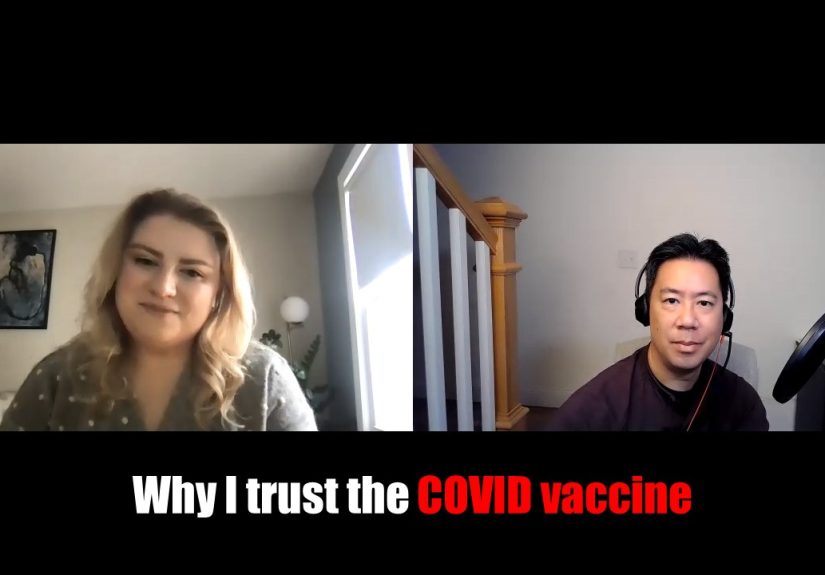
I trust the COVID vaccine because the evidence has been tested, re-tested, monitored, updated, and debated in public.
I trust it because U.S. systems track safety signals, because real-world data shows meaningful protection against severe disease,
and because medical guidance increasingly acknowledges what’s true in real life: different people carry different levels of risk.
Health note: This article is general information, not personal medical advice. If you have a specific condition,
are pregnant, immunocompromised, or have questions about timing and product choice, talk with a licensed clinician.
My “Why I Trust the COVID Vaccine” Experiences (Extra ~)
I’ll be honest: my trust didn’t come from a single headline or a perfectly edited infographic. It came from a bunch of
ordinary moments where the science stopped being abstract and started being… human.
The first moment was watching how people talked about side effects in real time. Not the dramatic stuff that gets clicks,
but the normal stuffsore arms, the “I took a nap at 6 p.m. and woke up in another time zone” fatigue, a day of body aches.
It was surprisingly consistent. People would compare notes the way they compare new phone updates: “It drained my battery for
a day, but the security patch is worth it.” That consistency matched what clinicians and public health sources said to expect.
And when something rare did pop up in the newslike myocarditisit wasn’t brushed aside. It was investigated, tracked, and explained
with actual numbers. Watching that transparency play out made the process feel real, not performative.
Another moment came from a friend who’s cautious by naturethe kind of person who reads restaurant health grades and checks the
weather radar like it’s a hobby. They didn’t want “reassurance,” they wanted details: How is safety monitored? What happens if a rare
adverse event appears? What does “shared clinical decision-making” even mean? We ended up going down a rabbit hole of how the CDC and FDA
watch vaccine safety, why VAERS exists (and why it’s not a simple cause-and-effect database), and how updated vaccine formulas work.
By the end, their conclusion wasn’t “nothing can ever go wrong.” It was, “This is the most supervised shot I’ve ever seen.” Same.
Then there were the practical, quiet experiencesespecially around vulnerable people. I’ve heard the “I’m healthy, so I’ll be fine”
argument a million times. But the world isn’t just “me.” It’s also the older neighbor who waves from the porch, the relative with a medical
condition, the coworker caring for an immunocompromised parent, the pregnant friend trying to reduce unnecessary risks. In those contexts,
vaccination stopped being a personal philosophy and started being a community tool. Not a perfect tool, but a useful onelike turning on
headlights in the rain even though it doesn’t stop the storm.
One of the most persuasive experiences was watching how recommendations evolved without pretending the past didn’t happen. Agencies updated
guidance, emphasized high-risk groups, and explained why certain decisions changed. That’s exactly what I want from a system managing a moving
target. If the virus changes and the data changes, the guidance should change too. Consistency is great for coffee orders; it’s less useful for
a respiratory virus that keeps reinventing itself.
So when I say “I trust the COVID vaccine,” I mean I trust the evidence trail: the trials, the monitoring, the updates, the debates, and the
real-world outcomes. It’s not about being fearless. It’s about being realisticand choosing the option that stacks the odds in my favor.




 Close
Close