
Table of Contents >> Show >> Hide
- What psychedelic therapy actually means
- How psychedelic therapy works
- Which drugs are involved?
- What conditions is psychedelic therapy being studied for?
- Why are researchers so interested?
- What psychedelic therapy is not
- Risks, side effects, and reasons for caution
- What about legality?
- Could psychedelic therapy become mainstream?
- So, what is psychedelic therapy in one sentence?
- Experiences related to psychedelic therapy: what do patients often describe?
- Conclusion
Psychedelic therapy is one of those topics that can sound either deeply futuristic or suspiciously like something your weird cousin explains at Thanksgiving after two kombuchas. In reality, it is neither magic nor nonsense. It is a clinical approach that combines a psychedelic or psychedelic-adjacent drug with structured psychotherapy, medical screening, close supervision, and follow-up sessions designed to help a person process what happened and apply it in everyday life.
That last part matters. A lot. Psychedelic therapy is not simply “taking a psychedelic and hoping for personal growth to show up in a cardigan.” In medical and research settings, the therapy is the whole package: careful patient selection, preparation, monitored dosing, and integration afterward. The drug is one piece of the puzzle, not the entire jigsaw box.
What psychedelic therapy actually means
At its core, psychedelic therapy refers to treatment in which a psychedelic substance is used alongside psychotherapy to address mental health symptoms or emotional distress. Researchers and clinicians are studying whether this model can help some people with conditions such as depression, post-traumatic stress disorder, alcohol use disorder, and distress related to serious illness.
The word therapy is doing a lot of heavy lifting here. A patient is not dropped into a beanbag chair and told to “find themselves.” Instead, the process usually happens in a tightly structured setting with trained professionals, established protocols, and safety rules that are there for a reason. These sessions are designed to reduce risk, support the patient during the altered state, and help translate the experience into lasting behavioral or emotional change.
How psychedelic therapy works
Although protocols vary, most psychedelic therapy models follow three broad phases: preparation, the dosing session, and integration. Think of it as a three-act play, except the goal is not applause. The goal is better mental health.
1. Preparation
Before any medication is given, clinicians typically assess medical history, psychiatric history, current symptoms, medications, and possible risk factors. Patients are also prepared psychologically. They learn what the session may feel like, what kinds of emotions or memories could come up, and how to handle fear, confusion, or intensity without bolting for the exit.
This stage helps establish trust. In many studies, people are encouraged to enter the session with curiosity rather than rigid expectations. That matters because mindset and environment can shape the experience significantly. Researchers often call this “set and setting,” which sounds like a home decor category but is actually a serious safety concept.
2. The dosing session
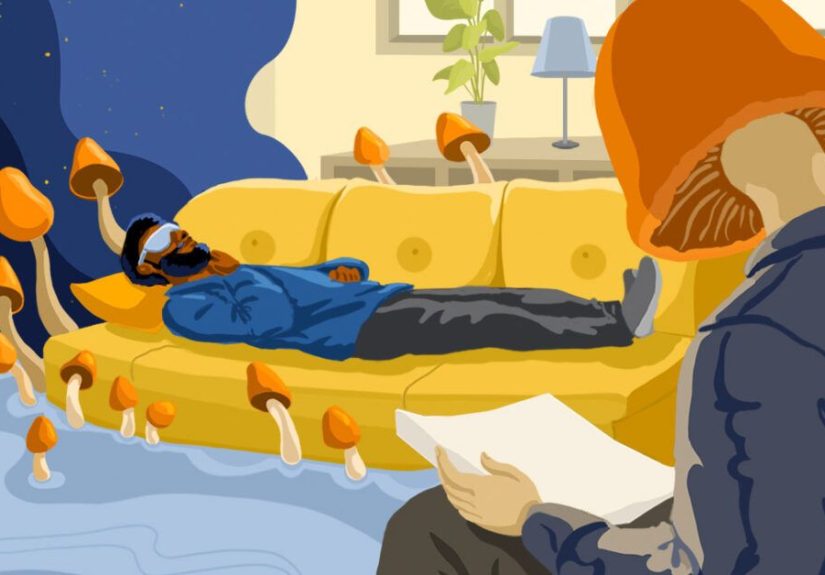
During the medication session, the patient takes the study drug or prescribed treatment in a controlled environment. These sessions can last for hours. The room is usually designed to feel calm rather than clinical, and some protocols include headphones, music, or eye shades. The point is not to create a spa commercial. It is to minimize distractions and support focused inner work.
Therapists or trained monitors stay with the patient throughout the session. They may offer reassurance, help the person tolerate difficult emotions, and keep the experience anchored in safety. In some models, the therapist speaks very little unless needed. In others, there is more active guidance. Either way, this is supervised care, not free-range consciousness.
3. Integration
After the session, psychotherapy continues. This follow-up phase is called integration. The therapist helps the patient reflect on thoughts, emotions, images, or insights that emerged and connect them to real-life goals. A powerful experience that never gets processed can turn into little more than an expensive cosmic scrapbook. Integration is where insight becomes treatment.
Which drugs are involved?
Psychedelic therapy is an umbrella term, and the substances under that umbrella are not all identical.
Classic psychedelics
Classic psychedelics include psilocybin, LSD, and DMT-related compounds. These drugs strongly affect perception, emotion, and cognition, often through serotonin-related pathways in the brain. Psilocybin, the compound associated with so-called “magic mushrooms,” is one of the most studied in modern clinical research.
MDMA
MDMA is often discussed alongside psychedelics even though it is technically different from classic psychedelics. Researchers have studied it for PTSD because it may reduce fear responses, increase emotional openness, and make trauma-focused psychotherapy more tolerable for some patients. That said, public excitement has run ahead of regulation, and that is exactly why experts keep waving the caution flag.
Ketamine and esketamine
Ketamine is not a classic psychedelic, but it often appears in the same conversation because it can produce dissociative and perception-altering effects and has been used in mental health treatment. The FDA-approved version that matters most here is esketamine nasal spray for certain adults with treatment-resistant depression, given under strict medical supervision. So when people say, “Psychedelic therapy is already legal,” the more accurate answer is, “One related treatment exists in a very specific, heavily supervised form.”
What conditions is psychedelic therapy being studied for?
This is where the topic gets exciting and complicated at the same time. Early and mid-stage studies suggest potential benefits, but the evidence is uneven across conditions, and many questions remain unanswered.
Depression
Depression is one of the most discussed targets for psychedelic-assisted treatment, especially when standard antidepressants have not helped enough. Psilocybin has attracted attention because some studies suggest it may reduce depressive symptoms quickly for certain people. That speed is part of the buzz. Traditional antidepressants can take weeks to fully kick in, while psychedelic-assisted models are being studied for faster effects.
Still, “promising” is not the same thing as “proven.” Some trials show meaningful improvement, while others suggest the benefits may be similar to established treatments rather than dramatically better. Researchers are still sorting out who benefits most, how long effects last, and how much of the outcome is due to the drug versus the therapy, expectation, and supportive setting.
PTSD
PTSD research has largely focused on MDMA-assisted psychotherapy. The idea is that lowering fear and defensiveness may help patients engage trauma memories without becoming overwhelmed. It is a compelling hypothesis, and some study results have been encouraging. But encouraging is not the same as approved. Regulatory agencies have raised questions about durability, study design, and safety, which means this area remains very much a work in progress.
Alcohol and substance use disorders
Psilocybin-assisted therapy has also been studied for alcohol use disorder and other forms of addiction. Researchers are interested in whether the treatment can reduce compulsive patterns, increase psychological flexibility, and help people reconnect with motivation, meaning, or self-awareness. Some studies suggest benefit, but as with other conditions, the research base is still smaller than the hype machine.
Cancer-related anxiety and existential distress
Another area of study involves people facing serious illness, especially cancer. In these settings, psychedelic-assisted therapy has been explored as a way to reduce anxiety, depression, and existential distress. Some patients report less fear, more acceptance, and a stronger sense of connection or peace. That does not mean the drug “cures” emotional suffering. It means the therapy may, in carefully selected settings, help people relate to suffering differently.
Why are researchers so interested?
Part of the excitement comes from the possibility that psychedelic therapy may work differently from standard psychiatric treatment. Rather than gradually nudging symptoms down over time, these treatments may create a short period of intense emotional and cognitive openness. Some researchers think that window may make it easier for therapy to help a person reframe trauma, interrupt rigid thought loops, or see themselves with a little more compassion and a little less internal doom scrolling.
There is also interest in whether these drugs temporarily increase neural flexibility, making the brain less stuck in habitual patterns. That idea is still being investigated. Scientists are exploring mechanisms, not handing out final answers engraved on stone tablets.
What psychedelic therapy is not
It is not the same as recreational drug use. It is not the same as self-medicating at home. It is not just microdosing. And it is not a guaranteed shortcut to healing, enlightenment, or becoming the kind of person who says “I’m really into intentionality” three times before lunch.
Clinical psychedelic therapy depends on screening, safety planning, therapist support, and follow-up. Remove those elements and you do not have the same treatment model anymore. You have something else entirely, and possibly something much riskier.
Risks, side effects, and reasons for caution
This field gets covered with a lot of wow-factor headlines, but responsible discussions always include the downsides. Psychedelic experiences can be unpredictable. Even in supervised settings, people may feel fear, panic, confusion, grief, or temporary paranoia. Physical effects can include increased heart rate, increased blood pressure, headache, nausea, dizziness, fatigue, and sleep disruption.
Some people should be approached with special caution or may be excluded from treatment entirely, especially those with a history of psychosis, schizophrenia-spectrum conditions, or certain forms of bipolar disorder. There are also questions about medication interactions, appropriate dosing, long-term effects, and how to distinguish durable benefit from short-term emotional intensity.
Another major issue is research quality. Psychedelic trials are hard to blind because people often know when they received the active drug. That creates expectancy effects. In plain English, if participants and researchers can guess who got the psychedelic, the study gets messier. This does not mean the results are meaningless. It means they need to be interpreted with care.
What about legality?
Legality is where people tend to get whiplash. In the United States, psilocybin remains illegal at the federal level, even though some states and cities have changed local policies. That means the legal landscape is patchy, evolving, and easy to misunderstand. MDMA-assisted therapy is not FDA-approved. Classic psychedelic treatments largely remain investigational.
Esketamine is the exception people often point to, but even that treatment comes with a big asterisk. It is approved only for specific adult indications and must be given under strict supervision in certified health care settings. In other words, this is not over-the-counter wellness wizardry.
Could psychedelic therapy become mainstream?
Possibly, but “possibly” is carrying the conversation on its back. The field has momentum, major academic centers are studying it, and professional organizations are taking it seriously enough to debate methodology, ethics, training, and policy. At the same time, reputable medical groups continue to stress that evidence is still developing and that clinical use should follow scientific standards rather than social media enthusiasm.
If psychedelic therapy does become more common, it will likely be expensive, highly regulated, and dependent on trained clinicians. The future may involve new protocols, shorter-acting compounds, better patient selection, and more clarity about which diagnoses respond best. It may also involve a lot of disappointing fine print. Medicine usually does.
So, what is psychedelic therapy in one sentence?
Psychedelic therapy is a structured, supervised form of treatment that combines psychotherapy with a psychedelic or psychedelic-adjacent drug in order to help certain patients process emotions, trauma, or mental health symptoms in ways that standard treatment has not fully achieved.
That is the hopeful version. The honest version adds one more line: it is promising, but it is still being figured out. Both statements can be true at the same time.
Experiences related to psychedelic therapy: what do patients often describe?
People who go through psychedelic therapy in research or medical settings often describe the experience as emotionally intense, unusual, and difficult to compare with ordinary talk therapy. That does not automatically mean pleasant. In fact, one of the most important truths about psychedelic therapy is that meaningful does not always equal comfortable.
Some patients report a temporary change in their sense of time. Minutes may feel stretched, memories can seem unusually vivid, and emotions that were previously locked behind several layers of psychological bubble wrap may become startlingly accessible. A person might cry, laugh, revisit an old fear, or feel an unexpected tenderness toward themselves. For someone who has spent years emotionally numb, that shift can feel enormous.
Others describe a stronger sense of connectedness. That may mean feeling more connected to loved ones, to the body, to nature, or to a broader sense of meaning. In depression, where life can feel flat and colorless, even a temporary return of emotional richness may feel important. In trauma treatment, some participants describe being able to look at painful memories with a little more distance and a little less terror, almost as if the mind finally stopped slamming the door shut.
Not every experience is uplifting. Some people encounter fear, sadness, shame, or confusion during the session. Difficult material can surface quickly. That is one reason the therapeutic setting matters so much. When trained professionals are present, patients may be encouraged to stay with the emotion, breathe through it, and allow it to unfold instead of trying to outrun it. The goal is not to force a “good trip.” The goal is to make the experience safe enough that hard material can be processed rather than merely endured.
Patients also often say the session itself is only part of the story. The days and weeks afterward may be just as important. Some people notice improved mood, less rumination, or a softer inner voice. Others feel emotionally raw for a while and need careful support to make sense of what surfaced. This is where integration sessions earn their paycheck. A therapist may help the patient translate the experience into practical change, such as setting boundaries, rebuilding routines, addressing grief, or returning to sobriety goals with a clearer sense of purpose.
There is also a quieter category of experience that gets less attention online because it is not flashy enough for a dramatic headline. Some patients simply report feeling more open, less rigid, and more willing to engage with life again. No thunderbolt. No cinematic revelation. Just a small but meaningful shift from “I cannot move forward” to “Maybe I can.” In mental health care, that kind of change is not boring. It is huge.
Still, these reported experiences should not be romanticized. A powerful session does not guarantee lasting improvement, and an intense emotional experience is not the same thing as recovery. Psychedelic therapy may create an opening, but patients usually still need ongoing care, honest self-work, and sometimes conventional treatments too. The experience can be important. What happens after it may matter even more.
Conclusion
Psychedelic therapy sits at the intersection of neuroscience, psychiatry, psychotherapy, and public curiosity. It is generating real scientific interest because early studies suggest it may help some people with depression, trauma-related symptoms, addiction, and existential distress. But the key word is may. Most psychedelic therapies are still investigational, the legal picture remains uneven, and the field still has serious questions to answer about safety, access, ethics, and long-term outcomes.
The smartest way to understand psychedelic therapy is neither to dismiss it as hype nor crown it as a miracle. It is better to see it for what it is right now: a developing treatment model with genuine promise, meaningful risks, and a lot of science still left to do.







 Close
Close