
Table of Contents >> Show >> Hide
- The Milhouse Type: Prepared for Disaster, Shocked When It Happens
- The Ralph Type: Confused, Honest, and Weirdly Free
- Milhouse vs. Ralph: Anxiety and Innocence Walk Into Springfield Elementary
- Why These Two Characters Still Matter
- The Milhouse Strengths We Should Stop Mocking
- The Ralph Wisdom We Should Take Seriously
- So, Which One Are You?
- Life Experiences: Learning to Accept Your Inner Milhouse or Ralph
- Conclusion: Everything’s Coming Up Human
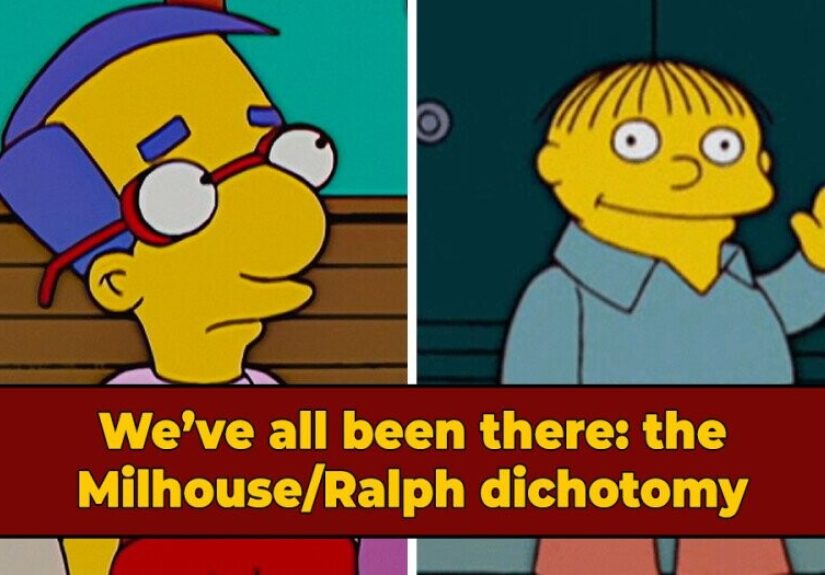
Every generation gets the personality test it deserves. Some people get Myers-Briggs. Some get Enneagram numbers. Some get zodiac signs, which are useful if you want to blame Mercury for sending an email with “per my last email” in it. But true cultural scholars know there is one far more accurate system for understanding human behavior: in life, we can only be two thingsa Milhouse or a Ralph.
Yes, we are talking about Milhouse Van Houten and Ralph Wiggum, two of the most quietly brilliant side characters in The Simpsons. They are not the loudest kids at Springfield Elementary. They are not the coolest. They are not Bart Simpson, who lives as if consequences are merely rumors. They are not Lisa Simpson, who can turn a school assignment into a moral referendum. Milhouse and Ralph occupy stranger, funnier, and more emotionally familiar territory. They are the kids who make the joke land because they are not trying to be jokes.
The phrase “We can only be two things in life: a Milhouse or a Ralph” works because it sounds ridiculous, then immediately starts making sense. Milhouse is anxious, eager, overprepared, unlucky, loyal, and always one bad decision away from being dragged into Bart’s disaster of the week. Ralph is dreamy, unfiltered, accidentally poetic, and so far outside the social script that he occasionally appears to be receiving wisdom from another dimension. Together, they form a surprisingly complete map of the human condition: nervous participation versus innocent surrender.
The Milhouse Type: Prepared for Disaster, Shocked When It Happens
Milhouse Van Houten is the patron saint of trying too hard. He wears thick glasses, has blue hair, and carries the energy of someone who has already apologized for a mistake he has not made yet. He is Bart’s best friend, which is both an honor and a workplace hazard. Being Bart’s best friend means Milhouse gets adventure, attention, and access to chaos. It also means he is often the first person blamed, chased, humiliated, or abandoned near a broken window.
A Milhouse is not simply a nerd. That would be too easy. A Milhouse is someone who wants to be included so badly that they may ignore the warning signs flashing like a nuclear plant control panel. The Milhouse personality says yes before reading the terms and conditions. It laughs nervously at jokes it does not fully understand. It develops a crush, plans an emotional future, and is devastated when the other person was simply being polite.
And yet Milhouse is not pathetic. That is the secret ingredient. Milhouse survives. He gets knocked down by bullies, bad luck, bad timing, and occasionally by Bart’s complete lack of foresight, but he keeps coming back. There is something heroic about that. A Milhouse may panic, but he still shows up. He may complain, but he still follows the group into Shelbyville to retrieve a stolen lemon tree. He may not want the spotlight, but when cast as Fallout Boy in the “Radioactive Man” movie, he becomes the center of one of the show’s funniest Hollywood satires.
Signs You Might Be a Milhouse
You may be a Milhouse if you rehearse phone calls before making them. You may be a Milhouse if you say “no worries” while actively worrying. You may be a Milhouse if you have ever stayed in a friendship, job, or group chat longer than you should have because leaving felt too dramatic. Milhouses do not crave danger, but somehow danger has their address.
In modern life, the Milhouse shows up everywhere. He is the coworker who creates a backup folder for the backup folder. He is the friend who brings sunscreen, bandages, and an emotional support granola bar to a picnic. He is the person who reads restaurant reviews for forty minutes and still orders the same sandwich. A Milhouse wants life to be safe, predictable, and maybe just a little flattering. Life, being life, responds by stealing his lunch money.
The Ralph Type: Confused, Honest, and Weirdly Free
Ralph Wiggum operates on a frequency the rest of Springfield cannot receive. He is the son of Chief Wiggum, a student in Lisa’s class, and one of the most quoted oddballs in television history. Ralph’s lines often sound like nonsense, but that is only because the world is too busy pretending it makes sense. Ralph does not pretend. He says what floats through his mind, whether it is sweet, strange, alarming, or accidentally profound.
A Ralph is not trying to win the room. A Ralph may not even know there is a room. That is part of the charm. While Milhouse monitors the social temperature like a tiny anxious meteorologist, Ralph wanders through life with the emotional honesty of a golden retriever who has discovered finger paint. He does not perform confidence. He simply exists, and somehow that makes him freer than almost everyone around him.
The classic Ralph episode “I Love Lisa” shows why the character is more than a walking non sequitur. When Lisa gives Ralph a Valentine out of pity, Ralph interprets it as romance. The situation becomes painfully funny because everyone has been on one side of that misunderstanding: the person who meant less, or the person who felt more. Ralph’s heartbreak is cartoonish, yes, but it is also recognizable. His innocence makes the emotional damage land harder.
Ralph can also become oddly powerful when the world projects meaning onto him. In “E Pluribus Wiggum,” Springfield backs Ralph as a presidential candidate, and the joke works because he is both completely unqualified and somehow less artificial than the adults around him. Ralph does not spin. Ralph does not strategize. Ralph does not carefully triangulate his message for suburban swing voters. Ralph says Ralph things, and people decide he represents whatever they want to believe.
Signs You Might Be a Ralph
You may be a Ralph if your best ideas arrive with no context. You may be a Ralph if you have accidentally said something wise while trying to describe lunch. You may be a Ralph if people underestimate you because your brain takes the scenic route. Ralphs do not always follow the conversation, but sometimes they stumble into the truth everyone else is politely avoiding.
In everyday life, Ralph is the friend who sees a cloud shaped like a toaster and means it sincerely. He is the person at a stressful meeting who asks the simple question everyone else was too embarrassed to ask. He is the childlike spark in adults who have not completely turned into spreadsheets. Being a Ralph is not about ignorance. It is about wonder surviving in a world that keeps trying to turn wonder into a productivity metric.
Milhouse vs. Ralph: Anxiety and Innocence Walk Into Springfield Elementary
The Milhouse-Ralph divide is funny because both characters are vulnerable, but in opposite ways. Milhouse knows too much about what can go wrong. Ralph often does not know enough. Milhouse is painfully aware of social rejection. Ralph sometimes floats beyond it. Milhouse wants approval. Ralph wants paste, friendship, and perhaps a nap.
Milhouse is the self-conscious part of us. He is the voice that says, “What if they laugh?” Ralph is the unfiltered part of us. He is the voice that says, “My cat’s breath smells like cat food,” and somehow changes the emotional climate of the room. Milhouse edits himself. Ralph broadcasts live. Milhouse wants a plan. Ralph is the plot twist.
Neither type is better. That is the beauty of the comparison. A world full of Milhouses would be organized, loyal, and deeply overinsured, but it might never dance unless someone sent a calendar invite. A world full of Ralphs would be magical, honest, and extremely sticky. Civilization needs both: the person who packs the emergency flashlight and the person who reminds everyone that the moon looks like a pancake wearing a hat.
Why These Two Characters Still Matter
The Simpsons has lasted for decades because Springfield is not just a cartoon town; it is a human behavior laboratory with better jokes. Milhouse and Ralph endure because they capture feelings that do not disappear when childhood ends. Adults still feel like Milhouse when they are ignored in meetings, nervous on dates, or trying to seem relaxed at a party where everyone else appears to understand the dress code. Adults still feel like Ralph when they are overwhelmed, curious, oddly joyful, or completely unable to explain why they walked into a room.
Milhouse represents the comedy of wanting. He wants Lisa to notice him, Bart to respect him, bullies to forget him, and life to stop placing banana peels directly in his path. Ralph represents the comedy of being. He does not chase status in the same way. He simply says the thing, feels the feeling, and wanders onward. Milhouse is a bundle of expectations. Ralph is a loose balloon in a gymnasium.
This is why the “Milhouse or Ralph” idea makes such a good pop-culture personality lens. It is silly, but it is sticky because it asks a real question: do you move through life by trying to manage how others see you, or by letting your strange little inner weather system do what it does? Are you anxious because you care too much, or liberated because you forgot to care on schedule?
The Milhouse Strengths We Should Stop Mocking
Milhouse gets teased because he is visibly insecure. But insecurity often grows right beside empathy. Milhouses notice when the mood shifts. They remember details. They are loyal, sometimes to a fault, but loyalty is still a virtue when it is not being exploited by a spiky-haired agent of chaos.
The Milhouse type is also resilient. He may not look like a hero, but resilience rarely arrives wearing a cape. Sometimes it arrives wearing red shorts and enormous glasses. Milhouse keeps trying after embarrassment. He keeps trusting after disappointment. He keeps believing that maybe, just maybe, this time everything is coming up Milhouse.
That optimism matters. It is not loud like Bart’s rebellion or polished like Lisa’s ambition, but it has its own stubborn glow. A Milhouse knows the world can be cruel and still brings his whole heart to it. That is not weakness. That is emotional cardio.
The Ralph Wisdom We Should Take Seriously
Ralph’s gift is that he does not filter life through the same machinery as everyone else. In comedy terms, that makes him a perfect source of surprise. In human terms, it makes him a reminder that intelligence is not always packaged as smooth conversation. Sometimes insight arrives sideways.
Ralph also exposes the absurdity of adult seriousness. Put him beside politicians, teachers, police officers, or television hosts, and suddenly their confidence looks just as strange as his confusion. The adults claim to know what they are doing, but Springfield proves again and again that most authority figures are improvising with a clipboard.
To be a Ralph is to keep a little part of yourself unsanded by embarrassment. It is to let wonder leak through the cracks. It is to say the odd thing, ask the basic question, and occasionally become the only honest person in the scene.
So, Which One Are You?
If you are a Milhouse, you probably already know. You read the title and immediately wondered whether being a Milhouse was bad, then felt guilty for judging Ralph, then considered making a list. You are the planner, the loyal friend, the nervous romantic, the person who wants life to grade on effort.
If you are a Ralph, you may not care which one you are. You might be delighted simply to be included. You bring accidental poetry to ordinary moments. You are not always easy to follow, but you are often impossible to forget.
Most of us, of course, are both. We are Milhouse when we want to be chosen. We are Ralph when we stop trying to sound impressive. We are Milhouse when we fear rejection. We are Ralph when we say something honest before our inner publicist can stop us. We are Milhouse in the waiting room before a job interview. We are Ralph five minutes after waking up from a nap.
Life Experiences: Learning to Accept Your Inner Milhouse or Ralph
There is a particular kind of Milhouse moment that nearly everyone experiences. Imagine walking into a party where you know exactly one person, and that person is currently trapped in a conversation across the room. You stand near the snacks, pretending to evaluate chips like a food critic. You check your phone, though no one has texted. You laugh at a joke you only half-heard. That is pure Milhouse energy: wanting to belong, fearing you do not, and hoping no one notices the panic tap-dancing behind your eyes.
But then something Ralph-like happens. Someone spills a drink. A dog enters wearing a sweater. The playlist suddenly serves a song everyone secretly loves. The room loosens. You say something unplanned, maybe even odd, and people laugh with you instead of at you. For a second, you are not managing your image. You are just there. That is the Ralph experience: the unexpected relief of not performing.
School is another breeding ground for Milhouse-and-Ralph moments. Many people remember being the Milhouse during group projectsthe one who cared too much, made the slides, checked the spelling, and silently aged three years when another team member said, “I’ll just wing my part.” At the same time, every class had a Ralph: the kid who asked a question so strange that the teacher paused, then realized it was actually the most interesting question of the day. The Milhouse kept the project alive. The Ralph made it memorable.
Workplaces are not much different. The Milhouse prepares for the meeting with notes, backup notes, and a backup plan for the backup notes. The Ralph asks, “Why are we doing this?” and accidentally detonates the entire strategy deck. The Milhouse may resent the Ralph for being unbothered, while the Ralph may not notice there was tension in the first place. Yet the best teams need both. Without Milhouse, nothing gets finished. Without Ralph, nobody questions whether the finished thing makes sense.
Relationships also reveal the two types. The Milhouse in us wants reassurance. It reads tone, punctuation, response time, and whether “haha” has one “ha” too few. The Ralph in us wants to love without overthinking, to say the sincere thing even if it comes out crooked. Healthy connection probably lives somewhere between them. Too much Milhouse and love becomes a courtroom drama. Too much Ralph and important anniversaries may be remembered only as “the day with the cake feelings.”
The real lesson is not that we must choose one identity forever. It is that we should recognize which one is driving at any given moment. When fear makes us shrink, we can honor our inner Milhouse without letting him run the whole committee. When innocence makes us honest, we can welcome our inner Ralph without abandoning responsibility completely. The goal is not to become Bart, Lisa, or anyone else. The goal is to be anxious and brave, strange and sincere, cautious and curious.
In other words, life is not asking us to defeat Milhouse or outgrow Ralph. It is asking us to let Milhouse bring the map and let Ralph point out the weird cloud shaped like a sandwich. Between those two, we might actually find our way.
Conclusion: Everything’s Coming Up Human
“We Can Only Be Two Things In Life: A Milhouse Or A Ralph” is more than a funny Simpsons thought experiment. It is a surprisingly accurate way to talk about vulnerability. Milhouse teaches us that caring too much can be embarrassing, but it can also be brave. Ralph teaches us that not fitting the script can be confusing, but it can also be freeing.
The best version of life may not be choosing between them. It may be learning when to use each one. Be a Milhouse when loyalty, preparation, and persistence matter. Be a Ralph when honesty, wonder, and weird little flashes of truth are needed. And when life knocks you down, misquotes you, or casts you as Fallout Boy without your consent, remember: getting back up is very Milhouse. Saying something unforgettable while doing it is pure Ralph.







 Close
Close