
Table of Contents >> Show >> Hide
- What is a posture corrector, exactly?
- Do posture correctors really work?
- Who may benefit from using one?
- Who should be careful or skip a generic posture corrector?
- How long should you wear a posture corrector?
- Can a posture corrector weaken your muscles?
- How do you choose the right posture corrector?
- How should you use a posture corrector correctly?
- What else should you do besides wearing one?
- What are common mistakes people make?
- Can a posture corrector help with pain?
- How long does it take to notice results?
- When should you see a clinician or physical therapist?
- Common experiences people report when using a posture corrector
- Final thoughts
If you have ever caught your reflection and thought, “Why do I look like a question mark with a coffee addiction?” welcome to the club. Slouching happens. Screens are sneaky. Couches are persuasive. And long workdays can turn even confident adults into human shrimp. That is why posture correctors have become wildly popular. They promise straighter shoulders, less nagging tension, and maybe a little more confidence when you walk into a room.
But do posture correctors actually work, or are they just the fitness equivalent of buying a salad and then ordering fries? The real answer is more useful than the hype. A posture corrector can help some people, especially as a short-term reminder. It is not a miracle device, and it is not a replacement for muscle strength, movement, or a better workstation setup. Used wisely, it can be a helpful tool. Used poorly, it can become an uncomfortable crutch that spends more time in your closet than on your body.
This guide answers the questions people actually ask about posture correctors, from how they work to how long to wear them, who should avoid them, what results to expect, and how to get better posture without turning your day into a full-time stretching retreat.
What is a posture corrector, exactly?
A posture corrector is a wearable device designed to guide your body into better alignment. Most common consumer versions fit around the shoulders and upper back like a light brace or harness. Some include elastic straps, some use firmer support panels, and some are more like compression garments with a reminder effect. Their basic job is simple: they encourage you to pull your shoulders back, open your chest, and notice when you start sinking into a slouch.
That last part matters. For many users, a posture corrector works less like a permanent fix and more like training wheels. It gives you feedback. When you drift forward, the device reminds you that your head is creeping out over your shoulders and your upper back is collapsing like a folding lawn chair.
Do posture correctors really work?
Yes, but with an important asterisk the size of a yoga mat.
A posture corrector can help improve your awareness of posture and may temporarily improve upper-body alignment. Some research on scapular and rounded-shoulder bracing suggests short-term improvements in posture and muscle activity. In plain English, the brace can nudge your body in the right direction and help you recognize what better posture feels like. That can be useful, especially if you spend hours at a computer, drive a lot, or tend to roll your shoulders forward without realizing it.
What a posture corrector does not do is magically retrain weak muscles while you sit motionless for ten hours a day. If you want long-term results, the brace has to be paired with movement, strengthening, stretching, and smarter daily habits. Otherwise, it is like buying running shoes and expecting your cardio to improve while you continue negotiating peace treaties with your couch cushions.
Who may benefit from using one?
A posture corrector may be helpful for people who:
- Spend long stretches sitting at a desk or using a laptop
- Notice rounded shoulders or a forward-head posture during the day
- Feel mild tension in the neck, shoulders, or upper back linked to slouching
- Need a short-term cue while learning better posture habits
- Are working on posture exercises and want occasional reinforcement
It can be especially useful for people who say things like, “I know my posture is bad, but I do not realize I am slouching until I already feel stiff.” In that situation, the device acts as a reminder system. It does not do the work for you, but it taps you on the shoulder and says, “Hey, your neck is doing too much again.”
Who should be careful or skip a generic posture corrector?
Not everyone should self-treat with an over-the-counter posture brace. If you have significant pain, numbness, tingling, weakness, a recent injury, known spinal disease, breathing issues, or symptoms that travel down the arm or leg, it is smart to get medical advice first. The same goes for anyone with a history of scoliosis, significant kyphosis, osteoporosis-related spinal fractures, or other structural spine conditions.
This is where many people get confused. A consumer posture corrector is not the same thing as a custom medical brace. Braces used for scoliosis or certain spinal conditions are prescribed for specific reasons and are fitted differently. If you have a diagnosed spinal condition, do not assume an online shoulder brace is the bargain-bin version of medical treatment. It is not.
How long should you wear a posture corrector?
Short sessions are usually the smartest approach. Most people do better starting with 15 to 30 minutes at a time, then gradually increasing only if the device feels comfortable and does not cause irritation or soreness. Many experts suggest thinking of posture correctors as temporary tools, not all-day uniforms.
If you strap one on from breakfast to bedtime, you may become overly reliant on it, and you might ignore the real habits that need changing. The better approach is to use it strategically. Wear it during a stretch of desk work. Use it while learning how upright sitting feels. Put it on during a posture reset session. Then take it off and practice holding that position on your own.
A good rule of thumb
Use the device to teach posture, not to replace it. If you cannot maintain better alignment at all without the brace after weeks of use, the plan needs more exercise and less dependency.
Can a posture corrector weaken your muscles?
That depends on how you use it. Wearing a brace occasionally as a cue is very different from relying on it constantly. If you use a posture corrector as a reminder while also strengthening your upper back, shoulders, and core, it is less likely to become a problem. If you wear it for long periods and stop using your own muscles to support good alignment, you may not build the control you actually need.
Think of it like leaning on a shopping cart. For a minute, fine. For your whole life, not ideal.
Better posture depends on muscular endurance, mobility, body awareness, and daily movement. A brace can assist those things, but it cannot substitute for them.
How do you choose the right posture corrector?
The best posture corrector is not necessarily the most intense-looking one. In fact, if it resembles camping gear designed for a small robot, it may be more dramatic than helpful.
Look for these features:
- Comfort: If it pinches, rubs, or makes you miserable, you will not wear it consistently enough to learn from it.
- Adjustability: Straps should be easy to modify so the device feels supportive rather than punishing.
- Breathability: Lightweight materials are more practical for everyday use.
- Gentle cueing: A device that reminds you to align is often better than one that forcefully yanks you backward.
- Fit under clothing: Real life matters. If it only works with one shirt and a prayer, it probably will not become part of your routine.
If the brace causes skin irritation, numbness, sharp pain, restricted breathing, or new discomfort, stop using it.
How should you use a posture corrector correctly?
Start by putting it on while standing tall, not while already slumped like you are apologizing to gravity. Adjust the brace so it gently encourages your shoulders back and down without forcing an exaggerated military posture. Good posture is not a chest-puffed, chin-jutted performance. It is balanced, relaxed, and sustainable.
When wearing it, keep these habits in mind:
- Keep your ears roughly over your shoulders
- Let your shoulders relax instead of shrugging upward
- Keep your rib cage stacked over your pelvis
- Distribute weight evenly through your feet when standing
- Take breaks to move instead of freezing in one position
And yes, movement breaks matter. Even a beautifully aligned sitting posture becomes a problem if you hold it for too long. Your body loves variety more than perfection.
What else should you do besides wearing one?
This is the part many shoppers skip, and it is the part that actually delivers lasting change.
1. Strengthen the upper back and core
Exercises like rows, scapular squeezes, wall angels, and band pull-aparts can help train the muscles that support better posture. A strong upper back gives your shoulders a reason to stay where they belong instead of drifting forward like curious toddlers.
2. Stretch what tends to get tight
Tight chest muscles, a stiff thoracic spine, and cranky hip flexors can all contribute to poor posture. Gentle stretching for the chest, upper back, and hips can make an upright position feel less like a punishment.
3. Fix your workstation
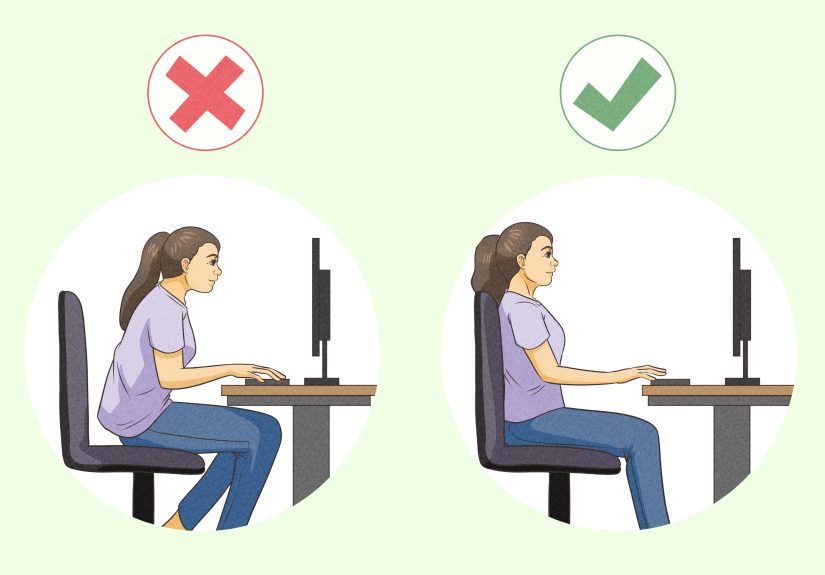
If your screen is too low, your chair is too high, your keyboard is too far away, and your feet are dangling like you are waiting for a ski lift, your posture corrector is fighting an uphill battle. Set your screen closer to eye level, keep your feet supported, relax your shoulders, and keep frequently used items close by.
4. Move every 30 to 60 minutes
Stand up. Walk. Stretch. Reset. No heroic transformation is required. Even brief posture breaks help interrupt the marathon of sitting still.
5. Practice body awareness
Wall checks, mirror checks, and photo checks can help you see what your posture actually looks like. Most people’s “I am sitting up straight” posture is still suspiciously shrimp-adjacent.
What are common mistakes people make?
- Wearing it too long: More is not always better.
- Using it without exercise: A brace alone rarely solves the problem.
- Choosing a device that is too rigid: Comfort matters for compliance.
- Expecting instant pain relief: Posture is only one piece of the pain puzzle.
- Ignoring ergonomics: A bad desk setup can undo your progress fast.
- Forcing “perfect” posture: Good posture is efficient and relaxed, not robotic.
Can a posture corrector help with pain?
It can help some people with mild discomfort related to slouching, muscle fatigue, or prolonged sitting. But pain is complicated. Neck pain, shoulder tension, and back pain can come from muscle strain, joint problems, nerve irritation, poor sleep positions, injuries, stress, and other causes. That means a posture corrector may reduce one contributor without solving the whole issue.
If your pain is severe, constant, worsening, or paired with numbness, weakness, fever, weight loss, bowel or bladder changes, or pain shooting below the knee, do not treat it as a simple posture issue. Get it checked.
How long does it take to notice results?
Some people notice a difference immediately in awareness. They stand a little taller, feel their shoulders open up, and realize how often they drift into a slump. That is the fast win.
The slower win is building posture that lasts without the device. That usually takes weeks of consistent practice, not days. Real improvement comes from the combination of cueing, strengthening, stretching, and better daily habits. Think progress, not posture perfection.
When should you see a clinician or physical therapist?
See a healthcare professional if:
- Your pain is strong, persistent, or getting worse
- You have numbness, tingling, weakness, or balance problems
- Your symptoms started after a fall or injury
- You notice a visible spinal curve or one shoulder is much higher than the other
- You have pain that wakes you at night or spreads into the arms or legs
- You have bowel or bladder changes, fever, or unexplained weight loss
A physical therapist can help identify whether your problem is mostly posture, mobility, weakness, ergonomics, or something else entirely. That matters, because the best brace in the world cannot fix the wrong diagnosis.
Common experiences people report when using a posture corrector
People often start using a posture corrector for one simple reason: they are tired of feeling folded over by the end of the day. A common early experience is increased awareness. Users suddenly realize how often they push their chin forward, round their shoulders, or collapse into one hip while standing. This “wow, I really do slouch a lot” phase is extremely common and, honestly, useful. Awareness is usually the first real step toward change.
Another frequent experience is mild muscle fatigue during the first several uses. This does not necessarily mean something is wrong. If the device is fitted gently and the feeling is more like your upper back is finally clocking in for work, that can be normal. Many people describe the sensation as a reminder that their postural muscles have been on an extended vacation. What they often notice next is that short sessions feel manageable, while long sessions quickly become annoying. That is one reason moderation works better than wearing the brace all day.
Some users report that a posture corrector makes desk work more comfortable, especially during tasks that usually trigger slouching, like typing, reading, or scrolling on a laptop. They may feel less upper-back tension at the end of the afternoon, or they may catch themselves sooner before their head starts drifting forward. Others say the biggest benefit is not pain relief but confidence. Standing taller can make breathing feel easier, clothing fit better, and body language appear more open and energetic.
At the same time, people also learn what posture correctors cannot do. Many realize that if they take the brace off and return to a poor desk setup, low movement, and zero strengthening, the old posture habits return quickly. That is not failure. It is feedback. The brace was doing its job as a cue, but the body still needed training. Users who combine the device with rows, wall angels, chest stretches, walking breaks, and workstation adjustments tend to report more durable improvement than users who rely on the brace alone.
There are also practical experiences that matter. Some people discover that a bulky brace is too hot under clothing or rubs the skin near the underarms. Others find that a softer, more adjustable model is easier to use consistently. A few people stop wearing posture correctors because they expected instant transformation and instead got a gentle reminder device. That expectation gap is common. The most satisfied users usually approach the tool with realistic goals: better awareness, temporary support, and help building healthier habits over time.
Finally, many people say the greatest benefit is not that the device “fixed” their posture forever, but that it taught them what better alignment feels like. Once they recognize that feeling, they can recreate it without the brace more often during daily life. That is the sweet spot. A posture corrector should help you become less dependent on it, not more.
Final thoughts
A posture corrector can be a smart, practical tool when used with the right expectations. It may help cue better alignment, reduce slouching during certain activities, and improve awareness of how you carry yourself throughout the day. But it is only one piece of the posture puzzle. Lasting results come from better movement, stronger support muscles, smarter ergonomics, and less time parked in one position.
So yes, you can use a posture corrector. Just do not expect it to perform a solo rescue mission while your desk setup remains chaotic and your upper back muscles continue their long-standing labor strike. Use it as a helper, not a hero, and you will have a much better chance of standing taller for the long haul.







 Close
Close