
Table of Contents >> Show >> Hide
- Why the Army Wanted a Light Tank Again
- Meet the M10 Booker
- Why the Booker Mattered
- The Problem With Calling It a Light Tank
- The Plot Twist: The Army Hit the Brakes
- What the Booker Says About the Future of Army Combat
- Extended Experience: What the Army’s Booker Experience Really Teaches
- Conclusion
- SEO Tags
For a while, that headline sounded like one of those rare Pentagon stories that was both simple and exciting: the U.S. Army wanted a new light tank, picked a winner, and finally started taking deliveries. After more than half a century without a true light tank in the old-school Sheridan sense, the service appeared ready to bring back mobile direct-fire support for infantry in a big way.
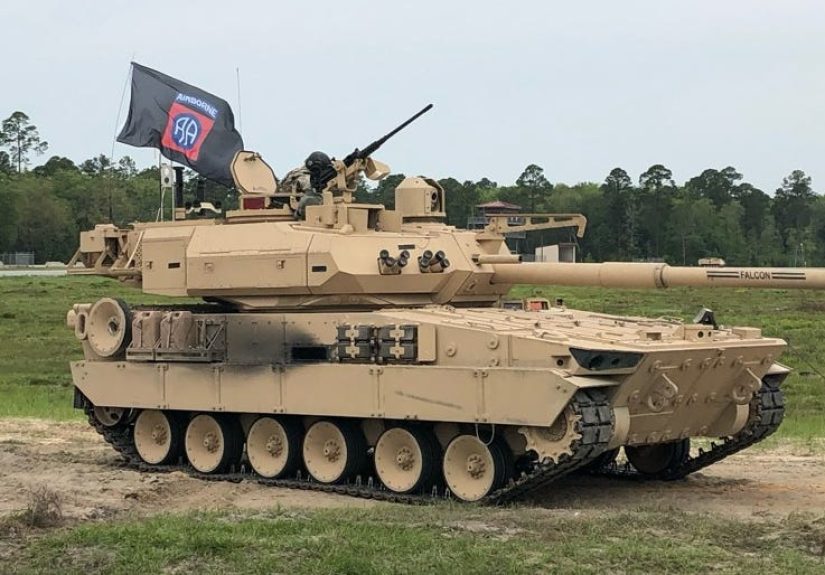
Then the story did what defense programs often do: it took a hard left turn into complexity, bureaucracy, and one extremely expensive reality check. The vehicle that arrived was the M10 Booker, formerly known as Mobile Protected Firepower. It looked like a small tank, rolled like a small tank, and carried a 105mm gun like a machine that definitely does not exist to hand out polite suggestions. But the Army repeatedly argued that it was not really a “light tank” in the traditional sense. Instead, it was built to give Infantry Brigade Combat Teams a protected, mobile direct-fire platform to blast bunkers, machine-gun nests, fortified positions, and light armored threats that regular light infantry could not easily handle on their own.
So yes, the Army finally got the kind of vehicle many observers called its first light tank in decades. But it got there by taking a winding road through modern procurement, changing battlefield assumptions, and a final twist that turned the M10 Booker from headline-grabber into cautionary tale. If you want the short version, here it is: the Army got its first deliveries, learned a lot, and then decided the future battlefield wanted something different.
Why the Army Wanted a Light Tank Again
To understand the Booker, you have to understand what the Army felt it had been missing. Infantry Brigade Combat Teams are designed to move fast and deploy quickly, but they do not bring the same level of protected firepower as heavy armored formations. That creates a problem when light infantry runs into bunkers, fortified strongpoints, or enemy vehicles that are too stubborn to be solved with a rifle squad and optimistic body language.
For years, that gap sat there like an unpaid tab. The Army’s older M551 Sheridan had once filled a version of that role. Introduced during the Vietnam era, the Sheridan was the Army’s last real attempt to field an effective light tank, but its service history was mixed. It offered mobility and punch, yet it also suffered from design compromises, survivability issues, and a reputation that was never exactly wrapped in glory and handed out with a parade. After the Sheridan faded out, the Army never really found a perfect replacement. It tried, thought about trying, nearly tried, and occasionally tried so hard it accidentally invented a meeting instead of a vehicle.
That long-running capability gap is what gave birth to the Mobile Protected Firepower requirement. Army planning documents and acquisition summaries made the mission clear: infantry brigades needed a protected, long-range, precision direct-fire capability that could destroy prepared positions, bunkers, machine guns, and light armored threats while supporting offensive and defensive operations. In plain English, the Army wanted something lighter and easier to deploy than an Abrams, but far more lethal and survivable than a truck with a bad attitude.
The Ghost of the Sheridan
The phrase “first light tank in over 50 years” came from comparisons to the M551 Sheridan, which entered service in the late 1960s. That vehicle was built for airborne and reconnaissance use, and it gave the Army a small, air-deployable armored platform with a heavy punch. It also came with enough issues to keep maintenance crews employed and historians entertained for decades.
In a way, the Booker was supposed to avoid that trap. The Army did not want a nostalgic remake of the Sheridan. It wanted a more practical, more survivable, more useful vehicle for modern infantry formations. The goal was not to create a mini-Abrams for tank-on-tank duels. The goal was to give infantry commanders an armored sledgehammer that could arrive faster than a main battle tank and stay with lighter formations in demanding terrain and expeditionary operations.
Meet the M10 Booker
The Army awarded General Dynamics Land Systems the production contract in 2022 after a competitive prototyping effort. The vehicle was later officially named the M10 Booker in honor of Pvt. Robert D. Booker, a World War II Medal of Honor recipient, and Staff Sgt. Stevon A. Booker, a Distinguished Service Cross recipient killed during Operation Iraqi Freedom. That naming gave the platform something many weapons programs never get: a real human connection that made it feel less like a spreadsheet and more like part of Army tradition.
Technically, the Booker brought plenty to the table. It used a 105mm M35 main gun, carried a crew of four, and included secondary weapons like a coaxial machine gun and a commander’s .50 caliber machine gun. Army descriptions emphasized that it offered mobile, protected, direct-fire support against light armored vehicles, hardened fortifications, and dismounted personnel. It could reach roughly 40 miles per hour, and Army officials highlighted that two vehicles could be transported on a C-17, which mattered a great deal for rapid deployment scenarios.
That transport point was one of the Booker’s biggest selling features. The Abrams is formidable, but it is also huge, heavy, and logistically demanding. The Booker was supposed to be the more agile cousin: not as heavily armored, not as heavily armed, but more responsive for infantry formations that needed something scary and tracked to show up quickly. Think of it as the Army’s effort to order armor in a size that fit through the deployment door without requiring a forklift, three waivers, and a weather miracle.
What It Was Built to Do
The Army’s own descriptions are important here because they explain why officials pushed back on the “light tank” label. In testing and program documents, the M10 Booker was framed as an infantry support vehicle or assault gun rather than a classic tank. It was meant to support dismounted light infantry, engage bunkers and machine-gun positions, and provide direct fire during offensive and defensive operations. It was not designed to charge across open ground hunting enemy main battle tanks like it had something to prove at a reunion.
That distinction matters because labels shape expectations. Call it a tank, and many people will expect Abrams-style protection and performance. Call it an armored infantry support vehicle, and the conversation shifts toward mission fit. The Army wanted the second definition, while much of the public and media preferred the first because, frankly, “new light tank” is a much better headline than “new tracked protected direct-fire platform optimized for infantry brigade operational shortfalls.” The copy editor was never going to win that fight.
Why the Booker Mattered
Even critics of the program usually agreed on one thing: the underlying requirement was real. Infantry brigades need protected firepower. There are battlefield problems that cannot be solved quickly by shoulder-fired weapons, artillery on call, or hopes and dreams attached to a radio request. A vehicle like the Booker promised to let lighter Army formations punch above their weight without waiting for heavy armor to arrive days later.
It also mattered because it showed the Army trying to move faster. The Mobile Protected Firepower effort used competitive prototyping and a more streamlined acquisition approach than some legacy defense programs. For a while, the Booker looked like proof that the Army could identify a tactical gap, run a competition, get industry prototypes into soldier hands, and move toward production without disappearing into a paperwork cave for fifteen years. In acquisition terms, that alone was enough to make people sit up and clap politely.
On paper, the plan was ambitious. Army documents pointed to an acquisition objective of hundreds of vehicles, with early fielding aimed at units like the 82nd Airborne. The vehicle had a clear role, a strong narrative, and a mission that sounded increasingly relevant in an era when mobility, survivability, and fast deployment all matter at once.
The Problem With Calling It a Light Tank
Here is where things get delightfully awkward. The Booker looked like a tank, was armed like a tank-adjacent machine, and was widely described as a light tank. But Army officials kept saying it was not one. That was not just branding fussiness. It reflected a real tension between appearance, mission, and battlefield expectations.
Traditional light tanks are usually associated with reconnaissance, airborne deployment, or a lighter armored role that still preserves tank identity. The Booker, by contrast, was developed specifically to support infantry brigades with direct fire. Army testing officials described it as an assault gun and an armored infantry support vehicle, not a battle tank. In other words, the Army was trying to prevent the classic military problem where everyone sees a shiny tracked vehicle with a big gun and immediately starts assigning it jobs it was never meant to do.
That caution was wise. By 2025, the service was still testing the Booker in places like Yuma Proving Ground and Alaska, while evaluation documents noted ongoing efforts related to live fire, operational testing, cooling improvements, and earlier fixes tied to toxic fumes when firing the main gun. None of that meant the program was doomed. It did mean the Army was still figuring out how well the vehicle matched the mission it had been assigned.
The Plot Twist: The Army Hit the Brakes
Then came the twist that changed the whole conversation. In 2024, the Army took delivery of its first M10 Booker. For a moment, the program looked like a success story finally crossing into real fielding. By early 2025, testing was still underway, and the system was moving toward a decision on full-rate production.
But in 2025, the Army’s broader transformation push changed priorities. As Army leaders focused more heavily on drones, counter-drone systems, mobility, faster adaptation, and new battlefield realities, the Booker became vulnerable. In June 2025, the Army announced it would cease procurement of M10 Booker Combat Vehicles and would not enter full-rate production. That was not a minor trim around the edges. That was the service effectively pulling the emergency brake on the program just as it was supposed to accelerate.
Why? Because the Army concluded the platform no longer fit as cleanly into its future plans as once hoped. Critics argued the vehicle had grown too heavy for what many expected from a “light” concept. Officials also pointed toward the need to reallocate money toward capabilities they saw as more urgent and more aligned with the evolving battlefield. The program had delivered vehicles, but the Army no longer wanted to keep buying them at scale.
That makes the Booker story unusual. It was not a total paper concept that died before reality. It was not a triumphant full-scale success either. It actually reached the Army, proved the service could field a new tracked combat vehicle, and then got caught in a strategic reevaluation that said, essentially, “Interesting machine. Wrong moment. Next question.”
What the Booker Says About the Future of Army Combat
The most interesting part of the Booker story is not just the vehicle itself. It is what the vehicle reveals about the Army’s current identity crisis in a changing era of warfare. The service still needs protected firepower for infantry. That requirement did not magically disappear because somebody wrote a memo with more drones in it. But the Army also knows that mobility, networked sensors, loitering munitions, electronic warfare, and air defense are becoming central to survival.
The Booker sat right in the middle of that debate. It was a practical answer to a real tactical gap. Yet it also represented a heavy, manned, tracked solution arriving at a time when many defense leaders were asking whether the next battlefield rewards smaller signatures, distributed systems, and cheaper mass. In that sense, the Booker became less a symbol of failure than a symbol of timing. It solved yesterday’s urgent question just as tomorrow’s louder question barged into the room.
That does not make the program pointless. Quite the opposite. The Army learned from soldier assessments, testing, logistics planning, transport questions, survivability analysis, and acquisition speed. Even canceled programs leave behind valuable lessons, and sometimes they leave behind even more honest lessons because the institution is forced to explain what changed.
Extended Experience: What the Army’s Booker Experience Really Teaches
The best way to think about the M10 Booker experience is not as a clean victory or a clean failure, but as a very modern Army lesson wrapped in steel, software, and ambition. First, the Booker experience shows that requirements matter more than hype. The Army correctly identified a painful problem: light infantry needed protected direct fire. That part was never silly, never imaginary, and never just a contractor sales pitch in a nicer tie. The need was real. Soldiers wanted something that could move with them, survive better than lighter vehicles, and smash fortified threats without waiting for heavier formations. If anything, the Booker experience proves the Army’s tactical diagnosis was sound.
Second, the Booker experience shows how quickly a reasonable requirement can become a complicated product. The more survivability, mobility, transportability, lethality, and crew protection you add, the more the vehicle starts gaining weight, complexity, and cost. Suddenly the “light” concept starts eating a large lunch every day and turns into something that still is not an Abrams, but also is not exactly featherweight. That is not unique to the Booker. It is practically the theme song of modern defense acquisition.
Third, the program revealed something valuable about the Army’s willingness to change course. Historically, major programs often linger because so much money, pride, and institutional momentum are already invested. The Booker experience suggests the Army is at least trying to become more willing to say, “We got part of this right, but not enough of it right for the future we now see.” That does not make the cancellation painless, but it may be healthier than pretending every expensive vehicle automatically deserves a lifelong career.
Fourth, soldiers and planners still gained something from the process. The Army tested a new combat vehicle, refined issues involving fumes and cooling, examined how the platform performed in desert and cold weather conditions, and explored how rapidly deployable armored support might actually work for infantry brigades. Those lessons do not disappear just because procurement stopped. They become building blocks for whatever comes next, whether that is a lighter manned system, a new family of unmanned support vehicles, or a hybrid approach that mixes platforms and precision fires.
Finally, the Booker experience is a reminder that warfighting trends are moving fast. A vehicle conceived to solve one operational gap can run straight into a new environment dominated by drones, loitering munitions, electronic attack, contested logistics, and constant surveillance. The Army did not suddenly stop caring about firepower. It started caring even more about flexibility, affordability, and how a platform survives in a battlefield that now sees almost everything. The M10 Booker may not become the long-term backbone once imagined, but its story still matters because it captures the Army in transition: looking backward at a decades-old firepower gap while also looking forward to a battlefield that refuses to stay still.
Conclusion
The U.S. Army’s first light-tank-like vehicle in over 50 years was supposed to mark a triumphant return of mobile protected firepower for infantry. In one sense, it did. The M10 Booker moved from concept to contract to naming ceremony to first delivery, proving the Army could still field a new tracked combat vehicle and address a long-standing gap in its lighter formations.
But the bigger truth is more interesting than the original headline. The Booker was never just about reviving the light tank. It was about the Army trying to balance deployability, survivability, and firepower in a world where battlefields are changing faster than procurement cycles. The result was a vehicle that solved some old problems, raised some new ones, and then got caught in a broader transformation effort before it could fully settle into the force.
That makes the Booker story worth reading not because it is neat, but because it is messy. It is a story about what the Army thought it needed, what it managed to build, and what it later decided it needed even more. In defense, that is often the real action: not when the vehicle rolls out, but when the strategy changes while the paint is still drying.





 Close
Close