
Table of Contents >> Show >> Hide
- What does a blackbird symbolize?
- Blackbird spiritual meaning
- Blackbird symbolism in Indigenous and cultural traditions
- Blackbird meaning in literature and music
- Why blackbirds feel symbolic in the first place
- How to interpret a blackbird encounter
- Experiences people often connect with blackbird symbolism
- Conclusion
Blackbirds have a talent for showing up like they own the place. One minute you are walking past a pond, minding your business, and the next minute a glossy dark bird lands on a reed, flares a flash of color, and delivers a song that sounds like nature clearing its throat before making an important point. It is no wonder blackbirds have gathered layers of spiritual meaning, folklore, artistic symbolism, and cultural weight across generations.
If you have ever wondered what a blackbird means, the short answer is this: blackbirds often symbolize change, intelligence, voice, protection, mystery, resilience, and the ability to move between the ordinary world and the emotional one. That is a lot for one bird to carry around on two tiny legs, but blackbirds have always been overachievers.
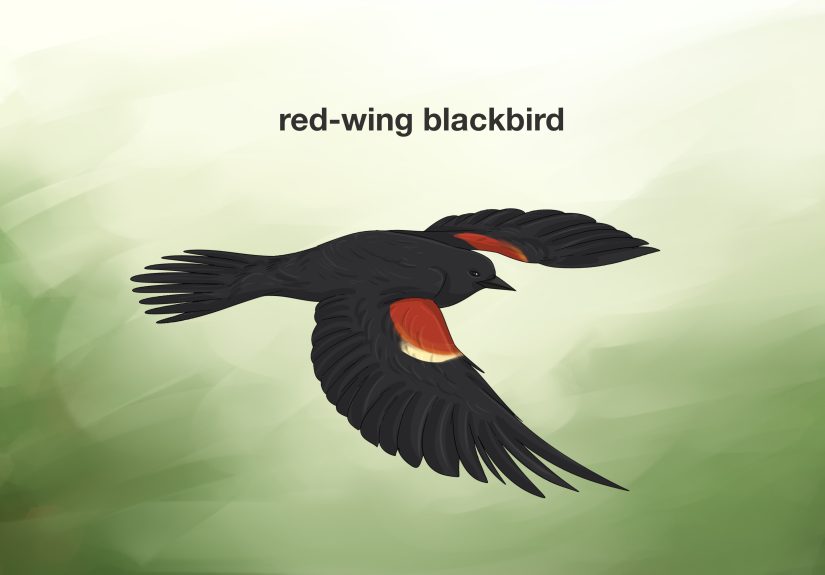
There is one important detail to get straight before we go full symbolism mode. In North America, the word blackbird often refers to birds such as red-winged blackbirds, grackles, and related species. In British and European traditions, “blackbird” often points to the common blackbird, a different species altogether. The symbolism overlaps because people respond to similar traits: dark plumage, striking song, bold presence, and a habit of appearing exactly when a moment feels meaningful.
What does a blackbird symbolize?
Across spiritual traditions, literature, and everyday folklore, blackbird meaning tends to cluster around a few recurring themes.
1. Change and transition
Blackbirds are frequently linked to transition because they are so often noticed at seasonal turning points, especially in spring. Their calls cut through wetland air, roadside fields, and morning silence like a natural announcement that winter is packing its bags. Symbolically, that makes the blackbird a messenger of movement: the end of one phase, the beginning of another, and the uncomfortable but necessary middle where life rearranges the furniture without asking permission first.
2. Voice and self-expression
A blackbird is not a shy symbol. Many blackbird species are loud, territorial, visible, and deeply connected to song. Spiritually, that gives them strong ties to communication, confidence, and speaking up. If a blackbird appears in a dream, a reflection practice, or a personal moment of change, many people interpret it as a nudge to stop swallowing their truth like it is expired medicine. Say the thing. Sing the song. Send the email. Be mildly terrifying if necessary.
3. Mystery without pure doom
Because blackbirds are dark in color, they are sometimes associated with the unknown, the hidden, or the shadow side of life. But unlike some darker bird symbols that lean heavily toward fear, blackbirds usually carry a more balanced message. They do not simply represent doom. More often, they symbolize depth, intuition, and the parts of life that cannot be reduced to neat labels. In other words, the blackbird is less “everything is ruined” and more “pay attention, something important is happening under the surface.”
4. Protection and courage
Anyone who has ever wandered too close to a red-winged blackbird nest already knows this bird has opinions. Blackbirds are famous for fierce territorial defense, and that behavior has shaped their symbolism. In some traditions, they are seen as protectors, warning voices, or guardians of what matters most. Their message is not passive peace. It is active care. Protect your people. Guard your boundaries. Do not confuse softness with surrender.
Blackbird spiritual meaning
From a spiritual perspective, the blackbird often represents awareness at the edge of transformation. It appears in symbolic language as a bird of thresholds: dawn and dusk, winter and spring, silence and song, uncertainty and insight. This “in-between” quality is one reason blackbirds feel spiritually charged. They seem to belong to both the visible landscape and the inner landscape at the same time.
Many modern spiritual interpretations connect blackbirds with intuition. Their dark feathers suggest hidden knowledge, while their songs suggest revelation. Put those together and you get a symbolic creature that says, “Trust what you sense, but also give it form.” Intuition is not much use if it never leaves your chest. The blackbird, in this reading, is a reminder to translate feeling into action.
Another common blackbird spiritual meaning is resilience. Blackbirds thrive in marshes, roadsides, fields, suburbs, and edges of human spaces. They do not wait for perfect conditions. They adapt. That makes them powerful symbols for people rebuilding after grief, burnout, heartbreak, or identity shifts. A blackbird does not need ideal weather to sing. It just needs enough sky to get started.
Some people also see blackbirds as signs to pay closer attention to patterns in life. Not in a “the bird definitely knows your Wi-Fi password” way, but in a grounded symbolic sense. Repeated encounters with blackbirds can feel meaningful because they invite reflection. What are you avoiding? Where do you need courage? What truth keeps circling back like a bird returning to the same wire?
Blackbird symbolism in Indigenous and cultural traditions
Blackbird symbolism is not universal in one tidy package, and it should never be flattened into a single global meaning. Different cultures read birds through local landscapes, species, and stories. Still, several recurring traditions help explain why the blackbird carries such rich symbolic weight.
Indigenous North American associations
In some Plains traditions, blackbirds have been connected with corn, sacred relationships to food, and ritual meaning. In other stories involving red-winged blackbirds, the bird appears as a courageous protector or as a sign that abundance and spring are near. These interpretations are rooted in specific communities and should be treated with respect rather than turned into one-size-fits-all “spirit animal” merchandise. The real lesson here is that blackbirds were not just decorative wildlife in these traditions. They were part of a living moral and ecological world.
Christian and Celtic echoes
In European and Irish-associated traditions, the blackbird sometimes appears in stories of patience, contemplation, sacred attention, and the strange closeness between wilderness and holiness. Because blackbirds are strong singers and often occupy hedgerows, gardens, and monastic landscapes in European lore, they can symbolize solitude that is alive rather than lonely. Not isolation as punishment, but stillness as listening.
Blackbird as beauty and identity
One of the most moving modern cultural uses of blackbird symbolism appears in Ashley Bryan’s Beautiful Blackbird, adapted from a Zambian folktale. In that story world, black is not a mark of fear or misfortune. It is beauty, dignity, and inner worth. That matters. Blackbird symbolism does not only belong to mystery and omens; it also belongs to confidence, self-acceptance, and the idea that what is deep and dark can be radiant rather than threatening.
Blackbird meaning in literature and music
Writers and musicians love blackbirds for the same reason readers do: they are visually simple but symbolically elastic. A blackbird can stand for perception, loneliness, social change, memory, or freedom depending on the context. Basically, it is the literary equivalent of a black T-shirt: it goes with everything, but somehow still says something.
Wallace Stevens and the blackbird as perception
In American poetry, Wallace Stevens made the blackbird unforgettable in Thirteen Ways of Looking at a Blackbird. His poem treats the bird less as a fixed symbol and more as a shifting lens through which reality can be seen from multiple angles. In that sense, the blackbird becomes a figure for perception itself. It suggests that meaning is not singular, and that truth often arrives in fragments, glimpses, and changing frames.
That poetic legacy still shapes how many people think about blackbird symbolism today. The bird becomes not just a thing to decode, but a way of paying attention. A blackbird is meaning in motion.
The Beatles’ “Blackbird” and resilience
In modern culture, the most famous symbolic blackbird may be the one from the Beatles song. Although the title sounds ornithological, the song’s meaning became associated with the struggle for civil rights in the United States and with hope offered to Black women facing injustice. That turned the blackbird into a symbol of endurance, dignity, and rising through pain without surrendering identity.
This matters because it expands blackbird symbolism beyond folklore. The blackbird becomes a cultural emblem of courage under pressure. Not just mystery. Not just intuition. Also survival, voice, and forward motion when history is being heavy-handed.
Why blackbirds feel symbolic in the first place
Part of the blackbird’s power comes from how it behaves in real life. Symbolism usually sticks when nature gives people something memorable to work with, and blackbirds are excellent at being memorable.
They are striking without being exotic. They are common enough to feel accessible, but vivid enough to feel special. Their plumage can look plain at first glance, then flash with sheen or color in the right light. Their calls are bold and often seasonal. Their behavior can switch from communal flocking to intense territorial defense. All of that creates a symbolic profile that feels layered: social yet solitary, ordinary yet dramatic, grounded yet uncanny.
In other words, blackbirds invite interpretation because they already feel like characters. They are not background birds. They are scene-stealers with excellent timing.
How to interpret a blackbird encounter
If a blackbird keeps appearing in your life and you want to reflect on its symbolic meaning, a grounded interpretation works better than superstition. Instead of asking, “What cosmic lottery ticket did this bird bring me?” try asking a few more useful questions.
- What change am I currently resisting?
- Where do I need to speak more clearly or honestly?
- What boundary needs protecting?
- What hidden feeling or truth keeps returning?
- Am I being asked to move from observation into action?
This kind of reflection respects symbolism without turning every feathered flyby into a dramatic prophecy. Sometimes a blackbird is just a blackbird. Sometimes it is a meaningful mirror. The trick is not to force the meaning, but to notice what the encounter stirs in you.
Experiences people often connect with blackbird symbolism
Many people describe blackbird encounters as memorable not because the bird does something supernatural, but because the moment feels emotionally timed. Someone hears a blackbird on the first morning after a difficult breakup and suddenly notices that the world is still moving. The coffee is still hot, the sky is still there, and the bird sounds annoyingly alive. It can feel like a small act of emotional defibrillation.
Others notice blackbirds during seasons of burnout. A person drives to work half-awake, fully over it, and sees a red-winged blackbird balanced on a cattail beside a gray retention pond. It is not glamorous. It is not a cinematic lakeside revelation. Yet the bird’s confidence in such an unimpressive setting can feel weirdly instructive. Blackbirds do not wait for ideal scenery to become themselves. They show up where they are and make the place louder.
People also connect blackbirds to grief. A blackbird appearing in a yard, at a cemetery, on a fence after a funeral, or outside a hospital window can feel like a symbol of presence at the edge of loss. Not a message with subtitles, but a reminder that sorrow and life are happening at the same time. The blackbird’s dark coloring makes it easy to associate with mourning, while its song keeps it from becoming a symbol of emptiness. It represents sadness with motion still inside it.
For some, blackbird experiences are tied to creativity. Writers, musicians, and artists often describe birds as companions to attention. A blackbird on a wire, in a marsh, or on a city lawn can pull the mind out of mental static and into observation. Its shape is simple, but its presence is vivid. That combination makes it ideal for symbolic thinking. It is like the bird version of a clean sentence that somehow says more than it should.
There are also experiences of warning. People who spend time around nesting red-winged blackbirds quickly learn that these birds are fearless defenders. A sudden dive-bombing blackbird can make a person laugh, duck, and instantly reconsider their life choices. Symbolically, those encounters often stick because they dramatize the importance of boundaries. The lesson is not subtle: something precious is here, and you are too close. In human terms, that can translate into a healthy reminder that kindness does not require constant access.
Travelers and hikers sometimes associate blackbirds with liminal spaces: wetlands, edges of fields, roadside ditches, dawn parking lots, transitional weather, or migration season. These are not polished postcard settings. They are threshold places, the kinds of places where one thing becomes another. That is exactly why blackbird symbolism lands so well there. The bird often appears where categories blur: wild and human, water and land, ending and beginning.
Even ordinary backyard sightings can become meaningful over time. A family notices the first blackbird call each year and starts treating it as the unofficial start of spring. A child grows up hearing that sound and later connects it with renewal, home, and continuity. Symbolism often begins this way: not as doctrine, but as repetition mixed with feeling. See it enough. Hear it enough. Need it enough. Eventually the blackbird means something because it has been present when meaning was being made.
Conclusion
The meaning of a blackbird is rich because the bird itself lives at the intersection of beauty, boldness, and ambiguity. Spiritually, it can symbolize intuition, resilience, transformation, and truth-telling. Culturally, it has represented protection, seasonal renewal, sacred relationships, beauty, artistic perception, and civil-rights-era hope. In everyday life, it often feels meaningful because it appears in the exact kinds of places where humans notice change most deeply: thresholds, losses, awakenings, and beginnings.
So what does seeing a blackbird mean? Maybe it means change is near. Maybe it means your voice matters. Maybe it means protect what is precious, trust what you sense, and do not confuse darkness with emptiness. And maybe, just maybe, it means the world still knows how to send a sharp little reminder on wings.







 Close
Close