
Table of Contents >> Show >> Hide
- Why play matters so much
- How play builds the brain
- Play and language development go hand in hand
- Social and emotional learning lives on the playground too
- Physical play is not just about burning energy
- Different kinds of play teach different things
- What adults often get wrong about play
- How parents and teachers can protect play
- Play across ages: what it can look like
- Everyday experiences that show play doing the heavy lifting
- Conclusion
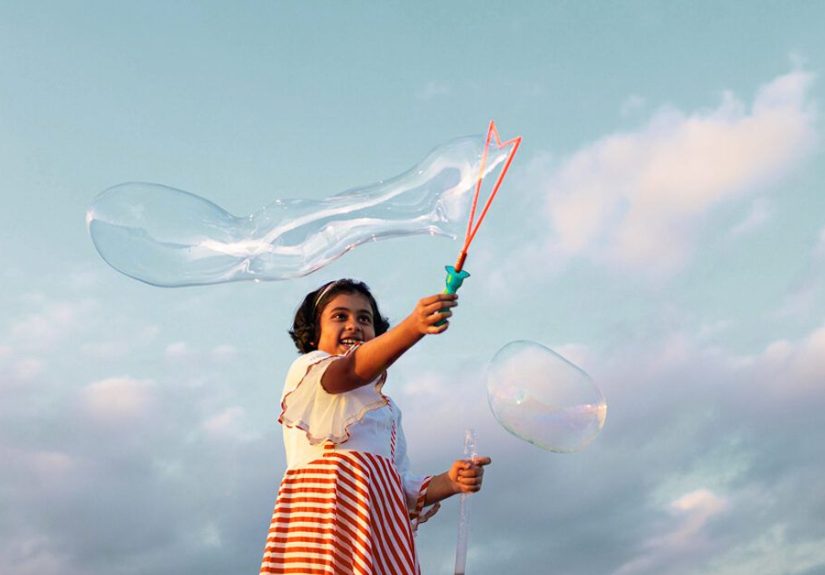
Somewhere along the way, adults invented a very strange myth: that learning is only official if a child looks slightly serious, sits reasonably still, and appears to be thinking thoughts large enough to require a necktie. Kids, thankfully, did not get the memo. Give them a cardboard box, a few blocks, a mud puddle, or a dramatic mission involving stuffed animals and a pretend veterinarian, and they get right to work. It may look like fun from the outside. That is because it is fun. It is also one of the most powerful ways children build language, social skills, self-control, creativity, confidence, and problem-solving ability.
Play is not the break from learning. For young children especially, play is learning. When kids stack, sort, run, negotiate, pretend, invent rules, break rules, fix rules, and try again, they are building the skills that support school success and life success. In other words, the block tower may wobble, but the brain is doing excellent construction work.
Why play matters so much
Play helps children grow across every major area of development. Cognitive growth, physical coordination, language development, emotional regulation, and social understanding all get a workout during playful experiences. That is one reason child-development experts keep repeating the same message in different ways: children need time, space, and permission to play. Not just because it is cute, though it absolutely is, but because it helps build healthy brains and resilient humans.
When children play, they are not memorizing information in a vacuum. They are testing ideas in real time. A toddler dropping a spoon from the high chair is not “being difficult” every single time. Sometimes that little scientist is running a gravity experiment with suspiciously high repetition rates. A preschooler turning couch cushions into a pirate ship is practicing storytelling, planning, collaboration, and flexible thinking. An older child making up playground rules is learning leadership, fairness, negotiation, and what happens when everyone votes against “my turn lasts forever.”
How play builds the brain
One of the biggest benefits of play is what it does for thinking skills. During play, children use attention, memory, planning, and self-control. These are often called executive function skills, and they matter for everything from following directions to solving math problems to not yelling “I licked the glue stick” at the exact wrong moment in class.
Pretend play is especially powerful. When children act out roles like chef, astronaut, store owner, or dragon dentist, they have to remember the storyline, stay in character, respond to other people’s ideas, and adjust when the game changes. That means they are practicing working memory, flexible thinking, and inhibitory control. In plain English, they are learning how to hold ideas in mind, switch gears, and keep impulses from driving the bus.
Play also supports curiosity, which is rocket fuel for learning. A child who wants to know why the block bridge fell or whether leaves float better than rocks is already doing the early work of science. Through playful experimentation, children learn cause and effect, comparison, sequencing, measurement, and prediction. They may not call it “hypothesis testing,” but honestly, that sounds like a terrible name for a sandbox activity anyway.
Play and language development go hand in hand
Kids do not build communication skills only by being talked to. They build them by talking, listening, pretending, singing, storytelling, asking questions, and arguing passionately about whether the stuffed giraffe can be the bus driver. Play creates natural reasons to use language, and that is a huge deal.
During dramatic play, children learn new vocabulary because they need words for roles, objects, feelings, and actions. In a pretend grocery store, children talk about money, counting, shopping lists, taking turns, and categories of food. In a blanket fort, they discuss plans, solve disputes, and narrate the unfolding “very serious” mystery of who stole the flashlight. Rich language grows when children have something meaningful to say.
Even simple games support literacy foundations. Rhyming songs build sound awareness. Story reenactments help children understand sequence and characters. Building signs for a pretend lemonade stand introduces print with purpose. Play makes language feel useful, social, and memorable, which is exactly what early learning needs.
Social and emotional learning lives on the playground too
Play teaches children how to be with other people. That may sound obvious, but it is one of the biggest reasons play matters. In group play, children practice taking turns, sharing materials, reading facial expressions, expressing needs, coping with frustration, and recovering after disappointment. Those skills do not appear out of thin air. They are built one awkward, funny, slightly dramatic interaction at a time.
When kids play house, school, superheroes, restaurant, or “we are all puppies for reasons no one can explain,” they explore emotions and relationships in a low-stakes way. They try on perspectives. They imagine how others feel. They learn that their friend may want to play differently and that compromise is not a personal attack. This kind of social rehearsal helps children develop empathy and perspective-taking.
Play also gives children a healthy outlet for stress. Running, drawing, building, role-playing, and sensory exploration can help kids process big feelings when they do not yet have the words to explain them. After a hard day, a child may not deliver a polished monologue about emotional overload. They may instead build a giant block wall, stomp in the yard, or make every dinosaur in the room go to “time-out volcano.” Play lets children work things through safely.
Physical play is not just about burning energy
Yes, physical play helps children move their bodies and sleep better at night, which parents everywhere would like noted in bold print. But its benefits go much deeper than “getting the wiggles out.” Active play supports balance, coordination, strength, body awareness, and motor planning. Running, climbing, jumping, digging, carrying, and dancing teach children how their bodies work in space.
Outdoor play adds extra benefits because it offers more room, more variety, and more chances to explore. Sticks become wands, rivers, fishing poles, or dragon-detectors. Hills turn into challenge courses. Dirt becomes a bakery, a construction site, or a soup of questionable ingredients. Outdoor settings encourage movement, creativity, observation, and manageable risk-taking. Children learn what feels safe, what feels tricky, and how to adjust. That kind of judgment matters.
Reasonable risk in play, such as climbing something age-appropriate, balancing on a log, or trying a new physical skill under supervision, can build confidence and decision-making. Children do not become capable by being wrapped in bubble wrap and gently placed on a carpet square for twelve years.
Different kinds of play teach different things
Free play
Free play is child-led play without a tight adult agenda. It is where imagination, choice, and independence really stretch their legs. Children decide what to do, how to do it, and when to change direction. This supports creativity, motivation, and problem-solving.
Pretend play
Imaginative play helps children explore emotions, roles, language, and self-regulation. It is a master class in social learning disguised as a tea party with a plastic dinosaur.
Constructive play
Building with blocks, magnetic tiles, recycled materials, sand, or clay supports spatial reasoning, planning, persistence, and early math concepts. It also teaches the noble life lesson that sometimes your tower falls and you rebuild it anyway.
Physical play
Tag, obstacle courses, ball games, dance, and rough-and-tumble play support motor development, coordination, and self-control. Children learn how hard is too hard, when to stop, and how to read other people’s cues.
Sensory play
Water bins, play dough, finger paint, scooping beans, and other sensory activities help children explore texture, pattern, movement, attention, and calm. Sensory play can be especially useful for children who need hands-on ways to regulate and focus.
What adults often get wrong about play
Adults sometimes divide childhood into two categories: “learning time” and “play time,” as if they are competing brands in the same cereal aisle. In reality, high-quality play often produces deep learning because children are engaged, curious, and emotionally invested. When joy and choice are present, kids tend to stick with challenges longer and participate more actively.
Another common mistake is over-scheduling. Music lessons, sports, tutoring, clubs, enrichment classes, and organized activities can all have value. But when every minute is preplanned, children lose opportunities for self-directed play. They need unscripted time to invent, rest, negotiate, create, and be bored long enough to come up with something interesting. Boredom is not always the enemy. Sometimes it is the opening act for imagination.
Adults also do not need to dominate play to make it educational. The best support often looks like creating a safe environment, offering interesting materials, following the child’s lead, and adding gentle language or questions. Not every block build needs a lecture on engineering. Sometimes “Tell me about your bridge” does more than “Let’s review structural stability, Madison.”
How parents and teachers can protect play
Making space for play does not require a Pinterest-level craft room, a backyard the size of a national park, or a toy budget that could fund a small moon mission. Children benefit most from time, attention, and materials that invite imagination. Boxes, scarves, paper, tape, blocks, crayons, dress-up clothes, balls, and outdoor space can go a very long way.
For parents, one of the best strategies is to build play into daily routines. Sing while cleaning up. Tell stories in the car. Let a child “help” cook by sorting, stirring, and pretending they run a five-star restaurant with three raisins and a spoon. Read books and then act them out. Get outside when possible. Protect a chunk of time that is not optimized, scheduled, or turned into a performance review.
For teachers, playful learning does not mean giving up on academic goals. It means designing experiences where children can investigate, collaborate, move, talk, and create while building real skills. Counting games, storytelling stations, dramatic play centers, sensory tables, building challenges, and playful literacy activities can support strong learning without making the classroom feel like a tiny office park.
Play across ages: what it can look like
Babies learn through face-to-face interaction, peekaboo, songs, reaching, mouthing safe objects, and sensory exploration. They are building attention, trust, movement, and early communication.
Toddlers thrive with movement, imitation, simple pretend play, stacking, dumping, filling, pushing, pulling, and naming games. They are learning language, motor control, and independence at impressive speed.
Preschoolers dive into dramatic play, construction, art, outdoor adventures, and games with simple rules. This is prime time for imagination, friendship skills, emotional regulation, and school-readiness foundations.
School-age kids still need play, even if the toys look different. Board games, sports, maker projects, drawing, role-playing games, forts, dancing, biking, and outdoor exploration continue to support problem-solving, teamwork, resilience, and creativity.
Everyday experiences that show play doing the heavy lifting
Imagine a rainy Saturday afternoon. A seven-year-old drags chairs into the living room, throws blankets over the top, and announces the construction of “Fort Thunder.” On the surface, it looks like a mild household inconvenience with decorative couch cushions. Underneath, it is a rich learning experience. The child is planning a structure, testing balance, estimating space, revising the design when gravity objects, and inventing a story about who lives inside. If siblings join in, there is also negotiation, conflict resolution, and the ancient diplomatic struggle over flashlight ownership.
Now picture a preschool classroom dramatic-play corner turned into a grocery store. One child stocks shelves with plastic fruit. Another writes price tags made entirely of brave invented spelling. A third insists the banana costs ninety dollars because “it is fancy.” Here, children are using math, literacy, vocabulary, categorization, and social language all at once. They are practicing how communities work. They are learning that symbols can represent real things. They are also learning that customer service becomes very complicated when a stuffed penguin wants exact change.
Or think about a toddler outside with a bucket of water, a spoon, and several rocks that have instantly become the most important objects on Earth. That child is comparing weight, volume, texture, and splash potential. The adult may see a wet shirt and a future laundry situation. The child sees discovery. Scooping and pouring strengthen motor skills. Repetition builds confidence. Small experiments teach cause and effect without a single worksheet in sight.
Play also reveals itself in emotional moments. A child who had a hard day at school may line up action figures and replay a conflict in miniature. A teacher watching closely might notice who is always “the boss,” who gets left out, or how a child solves a pretend disagreement. This is valuable information. Play can help adults understand what children are thinking and feeling when direct conversation is still too hard or too abstract.
Even family traditions can become powerful learning through play. A weekly board-game night teaches patience, turn-taking, flexible thinking, and how to lose without composing a tragic monologue. A backyard scavenger hunt encourages observation, memory, and teamwork. A dance party after dinner builds movement, rhythm, joy, and connection. These moments may look ordinary, but they are quietly shaping how children think, relate, and recover from frustration.
That is the magic of play: it hides serious growth inside delight. Children laugh, build, pretend, run, invent, and repeat. Adults see mess, noise, motion, and occasionally a suspicious amount of tape. But beneath all that is learning that sticks because it is active, meaningful, and emotionally alive. Kids do not need childhood to be turned into a nonstop lesson plan. They need room to explore the world with their whole selves. Play gives them that room, and then some.
Conclusion
The importance of play is not sentimental fluff. It is grounded in how children develop. Play helps kids learn how to think, communicate, move, cooperate, imagine, and cope. It strengthens relationships with caregivers and peers. It supports healthy bodies, healthy brains, and healthy confidence. Most of all, it respects a simple truth: children learn best when they are engaged, active, and having a genuinely good time.
So the next time a child turns a cardboard box into a spaceship, a bakery, or a secret headquarters for rescue hamsters, it may be wise to step back before asking whether anything educational is happening. The answer is yes. Very much yes. The lesson plan just happens to include capes.





 Close
Close