
Table of Contents >> Show >> Hide
Every profession has its little survival tricks. Chefs keep squeeze bottles everywhere. Mechanics have favorite wrenches with suspicious nicknames. And teachers? Teachers turn binder clips, sticky notes, plastic bins, and sheer willpower into a functioning civilization by 8:05 a.m.
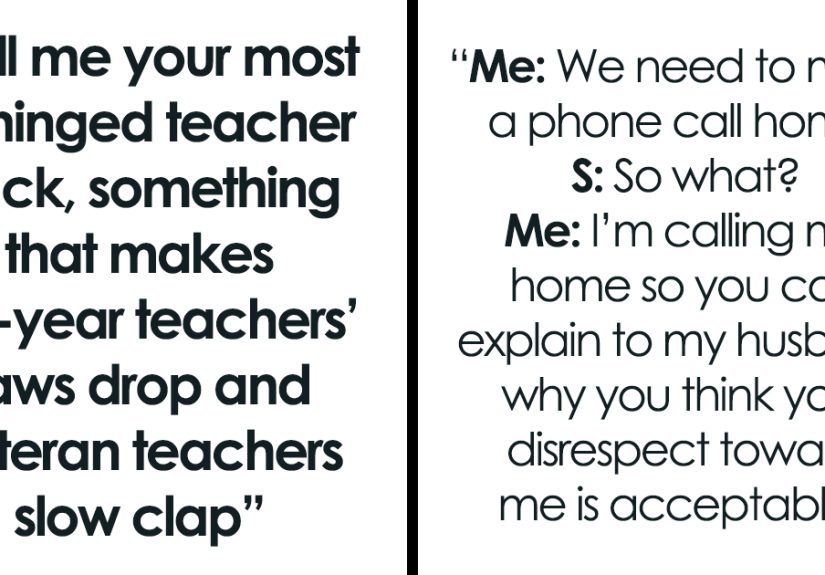
That is why the internet can’t get enough of “unhinged teacher hacks.” They sound chaotic, look slightly improvised, and often come with the energy of, “Listen, I did what I had to do before first period.” But under the comedy is something very real: the best teacher hacks usually solve practical classroom problems. They reduce transition time, cut down on repeated directions, make routines visible, help students stay organized, and protect the teacher’s last remaining ounce of sanity.
The funniest hack in the room is rarely random. It is usually a routine in disguise. A visual timer is not just a timer; it is a peace treaty. Color-coded bins are not just pretty; they are a way to stop 27 people from asking where to turn things in. Even the wild-sounding stories teachers swap online often point back to the same truths: kids do better when expectations are clear, transitions are predictable, directions are visible, and adults stay calm enough to keep the room moving.
So no, this is not a celebration of chaos for chaos’s sake. It is a salute to the gloriously scrappy, slightly dramatic, highly effective tricks teachers use to keep learning on the rails. Here are 79 tried-and-tested teacher hacks that may sound a little unhinged at first, but make an astonishing amount of sense once you’ve actually been in a classroom.
Why These Teacher Hacks Actually Work
The most effective classroom hacks tend to do one of four things: they make expectations obvious, reduce friction, support attention, or save time. That is the whole magic trick. When students can see what to do, hear consistent cues, and predict what happens next, the classroom feels less like a traffic jam and more like a place where actual learning can happen.
The funny part is that these hacks are often delightfully low-tech. A printed checklist can work better than a ten-minute lecture. A taped square on the floor can fix a line-up problem faster than a full philosophical debate on personal space. A “finished work” tray can rescue a teacher from the eternal cry of “Where do I put this?” faster than any schoolwide email ever written.
In other words, the “unhinged” vibe is mostly packaging. The strategy underneath is usually smart, efficient, and surprisingly research-friendly.
79 Tried-and-Tested Unhinged Hacks That Teachers Swear By
Attention, Noise, and Transition Hacks
- Put directions on the board before students walk in. It cuts down on repeat questions and gives the room a calm starting line.
- Use a visual timer for everything. A countdown settles the classic “How much longer?” drama before it begins.
- Create one signature attention signal. A phrase, clap pattern, or call-and-response works best when it is always the same.
- Practice transitions like they are part of the lesson. Because they are. Moving from desks to groups is not magic; it is choreography.
- Use a voice-level chart. It is much easier to point at “Level 1” than deliver your 900th speech about indoor voices.
- Turn cleanup into a race against the timer. Nothing motivates like a countdown and mild theatrical pressure.
- Post a “What to do if I’m done” list. Early finishers stop becoming freelance chaos consultants.
- Assign student jobs for predictable bottlenecks. Paper passer, tech helper, line leader, door holdertiny roles solve oddly large problems.
- Use music for transitions. When the song ends, the transition ends. The room suddenly has a soundtrack and a deadline.
- Teach students how to ask for help without shouting your name. Desk signals, colored cups, or help cards work wonders.
- Keep a basket of sharpened pencils ready. This eliminates the dramatic, never-ending pencil emergency parade.
- Have a “borrow one, return one” pencil system. It is not glamorous, but it protects your supply stash from extinction.
- Use a silent signal for bathroom requests. Fewer interruptions, less public commentary, same basic human dignity.
- Give one-minute warnings before every switch. Students handle change better when it is not dropped on them like a surprise plot twist.
- Put frequently used supplies in the same place every day. The less students have to search, the less wandering you get.
- Keep backup materials clipped together by class. One binder clip can save five minutes and several grey hairs.
- Number turn-in trays by period or subject. Suddenly papers stop vanishing into the academic void.
- Use a “parking lot” for off-topic questions. Good questions still matter, but they do not get to hijack algebra.
- Write the agenda in the same location daily. Predictability is quietly powerful.
- Teach students how to enter the room. Not just that they should enter, but where to put things, what to read, and what to start.
Organization Hacks That Save Everyone’s Sanity
- Color-code by class or subject. It looks neat, but more importantly, it cuts confusion fast.
- Use labeled bins like your life depends on it. Sometimes it honestly does.
- Create an absent-work folder. This stops teachers from explaining yesterday’s assignment 14 separate times.
- Keep a substitute folder permanently ready. Future-you will think present-you is a genius.
- Clip class sets together before the day starts. It is boring prep and glorious payoff.
- Use rolling carts if you move rooms. Dignity may be optional; portability is not.
- Store emergency extras in one “save the day” drawer. Tape, chargers, tissues, sticky notes, and spare name tags belong there.
- Use document sleeves for station materials. They keep papers together and survive enthusiastic student handling.
- Put today’s materials in one visible spot. Students are far more independent when the room is easy to read.
- Keep a lost-and-found bin in the classroom. Mysteriously orphaned hoodies will otherwise become permanent décor.
- Use checklists for recurring tasks. Because memory is a beautiful thing until fourth period.
- Print extra copies right away. The copy machine can sense desperation.
- Make one landing zone for turned-in forms. Permission slips should not live seven separate lives.
- Label technology cords. Once every charger looks identical, civilization starts to wobble.
- Use a weekly paper purge. If you do not schedule it, paper will become the dominant species.
- Train students to reset materials before leaving. Tomorrow begins at the end of today.
- Keep mentor texts, manipulatives, and high-use tools close by. Prime real estate belongs to the items you reach for constantly.
- Use folders for unfinished work. This prevents desks from becoming archaeological sites.
- Post anchor charts where students actually need them. Helpful reminders are wasted if hidden behind a ficus.
- Build a simple routine for collecting devices. Nothing turns into chaos faster than 28 laptops and no system.
Behavior and Relationship Hacks That Feel Smarter Than Yelling
- Narrate the behavior you want. “I see three tables ready” often works better than “Why is nobody ready?”
- Correct privately whenever possible. Public embarrassment rarely produces private growth.
- Give directions in short steps. Long verbal speeches are basically invitation-only confusion.
- Use proximity before confrontation. Walking near a student can solve a problem without a single dramatic line reading.
- Offer limited choices. Choice builds buy-in, but unlimited choice is how you end up debating pencil colors for nine minutes.
- Separate the student from the behavior. “That choice was disruptive” lands better than “You are disruptive.”
- Use humor carefully, not sarcasm recklessly. One builds connection; the other leaves scorch marks.
- Teach routines explicitly instead of assuming students know them. Most “misbehavior” starts as confusion in a cheap disguise.
- Notice improvement out loud. Students often repeat the behavior that gets calm, specific recognition.
- Have a reset space, not a shame corner. A quiet place to regroup is very different from a punishment stage.
- Keep consequence systems predictable. Surprise justice is not actually justice.
- Front-load support for students who struggle with transitions. A quiet heads-up can prevent a loud fallout.
- Use relationship deposits before making withdrawals. Students respond better to adults who know them as people.
- Start with neutral questions. “What happened?” gets farther than “Why are you doing this again?”
- Give students language for disagreement. “I see it differently” is more classroom-friendly than the classic “That’s dumb.”
- Teach what respectful discussion sounds like. It does not appear by magic just because desks are in a circle.
- Use a quick check-in system. Mood meters, sticky dots, or simple thumbs can reveal a lot before behavior escalates.
- Keep corrections brief. The longer the lecture, the more likely the lesson becomes a hostage situation.
- Be calm on purpose. Students borrow adult nervous systems more than we like to admit.
- Follow through. The tiny promise you keep matters more than the giant threat you never enforce.
Instructional Hacks That Make Learning Easier to Follow
- Chunk long assignments into visible steps. Students are more likely to start when the mountain becomes a staircase.
- Model the finished product. A good example clears up what five paragraphs of explanation cannot.
- Use sentence starters for discussion. They lower the barrier for participation without lowering expectations.
- Post exemplars and non-examples. Students learn a lot from seeing what works and what very much does not.
- Repeat key directions in writing. Spoken directions evaporate faster than teachers wish they did.
- Use visual cues for multi-step tasks. Icons, arrows, and checkboxes can be secret weapons.
- Build in movement breaks. Sometimes the class does not need a speech; it needs to stand up.
- Use timers for independent work bursts. Short sprints make hard work feel more possible.
- Teach students how to organize materials for long-term projects. Otherwise “project-based learning” becomes “project-based scavenger hunt.”
- Preview tricky vocabulary before reading. It helps students enter the task with fewer potholes.
- Use turn-and-talk strategically. It wakes up processing, provided the room knows when to stop talking too.
- Offer alternate ways to show understanding. A sketch, short verbal explanation, or checklist can reveal learning more accurately for some students.
- Build routines for group work. Roles, time limits, and clear products keep collaboration from becoming social hour with glue sticks.
- Keep reteaching tools handy. Mini whiteboards, manipulatives, anchor charts, and sample problems save momentum.
- End class with a consistent closing routine. Exit tickets, reflection prompts, or next-step reminders make learning stick.
- Use positive behavior systems thoughtfully. Reward systems work best when they support habits instead of replacing intrinsic motivation.
- Plan for student attention, not fantasy attention. Lessons go better when designed for real humans instead of imaginary robots.
- Have a backup plan for technology failure. Because the Wi-Fi always chooses violence at the worst moment.
- Leave a little white space in the day. Over-scheduling creates rushed teaching and rushed behavior.
- Remember that the weirdest hack is sometimes the simplest one. Clear directions, calm tone, consistent routine, repeat forever.
What Makes a Hack “Unhinged” in the First Place?
Usually, it is not because the hack is reckless. It is because it sounds hilariously specific when taken out of context. Teachers are experts at solving problems that no one outside a classroom would ever think about. How do you stop 30 students from crowding one supply bin? How do you quiet a room without shouting over it? How do you keep one missing pencil from becoming a 12-minute subplot?
The answer is often something wonderfully improvised: tape on the floor, a laminated hall pass, a color-coded cup system, a “mystery student” incentive, a clipboard by the door, or a dramatic catchphrase that somehow became classroom law. These things sound ridiculous until you realize they work because they reduce uncertainty. Students know what to do. Teachers stop repeating themselves. The room feels safer, smoother, and less random.
That is the real charm of teacher hacks. They are practical, deeply human, and born from experience rather than theory alone. They say, “I have seen this exact problem before, and no, I am not letting it ruin my Tuesday.”
Teacher Experiences: What These Hacks Feel Like in Real Life
Talk to enough teachers and you start hearing the same emotional arc. At first, a hack feels silly. Maybe even a little desperate. You print labels for every single bin and think, “Surely this is excessive.” Then two weeks later, a student silently grabs the right folder, turns in the right paper, starts the warm-up without asking three questions, and suddenly those labels look less excessive and more like a masterpiece.
One teacher might swear that writing step-by-step directions on the board changed everything. Before that, independent work time was just a parade of “What are we doing?” and “Wait, which page?” After that, students had something to reference besides the teacher’s memory and volume level. Another teacher might laugh about using a cheap kitchen timer like it is a sacred artifact, but that tiny visual countdown can turn restlessness into focus. It is not flashy. It is just effective.
Then there are the hacks that feel unreasonably life-saving because they solve problems no one warned you about in teacher prep. The sharpened-pencil cup. The absent-work crate. The emergency sub folder. The laminated passes that do not disintegrate by October. The clipboards by the door. The “ask three before me” poster. These are not the glamorous parts of teaching, but they are often the pieces that keep the day from sliding off the rails.
And yes, some teacher stories sound absolutely feral when told out loud. A tie stapled into place before an event. A rolling cart packed like a survival bunker. A drawer labeled for “miscellaneous disasters.” A classroom rule explained through interpretive hand signals because that was somehow faster than words. But the experience behind those stories is usually the same: teachers adapt because they have to. They are constantly balancing instruction, relationships, behavior, attention spans, materials, and time. A hack is often what happens when necessity meets creativity before first bell.
What is most striking, though, is how many of these hacks are really about care. They are not just about controlling a room. They are about making the room easier to navigate for students who are distracted, overwhelmed, anxious, disorganized, or simply nine years old and full of ideas. A posted agenda helps the student who panics when the day feels unpredictable. A clear routine helps the student who struggles with executive function. A calm check-in helps the student who arrived upset. A movement break helps the whole class before the collective wiggles evolve into chaos.
Teachers also talk about the relief that comes when a hack gives them back some emotional bandwidth. That matters. When the room runs more smoothly, the teacher gets to spend less energy on logistics and more on teaching, noticing, encouraging, and actually enjoying students. That is the hidden benefit of a good classroom hack: it does not just make things more efficient. It makes the human part of the job more possible.
So when teachers trade these stories online, the laughter is real, but so is the respect. The “unhinged” part is often just the packaging. The truth is much more grounded. These hacks are field-tested responses to real classroom friction. They come from observation, trial and error, and the kind of professional wisdom that only develops when you are responsible for a room full of learners every day. In that sense, the weirdest hacks are often the wisest ones.
Conclusion
Teacher hacks are funny because they are specific, but they endure because they work. The best ones are not about being flashy or controlling every second. They are about making the school day clearer, calmer, kinder, and more manageable for everyone in the room. Some involve timers. Some involve bins. Some involve a level of improvisation that would impress a stage crew and worry an office manager.
But all of them point to the same lesson: strong classrooms are not built on magic. They are built on routines, clarity, relationships, flexibility, and a healthy willingness to solve small problems before they become giant ones. If a hack looks a little unhinged from the outside, that may just mean it was invented by someone who knows exactly what a classroom really demands.







 Close
Close