
Table of Contents >> Show >> Hide
- Research Basis Used for This Piece (U.S.-based outlets and references)
- Did Juan Carlos “Confess”? YesBut Not to Intentional Murder
- The 1956 Tragedy: What We Know, What We Don’t
- Why This Story Returned Now: Legacy, Exile, and Reputation Repair
- From Hero of Transition to Symbol of Contradiction
- How Spain Reacted to the Memoir
- How to Read a Royal “Confession” Without Getting Played by the Headline
- 500-Word Experience Section: What This Story Feels Like in Real Life
- Conclusion
History is messy. Royal history is messier. And when a former king publishes a memoir, the internet often reacts like it just discovered caffeine:
loud, fast, and occasionally allergic to nuance. The headline that Spain’s former King Juan Carlos “confessed” to ending his brother’s life has
spread widely, but the full story is more complicatedand more humanthan a one-line viral take.
In his 2025 memoir Reconciliation, Juan Carlos describes, for the first time in direct first-person detail, the 1956 shooting that killed
his younger brother Alfonso. He frames it as an accident. That distinction matters. It matters legally, historically, ethically, and emotionally.
It matters for Spain’s monarchy, for his son King Felipe VI, and for readers trying to understand whether this is a confession of intentor a late
acknowledgment of responsibility.
This article breaks down what is known, what remains uncertain, and why this story resurfaced now. It also examines how one of Europe’s most
important postwar monarchs became a case study in legacy management, public trust, and the brutal durability of family trauma.
Research Basis Used for This Piece (U.S.-based outlets and references)
This analysis synthesizes reporting and background from major outlets including AP News, Reuters, TIME, The Washington Post, Bloomberg, CBS News,
ABC News, PBS NewsHour, Encyclopaedia Britannica, Vanity Fair, and People.
Did Juan Carlos “Confess”? YesBut Not to Intentional Murder
Let’s start with the key point: in the memoir, Juan Carlos says he fired the shot that killed his brother Alfonso. He describes the event as
accidental. In other words, this is a confession to causing the death, not a confession to premeditated intent.
That might sound like semantics, but it’s actually the core of the story. Headlines often compress a legal and moral spectrum into one dramatic verb.
“Confesses” can imply many things: admission of act, admission of intent, or admission of guilt in a criminal sense. Here, the admitted act is clear;
intent remains denied.
For decades, public versions of the 1956 tragedy varied. One early account suggested Alfonso was cleaning a firearm when it discharged. The memoir’s
account is different: Juan Carlos says they were handling the weapon and that he accidentally pulled the trigger. That contradiction is why this is
such a major historical momentit rewrites the most sensitive line in a royal family’s private disaster.
If you feel uneasy reading this, that reaction is normal. Stories involving sibling death, power, and state symbolism are never easy. But clarity matters:
the memoir presents accidental responsibility, not an intentional killing narrative.
The 1956 Tragedy: What We Know, What We Don’t
Known facts
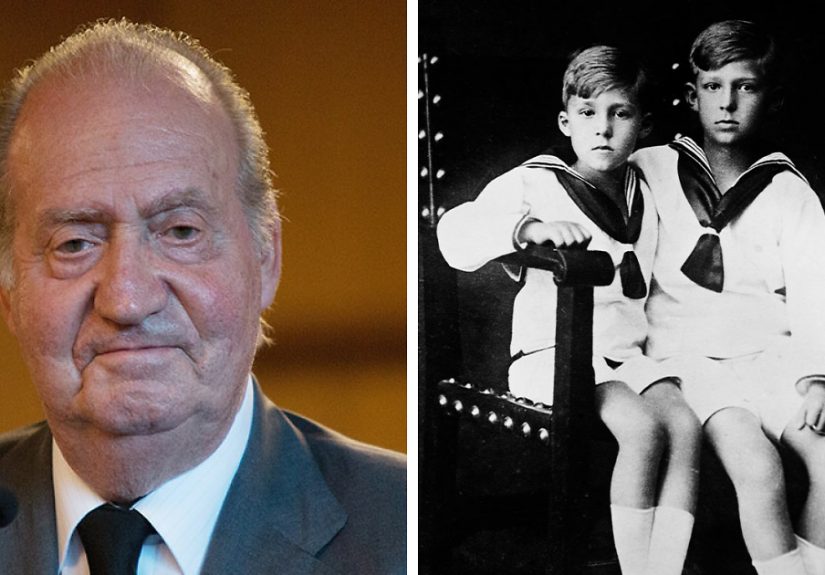
Alfonso, younger brother of Juan Carlos, died in 1956 after being shot in Estoril, Portugal. Juan Carlos was present. The royal family carried the shock,
and Spain carried the rumor cycle for decades. The event became one of the great unresolved shadows in modern royal history.
What changed in 2025
The memoir introduces direct first-person responsibility from Juan Carlos himself. That is historically significant because earlier public explanations
were indirect and disputed. His wording does not erase uncertainty over every detail, but it removes the biggest ambiguity: he says he pulled the trigger.
What remains uncertain
Even with a first-person account, historians still face limits. A memoir is evidence, but it is also self-presentation. It can be honest, selective, or both.
Was every movement in that room exactly as remembered? Were earlier official communications shaped by image protection? Those questions are likely to remain open.
Put simply: the memoir gives us more truth than we had, but probably not the final truth in forensic detail. History often works like that: better, not perfect.
Why This Story Returned Now: Legacy, Exile, and Reputation Repair
Juan Carlos published Reconciliation at a moment when his public image was already deeply contested. Once celebrated as a democratic stabilizer,
he later became associated with scandal, financial controversy, and political embarrassment for the Crown.
After abdication in 2014, and later self-imposed exile in Abu Dhabi in 2020, he lost much of the narrative control he once enjoyed. Publishing a memoir is
one way to reclaim authorship over a public life that has been narratedsometimes harshlyby prosecutors, tabloids, documentary producers, and political rivals.
And yes, memoir timing is rarely accidental. He is not just telling his story; he is curating legacy in real time, while Spain continues debating what his reign
should represent: democratic modernizer, scandal-plagued monarch, or both.
From Hero of Transition to Symbol of Contradiction
The achievement record
Juan Carlos is widely credited with helping guide Spain’s transition from dictatorship to constitutional democracy after Franco’s death in 1975.
He also became strongly associated with resisting the attempted coup of 1981, a pivotal moment in consolidating democratic legitimacy.
The decline
That legacy later collided with a long scandal cycle: personal relationships under intense media focus, the Botswana elephant-hunting trip during economic hardship,
and investigations tied to undeclared wealth and tax issues. Some inquiries were closed without prosecution due to legal limitations such as immunity during his reign
and statute-of-limitations constraints.
This duality is why Juan Carlos remains such a difficult figure to summarize. He is not a simple hero-turned-villain arc. He is a paradox: historically consequential,
personally flawed, institutionally costly, and still politically relevant.
If history were a streaming series, this would be the season where every character is both right and wrong in a different episode.
How Spain Reacted to the Memoir
The domestic reaction has been mixed. Some readers view the memoir as overdue candor. Others see it as controlled damage rather than genuine accountability.
Coverage suggests the royal household has not embraced the project as a unifying family intervention, and public fatigue with old scandals remains high.
That matters because monarchy runs on symbolic trust. Even when legal cases close, political memory does not. Closing a file is not the same thing as restoring confidence.
The memoir may clarify one long-disputed event, but it does not automatically repair the broader breach between Juan Carlos and large parts of Spanish public opinion.
How to Read a Royal “Confession” Without Getting Played by the Headline
1) Separate act from intent
“I caused this” is not automatically “I meant this.” In this case, that distinction is fundamental.
2) Separate legal closure from moral closure
Prosecutorial decisions can end legal exposure while leaving ethical debate alive for decades.
3) Treat memoirs as primary sourcesnot final verdicts
They are invaluable, but never neutral. A memoir is testimony shaped by memory, motive, and timing.
4) Track institutional context
This story is not just about two brothers in a room in 1956. It is about monarchy, democratic legitimacy, media ecosystems, and public trust in elite institutions.
5) Resist binary storytelling
Historical figures can build democracy and damage institutions in the same lifetime. Complexity is not indecision; it’s accuracy.
500-Word Experience Section: What This Story Feels Like in Real Life
There is a specific kind of silence that follows accidental tragedy in families. It is not theatrical silence. It’s logistical silence. Who makes calls? Who says what?
Who decides how much truth is “too much” for people already broken? The Juan Carlos–Alfonso case resonates far beyond royal gossip because families everywhere recognize
this choreography: grief first, language later, and clarity maybe never.
One experience many people report around stories like this is emotional time lag. The event happens, but the emotional admission arrives decades later. The memoir becomes
not just a book but a delayed sentencelike hearing someone say, at last, “I was the one,” after half a century of hedging, euphemism, and institutional wording.
That delayed honesty can feel both healing and infuriating: healing because truth is finally spoken, infuriating because it took so long.
Another shared experience is the collision between private guilt and public role. Ordinary people can grieve in partial privacy; kings rarely can. Every statement becomes
state-adjacent. Every family crisis becomes constitutional weather. So the person at the center may feel less like a brother and more like a monument trying not to crack.
The public, meanwhile, sees the monument crack anyway and wonders whether the statue was honest from the start.
Journalists who cover legacy figures describe a recurring tension: when new personal testimony appears, should it be treated as revelation, rehabilitation, or reputation
management? Usually it is all three. Readers experience this too. You may feel sympathy for lifelong burden, suspicion toward timing, respect for historical contributions,
and anger at elite opacitysometimes in the same paragraph.
There is also a generational experience here. Older audiences remember Juan Carlos as a stabilizing force in the democratic transition; younger audiences often met him first
through scandal headlines, exile coverage, and institutional skepticism. When a memoir drops, these generations are not simply arguing factsthey are defending different
emotional archives.
Finally, there is the family-aftershock experience. When a parent publishes painful memories, children inherit the public reaction. For King Felipe VI, this is not abstract.
Any attempt by Juan Carlos to reclaim narrative risks reopening tension inside the monarchy he no longer leads but still heavily influences. That is a uniquely modern royal
predicament: you can abdicate power, but not narrative gravity.
If this story teaches one human lesson, it is this: truth delayed is still truthbut delay changes the shape of forgiveness. Some people welcome it. Some reject it. Most do
both in phases. History books call this “legacy.” Families call it “Tuesday.”
Conclusion
So, did Spain’s former king confess? Yesto causing his brother’s death in what he describes as an accident. Noto intentional killing. That difference is not legal trivia;
it is the backbone of responsible reporting.
The bigger story is how one admission intersects with decades of monarchy, democratic transition, scandal, exile, and public memory. Juan Carlos remains one of Europe’s most
consequential and contradictory modern royals. His memoir does not settle every debate, but it forces a sharper one: can a nation hold two truths at oncethat a leader helped
build democracy, and also helped damage trust in the institution he embodied?
If we can read this story with nuance instead of noise, we get something better than clickbait. We get history with its edges intact.






 Close
Close