
Table of Contents >> Show >> Hide
- Quick Snapshot: What This Game Is (and Isn’t)
- The Big Question: Where Does Secret Rings Rank?
- Ranking the Game’s Core Elements
- 1) Speed & Flow: The “This Could’ve Been Great” Trophy
- 2) Controls: The Make-or-Break Ingredient
- 3) Level Design & Missions: Quantity vs. Momentum
- 4) Story & Characters: Better Than It Had to Be
- 5) Music & Presentation: The “Turn It Up” Award
- 6) Bosses & Big Moments: Cool Ideas, Variable Execution
- 7) Party Mode & Extras: A Mixed Bag of Snacks
- So… Is It Underrated or Properly Rated?
- How to Enjoy Secret Rings in 2025 (Without Losing Your Mind)
- Hot Takes (Gently Roasted)
- Final Verdict
- Player-Style Experiences (500+ Words): What Revisiting Secret Rings Often Feels Like
Sonic and the Secret Rings is one of those games that makes people argue the way sports fans argue
about “greatest of all time” listsexcept instead of stats, we’re yelling about motion controls, “why is Sonic
always running,” and whether a genie companion is secretly the emotional heart of the Sonic franchise (no judgment).
Released for the Nintendo Wii during the “everyone wave your arms like you’re summoning rain” era, Secret Rings
tried something bold: an on-rails, forward-leaning Sonic adventure wrapped in an Arabian Nights storybook.
The result? A game that many critics called a step forward after a rough patch for 3D Sonicyet also a game that
can feel like it’s fighting your hands in the most literal way possible.
This article delivers a practical, opinionated ranking of what Secret Rings does well, what it faceplants on,
and how it stacks up in the broader Sonic conversationwithout pretending it’s either a flawless masterpiece or a
war crime committed by a blue hedgehog.
Quick Snapshot: What This Game Is (and Isn’t)
The vibe
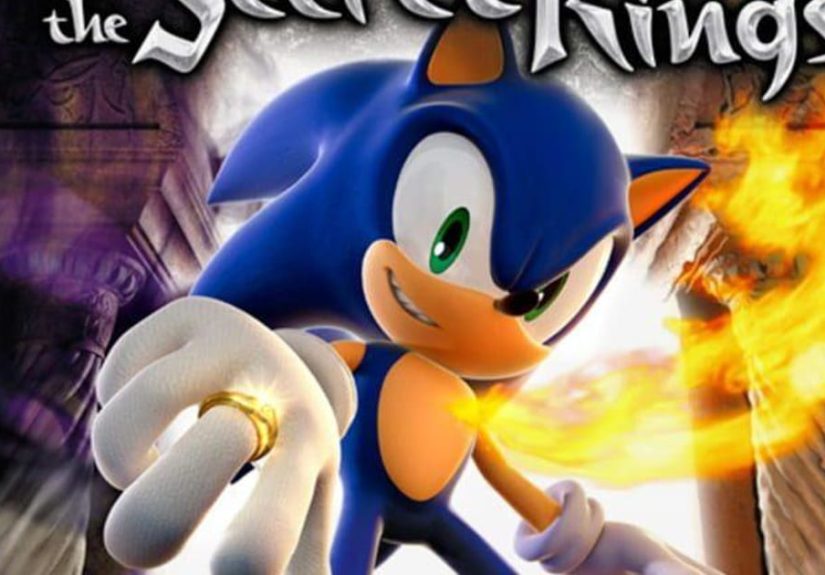
Sonic gets pulled into a storybook version of Arabian Nights, teams up with a ring genie named
Shahra, and races to stop Erazor Djinn from rewriting the world by collecting the
World Rings. It’s a fairytale remix featuring familiar Sonic characters playing storybook roles,
plus a soundtrack that leans into rock energy with Middle Eastern-inspired flavor.
The core gameplay loop
- On-rails running with branching paths and obstacle dodging.
- Wiimote tilt steering and gesture-based actions (jump, attack, etc. depend on setup).
- Missions inside stages (not just “beat the level,” but specific objectives to progress).
- Skill system that changes how Sonic performs (speed, jump, abilities, and utility).
- Party mode minigames as a side dish (sometimes fun, sometimes… a side dish).
The Big Question: Where Does Secret Rings Rank?
Ranking a Sonic game is tricky because people grade on different curves:
some value speed and flow, others value platforming precision, and some just want the music to go hard enough to
power a small city. So I’m ranking Secret Rings in three ways:
(1) as a Wii motion-control game, (2) as a 3D Sonic game, and
(3) as a “cult conversation” Sonic game.
Overall ranking summary
| Category | Rank / Verdict | Why (in plain English) |
|---|---|---|
| As a Wii motion-control showcase | 6.5/10 | Ambitious, sometimes thrilling, sometimes “why did my wrist just betray me?” |
| As a 3D Sonic entry | 7/10 | It finds a clear identity (speed-run action), but control and mission gating can grind momentum. |
| As a Sonic “conversation piece” | 8/10 | Storybook setting + Darkspine Sonic + memorable music = lasting fandom debate fuel. |
| Best for | Players who enjoy learning a system, replaying missions, and chasing smoother runs. | |
| Worst for | Players who want instant precision, traditional 3D exploration, or minimal gimmicks. | |
Ranking the Game’s Core Elements
1) Speed & Flow: The “This Could’ve Been Great” Trophy
When Secret Rings clicks, it’s genuinely satisfying. You’re flying down narrow paths, threading obstacles,
timing jumps, and feeling that classic Sonic “momentum joy”the rush of a clean run where everything lines up and
you look like a speed demon instead of a pinball in a hallway.
The catch is that the game doesn’t always want you to go fast in a way that feels natural. Some missions demand
slowing down, stopping, or performing specific actions that break rhythm. If you’re the type who plays Sonic for
uninterrupted flow, the mission structure can feel like someone yelling “DO A BACKFLIP!” in the middle of your
morning commute.
Rank: 7.5/10 (great highs, uneven pacing)
2) Controls: The Make-or-Break Ingredient
Let’s not tiptoe around it: a lot of opinions on Secret Rings are really opinions on the controls.
Tilt steering can feel “fine” once you adjust, but it can also feel inconsistent depending on your setup,
your sensitivity, and how forgiving you are of motion-era design choices.
Some players adapt and end up loving the “racing line” feellike steering a fast character down a track.
Others feel like the game is almost responsive but not quite, which is a special kind of frustrating in a
game that demands reaction timing. Sonic is also often forced forward, which makes the experience feel less like
free-running and more like being launched from a canon while holding a tiny steering wheel.
Rank: 6/10 (doable, learnable, but divisive)
3) Level Design & Missions: Quantity vs. Momentum
The game gets credit for variety. You’re not just running to the goal; you’re clearing objectives that ask you to
dodge, defeat, survive, collect, or perform route-specific challenges. That structure can add replay valueespecially
if you enjoy mastering runs and building skill setups.
The downside is “mission gating.” Progress can require repeating stages in ways that feel less like “I want to replay”
and more like “the game is making me replay.” For completionists, that’s a buffet. For players who want a clean,
forward campaign, it can feel like the story is held hostage by the mission board.
Rank: 7/10 (strong variety, occasional repetition fatigue)
4) Story & Characters: Better Than It Had to Be
Sonic games have a wide emotional rangefrom “Saturday morning cartoon fun” to “unexpectedly sincere” to
“what did I just watch?” Secret Rings lands closer to sincere than you might expect.
Shahra isn’t just a tutorial voice; she’s a real character with a relationship arc, and Erazor Djinn is the kind of
villain who feels like he belongs to the storybook setting. The narrative has stakes, betrayal, and a finale that
fans still bring upespecially because it leads to one of the game’s signature moments: Darkspine Sonic.
Rank: 8/10 (memorable, surprisingly heartfelt, occasionally cheesybecause Sonic)
5) Music & Presentation: The “Turn It Up” Award
Even people who dislike playing Secret Rings often admit the soundtrack is a standout. The main theme,
“Seven Rings in Hand,” has become part of Sonic music culture, and the game’s audio identity matches
its storybook style: rock-forward energy with thematic flavor.
Visually, it’s a colorful early-Wii showcase with stylized environments that fit the “storybook chapters” framing.
You can tell the game wants to feel like a tale being toldsometimes with cutscene presentation that’s more
stylized than cinematic, but still distinct.
Rank: 8.5/10 (music is a major reason this game is still remembered)
6) Bosses & Big Moments: Cool Ideas, Variable Execution
Boss encounters in motion-control Wii games can go either way: thrilling or fiddly. Secret Rings offers spectacle
and set-piece energy, and its late-game transformation moment is iconic for many fans. But the same control friction
that affects stages can show up here tooespecially when precision matters under pressure.
Rank: 7/10 (spectacle wins, mechanical feel varies)
7) Party Mode & Extras: A Mixed Bag of Snacks
Party mode exists, and sometimes that’s enough for a Wii-era living room. Some minigames are fun diversions, especially
with friends who don’t need deep mastery. Others feel like paddingcontent that’s “nice to have” but not the reason
you came to the table.
Rank: 6.5/10 (good for a quick laugh, not a main-course feature)
So… Is It Underrated or Properly Rated?
Here’s my honest “ranking-and-opinions” answer:
Secret Rings is both underrated and properly criticized.
-
Underrated because it committed to a clear identity (speed-run challenge design),
delivered memorable music and a distinct setting, and helped shift the conversation toward “Sonic can still work in 3D.” -
Properly criticized because the controls and mission gating are real friction points that can turn
a fun run into a series of “why did that happen” moments.
Where I’d place it in the Sonic ecosystem
-
In the Storybook corner: It’s the foundation of the “storybook Sonic” idea. If you’re curious about that
mini-era, this is required reading (and yes, it’s literally a book in the plot). -
Among 3D Sonic experiments: It’s not the most polished, but it’s more coherent than some 3D entries that
tried to do five genres at once. - As a replay challenge game: If you enjoy “learn the stage, refine the run, build a setup,” it has genuine legs.
How to Enjoy Secret Rings in 2025 (Without Losing Your Mind)
1) Treat it like a speed-challenge game, not an exploration platformer
If you approach it expecting wide-open 3D spaces, you’ll feel boxed in. Approach it like a high-speed challenge course
with routes and objectives, and it makes more sense.
2) Give the controls an honest “learning window”
Many players report that their opinion changes after a few sessionseither for better (“I get it now”) or worse
(“I get it now… and I still hate it”). Either outcome is valid, but don’t judge it based on five minutes of steering
panic.
3) Lean into the skill system
The skill mechanics are one of the game’s strongest “why it’s interesting” arguments. Experimenting with builds can
make missions feel less like repetition and more like optimization.
4) Use breaks like a real human
If a mission annoys you, take a break. This game can be the type where frustration compounds, and suddenly you’re
blaming the Wiimote for your life choices. (The Wiimote has never paid rent. Keep perspective.)
Hot Takes (Gently Roasted)
- Hot take: The storybook setting is cooler than people give it credit for.
- Hot take: The soundtrack does at least 30% of the game’s reputation-lifting, and that’s okay.
- Hot take: Mission structure is fun when you’re in “challenge mode,” miserable when you’re in “story mode.”
- Hot take: If this game had optional traditional controls, its legacy would be dramatically better.
Final Verdict
Sonic and the Secret Rings is not the “best Sonic game,” but it’s absolutely one of the most
talked-about Sonic games for a reason. It’s a meaningful experiment with real strengthsspeed,
style, music, and a surprisingly memorable storyheld back by design decisions that can make moment-to-moment play
feel like a negotiation.
If you enjoy mastering mechanics and you’re willing to adapt, you may find a genuinely rewarding (and sometimes
exhilarating) Wii-era oddball. If you need precise, immediate control and hate repeating missions, you’ll probably
bounce off ithardpossibly into a vase.
Player-Style Experiences (500+ Words): What Revisiting Secret Rings Often Feels Like
Imagine you’re revisiting Sonic and the Secret Rings today. Not as a museum piece, not as a meme, but as
a real game you’re about to spend an evening with. You boot it up, the vibe hits, and the opening reminds you that
this game had big “storybook adventure” ambitionslike Sonic wandered into a myth and decided the myth needed more
attitude and better cardio.
The first session tends to follow a familiar emotional arc for a lot of players: curiosity, mild excitement, then a
sudden moment where you tilt left and Sonic politely declines. That’s the first “oh right” moment. It’s not always
a failure of the system; sometimes it’s a mismatch between how you expect analog movement to feel and how motion
steering behaves under speed. Your body is doing the work that a thumbstick would normally do, and your brain needs
a little time to stop treating your wrist like an optional accessory.
Then, something interesting happens. You reach a stretch where the layout is readablean obstacle pattern that
makes sense, a clean jump window, a line you can hold. You start to feel the game’s intended rhythm: forward drive,
quick corrections, timing-based jumps, and that “I survived that by a hair” thrill. Your second run through the same
section is smoother, not because the game magically got better, but because your inputs got calmer. You’re not
wrestling; you’re guiding. And for a few minutes, it feels greatlike a racing game disguised as a platformer,
where the real challenge is not just speed but composure.
Next comes the mission board moment. You finish a level and realize the game wants you to do it again with a specific
objective. If you’re in the mood for challenge runs, this is where the game wins you over. You think, “Okay, let’s
optimize.” You experiment with skills. You learn which moves save time, which ones cause mistakes, and where the
stage is secretly trying to trick you. It becomes a “practice, refine, improve” experiencealmost like you’re
training for a personal best.
If you’re not in that mood, the same moment can feel like the game is stalling the story. You’re ready for the
next chapter, but the game is handing you a checklist and saying, “Earn it.” That’s when frustration can spike,
especially if the mission requires precision while the controls are still settling into your hands. You might fail a
mission not because the idea is unfair, but because one steering correction didn’t register the way you expected.
It’s the kind of failure that makes you stare at your controller like it just insulted your family.
And yetthis is the weird magicpeople often keep going. The soundtrack keeps you moving. The setting keeps changing.
The storybook framing gives the whole thing a sense of “chapters,” like you’re pushing through a tale that’s slowly
building toward something bigger. As the hours pass, you get a clearer sense of whether you’re bonding with the game
or merely enduring it. Some players find a turning point where control becomes second nature and missions feel like
bite-sized challenges. Others hit a wall where every replay feels like a tax on fun.
By the end of a revisit, many players land in the same nuanced place: Secret Rings isn’t consistently smooth,
but it’s consistently memorable. You remember the best runs, the best music moments, the surprise sincerity of the
story beats, and yes, the occasional hand-waving chaos. It’s the kind of Sonic game that doesn’t just live in a ranking.
It lives in arguments, nostalgia, and the strangely specific feeling of trying to steer a supersonic hedgehog with a
wrist tilt while your brain screams, “This would’ve been easier with a stick!”





 Close
Close