
Table of Contents >> Show >> Hide
- What makes this blade feel “smarter” than the wood?
- Why foldable joints matter in the first place
- The science hiding inside the groove
- Why the idea resonated beyond hobby woodworking
- What this kind of joint can do well
- What it cannot magically solve
- How it compares with older joinery ideas
- Why the phrase “smarter than wood” actually works
- Final thoughts
- Extended experiences related to smarter foldable joints
Every now and then, woodworking coughs up an idea so simple-looking that it feels a little rude. You stare at it and think, “Wait, that was legal this whole time?” That is exactly the vibe behind the so-called smarter-than-wood saw blade that makes perfect foldable joints. It is not smart in the chatbot sense. It does not judge your shop organization or quietly resent your bargain-bin clamps. Its genius is much more practical: the blade profile is designed so the cut itself does the thinking.
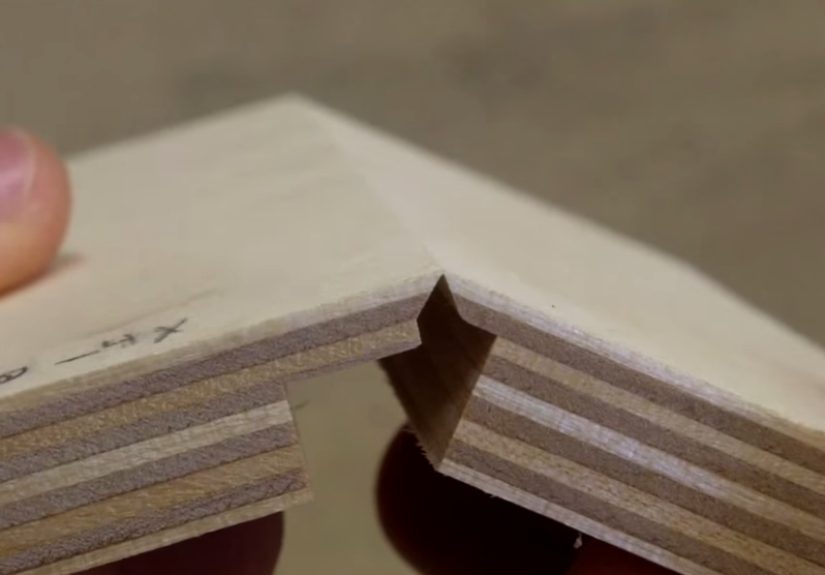
Instead of treating wood like a stubborn material that must be bullied into shape with a pile of separate parts, careful glue-ups, and a prayer whispered over a square, this concept turns one flat panel into something that can fold neatly into a box or drawer. The joint geometry is built into the cut. The wood is still wood, but the blade coaxes it into behaving like a well-trained hinge for just long enough to create a clean corner. That is why the idea grabbed so much attention. It promised fewer parts, faster assembly, and cleaner results in one move that felt a little like cheating and a lot like clever engineering.
What makes this blade feel “smarter” than the wood?
The phrase sounds like clickbait wearing safety glasses, but there is a real concept underneath it. Traditional drawer or box construction usually involves cutting multiple panels, aligning corners, gluing joints, clamping everything square, and then hoping the final result does not look like it was assembled during a mild earthquake. The smarter-than-wood blade flips that process on its head. The intelligence is embedded in the cut profile itself.
Rather than removing material in a plain groove or simple V-notch, the blade creates a more specialized shape that leaves just enough material to keep the panel connected while allowing it to fold into a crisp corner. In other words, the cut is not merely cutting. It is also pre-engineering the fold, the alignment, and much of the final joint geometry. That is a big deal because in woodworking, tiny setup errors love to become large emotional events.
The real magic is that the joint becomes partly self-registering. When the panel folds, the geometry encourages the corner to close in a predictable way. That predictability is what makes the whole thing feel futuristic. It is less about brute-force craftsmanship and more about using design to make precision easier to repeat.
Why foldable joints matter in the first place
Foldable joints are appealing because they combine three things woodworkers, cabinetmakers, and product designers all appreciate: speed, consistency, and fewer opportunities to mess up. If you can create a drawer side or box body from a single substrate rather than several separate parts, you reduce measuring, reduce part count, reduce assembly time, and reduce the number of corners that can drift out of square.
That matters even more in production-minded environments. A shop building one custom jewelry box can afford a little drama. A shop building twenty identical drawer boxes would rather not live in that movie. Any process that removes redundant steps has value, especially when it also improves repeatability. A foldable-joint system turns the flat panel into a near-ready structure before glue-up begins. That means the precision shifts upstream, away from frantic assembly and into controlled cutting.
There is also a design benefit. A continuous wraparound panel can look cleaner than a box assembled from multiple disconnected pieces. The outside surfaces can read as more unified, more intentional, and sometimes more refined. Good design often looks effortless. In reality, it is usually just geometry doing push-ups in the background.
The science hiding inside the groove
Kerfing is the quiet hero
At a high level, this idea belongs to the same family of strategies as kerf bending. Kerfing works by cutting a series of relief cuts that allow a rigid board to flex without fully separating into pieces. The smarter-than-wood blade takes that general logic and gives it a joinery upgrade. Instead of making a board simply curve, it helps the board fold into a precise corner while preserving a usable outer face.
That distinction matters. Ordinary kerfing is often about flexibility. This blade concept is about controlled geometry. It is not content to say, “Sure, the board bends now.” It wants the board to bend to a very specific angle, land neatly, and create a joint that can actually be glued into something useful. That is a much taller order, but also a much more exciting one.
Plywood is a natural partner
Plywood is especially well suited to this conversation because it is dimensionally more stable than many solid-wood options and already lives a double life as both structural material and finish-friendly panel. Its cross-laminated layers help resist some of the dramatic mood swings wood can have as humidity changes. For foldable joints, that stability is a feature, not a footnote.
It also helps that plywood is common in drawers, cabinet internals, shop fixtures, and utility furniture. This is not some rare unicorn material that must be harvested under a full moon. It is everyday stuff. That makes the blade concept feel less like academic sculpture and more like an answer to a practical shop problem.
Still, plywood is not infinitely cooperative. Veneer tear-out, core quality, thickness variation, and face durability all affect results. So while the idea is elegant, the material still gets a vote. Wood always does. It is the original user-generated content.
Glue still does the heavy lifting
The fold may be clever, but the final strength still depends on adhesive performance and surface quality. A beautifully profiled cut that closes perfectly is only half the story. Once folded, the joint must hold under real use, and that is where bond quality matters. Good wood joints benefit from proper adhesive contact, penetration, and a close mating fit. Translation: even a smart blade cannot rescue a lazy glue-up forever.
That is one reason this invention is so interesting. It does not replace craftsmanship; it reallocates it. The skill moves from manually aligning parts toward understanding geometry, material choice, blade quality, and process control. Different shop, same need for respect.
Why the idea resonated beyond hobby woodworking
The concept landed at a moment when digital fabrication, mass customization, and fabrication-aware design were becoming much more visible. Designers and researchers were already exploring how cut patterns can change the behavior of rigid sheet materials. Suddenly, a woodworking-specific tool arrived that felt like it belonged in that larger story. It was not just a new accessory. It was a reminder that material behavior can be designed.
That is why the idea feels bigger than a drawer trick. It points toward a future where tooling does more than remove stock. It programs outcomes. A blade profile becomes a design language. A cut path becomes a structural decision. The tool is no longer just making the part; it is encoding how the part will assemble.
This way of thinking is already visible in computational woodworking and fabrication research. The broad trend is clear: instead of forcing materials into shape after cutting, designers increasingly shape material behavior during cutting. That is a fancy way of saying the smartest shop move is often to solve the problem before the assembly bench ever sees it.
What this kind of joint can do well
For the right application, foldable joints offer a seriously attractive mix of speed and polish. Drawer boxes are the obvious use case, but they are hardly the only one. Small organizers, knockdown utility boxes, cabinet inserts, display pieces, prototypes, and compact casework can all benefit from a method that turns a flat panel into a fast-forming structure.
Another strength is visual cleanliness. Because the geometry is hidden in the cut and fold, the finished corner can appear tidy and deliberate. It has some of the aesthetic appeal of a mitered corner, but with a process story that feels much more modern. That makes it appealing not only for shops chasing efficiency, but also for designers chasing minimalism.
There is also less assembly chaos. Anyone who has ever tried to keep four corners square while glue gets tacky, clamps slip, and one part suddenly decides it is abstract art understands the appeal of self-aligning behavior. Foldable joints reduce that circus. The parts arrive at the assembly stage already halfway committed to good behavior.
What it cannot magically solve
No clever blade deserves a fan club without a reality check. Foldable joints are not a universal replacement for every corner joint in woodworking. They are application-specific. Material thickness matters. Panel quality matters. The final use case matters. A drawer box in a dry shop cabinet is not the same challenge as a heirloom chest, a load-bearing structural corner, or a piece expected to survive years of abuse and moisture cycling.
There is also tooling reality. Specialized profiles are less forgiving than generic blades, and precision matters more when the goal is exact folding. Shops have to consider blade quality, cut consistency, material variation, and cost. A profile that looks effortless in a polished demo can become temperamental if the setup, stock, or expectations are off.
Then there is the obvious safety-and-sanity point: a concept like this is fascinating to study, but it is not an invitation to improvise custom power-tool geometry in the garage like a movie montage. Smart woodworking respects tooling, tolerances, and caution. A blade can be innovative without becoming a weekend dare.
How it compares with older joinery ideas
Part of the fascination here is that the blade did not emerge from nowhere. Woodworkers have long used miter folds, lock-miter profiles, kerf cuts, and router-based corner strategies to create cleaner or more efficient joints. What makes this concept stand out is the consolidation. It combines the foldability of kerfing, the alignment logic of interlocking profiles, and the efficiency of sheet-goods production into one unusually targeted solution.
That is why the best way to think about it is not as a rejection of traditional joinery, but as a specialized descendant of it. Fine joinery is still fine joinery. Dovetails are not sweating in the corner because one blade got a little ambitious. But for panel-based work, this idea is a persuasive reminder that joinery can evolve when tools are designed around process bottlenecks rather than tradition alone.
Why the phrase “smarter than wood” actually works
Wood is wonderful, but it is not naturally interested in becoming a perfectly folded box corner. It wants to be wood: fibrous, directional, occasionally stubborn, and always ready to remind you that nature was not designed around your cut list. The blade earns the “smarter” label because it does not ask the wood to stop being wood. It simply works around wood’s behavior with a more intentional cut profile.
That is the deeper lesson here. In modern making, the smartest tools are often the ones that understand material limits and turn them into advantages. Rather than fighting the grain, the structure, or the panel form, they collaborate with those realities. Good design is not about domination. It is about setting things up so physics stops acting like your sworn enemy.
Final thoughts
The smarter-than-wood saw blade makes perfect foldable joints because it treats joinery as a geometry problem instead of just a cutting problem. That shift is what makes it so compelling. It promises faster fabrication, fewer parts, cleaner corners, and a more repeatable path from flat sheet to finished box. It also hints at a larger future in woodworking, one where tooling and computational thinking increasingly shape what materials can do.
In a field full of beloved traditions, that is refreshing. Not because tradition is wrong, but because innovation occasionally walks into the shop, wipes the sawdust off a profile sketch, and says, “What if the cut handled more of the drama?” Sometimes that idea is a gimmick. Sometimes it is a gimmick wearing a necktie. And sometimes it is a genuinely sharp leap forward. This one feels closer to the last category.
Extended experiences related to smarter foldable joints
What makes this topic stick with people is not just the novelty of the blade. It is the memory of all the painful little moments it seems to eliminate. Anyone who has built boxes or drawers the old-fashioned way remembers the routine: cut the parts, label the parts, dry-fit the parts, realize one part is somehow both too long and too short emotionally, trim again, glue up, clamp, check square, unclamp, reglue, reclamp, then stare at the assembly like a hostage negotiator. A foldable-joint approach speaks directly to that experience. It promises less fuss and more flow.
Designers tend to love the idea for a different reason. To them, this is not just a shop shortcut. It is a proof of concept that fabrication can be embedded into geometry from the start. The cut becomes part of the design language. Instead of sketching a box and later deciding how to join it, the joinery can be part of the object’s identity from the first drawing. That changes the whole creative process. It encourages flatter packing, cleaner forms, and more deliberate use of sheet goods.
Cabinetmakers and small-shop owners often respond with a more practical kind of enthusiasm. They see labor minutes. They see repeatability. They see fewer opportunities for assembly drift. In a production setting, even small simplifications can compound into meaningful savings. When several tiny headaches disappear at once, that feels less like a minor convenience and more like a business improvement.
There is also a strong emotional reaction from makers who simply enjoy elegant solutions. Woodworking can be gloriously hands-on, but it can also reward overcomplication. People sometimes wear unnecessary difficulty like a merit badge. Then a tool comes along that reduces parts, reduces alignment problems, and still produces a handsome result, and suddenly everyone has to admit that cleverness counts too. Efficiency is not laziness when it produces better work.
At the same time, experienced woodworkers usually keep one eyebrow raised, and that is healthy. They know every miracle technique has conditions hiding in the fine print. Material quality changes outcomes. Blade sharpness changes outcomes. Production tolerance changes outcomes. So the mature response is not blind hype. It is cautious admiration. That may actually be the best compliment a woodworking idea can receive. If seasoned makers say, “Okay, that is genuinely interesting,” you have probably built something worth discussing.
In the end, the experience surrounding smarter foldable joints is about possibility. The concept reminds people that even in a craft as old as woodworking, there is still room for a new move. There are still ways to rethink joints, rework workflows, and turn a flat sheet into something unexpectedly elegant. That is why the idea keeps circulating. It is not just about one blade. It is about the thrill of discovering that a familiar material still has a few surprises left in it.





 Close
Close