
Table of Contents >> Show >> Hide
- What “small” really means in Carl Turner’s architecture
- The design philosophy behind the firm
- The key projects that explain the book
- Why this work still matters
- What designers, homeowners, and developers can learn from Small
- Experiencing “Small” in practice: what Carl Turner’s architecture feels like
- Conclusion
Some architecture books arrive like glossy victory laps. Small: Carl Turner Architects feels more like a pocket-sized provocation. It is not just a showcase of pretty buildings with serious lighting and suspiciously tidy countertops. It is a compact argument about what architecture can do when money is tight, land is awkward, and the brief is less “make a monument” and more “make this actually work.”
That is what makes Carl Turner Architects so interesting. The firm built its reputation not by chasing oversized icons, but by pushing hard on smaller commissions, overlooked sites, reused structures, and hybrid programs. In that world, “small” does not simply mean compact square footage. It means precision. It means resourcefulness. It means understanding that a building can be modest in size while still being ambitious in social, environmental, and spatial terms.
The work associated with Carl Turner has long carried that double charge. On one hand, there is a strong visual identity: crisp forms, lean materials, restrained palettes, and clever manipulation of light. On the other, there is a practical intelligence beneath the surface: adaptable layouts, low-cost construction strategies, brownfield infill, container-based reuse, and projects that create value for communities as much as for clients. If a lot of architecture tries to impress you from the curb, Carl Turner’s work often wins you over by showing how smart the plan is once you get inside.
What “small” really means in Carl Turner’s architecture
The title Small works on several levels. Yes, many of the projects are physically compact or budget-conscious. But the deeper idea is about designing within real-world limits and treating those limits as fuel rather than punishment. A narrow gap site in Brixton becomes the testing ground for a high-performance urban prototype. A neglected shed in the fens becomes a guest house and studio with real personality. A pile of shipping containers becomes a platform for jobs, events, and local enterprise. A half-forgotten parking structure becomes a place where makers, artists, and small businesses can actually get a foothold.
That is the trick: the work does not glorify smallness for its own sake. It uses smallness as a design discipline. Every move has to earn its keep. Every wall, opening, stair, and material choice needs a job description. In a Carl Turner project, wasted gestures do not last long. There is usually a feeling that the architecture has been trimmed back until the essential idea becomes legible.
This is one reason the studio’s projects age better than trend-heavy work. They are not obsessed with decorative novelty. They are interested in systems: how people live, how buildings adapt, how neighborhoods grow, how low-cost materials can still feel generous, and how architecture can create opportunity instead of merely enclosing it.
The design philosophy behind the firm
1. High impact, low cost
Carl Turner Architects built an early reputation around high-impact, low-cost architecture, and that phrase still captures the firm’s best instincts. These are projects where the drama often comes from proportion, massing, and sharp decision-making rather than expensive finishes. The work proves that a small budget does not require small ideas. It just requires better editing.
That attitude is especially visible in projects like Stealth Barn, where economical materials and a prefabricated timber frame were used to keep costs under control without flattening the design into blandness. Instead, the restrictions sharpened the concept. The result is a building that looks bold, feels specific to its landscape, and never wastes energy pretending to be something it is not.
2. Architecture as process, not just product
Another hallmark of Carl Turner’s work is the belief that architecture is both process and product. That sounds lofty until you see what it means in practice. It means the design does not stop at the object. It includes the way a place is commissioned, built, occupied, shared, and potentially reused. This is why so many projects orbit around making, enterprise, temporary use, adaptive reuse, and community participation.
In other words, the building is never just the building. It is also the relationships it enables. That is a strong theme in Pop Brixton, Peckham Levels, and Hackney Bridge, where design becomes a tool for creating affordable space for entrepreneurs, artists, and local organizations. The architecture matters, but the ecosystem matters more.
3. Flexibility beats perfection
If there is a quiet hero in Small, it is flexibility. Carl Turner’s projects repeatedly resist rigid planning in favor of layouts that can change over time. A live/work building can become a home with a studio, two apartments, or a mixed arrangement. A small rural outbuilding can function as a guest house, workspace, and retreat. A container village can evolve as tenants and uses change. This is architecture that assumes life will get messy and plans accordingly. Honestly, that is more realistic than pretending every family, business, and neighborhood will remain frozen like a showroom display forever.
The key projects that explain the book
Slip House: the manifesto project
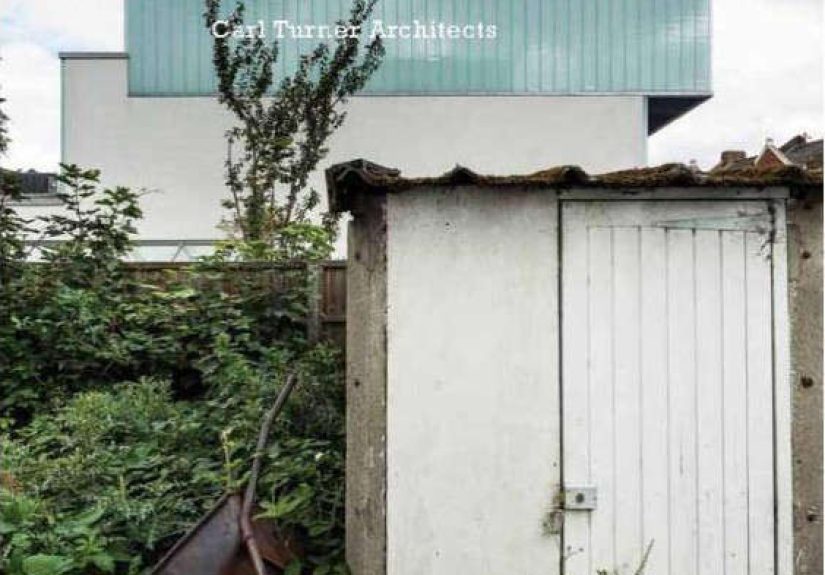
If one building explains why Carl Turner Architects matters, it is Slip House. Completed in Brixton, the project occupies a gap site on brownfield land and was conceived as a prototype for dense urban infill. Its composition of three stacked, “slipped” boxes gives the house its sculptural identity, but the real story is how much intelligence is packed into that form.
The house combines living, sleeping, and working spaces in a way that allows future adaptation. It was designed as an energy-efficient test case, incorporating features such as rainwater harvesting, a planted roof, and a solar-assisted system strategy. Importantly, Slip House is not sustainable in the annoying, preachy way where the architecture seems to be apologizing for existing. It is sustainable and spatially memorable at the same time. The frosted exterior gives it a light, ghostly presence, while the internal layout keeps the building practical and open to change.
That balance is part of what made Slip House so influential. It showed that a compact city building could be experimental without becoming precious, and green without becoming visually dull. It also demonstrated a theme that runs through the rest of the work: underused urban land is not a problem to complain about, but an opportunity to design better housing types.
Stealth Barn and Ochre Barn: rural minimalism without the fake rustic costume
Then there are the barn projects, which reveal another side of the studio’s thinking. Ochre Barn shows a clear resistance to over-domesticating agricultural structures. Instead of sanding away every trace of working history, the conversion preserves exterior character while transforming the interior into flexible living space. That choice matters. Too many barn conversions end up looking like luxury spas that accidentally wandered onto a farm. Carl Turner’s approach is more disciplined and more respectful.
Stealth Barn takes that logic and gives it an almost graphic clarity. Dark, lean, and sharply composed, it reads like a silhouette beside its agricultural context. Yet the interior flips the mood with OSB-lined warmth and carefully framed views. It is a small project, but it hits above its weight because every decision is coordinated: budget, structure, cladding, openings, and use all pull in the same direction.
Together, these projects make a strong case that “small architecture” is not a lesser category. It is often where the clearest thinking happens. With fewer excuses and tighter constraints, the design either works or it does not. These projects work.
Pop Brixton, Peckham Levels, and Hackney Bridge: small interventions, big civic effect
One of the smartest things about Small is that it does not reduce architecture to private houses. Carl Turner’s urban and community-oriented projects are arguably just as important. Pop Brixton transformed a brownfield site with low-cost, low-energy shipping containers into a mini city of workshops, food spaces, bars, events, and public gathering areas. It created a visible framework for local talent, jobs, and apprenticeship opportunities. That is not tiny-house minimalism. That is architecture as economic infrastructure.
Peckham Levels pushed the idea further by reworking disused levels of a parking structure into affordable workspace and cultural facilities. The genius of the project lies in its refusal to over-cosmeticize the building. Instead of pretending the garage was something else, the design embraced the roughness, worked carefully with the low ceilings and sloping floors, and redirected the space toward uses that suited the building’s realities. That is adaptive reuse at its best: not denial, but strategic acceptance.
Hackney Bridge continues the same line of thinking. Here again, the firm works with “meanwhile” logic, doing the most with the least and designing robust, flexible spaces for makers and small businesses. Across these projects, Carl Turner’s architecture becomes a platform rather than a final statement. It invites occupation, experimentation, and growth.
Floating House and Cube Haus: future-minded, but still grounded
The future-facing side of the practice also deserves attention. Floating House addressed flood risk and access by proposing open-source home designs that could adapt to waterways and underused spaces. Cube Haus, meanwhile, explored modular homes for awkward urban sites, showing how off-site construction and standardized systems could bring strong design to plots that conventional development tends to ignore.
What matters here is not whether every prototype changes the world overnight. It is that the studio consistently looks at neglected conditions, whether environmental, spatial, or economic, and asks a useful question: can architecture turn this constraint into a model? That question sits at the heart of Small.
Why this work still matters
Many of the ideas associated with Carl Turner Architects now sound remarkably current: reuse instead of demolition, compact urban infill, hybrid live/work layouts, off-site construction, climate-aware design, affordable workspace, and community-centered development. But that is exactly why the book remains relevant. It captured these concerns before they became standard talking points in every developer presentation with a fern in the corner and the word “innovation” in 48-point type.
More importantly, the work offers a reminder that sustainability is not just about technology. It is also about permanence, adaptability, and usefulness. A building that can change with its users is more sustainable than one optimized only for a single frozen moment. A reused structure with rough edges can be more socially valuable than a polished replacement that prices everyone out. A small project that supports enterprise and civic life can do more for a neighborhood than a formally spectacular object with no local traction.
That is why Small: Carl Turner Architects feels bigger than its title suggests. It is a study in how architecture gains force when it stops trying to dominate every situation and starts listening harder to context, budget, use, and people.
What designers, homeowners, and developers can learn from Small
For designers, the lesson is that strong concepts do not require oversized budgets. For homeowners, it is that flexibility and long-term usefulness matter more than flashy square footage. For developers and city-makers, it is that underused sites and existing structures are not leftovers. They are often the most interesting raw material in the city.
Carl Turner’s work also demonstrates that architecture can be serious without becoming stiff. There is a playful streak in the projects, especially in the way materials are re-read, programs are mixed, and constraints are turned into memorable features. The work has discipline, but it is not humorless. It understands that delight often comes from surprise: a translucent façade on a tight urban plot, a black barn glowing softly at night, a parking garage that becomes a local creative engine.
That combination of rigor and imagination is rare. It is what makes Small worth reading not merely as a monograph, but as a handbook for smarter, leaner, more humane architecture.
Experiencing “Small” in practice: what Carl Turner’s architecture feels like
What makes the world of Small: Carl Turner Architects especially compelling is the experience these projects seem to create for the people who actually use them. Judging from the plans, photographs, and project descriptions, Carl Turner’s architecture is not about walking into a room and immediately getting hit over the head with drama. It works in a slower, more persuasive way. You notice the proportions first. Then the light. Then the fact that the building is doing more jobs than you initially realized.
Take Slip House. The experience begins with contrast. From the street, it holds its own among neighboring buildings, but it also feels slightly otherworldly because of the translucent skin and stacked composition. Once inside, the project appears to become more personal and more practical. The arrangement of living, sleeping, and working zones creates a sense that daily life has been carefully choreographed without feeling rigid. It is the kind of place that probably makes you want to put your phone down for a second and look at how the light moves across the surfaces. That is not a bad trick in the age of constant distraction.
Stealth Barn likely creates a different kind of experience: more retreat-like, more cinematic, more tuned to the horizon. The low horizontal windows frame the landscape in a deliberate way, so the outside is never just background scenery. It becomes part of the interior atmosphere. The tough black shell and warm OSB lining also create a satisfying reversal. From the exterior, the building reads as severe and silent. Inside, it feels protective, textured, and unexpectedly intimate. That contrast is memorable because it is emotional, not merely visual.
The community-focused projects work on another level altogether. At Pop Brixton and Peckham Levels, the experience is less about a single elegant room and more about the energy of occupation. These are places designed to be activated by people doing things: working, eating, making, meeting, selling, learning, improvising. In those settings, architecture becomes a host rather than a performer. You feel the design in the way circulation invites discovery, in the affordability of the spaces, in the looseness that allows small businesses to grow. The buildings are not asking for quiet reverence. They are asking to be used hard and used well.
That may be the most valuable experience Small offers. It suggests that good architecture does not have to choose between beauty and usefulness, or between experimentation and realism. Carl Turner’s projects often feel humane because they respect ordinary life. They allow work and living to overlap. They acknowledge that budgets are finite. They accept that materials can be simple. They understand that communities need platforms, not just polished imagery.
In the end, the experience of Carl Turner Architects is the experience of architecture becoming sharper through constraint. Nothing feels lazy. Nothing feels unnecessarily inflated. The spaces seem to say: this is enough, and enough can be brilliant. That is a powerful message, especially now, when so much design still confuses excess with quality. Small makes the opposite case, and it makes it very well.
Conclusion
Small: Carl Turner Architects is ultimately a book about outsized intelligence in compact form. It captures a practice that has repeatedly used small budgets, tight sites, reused structures, and flexible programs to produce architecture with unusual clarity and staying power. Whether through Slip House, Stealth Barn, Pop Brixton, Peckham Levels, or later modular and flood-responsive concepts, Carl Turner’s work argues for an architecture that is leaner, smarter, and more socially awake.
That is what gives the book lasting value. It is not simply a record of stylish projects. It is a persuasive case for designing with constraints instead of complaining about them. In a field that can sometimes get distracted by spectacle, Small offers something better: buildings that think.







 Close
Close