
Table of Contents >> Show >> Hide
- What Is Sharks and Minnows?
- Quick Setup: Space, Players, and Safety
- Classic Sharks and Minnows (Land Version): Step-by-Step
- Pool Sharks and Minnows: How to Play (With Safety First)
- Variations for Any Age, Space, or Energy Level
- PE & Sports Skill Versions (Same Game, Extra Learning)
- Coach/Leader Tips: Keep It Fun, Fair, and Fast
- Safety Checklist (Land and Water)
- Real-World Experiences: What Sharks and Minnows Feels Like in Action (And Why People Love It)
- Wrap-Up
Sharks and Minnows is what happens when tag puts on a tiny snorkel, adds a dramatic narrator voice,
and declares: “Welcome to the ocean.” It’s fast, simple, and wildly replayablewhether you’re
running it in a gym, on a field, or (with the right safety rules) in a pool. Best of all, it scales
from “six kids in the backyard” to “a full class that just finished snack and has endless energy.”
In this guide, you’ll get clear, step-by-step instructions for the classic version, safer ways to run
it in the water, and lots of variationsfrom non-elimination styles to sport-specific PE drills
(basketball, lacrosse, soccer, hockey). The goal: keep the game fun, fair, and easy to manageso
the only thing getting “caught” is laughter.
What Is Sharks and Minnows?
One or more players are the sharks in the middle of a “pond” (the playing area). Everyone else
starts as minnows lined up on one end. On a signal, minnows try to cross to the other side without
getting tagged. If a minnow is tagged, they usually become a shark for the next round. The round-by-round
tension builds quickly, because the “ocean” gets more crowded with sharks every time.
Why it works (especially with groups)
- Simple rules: Most players learn it in one round.
- Short rounds: Great for PE classes, camps, parties, and warmups.
- Flexible difficulty: You can add safe zones, switch to no-elimination, or use skill equipment.
- Skill-building: Running, dodging, spatial awareness, quick decision-making, and teamwork.
Quick Setup: Space, Players, and Safety
1) Choose a “pond” and mark boundaries
A rectangle works best. Indoors, use court lines if available. Outdoors, use cones, chalk, or tape. The key
is balance: wide enough for dodging, but not so huge that sharks never have a chance. As a starting point,
many groups use two end lines about 30–40 feet apart for younger kids, and wider spacing for older kids or
bigger groups.
2) Decide how tagging works (safe touch only)
Sharks tag minnows with a light, safe touchno grabbing, pushing, blocking, or tackling. For schools
and camps, many leaders teach “butterfly tag”: soft, fluttery fingers and tagging only on appropriate areas
like upper back, shoulders, or arms (never the head or face). If you’re playing with younger kids, you can
also switch to shadow tagging (a shark tags by getting close and calling “tag”).
3) Pick your signal words
Give the game a predictable rhythm so it’s easy to run:
- Call to start: “Fishy, fishy, come out and play!” (Minnows get ready.)
- Go signal: “Shark attack!” or a whistle/clap (Minnows cross.)
- Stop signal: “Freeze!” or two whistles (Everyone stops immediately.)
4) Establish the “safe” rules
- End lines are safe zones. Once a minnow reaches the line, they can’t be tagged until the next round.
- Out of bounds = return to the start line (or become a sharkyour choice).
- Sharks stay in the middle area unless you’re using a special variation.
Classic Sharks and Minnows (Land Version): Step-by-Step
Objective
Minnows try to cross the pond safely. Sharks try to tag minnows before they reach the opposite end line.
The last minnow standing (or swimmingmore on that later) is the winner.
How to play
- Line up: All minnows stand shoulder-to-shoulder behind one end line. Choose 1–3 sharks to start in the middle.
- Start the round: The shark gives the cue (“Fishy, fishy, come out and play!”) and then the go-signal (“Shark attack!”).
- Minnows cross: Minnows run (or fast-walk for younger groups) to the opposite end line.
- Sharks tag: Sharks tag with safe, light touches only.
- Reset: Tagged minnows become sharks for the next round (classic rule). Everyone returns to a starting side.
- Repeat: Keep playing until one minnow remains (or a set time ends).
Common “house rules” that make the game smoother
- Fast-walk first round: Great for younger kids or a slippery gym floor.
- Sharks can’t camp: Require sharks to keep moving (no standing on the end line like it’s a toll booth).
- Two winners: End with 1–2 minnows remaining to avoid a 10-minute chase scene.
- Best-of-three: Quick reset keeps enthusiasm high.
Pool Sharks and Minnows: How to Play (With Safety First)
The pool version can be a blast, but it needs stricter rules. Water + excitement can turn into chaos
fast if supervision and boundaries aren’t clear. Use the pool version only when you have appropriate
adult oversight, swimmers who meet the pool’s rules, and a safe area to play.
Non-negotiable pool safety rules
- Adult supervision is continuous: One responsible adult (or lifeguard) is actively watchingno distractions.
- Swim with a buddy: No one plays alone.
- No rough play: No dunking, wrestling, pushing, or “underwater surprise tags.”
- No breath-holding contests: Don’t allow prolonged underwater swimming for time or distance.
- Walk on the deck: If players must exit and re-enter, the deck rule is always “walk, don’t run.”
Pool setup
- Pick the zone: Use a clearly marked section (often a shallow-water area) that matches the swimmers’ ability.
- Choose the safe walls: The pool wall at each end functions like the “shore.” Touching the wall = safe.
- Define tagging: A tag is a gentle touch to the shoulder/upper arm. No grabbing.
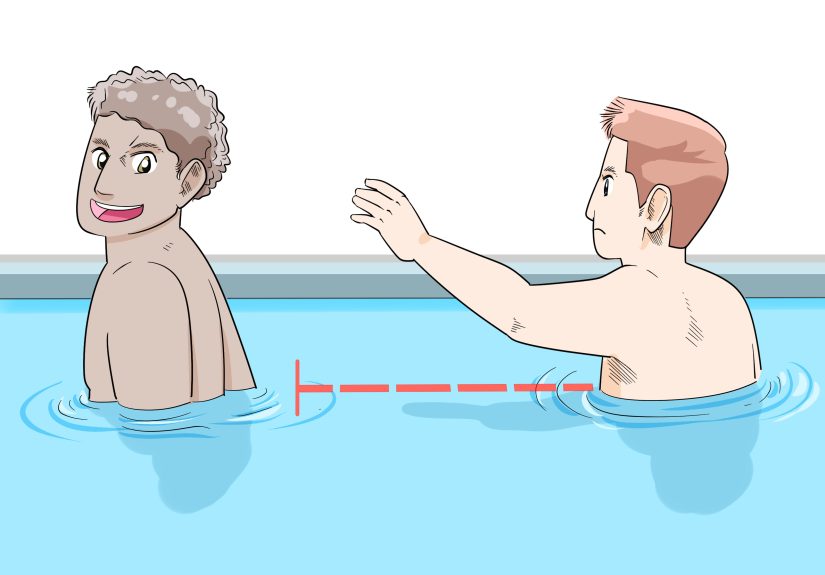
- Start positions: Minnows line up holding one wall. Sharks float/tread water in the middle zone.
How the pool round works
- On the signal, minnows swim to the opposite wall.
- Sharks tag by gently touching a minnow (not pulling them under or blocking them).
- Tagged minnows become sharks for the next round, or they can sit out one round and rejoin (a calmer option).
- Play short rounds and reset often to keep everyone oriented.
Pool-friendly tweaks
- “Sharks walk, minnows swim” (shallow end only): Sharks must keep feet on the floor while minnows can swim.
- Equipment-free only: Skip goggles-snatching chaos and keep hands free.
- Time cap: If no one is tagged after 20–30 seconds, add another shark to keep things moving.
Variations for Any Age, Space, or Energy Level
1) Seaweed (or “Octopus Arms”) Variation
When a minnow is tagged, they become seaweed instead of a shark. Seaweed stands where tagged and can tag
minnows who pass within arm’s reach (feet stay planted). This creates “hazards” that force smarter routes.
Great for managing speed in a small gym.
2) Freeze Tag Sharks
Tagged minnows freeze in place. They can be unfrozen by another minnow who tags them (leader decides how).
This turns Sharks and Minnows into a teamwork game instead of elimination.
3) Hospital or Lifeguard Version (Inclusive, no elimination)
Pick 1–2 “lifeguards” (or “medics”). If a minnow gets tagged, they do a quick reset action (like 5 jumping jacks
or touching a cone “hospital”) and then rejoin. This keeps everyone playing, especially good for PE classes
where you want maximum movement time.
4) Island Hops (Safe Zones in the Middle)
Place 2–4 hula hoops or cones as “islands” in the pond. Minnows may rest on an island for one slow count to three
before moving again. It helps nervous players and creates interesting strategy, but limits camping.
5) Color Call (Decision-Making Boost)
Mark each end line with a color (or assign “left shore” and “right shore”). Before each round, the shark calls a color:
minnows must run to that side only. It adds quick thinking and reduces the “everyone chooses the same lane” problem.
6) Speed Ladder Rounds
- Round 1: fast-walk
- Round 2: jog
- Round 3: run
- Round 4: run + one “power shark” (two-tag hand, still gentle)
This structure is gold for coaches because you can ramp intensity without changing the whole game.
PE & Sports Skill Versions (Same Game, Extra Learning)
Basketball Sharks and Minnows (Dribbling)
Every minnow has a basketball and must dribble while crossing. Sharks try to tag or knock the ball away.
If a minnow loses control (ball goes out of bounds or stops dribbling), they become a shark next round or complete
a quick skill task before rejoining (your choice). This version teaches ball control under pressure without feeling
like a drill.
Lacrosse Sharks and Minnows (Stick Protection)
Minnows carry a lacrosse stick and ball (or a safer substitute if needed). Sharks have sticks but no ball. On “go,”
minnows try to pass through the pond while protecting possession. If a minnow loses the ball, they become a shark.
You can vary which hand players use or set a rule like “cradle the whole way.”
Soccer Version (Dribbling Lanes)
Minnows dribble a soccer ball across the pond. Sharks attempt light tags or controlled poke tackles (only if players
have the skill and the surface is safe). For younger groups, tagging only is simpler and safer.
Hockey/Skating Version (Rink or Roller)
On ice or skates, minnows travel from one side to the other while sharks stay in the middle zone. A tag is a gentle
touch (often stick-on-stick or glove touch based on league rules). Because speed is higher on skates, keep boundaries
clear and start with more sharks to reduce long chases.
Coach/Leader Tips: Keep It Fun, Fair, and Fast
Make the first round a “practice lap”
Run one slow round to teach boundaries, safe tagging, and the stop signal. This saves you from spending the next
ten minutes playing “Referee Bingo.”
Fix the two most common problems early
- Problem: Sharks camp at the finish line.
Fix: Create a “no-fishing zone” one big step away from each end line, or require sharks to keep moving. - Problem: One super-fast minnow dominates every round.
Fix: Add lane rules (must cross through the middle), add more starting sharks, or use a cooperative format.
Use short, predictable rounds
The game is at its best when rounds are quick. If a round drags longer than 20–30 seconds on land (or 15–20 seconds in a pool),
adjust: shrink the pond, add a shark, or add seaweed.
Rotate roles for fairness
If the same kid is always the first shark, it can feel like a punishment. Rotate: “Last two tagged become sharks,”
or “New sharks are chosen from volunteers.” Fair roles = better sportsmanship.
Safety Checklist (Land and Water)
Land safety
- Clear the play area (bags, rocks, wet spots).
- Use shoes that match the surface (no socks-only sprinting on slick gym floors).
- Review safe tagging and personal space.
- Hydration breaks for hot days.
Pool safety
- Active adult supervision, plus buddy system.
- Stay in designated areas and follow posted pool rules.
- No rough play, no pushing, no dunking.
- No competitive breath-holding or prolonged underwater swimming.
- Walk on the deckalways.
Real-World Experiences: What Sharks and Minnows Feels Like in Action (And Why People Love It)
If you’ve ever watched a group play Sharks and Minnows for the first time, you know the opening round is basically a
documentary about human nature. The minnows line up, trying to look calm, but their toes are pointed like sprinters.
The first shark stands in the middle with that “I’m totally not nervous” postureuntil the moment they realize
thirty kids are about to bolt past them like a stampede of giggling gazelles.
The funniest part is how quickly strategy shows up. Some minnows immediately form a “school,” bunching together to
create confusionbecause it’s harder to tag one specific kid when five are zooming by at once. Others pick the
opposite approach and go solo, hugging the boundary line like it’s a secret tunnel. Meanwhile, the shark learns
the most important lesson in the ocean: don’t chase the fastest minnow first. The best sharks float in the middle,
wait for a hesitant runner, and tag with a calm, gentle touch. Suddenly the game becomes less about speed and more
about timing.
By round three or four, the “ocean” transforms. The sharks multiply, and the energy shifts from sprinting bravado to
real decision-making. Minnows start scanning: “Is there a gap? Who’s moving left? If I pause for half a second, will
I get trapped?” That’s the hidden magic of this game: it teaches awareness and problem-solving without anyone
realizing they’re learning. Even kids who don’t love traditional sports often enjoy Sharks and Minnows because every
round resets the storynew chances, new routes, new roles.
Leaders and teachers often notice another pattern: the game is an instant mood reset. A group that’s restless or
unfocused tends to snap into the same shared goalget acrossespecially if you keep rounds short and signals clear.
And it’s remarkably adaptable. If kids are bumping into each other, you widen lanes or add “no camping” rules. If
tagged players look discouraged, you switch to hospital mode so everyone stays in. If one athlete dominates, you add
islands, seaweed, or cooperative saves to balance it out. In other words: you don’t fight the chaos; you shape it.
The most memorable moments are usually small: a shy kid makes it across for the first time and beams like they just
won Olympic gold; a confident shark misses a tag and laughs at themselves; a whole class cheers when the “last
minnow” escapes by a hair. That’s why Sharks and Minnows stays popular year after year. It’s simple, it’s active,
and it turns a plain rectangle of space into an ocean adventureno special equipment required, just clear rules and
a group ready to play.
Wrap-Up
Sharks and Minnows is a classic for a reason: it’s easy to teach, fun to replay, and flexible enough to fit almost
any setting. Start with clear boundaries, safe tagging, and short rounds. Then mix in variationsseaweed, islands,
no-elimination formats, or skill-drill versionsto match your group’s age, space, and energy. With the right setup,
you’ll get maximum movement, minimum confusion, and a game that kids ask for again and again.






 Close
Close