
Table of Contents >> Show >> Hide
- What is scar tissue, exactly?
- What scar tissue pain feels like
- Why scar tissue hurts
- Who is more likely to have painful scar tissue?
- How doctors evaluate scar tissue pain
- Treatment for scar tissue pain
- 1. Give healing tissue the basics it needs
- 2. Over-the-counter pain relief
- 3. Physical therapy or occupational therapy
- 4. Scar massage, but only when it is safe
- 5. Silicone products for raised scars
- 6. Injections
- 7. Cryotherapy, laser treatment, and other dermatology procedures
- 8. Surgery or scar revision
- 9. Pain specialist care
- What not to do
- When to see a doctor
- Bottom line
- Experiences people often describe with scar tissue pain
Note: This article is for general education only and is not a diagnosis. If a scar becomes increasingly red, hot, swollen, drains fluid, opens up, or comes with fever, numbness, or severe worsening pain, get medical care.
Scar tissue has a reputation problem. Most people hear “scar” and think of a mark on the skin that tells a story, like “I battled a muffin tin and lost.” But scar tissue is not just cosmetic. It is your body’s repair patch. And like many repair jobs, it can be excellent, messy, tight, oversized, tender, or downright annoying.
Sometimes scar tissue fades into the background and never causes trouble. Other times it becomes painful, itchy, stiff, hypersensitive, or restrictive. It may hurt on the surface, deep underneath, or in a nearby area that seems unrelated at first. That is why scar tissue pain can feel confusing: the original injury may be long gone, but the discomfort keeps showing up like an unwanted sequel nobody asked for.
If you are wondering what scar tissue pain feels like, why it happens, and what treatments may actually help, this guide walks through the basics in plain English. We will cover skin scars, raised scars, internal adhesions, and the kinds of pain that can happen when healing tissue pulls, presses, or irritates nearby nerves.
What is scar tissue, exactly?
Scar tissue forms when your body repairs damaged skin or deeper tissue after surgery, trauma, burns, infection, or inflammation. Instead of rebuilding tissue exactly the way it was before, the body creates fibrous repair tissue to close the gap and strengthen the area. It is a smart survival move, but it is not always a graceful one.
That is why scars can look and feel different from normal tissue. A scar may be flat, raised, sunken, firm, ropey, itchy, or tender. Some scars stay mostly cosmetic. Others affect movement, sensation, and comfort. Internal scar tissue, often called adhesions, can develop after surgery or inflammation and may connect tissues that are supposed to glide past each other more freely.
In other words, scar tissue is your body’s patch kit. Useful? Absolutely. Elegant? Not always.
What scar tissue pain feels like
Scar tissue pain is not one-size-fits-all. People describe it in very different ways depending on where the scar is, how deep it goes, and whether nerves or nearby tissues are involved. Common descriptions include:
- Tenderness: The area feels sore when pressed or bumped.
- Burning: A hot, raw, stinging feeling, especially in raised scars or irritated nerves.
- Itching with pain: The scar itches, but scratching feels awful or makes it sting.
- Tightness: The skin or deeper tissue feels pulled, stretched, or too short.
- Sharp or stabbing pain: Often felt with movement, stretching, or pressure.
- Electric or zapping sensations: More suggestive of nerve irritation or nerve entrapment.
- Touch sensitivity: Clothing, seat belts, waistbands, or even light brushing may hurt.
- Aching or throbbing: A deeper, more constant discomfort that may worsen by the end of the day.
- Restricted movement with pain: The scar seems to “catch” when you reach, twist, squat, or straighten a joint.
For some people, the pain is mostly local. For others, it radiates. A scar near a nerve may create pain that travels beyond the visible scar line. That is one reason a tiny scar can sometimes cause a surprisingly big amount of misery.
External scar pain vs. internal scar pain
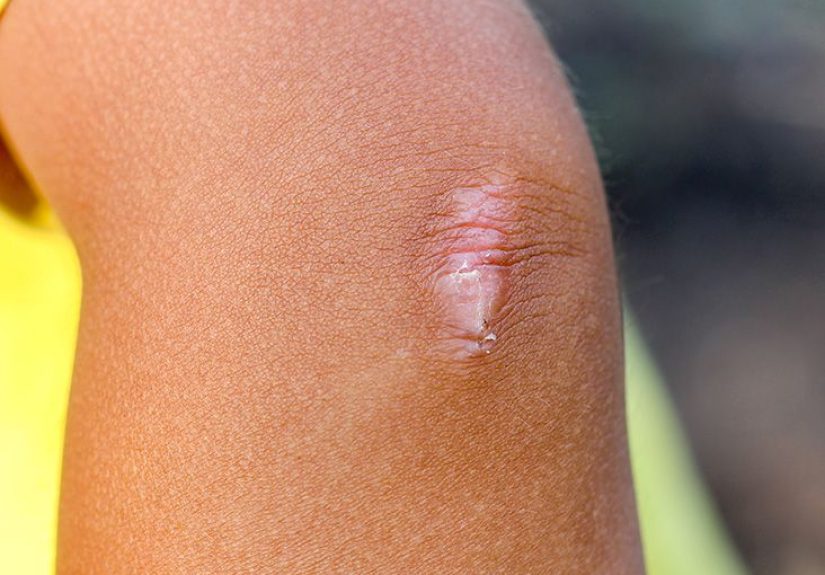
External scar pain usually comes from skin or tissue near the skin. This may happen with surgical scars, burn scars, hypertrophic scars, or keloids. These scars may feel firm, raised, itchy, burning, or painful to touch.
Internal scar pain can be trickier. Abdominal or pelvic adhesions may cause pulling, aching, cramping, pressure, or pain with movement. Uterine adhesions may be linked to pelvic pain and menstrual changes. In rare cases after neck or back surgery, scar tissue can form around a nerve root and cause significant nerve-related pain.
Why scar tissue hurts
There is not just one reason. Scar tissue pain usually happens because healing changes the local mechanics and the local nerve environment at the same time. Translation: the tissue gets stiffer, and the nerves are not thrilled about it.
1. The scar is tight and less flexible
Normal tissue has some give. Scar tissue tends to be denser and less elastic. When that happens over a joint, across a muscle, or in an area that moves a lot, the scar can feel tight and painful. You may notice pulling when you stretch, reach overhead, bend the knee, or twist the torso.
2. Small nerves get irritated
Healing tissue can affect tiny nerve fibers in and around the scar. If those nerves stay irritated, the scar may become extra sensitive. That can create burning, prickling, tingling, or pain from light touch. In some cases, a cutaneous nerve gets trapped in scar tissue, which can cause chronic pain long after the incision itself healed.
3. Raised scars can stay inflamed
Hypertrophic scars and keloids are more likely to itch, burn, or hurt. Keloids, in particular, can grow beyond the original wound and may stay tender or uncomfortable for a long time. If your scar looks raised, firm, and shiny and seems to have ambitions of becoming its own zip code, a dermatologist should evaluate it.
4. Adhesions limit normal glide between tissues
Internal scar tissue may cause organs, fascia, muscles, or connective tissue layers to stick together. When tissues stop gliding normally, movement can become uncomfortable. That may feel like deep pulling, pressure, cramping, or a hard-to-explain “stuck” sensation. Some people notice symptoms during exercise, sex, bowel movements, or certain positions.
5. The nervous system becomes more sensitive
Sometimes the original tissue injury heals, but the pain system stays on high alert. In that situation, the scar may be healed on the outside while the nervous system keeps sounding the alarm. This is one reason some scars become hypersensitive even when they look relatively ordinary.
Who is more likely to have painful scar tissue?
Anyone can develop scar discomfort, but some situations raise the odds:
- Surgery, especially in areas that move a lot
- Burns or deeper wounds
- Scars crossing a joint
- Raised scars, hypertrophic scars, or keloids
- Repeated trauma or tension on the healing area
- Internal adhesions after abdominal, pelvic, or spinal procedures
- Infection, delayed healing, or wound complications
- Smoking, which can impair healing
That said, even a seemingly small scar can be painful, and a dramatic-looking scar can sometimes be painless. Scar behavior is rude like that.
How doctors evaluate scar tissue pain
A good evaluation starts with a history and physical exam. Your clinician will want to know:
- When the pain started
- Whether it feels burning, stabbing, tight, itchy, or electric
- What makes it better or worse
- Whether movement is limited
- Whether there are infection signs, swelling, or drainage
- Whether numbness, tingling, or weakness are present
They may also examine the scar’s thickness, mobility, color, tenderness, and sensitivity to light touch or pressure. Internal scars may need imaging or specialty evaluation, depending on the symptoms and body area involved.
Treatment for scar tissue pain
Treatment depends on the type of scar and the type of pain. A burning, hypersensitive surgical scar is different from a stiff knee scar, which is different again from abdominal adhesions. The goal is not just to make the scar look nicer. The real prize is better function and less pain.
1. Give healing tissue the basics it needs
Early wound care matters. Follow your surgeon’s or clinician’s instructions, keep the area clean, avoid picking or scrubbing, and report signs of infection quickly. Good healing habits reduce the chance of a scar becoming more problematic later.
2. Over-the-counter pain relief
For some mild cases, over-the-counter pain relievers may help, especially if there is still some inflammation or soreness. These are not magic wands, but they can take the edge off while you work on movement and healing.
3. Physical therapy or occupational therapy
If the scar limits movement, therapy is often one of the most useful options. A therapist may work on range of motion, stretching, strengthening, desensitization, posture, and movement patterns. For fascia-related tightness, some people feel better with gentle movement and heat. In selected cases of adhesion-related pain, soft tissue mobilization may help, though evidence is still evolving.
4. Scar massage, but only when it is safe
Provider-guided scar massage may help reduce itch, improve mobility, and make the scar feel less stuck. Timing matters. Do not start rubbing a fresh incision like you are polishing furniture. Wait until your clinician says the wound is healed enough and safe to massage.
5. Silicone products for raised scars
Silicone gel or silicone sheets are commonly used for raised scars. They may help flatten and soften the scar over time. They are popular because they are relatively simple and noninvasive, which is medical shorthand for “less dramatic than someone attacking your scar with a laser.”
6. Injections
Corticosteroid injections are commonly used for raised scars and keloids. They can reduce thickness and ease symptoms like itching and pain. In some painful scars, specialists may also use local anesthetic-based injections or other targeted pain procedures.
7. Cryotherapy, laser treatment, and other dermatology procedures
For abnormal scars, dermatologists may recommend cryotherapy, laser treatments, or other procedures. These approaches can reduce pain, itch, hardness, swelling, discoloration, or restricted movement in the right patient.
8. Surgery or scar revision
Scar revision surgery may improve function or reduce the impact of a problematic scar, especially if it limits movement. Internal scar tissue may sometimes need a procedure as well, such as operative hysteroscopy for uterine adhesions. Surgery is usually considered carefully because any new procedure can create more scar tissue, which is a bit like trying to fix a pothole with another pothole.
9. Pain specialist care
If the pain seems nerve-related, persistent, or out of proportion to the scar’s appearance, a pain specialist may help. This is especially relevant when there is severe hypersensitivity, suspected nerve entrapment, or pain that continues after conservative treatments.
What not to do
- Do not ignore infection signs and assume it is “just scar pain.”
- Do not aggressively stretch or massage a healing incision without medical clearance.
- Do not expect every cream, oil, or internet hack to work. Some are more wishful thinking than science.
- Do not assume the scar has to hurt forever. Many scars improve with time and treatment.
When to see a doctor
Seek medical care if:
- The scar is becoming more painful instead of less painful
- The area is red, hot, swollen, draining, or foul-smelling
- You have fever or feel ill
- The wound reopens
- The scar limits movement
- You have numbness, tingling, weakness, or electric-shock pain
- You have pelvic or abdominal symptoms after surgery that are not improving
- The scar changes unexpectedly or looks unusual
Bottom line
Scar tissue pain can feel tender, tight, itchy, burning, stabbing, or strangely sensitive to touch. It happens because healing tissue is different from normal tissue, and sometimes that difference irritates nerves, limits movement, or creates adhesions. The good news is that treatment exists. Depending on the situation, relief may come from time, careful wound care, therapy, silicone products, injections, laser treatment, scar revision, or specialty pain care.
The biggest mistake is assuming you are stuck with it. A painful scar is not something you have to “just live with” if it affects your sleep, movement, work, exercise, or sanity. Yes, scars tell a story. They do not need to narrate your whole day.
Experiences people often describe with scar tissue pain
The experiences below are generalized, realistic composite examples based on common symptom patterns. They are not individual medical records.
1. “It feels fine until I move a certain way”
A lot of people say their scar does not hurt all the time. Instead, it flares during specific movements. Reaching into a high cabinet, twisting to get out of a car, standing up after sitting too long, or stretching in bed can create a sharp pulling feeling. They often describe it as “the scar catching” or “something tugging from underneath.” This is common when a scar crosses an area that needs to move a lot, such as the shoulder, abdomen, knee, or lower belly after surgery. In daily life, the person may look perfectly fine until one awkward movement suddenly makes them freeze and say a very creative word not found in medical textbooks.
2. “Even my shirt touching it drives me crazy”
Some scar pain is less about movement and more about sensitivity. People may say the scar burns when fabric rubs against it, or that a waistband, bra band, backpack strap, or seat belt feels unbearable. The scar may look healed, but the nerves in the area act like they missed the memo. Light touch that should feel normal ends up feeling irritating or painful. This can be especially frustrating because it is hard to explain to other people. From the outside, nothing dramatic is happening. From the inside, the nervous system is acting like a smoke alarm that goes off because someone made toast.
3. “It’s itchy and painful at the same time”
Raised scars and healing scars often come with the strange combination of itch and pain. People may say the scar itches deep in the skin, but scratching it causes stinging, burning, or soreness. This can happen with hypertrophic scars and keloids, especially while they are growing or changing. Some people notice the scar gets more irritated in heat, after sweating, or when their skin gets dry. Others say the irritation is worst at night, when there are fewer distractions and every little sensation suddenly feels louder.
4. “The scar is small, but the pain feels bigger than it should”
This is one of the most confusing experiences. A person may have a short surgical scar or a small old injury, yet the pain seems wildly out of proportion to the size of the mark. That can happen when the scar involves nearby nerves or becomes hypersensitive. People might describe zapping, pinching, tingling, or a weird electric feeling that travels away from the scar line. Because the scar looks minor, friends and family may underestimate it. But pain is not judged by square inches. A tiny scar can still create a major nuisance if it sits in the wrong place or heals in a way that irritates the local nerve supply.
5. “It’s not always where I expected it to be”
Internal scar tissue can be especially sneaky. People sometimes describe abdominal or pelvic scar pain as deep pulling, pressure, cramping, or a stuck feeling rather than a clear, surface-level pain. They may notice it during exercise, bowel movements, sex, or around the time of their period. Others only become aware of it when they try to resume normal movement and realize the area feels tight and uncooperative. One of the hardest parts of these experiences is uncertainty. The outside may look healed, but the inside still feels off. That mismatch can make people question themselves, delay asking for help, or assume they are overreacting. Usually, they are not.







 Close
Close