
Table of Contents >> Show >> Hide
- The Space Crisis Russia Can’t Ignore
- Luna-25: The Crash That Hurt More Than Hardware
- The Core of Russia’s Moon Plan
- The China-Russia Moon Base Strategy
- The Nuclear Power Plant Idea: Bold, Useful, and Very Complicated
- Russia’s New Orbital Station: A Bridge or a Distraction?
- How Russia Compares With NASA’s Artemis Program
- Can Russia Actually Land Humans on the Moon?
- Why This Plan Still Matters
- Experience Notes: What Russia’s Moon Plan Feels Like From the Ground
- Conclusion
Russia’s space program has never been short on drama. It has launched the first satellite, sent the first human into orbit, built rugged spacecraft that outlast office printers by decades, and kept cosmonauts flying even when geopolitics made Earth feel more complicated than space. But today, Roscosmos faces a very different universe. The country that once defined the space race is trying to prove it still belongs in the next one: the race to build a long-term human presence on the Moon.
The title sounds like a movie pitch: Russia’s big plan to shrug off its space crisis and land humans on the Moon. The actual story is messier, more technical, and far more interesting. Russia is dealing with aging space infrastructure, sanctions, a shrinking commercial launch role, delays in next-generation rockets and spacecraft, and the embarrassing crash of Luna-25 in 2023. Yet it is also pushing ahead with a new orbital station, upgraded launch vehicles, a partnership with China, and a proposed lunar power system that could support a future Moon base.
In other words, Russia is not simply trying to “go to the Moon.” It is trying to rebuild an entire space strategy while the rocket is already on the launchpad. No pressure.
The Space Crisis Russia Can’t Ignore
For decades, Russia’s human spaceflight program had one enormous advantage: reliability. Soyuz spacecraft became the dependable space taxi to the International Space Station, especially after the U.S. Space Shuttle retired in 2011. For years, if astronauts wanted a ride to orbit, they often had to buy a ticket on a Russian spacecraft. That was a powerful position.
Then the space economy changed. SpaceX’s Crew Dragon restored American crew launch capability, reusable rockets reshaped launch pricing, and geopolitical tension after Russia’s invasion of Ukraine damaged Moscow’s commercial partnerships. European Soyuz launches from French Guiana stopped. OneWeb moved away from Russian launch services. The old business model, where Russia could count on international customers and ISS transport revenue, began to look less like a foundation and more like a historical exhibit with fluorescent lighting.
The technical problems have also stacked up. The Russian segment of the ISS has faced air-leak concerns for years, while NASA and Roscosmos have had to coordinate risk management on an aging orbital laboratory. Russia has committed to ISS participation through at least 2028, while NASA and other partners plan station operations through 2030. That creates a hard deadline: Russia needs a post-ISS future, and it needs one soon.
Luna-25: The Crash That Hurt More Than Hardware
The most visible wound came in August 2023. Luna-25, Russia’s first lunar mission since the Soviet-era Luna-24 sample-return mission in 1976, was supposed to signal a proud return to deep-space exploration. Instead, it crashed into the Moon after a failed maneuver before landing.
The spacecraft was aimed at the lunar south polar region, one of the most strategically valuable areas on the Moon because permanently shadowed craters may contain water ice. Water ice is not just scientifically exciting; it could one day support life support systems, radiation shielding, and rocket propellant production. On the Moon, water is not just water. It is infrastructure wearing a transparent costume.
Luna-25’s failure did not destroy Russia’s lunar ambitions, but it damaged confidence. Space programs survive failures all the timeNASA, SpaceX, China, India, Japan, and Europe have all learned that space has a habit of grading exams with fire. But Luna-25 was especially painful because it came after nearly half a century away from the Moon. Roscosmos chief Yuri Borisov blamed part of the problem on the long break in lunar practice. That explanation made sense, but it also underlined the challenge: experience fades when a nation stops flying complex missions.
The Core of Russia’s Moon Plan
Russia’s lunar comeback plan rests on several connected pieces. First, it wants to resume robotic exploration with missions such as Luna-26 and Luna-27. Second, it wants to modernize its launch fleet, especially through Angara-A5 and Angara-A5M. Third, it wants to develop a next-generation crewed spacecraft often referred to as Oryol. Fourth, it wants a new Russian Orbital Station to replace its role on the ISS. Finally, it wants to join China’s International Lunar Research Station, or ILRS, as a major partner.
That is not a small checklist. It is more like trying to renovate the kitchen, rebuild the garage, train for a marathon, and host Thanksgiving dinner at the same time.
1. Robotic Missions Before Human Footprints
Before Russia can realistically land cosmonauts on the Moon, it needs robotic missions that work. Luna-26 is expected to be an orbiter designed to map and study the Moon, while Luna-27 has been discussed as a lander focused on polar science. These missions matter because lunar landing is not something a space agency can master with patriotic speeches. It requires navigation, propulsion, terrain mapping, communications, thermal control, and software that behaves itself when mission control is several light-seconds away.
Robotic missions also help choose future landing zones. If Russia wants to support a human lunar base, it must understand polar lighting conditions, surface hazards, local resources, and landing-site stability. The south pole is valuable, but it is not friendly. Low Sun angles create long shadows, the terrain is rugged, and temperatures can swing like a moody thermostat.
2. Angara and Soyuz-5: Rebuilding the Rocket Bench
Russia’s classic Soyuz rocket remains dependable, but it was not designed for the new lunar era. The Angara family is intended to give Russia independent heavy-lift access from its own territory, especially from Vostochny Cosmodrome in the Russian Far East. Angara-A5 launched successfully from Vostochny in 2024 after aborted attempts, and Russia has said the modernized Angara-A5M will support future crewed spacecraft and orbital station modules.
Soyuz-5 is another piece of the puzzle. Russia successfully test-launched the new Soyuz-5 rocket in 2026, presenting it as a lower-cost medium-heavy launcher capable of carrying payloads of up to about 17 metric tons to low Earth orbit. That does not make it a lunar super-heavy rocket by itself, but it could strengthen Russia’s launch infrastructure and support broader space operations.
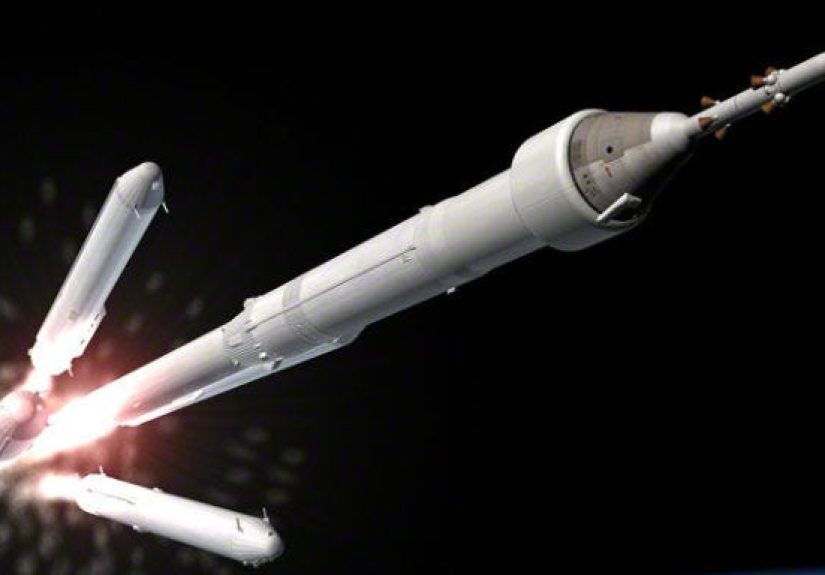
The big missing item is a true super-heavy lunar launcher. Russia’s proposed Yenisei rocket has been delayed, revised, paused, and politically reintroduced so many times that it could probably qualify as a serialized drama. Without a super-heavy launcher, Russia may have to rely on multi-launch architectures, Chinese launch systems, or a long development timeline before it can send humans to the lunar surface under its own power.
3. Oryol: The Crewed Spacecraft That Must Finally Arrive
Russia’s future human lunar plan depends on a spacecraft beyond Soyuz. Soyuz is excellent for low Earth orbit, but lunar missions require more volume, more power, longer-duration systems, and stronger reentry capability. Oryol, previously known as Federation, has long been Russia’s answer to that need.
The problem is that Oryol has been “coming soon” for a very long time. Development delays, funding limits, changing launch vehicle plans, and shifting national priorities have slowed progress. If Russia wants a credible human Moon landing program, Oryol must move from presentation slides into actual flight testing. Space history is full of beautiful spacecraft renderings. Unfortunately, renderings cannot dock, land, or survive reentry.
The China-Russia Moon Base Strategy
The most realistic path for Russia’s lunar ambitions may run through Beijing. China has built a steady, impressive lunar program: Chang’e missions have orbited, landed, returned samples, and supported long-term planning for a south polar presence. China also aims to land astronauts on the Moon before 2030 and to develop a basic International Lunar Research Station in the 2030s.
Russia and China announced cooperation on the ILRS as a parallel track to the U.S.-led Artemis program. The ILRS concept includes lunar orbit assets, surface infrastructure, communications, power systems, rovers, scientific equipment, and eventually human presence. In public roadmaps, the early phases focus on reconnaissance and technology verification, while later phases move toward construction and sustained operation.
This partnership gives Russia a way to remain part of a major lunar architecture even if its domestic program struggles. China brings momentum, funding, and a fast-growing industrial base. Russia brings deep space heritage, propulsion experience, nuclear power expertise, and decades of human spaceflight operations. The partnership is not equal in every category, but it is strategically useful for both sides.
The Nuclear Power Plant Idea: Bold, Useful, and Very Complicated
One of the most attention-grabbing parts of Russia’s plan is the proposed lunar power plant. Roscosmos has said it wants to build a lunar power system by 2036 to support rovers, observatories, and ILRS infrastructure. The involvement of Russian nuclear organizations suggests the project may rely on nuclear technology, though official language has sometimes been careful in how it describes the system.
Why does the Moon need nuclear power? Because solar power is tricky near the lunar poles. Some ridges receive long periods of sunlight, but deep craters remain in shadow, and the lunar night can last about two Earth weeks in many regions. A Moon base needs reliable power for heating, communications, science instruments, life support, and mobility. Batteries alone are heavy. Solar panels need sunlight. Nuclear systems can provide steady energy through darkness, dust, and awkward lunar weatherwhich is mostly “deadly vacuum with a chance of micrometeorites.”
If Russia can deliver a working lunar nuclear power system, it would be a serious contribution. It would also be extremely difficult. Launch safety, reactor deployment, thermal management, radiation protection, international concerns, and long-distance maintenance all create major engineering and political challenges. On Earth, a power outage is annoying. On the Moon, it can become a mission-ending emergency.
Russia’s New Orbital Station: A Bridge or a Distraction?
Russia’s post-ISS plan includes the Russian Orbital Station, often described as a national station that would serve science, Earth observation, technology testing, and human spaceflight. Roscosmos has discussed launching the first module in the late 2020s and building a core station around 2030, though timelines have shifted.
The station could help Russia preserve human spaceflight experience after the ISS. That matters because crews, flight controllers, docking systems, life support teams, and spacecraft manufacturers need regular missions to stay sharp. Human spaceflight is a muscle. Stop using it, and it gets weaker.
However, the orbital station could also compete with lunar ambitions for money and engineering talent. Russia has finite resources, and its civil space budget must compete with military priorities, sanctions-related supply problems, and domestic economic pressure. Building a new station and a Moon program at the same time is possible in theory, but only with consistent funding and disciplined management. History suggests that “consistent” and “space megaproject” do not always sit together at lunch.
How Russia Compares With NASA’s Artemis Program
The United States is moving ahead with Artemis, a program designed to return astronauts to the Moon and build a sustained presence through Orion, Space Launch System, commercial human landing systems, Gateway, new spacesuits, and international partnerships. NASA’s architecture is expensive and delayed, but it is active, funded, and supported by a large coalition.
Russia’s approach is different. Rather than leading a broad international bloc like Artemis, Russia is positioning itself inside a China-led lunar framework while trying to keep domestic capabilities alive. That makes the Russian plan less independent but potentially more achievable than a fully solo Moon program.
The comparison is not simply “America versus Russia” anymore. The modern Moon race is multipolar. NASA has Artemis. China has its crewed lunar program and ILRS. India has demonstrated lunar landing capability. Private companies are delivering payloads and building landers. Japan, Europe, Canada, the UAE, and others are joining different pieces of the lunar economy. Russia is trying to avoid becoming a museum exhibit in a race it helped invent.
Can Russia Actually Land Humans on the Moon?
The honest answer is: yes, but probably not soon, and probably not alone.
Russia still has serious strengths. It knows how to operate crewed spacecraft. It has deep experience with orbital stations. Its engineers understand propulsion, docking, life support, and long-duration spaceflight. It has nuclear technology that could become valuable on the lunar surface. It also has a powerful symbolic reason to keep going: space prestige is woven into modern Russian identity.
But the obstacles are enormous. Russia needs successful robotic lunar missions after Luna-25. It needs reliable heavy-lift capability from Vostochny. It needs Oryol to fly. It needs a clear human lunar architecture. It needs stable funding. It needs industrial quality control. It needs international cooperation that can survive political shocks. And it needs to do all this while China and the United States are moving quickly.
A Russian cosmonaut may eventually walk on the Moon as part of an ILRS-related mission. That scenario looks more plausible than a purely Russian Apollo-style landing. The spacesuit might carry a Russian flag, but the launch vehicle, lander, communications network, or surface base may be multinationalespecially Chinese-led.
Why This Plan Still Matters
It is easy to dismiss Russia’s lunar plan as overpromising. Space fans have seen plenty of grand announcements that age like milk left on a launchpad. But the plan matters because it shows how space power is changing.
Russia no longer dominates human spaceflight access the way it once did. It no longer sits at the center of global commercial launch. It no longer has the luxury of leaning on Soviet legacy forever. Yet it remains too experienced to ignore. A weakened Russia can still shape the lunar future through selective contributions: power systems, station operations, propulsion, polar science, and partnership diplomacy.
The Moon is becoming a test of national endurance, not just engineering brilliance. The winners will not be the countries that announce the most dramatic timelines. They will be the ones that keep flying, keep learning, keep fixing failures, and keep paying the bills after the press conference ends.
Experience Notes: What Russia’s Moon Plan Feels Like From the Ground
Watching Russia’s lunar plan unfold feels a little like watching an old champion walk back into the gym. Everyone remembers the trophies. Everyone knows the name. But the new athletes are faster, the equipment has changed, and nostalgia does not count as cardio.
The first experience this topic creates is tension between legacy and reality. Russia’s space history is genuinely extraordinary. Sputnik changed the world. Yuri Gagarin became a global symbol of human courage. Soviet lunar probes achieved firsts that still deserve respect. Soyuz remains one of the most successful spacecraft families ever built. When Russia talks about returning to the Moon, it is not speaking from nowhere. It is speaking from a museum full of real medals.
But the second experience is frustration. Luna-25 reminded observers that past success does not automatically transfer to modern systems. Spaceflight is not a family recipe where you can say, “Grandpa landed probes, so we’re good.” Teams need current practice, updated hardware, tested software, stable suppliers, and enough missions to maintain institutional memory. When decades pass between attempts, even a proud program can become rusty in dangerous ways.
The third experience is curiosity about the China partnership. For space watchers, ILRS is fascinating because it is not just a science project. It is a diplomatic statement. Artemis represents one vision of lunar cooperation, led by the United States and its partners. ILRS represents another, led by China with Russia as a major early partner. The Moon is becoming a place where technology, politics, and long-term resource strategy meet. That does not mean astronauts will be arguing over parking spots next to Shackleton Crater, but it does mean every landing site and power system has strategic meaning.
The fourth experience is skepticism mixed with possibility. Russia’s proposed lunar nuclear power system sounds bold, and bold ideas are easy to mock until they work. A reliable power source on the Moon would be incredibly valuable. If Russia can help solve that problem, it could regain influence even without leading the entire mission. In space, a country does not always need to build the whole orchestra. Sometimes controlling the power supply is enough to choose the music.
Finally, the story creates a sense of unfinished history. The first space race ended with American astronauts walking on the Moon and Soviet lunar crew plans fading into secrecy. A future Russian cosmonaut on the lunar surface would close a historical loop more than sixty years in the making. Whether that happens through Russian rockets, Chinese landers, or a multinational ILRS base, it would be a powerful moment.
Still, the Moon does not care about symbolism. It rewards engineering, patience, testing, and money. Russia’s big plan may succeed, shrink, delay, or transform into something more Chinese-led than Moscow-led. But the ambition itself reveals a simple truth: even in crisis, Russia does not want to leave the Moon race. It wants another chapter. The hard part is turning that chapter from a headline into hardware.
Conclusion
Russia’s plan to shrug off its space crisis and land humans on the Moon is ambitious, complicated, and far from guaranteed. The country is trying to recover from Luna-25’s failure, modernize its rockets, develop new crew systems, build a post-ISS orbital future, and secure a meaningful role in the China-led International Lunar Research Station. Its strongest path may not be a solo Moon landing, but a strategic partnership where Russian experience, nuclear power expertise, and human spaceflight knowledge support a larger lunar base architecture.
The big question is not whether Russia still dreams of the Moon. Clearly, it does. The real question is whether Roscosmos can turn crisis into capability before the next era of lunar exploration is already owned by others.







 Close
Close