
Table of Contents >> Show >> Hide
- What Is Ringworm of the Scalp?
- What Causes Tinea Capitis?
- Who Is Most at Risk?
- Symptoms of Ringworm of the Scalp
- Is Scalp Ringworm Contagious?
- How Doctors Diagnose Tinea Capitis
- Treatment for Ringworm of the Scalp
- Home Care Tips During Treatment
- What Happens If Tinea Capitis Is Left Untreated?
- How to Prevent Scalp Ringworm
- When to See a Doctor
- Common Myths About Scalp Ringworm
- Real-Life Experiences With Tinea Capitis
- Conclusion
Ringworm of the scalp, medically known as tinea capitis, sounds like something that should come with a tiny worm wearing a miner’s helmet. Thankfully, no worms are involved. The name comes from the round, ring-like patches that can appear on the skin. In reality, scalp ringworm is a contagious fungal infection that affects the scalp, hair shafts, and sometimes the surrounding skin.
Tinea capitis is especially common in children, but adults can get it too. It can cause itching, scaling, broken hairs, bald patches, redness, swelling, and in more severe cases, painful inflammation. The good news? With the right diagnosis and prescription treatment, most cases clear up well. The not-so-good news? Shampoo alone usually will not do the job, and ignoring it can let the infection spread faster than gossip in a school cafeteria.
This guide explains the causes, symptoms, diagnosis, treatment, prevention tips, and real-life experiences related to ringworm of the scalp so readers can recognize the problem early and know when to seek medical care.
What Is Ringworm of the Scalp?
Ringworm of the scalp is a fungal infection caused by dermatophytes, a group of fungi that can live on skin, hair, and nails. When these fungi infect the scalp and hair shaft, the condition is called tinea capitis. It is different from dandruff, eczema, psoriasis, or dry scalp, although it may look similar at first glance.
The infection often causes scaly patches where hair may break off close to the scalp. These patches can be itchy, red, tender, or flaky. In some cases, the scalp develops small black dots where hairs have broken at the surface. In more inflammatory cases, a swollen, boggy, painful area called a kerion may form. A kerion can look alarming and may be mistaken for a bacterial abscess, but it is usually the body’s intense reaction to the fungal infection.
What Causes Tinea Capitis?
Tinea capitis is caused by dermatophyte fungi, especially species from the Trichophyton and Microsporum groups. These fungi feed on keratin, a protein found in hair, skin, and nails. Once they invade the hair shaft, they can make hair brittle and prone to breaking.
Common Ways Scalp Ringworm Spreads
Scalp ringworm spreads through direct or indirect contact. A person may catch it from another person, an animal, or contaminated objects. Children are more likely to spread it because they often share hats, brushes, pillows, sports helmets, costumes, and close play spaces. In other words, childhood is basically a fungus networking event if hygiene gets ignored.
Common sources of infection include:
- Person-to-person contact: Close contact with someone who has scalp ringworm can spread the fungi.
- Shared personal items: Combs, brushes, hair clips, hats, towels, bedding, and helmets can carry fungal spores.
- Animals: Cats, dogs, and some farm animals can carry ringworm, sometimes without obvious bald spots.
- Contaminated surfaces: Barber tools, upholstered furniture, school mats, and shared pillows may contribute to spread if not cleaned properly.
Who Is Most at Risk?
Tinea capitis is most common in children, particularly school-age children. Adults can still develop it, but it is less common. Risk increases when someone has close contact with infected people or animals, lives in crowded settings, sweats heavily, shares hair tools, or has small cuts or irritation on the scalp.
Some people may carry the fungus without obvious symptoms. These asymptomatic carriers can still spread the infection, which is one reason scalp ringworm can bounce around a household like an unwanted group chat notification.
Symptoms of Ringworm of the Scalp
Symptoms can range from mild flakes to dramatic inflammation. Because tinea capitis can mimic other scalp conditions, a medical diagnosis is important, especially when hair loss is involved.
Common Signs and Symptoms
- Itchy scalp
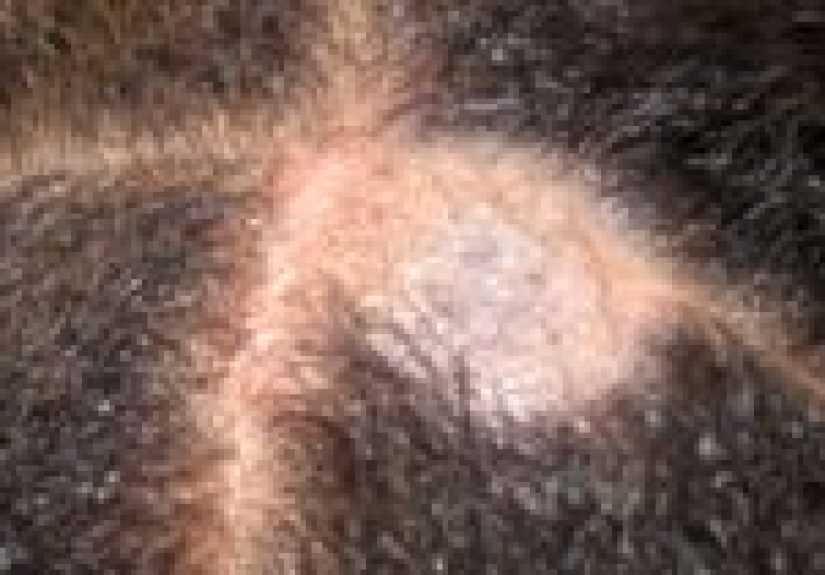
- Round or irregular scaly patches
- Patchy hair loss or thinning
- Broken hairs close to the scalp
- Black dots where hairs have snapped
- Redness, tenderness, or swelling
- Dry, flaky areas that resemble dandruff
- Crusting or oozing in more severe cases
- Swollen lymph nodes, especially around the neck or behind the ears
What Does Tinea Capitis Look Like?
In mild cases, scalp ringworm may look like a patch of dandruff that refuses to leave despite a shampoo lineup worthy of a bathroom commercial. The affected area may be dry, scaly, and slightly itchy. In other cases, hair breaks off in a circular or patchy pattern, creating visible bald spots.
Inflammatory tinea capitis can cause thick crusts, pus-filled bumps, tenderness, and swelling. A kerion may feel soft, swollen, and painful. This type needs prompt medical attention because severe inflammation can increase the risk of scarring and permanent hair loss.
Is Scalp Ringworm Contagious?
Yes. Tinea capitis is contagious and can spread before it is obvious. Fungal spores can survive on objects, making shared hair tools and hats risky. This is why prevention involves both treatment and environmental cleanup.
A child with scalp ringworm does not always need to be isolated for a long time, but schools and caregivers may have rules about return after treatment begins. Parents should follow the advice of the child’s healthcare provider and local school policy. The main goal is to start treatment, avoid sharing personal items, and reduce spread at home and in group settings.
How Doctors Diagnose Tinea Capitis
A healthcare provider may suspect scalp ringworm by looking at the scalp, checking the pattern of scaling and hair loss, and asking about symptoms, contacts, pets, and shared items. Because several scalp problems can look alike, testing may be recommended.
Common Diagnostic Tests
Doctors may gently scrape the scalp or collect affected hairs to examine under a microscope. A potassium hydroxide test, often called a KOH prep, can help reveal fungal elements. A fungal culture may also be sent to a lab to identify the specific fungus, although results can take time. In some cases, a Wood’s lamp may be used, because certain fungal species glow under special light.
Diagnosis matters because the treatment for scalp ringworm is different from the treatment for dandruff or eczema. Using only anti-dandruff shampoo may reduce flakes but will not eliminate fungus inside the hair shaft.
Treatment for Ringworm of the Scalp
The most important thing to know is this: scalp ringworm usually requires prescription oral antifungal medicine. Creams, lotions, and over-the-counter antifungal products may help ringworm on the body, but they do not penetrate deeply enough into the hair shaft to cure tinea capitis.
Oral Antifungal Medication
Healthcare providers commonly prescribe oral antifungal medications such as griseofulvin, terbinafine, fluconazole, or itraconazole. The best choice depends on the patient’s age, medical history, possible drug interactions, the suspected fungus, and local prescribing preferences.
Treatment often lasts several weeks and sometimes longer. It is important to finish the full course, even if the scalp starts looking better. Stopping early is like leaving one villain alive at the end of a movie: the sequel may be worse.
Medicated Shampoo
Doctors may recommend medicated shampoos containing selenium sulfide or ketoconazole. These shampoos can reduce fungal spores on the scalp and help prevent spread to others. However, shampoo alone does not cure tinea capitis. Think of it as the cleanup crew, not the main hero.
Treating Household Spread
Because ringworm can spread easily, family members may need to be checked, especially if they have itching, flakes, or hair loss. Pets should also be evaluated by a veterinarian if there are signs of ringworm, such as bald patches, scaling, or crusting. Sometimes pets can carry fungi without looking very sick.
Home Care Tips During Treatment
Home care supports medical treatment and reduces reinfection. It does not replace prescription medicine, but it can make a big difference in controlling the spread.
- Do not share combs, brushes, hats, towels, helmets, hair ties, pillows, or bedding.
- Wash bedding, towels, hats, and washable hair accessories regularly.
- Clean combs and brushes, or replace them once treatment has started.
- Keep the scalp clean and dry.
- Avoid scratching, which can irritate the scalp and spread infection.
- Check siblings and close contacts for symptoms.
- Have pets examined if they show suspicious skin or fur changes.
What Happens If Tinea Capitis Is Left Untreated?
Untreated scalp ringworm can spread to larger areas of the scalp and to other people. Bald patches may become more noticeable. Severe inflammation can lead to a kerion, secondary bacterial infection, scarring, or permanent hair loss. Most hair loss from tinea capitis is temporary when treated early, but delayed treatment increases risk.
That is why persistent scalp scaling, itching, and patchy hair loss deserve medical attention. A quick appointment can save weeks of guessing, worrying, and buying shampoos with names that sound like superhero chemicals.
How to Prevent Scalp Ringworm
Prevention focuses on hygiene, avoiding shared personal items, and recognizing symptoms early. This is especially important in households, schools, daycare centers, gyms, and sports teams.
Practical Prevention Steps
- Teach children not to share hats, brushes, combs, helmets, or pillows.
- Wash hair regularly, especially after sports or heavy sweating.
- Keep hair tools clean and separate for each person.
- Check pets for bald, scaly, or crusty patches.
- Clean shared surfaces and items when someone has ringworm.
- Encourage children to report itchy or flaky scalp patches early.
Barbershops and salons should disinfect tools properly between clients. Families should also be cautious with shared costumes, dress-up hats, and sports equipment. Fungal spores do not need a VIP invitation; they just need an opportunity.
When to See a Doctor
See a healthcare provider if a child or adult has patchy hair loss, scaling, itching, broken hairs, painful swelling, pus, crusting, or scalp tenderness. Medical care is especially important if symptoms are spreading, if several family members are affected, or if a pet may be involved.
Urgent evaluation is recommended for a painful swollen scalp mass, fever, worsening redness, or signs of infection. These symptoms may indicate a severe inflammatory reaction or secondary infection that needs prompt treatment.
Common Myths About Scalp Ringworm
Myth 1: Ringworm Means Worms
Nope. Not a worm. Not a bug. Not a tiny creature throwing a party under the hairline. Ringworm is a fungal infection.
Myth 2: Dandruff Shampoo Will Cure It
Medicated shampoo can help reduce spread, but scalp ringworm usually needs oral prescription antifungal medicine.
Myth 3: Only Dirty People Get Ringworm
Anyone can get ringworm. Hygiene helps reduce risk, but exposure can happen through school, sports, pets, family members, or shared items.
Myth 4: Hair Loss Is Always Permanent
Hair often grows back after proper treatment. Permanent hair loss is more likely when inflammation is severe or treatment is delayed.
Real-Life Experiences With Tinea Capitis
One of the trickiest things about scalp ringworm is that it often starts quietly. A parent may first notice flakes on a child’s scalp and assume it is dandruff. They buy a gentle shampoo, then a stronger shampoo, then maybe a “miracle” shampoo that promises a scalp so clean it could host a royal dinner. But the patch remains. A week later, the hair in that area starts breaking. That is usually the moment the situation moves from “dry scalp” to “we should call the doctor.”
In many families, the emotional side is just as stressful as the medical side. Children may feel embarrassed about bald patches, especially if classmates ask questions. Parents may worry they did something wrong. The truth is that tinea capitis is common, contagious, and treatable. It is not a character flaw, a parenting failure, or proof that someone’s bathroom routine needs a federal investigation.
A typical experience might look like this: a child develops an itchy, scaly patch near the crown of the head. At first, the flakes look like ordinary dryness. Then the hair begins to snap close to the scalp, leaving a small patch that appears thinner than the surrounding hair. The child scratches, which makes the area redder. A doctor examines the scalp, may take a sample, and prescribes an oral antifungal medication. The family is also told to use a medicated shampoo a few times per week and avoid sharing brushes, hats, and pillowcases.
The first week of treatment may not bring dramatic visual improvement. That can be frustrating. Fungal infections are not famous for their speedy exits. Some parents expect the patch to look better immediately, but the scalp often needs time to calm down and hair needs time to regrow. The itching may improve first. Scaling may slowly decrease. Broken hairs may remain visible until new hair grows in.
Another common experience is the “household detective phase.” Families start wondering where the infection came from. Was it the school costume hat? The soccer helmet? The cousin’s sleepover? The family cat? The answer is not always clear. The practical response is more important than the mystery: wash bedding, stop sharing hair tools, clean brushes, check siblings, and look at pets for unusual skin patches.
Children may need reassurance during treatment. A simple explanation can help: “This is a common scalp infection caused by fungus. Medicine will help it go away, and we are going to keep your hair things separate for a while.” Keeping the tone calm matters. Panic makes the child feel like the scalp has become a national emergency. Calm routines make treatment feel manageable.
For adults, scalp ringworm can be surprising because many people think it only happens to kids. Adults may mistake it for seborrheic dermatitis, psoriasis, irritation from hair products, or traction-related hair loss. Anyone with patchy hair loss and scaling should avoid self-diagnosing for too long. Early care can reduce spread and protect hair follicles.
The biggest lesson from real-life cases is simple: do not wait forever. If a flaky scalp patch comes with broken hairs, bald spots, swelling, tenderness, or spreading symptoms, get it checked. The earlier tinea capitis is treated, the easier it is to control. And while the treatment process may take patience, most people recover well with the right medication and prevention habits.
Conclusion
Ringworm of the scalp, or tinea capitis, is a contagious fungal infection that affects the scalp and hair. It is common in children, but adults can develop it too. Symptoms may include itching, scaling, bald patches, broken hairs, redness, swelling, and sometimes painful inflammation. Because the fungus can invade the hair shaft, scalp ringworm usually requires prescription oral antifungal medicine. Medicated shampoo can reduce spread, but it is not enough by itself.
Early diagnosis and treatment are the best ways to prevent complications, protect hair growth, and stop the infection from spreading through households, schools, or shared personal items. With medical care, good hygiene, and a little patience, tinea capitis is very treatable. The scalp may not send a thank-you card, but the new hair growth will make its appreciation known.
Medical note: This article is for educational purposes only and should not replace diagnosis or treatment from a licensed healthcare professional. Anyone with scalp swelling, pus, fever, worsening redness, or patchy hair loss should seek medical care.






 Close
Close