
Table of Contents >> Show >> Hide
- Why a Dresser-to-Desk Makeover Works So Well
- How to Choose the Right Dresser
- Plan the Conversion Before You Pick Up a Screwdriver
- Step-by-Step: How to Turn a Repurposed Dresser Into a Desk
- Design Ideas That Make the Desk Look Custom
- Mistakes to Avoid
- Is a Repurposed Dresser Into a Desk Worth It?
- Final Thoughts
- Real-World Experiences With a Repurposed Dresser Into a Desk
- SEO Tags
Turning a repurposed dresser into a desk is one of those DIY ideas that feels almost suspiciously smart. You get storage. You get personality. You get a workspace that does not look like it was panic-ordered at 11:47 p.m. during a home office meltdown. Best of all, you get to rescue an old piece of furniture and give it a second life that is actually useful.
That is the magic of this makeover. A dresser already knows how to hold things, survive daily abuse, and quietly judge your clutter. A desk needs those same talents, plus a comfortable work surface. When you combine the two, you end up with a custom setup that works especially well in small bedrooms, guest rooms, craft corners, and home offices where every inch matters.
If you have ever looked at a thrift-store dresser and thought, “You could do more,” this project is your moment. A repurposed dresser into a desk can look farmhouse, modern, vintage, coastal, traditional, or delightfully impossible to categorize. It can be painted, stained, stripped, dressed up with new hardware, or left a little imperfect for charm. In other words, it can become the overachiever of your furniture lineup.
Why a Dresser-to-Desk Makeover Works So Well
A standard desk gives you a top and maybe a drawer or two. A dresser gives you drawers for days. That built-in storage is the main reason this idea works. Office supplies, chargers, notebooks, cables, planners, sticky notes, headphones, paper files, and all the mysterious little objects that breed in workspaces finally get a home.
The second reason is footprint. A dresser already occupies floor space efficiently, and many dressers are deep enough to support a practical desktop without making the room feel crowded. In tight spaces, that matters more than most people expect. A bulky office desk can dominate a room, while a converted dresser desk often feels like a design choice rather than a workplace invasion.
The third reason is style. New office furniture can be painfully generic. A repurposed dresser into a desk brings texture, age, detailing, and character. Even a plain dresser usually has better lines than flat-pack office furniture with the emotional warmth of a waiting room.
How to Choose the Right Dresser
Look for “Good Bones” First
Not every dresser deserves a dramatic career change. The best candidates are sturdy, level, and heavy enough to feel reliable. Solid wood is ideal because it handles sanding, painting, drilling, and general reinvention better than flimsy particleboard. Veneer or laminate pieces can still work, but they require more care during prep and may not tolerate major structural changes as gracefully.
Open and close the drawers. Wiggle the frame. Check the back. Look for signs of water damage, loose joints, major warping, or a top panel that sags like it has already given up on life. A little cosmetic damage is fine. Bad structure is not a personality trait; it is a warning label.
Think About Size Before You Buy
Before you fall in love with ornate drawer pulls and curved legs, measure your space. Then measure again, because walls are sneaky. Consider the width of the room, the depth you can spare, and whether the chair will tuck in neatly. A dresser that looks charming in a thrift shop can become a hallway blockade at home.
Height matters too. For a seated workspace, aim for a desk height that feels comfortable for typing and writing. If the dresser is too tall, you may need a lower chair, a keyboard tray, or a different piece entirely. If it is too short, adding a thicker top or furniture risers may help. This is not the most glamorous part of the makeover, but it is the difference between a beautiful desk and a shoulder-cramping regret machine.
Plan the Conversion Before You Pick Up a Screwdriver
The easiest mistake in a dresser desk DIY is rushing into demolition. Slow down and decide what kind of desk you actually want.
Option 1: Remove the Center Drawers
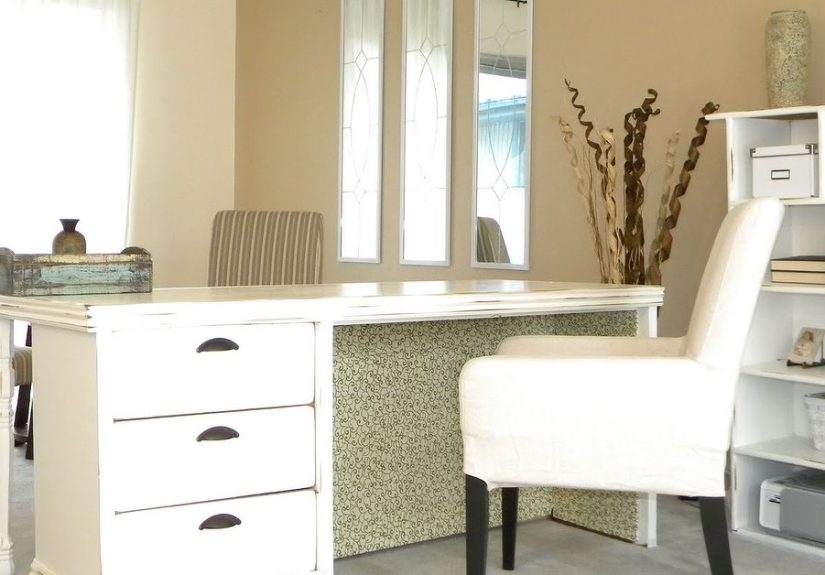
This is the classic approach. You remove one or more middle drawers to create knee space, while keeping side drawers for storage. It works beautifully on long dressers and gives the final piece that built-in, furniture-designer energy people love to post online as if it just “came together.” It did not. It took measuring.
Option 2: Use the Dresser as a Base and Add a Larger Top
This approach is great when you want more legroom or a wider workspace. The dresser acts as one support, and the extended top can connect to a second drawer unit, leg supports, or a wall bracket. This is especially useful for two-person desks, craft stations, or setups with a printer and monitor.
Option 3: Keep Most Drawers and Use a Pull-Out or Writing Surface
If you do not need full-time computer space, a shallower writing desk approach can work. This style is handy in bedrooms, hallways, or guest rooms where the desk needs to stay visually tidy and multipurpose.
Step-by-Step: How to Turn a Repurposed Dresser Into a Desk
1. Empty It and Take It Apart
Remove the drawers, hardware, and any pieces that might get in the way. Label the drawers if you plan to reuse them in different spots. This prevents the fun little puzzle later where nothing fits and you briefly accuse the dresser of changing shape.
2. Clean Like You Mean It
Dust, grease, wax, mystery residue, and old furniture polish can sabotage paint and primer. A thorough cleaning is not optional. Wipe down every surface, especially around handles, drawer fronts, and edges where grime tends to camp out long-term.
3. Decide Which Drawers Stay
Mark the section that will become the desk opening. In many projects, the center drawers are removed while the top drawer fronts are reattached as decorative panels so the piece still looks original from the front. That keeps the design balanced and prevents the makeover from looking half-finished.
4. Reinforce the Opening
Once you remove drawers, you may also remove support. Add wood cleats, braces, or L-shaped supports inside the frame so the piece remains strong. If you reattach a drawer face in a fixed position, secure it carefully from behind. This is one of those steps nobody notices when done right and everybody notices when done wrong.
5. Check Legroom and Chair Clearance
Sit at the opening before finishing the piece. Test whether your knees clear the frame, whether your chair slides in properly, and whether your elbows land at a comfortable height. This trial run can save you from building a desk that is technically beautiful and physically rude.
6. Sand, Scuff, or Degloss
Your prep depends on the material and finish. Solid wood usually benefits from a scuff sand. Slick laminate may need extra prep and a bonding primer. Chalk paint can simplify the process on some pieces, but smoother surfaces still benefit from thoughtful prep. The goal is simple: give the new finish something to hold onto.
7. Prime, Paint, or Stain
This is where the personality arrives. Paint is the easiest route if the dresser is mismatched, scratched, or visually dated. Stain is great if the wood grain is worth showing off. If you want a modern look, choose a saturated neutral such as deep green, charcoal, warm white, navy, or mushroom. If you want something more playful, go with muted terracotta, dusty blue, or a cheerful cream that says, “I own matching file folders now.”
Use a roller on broad, flat areas for a smoother finish and a brush for edges, trim, and grooves. Let each coat dry fully. Rushing between coats is how people end up fingerprinting their own furniture like overexcited raccoons.
8. Protect the Surface
A desk works harder than a dresser top. It deals with laptops, mugs, notebooks, hand oils, pens, and the occasional dramatic elbow. Finish the top with a durable sealer if needed, especially if you used chalk paint or a softer decorative finish. A protected surface helps the desk look intentional for years instead of “cute for six weekends.”
9. Upgrade the Hardware
Fresh knobs or pulls can completely change the mood of the piece. Brass adds warmth, matte black looks crisp, acrylic feels airy, and wood pulls lean modern and soft. If the original hardware is solid and interesting, clean it and keep it. Old hardware with character is often better than trendy hardware with commitment issues.
10. Style the Workspace
Now the fun part. Add a task lamp, cable management, drawer organizers, and one or two decorative pieces that make the desk feel like part of the room. Not fifteen decorative pieces. This is still a desk, not a retail display called “Thoughtful Productivity.”
Design Ideas That Make the Desk Look Custom
Add a New Wood Top
If the original dresser top is damaged or too narrow, replace or cap it with butcher block, plywood with edge trim, or a finished wood panel. This instantly makes the piece look more substantial and gives you a better work surface.
Create a Two-Tone Finish
Paint the base and keep the top wood-toned for contrast. This is one of the easiest ways to make a dresser desk look expensive without actually behaving expensively.
Use Wallpaper or Paint Inside the Side Drawers
Lining drawers adds a custom touch and makes the interior feel finished. It is a small detail, but the kind that makes people say, “Wait, you made this?” in the good way.
Build Upward
If your room is small, use the wall above the desk. Floating shelves, peg rails, framed cork boards, or a slim cabinet can turn a single piece of furniture into a full workstation. The trick is to go vertical without making the area feel visually top-heavy.
Mistakes to Avoid
One of the biggest mistakes is choosing a dresser based only on appearance. Fancy trim will not help if the frame is weak. Another common mistake is ignoring ergonomics. A desk can be gorgeous and still be a pain in the neck, literally, if the height is wrong or the monitor sits too high.
People also underestimate structure. Remove too many drawers without adding reinforcement, and the piece may rack, sag, or wobble. Another issue is skipping prep before paint. That shortcut often leads to chipping, peeling, or the dreaded “I thought it was dry” thumbprint permanently preserved in history.
Finally, do not convert a genuinely valuable antique without thinking it through. Some pieces are better restored than reinvented. A dresser-to-desk makeover should feel like a smart rescue, not a crime against furniture.
Is a Repurposed Dresser Into a Desk Worth It?
Absolutely, especially if you want a workspace with storage, style, and a smaller environmental footprint. Buying secondhand furniture and adapting it for a new use can be more affordable than purchasing a custom desk, and often more satisfying than settling for something mass-produced. You are not just creating a place to answer emails. You are building a piece that fits your room, your habits, and your taste.
It is also a project with a rare combination of practical payoff and visual impact. Once finished, the desk does not scream DIY. It whispers it confidently, from a beautifully organized drawer full of pens.
Final Thoughts
A repurposed dresser into a desk is proof that smart design does not always start in a showroom. Sometimes it starts in a thrift store, a garage, a dusty spare room, or the corner of your aunt’s basement where furniture goes to reflect on its life choices. With the right piece, a bit of planning, and a finish that suits your style, you can create a desk that works harder, stores more, and looks far better than most off-the-shelf options.
That is what makes this makeover so appealing. It is not just about saving money or upcycling for the sake of it. It is about making your furniture more useful, your room more functional, and your workspace more personal. And if the final result makes you feel slightly superior every time someone asks where you bought it, well, that is just a bonus feature.
Real-World Experiences With a Repurposed Dresser Into a Desk
One of the most common experiences people report after converting a dresser into a desk is surprise at how much more organized they become. A regular desk invites clutter because everything ends up on top. A dresser desk quietly solves that problem with actual storage. Pens go in one drawer, tech accessories in another, paper in a third, and suddenly the desktop stays usable. It is not a miracle. It is just drawers doing what drawers were born to do.
Another shared experience is that the finished piece often looks more expensive than expected. That is the power of repurposed furniture. A solid older dresser with fresh paint, updated hardware, and a clean work surface can look far more custom than many store-bought desks. People start with a practical mindset and end up with a furniture glow-up that makes the room feel more polished overall.
There is also a learning curve, and this is where real experience becomes valuable. Many first-time DIYers discover that prep takes longer than painting. Cleaning, sanding, patching dents, tightening joints, and figuring out which drawers to remove can consume more time than the pretty part. But once they get through that stage, the whole project becomes much easier. The lesson is simple: the boring steps are often the steps that make the finished desk look professional.
Some people find that using the dresser as a full desk base works best in bedrooms or guest rooms because it helps the workspace blend in with the rest of the furniture. Instead of introducing a separate office desk that feels visually cold, the converted piece feels consistent with the room. It is especially effective when the desk doubles as a vanity, writing station, or homework area.
Families also tend to appreciate how adaptable the project is. A wider dresser can become a shared workstation for siblings. A smaller vintage chest can become a compact laptop desk. A deeper dresser can serve as a crafting station with room for bins, tools, and supplies. In many homes, the real success of the makeover is not just style but flexibility. The desk evolves with the room instead of locking it into one purpose forever.
And then there is the emotional side of the experience. Repurposing an old dresser often feels more meaningful than buying a new desk. Sometimes the piece belonged to a parent or grandparent. Sometimes it came from a flea market and simply had character. Either way, transforming it creates a connection to the finished furniture that flat-pack pieces rarely offer. You remember the scratches you fixed, the color you chose, the hardware you swapped, and the exact moment it stopped looking like a dresser and started looking like a desk.
Of course, not every experience is pure triumph and flattering lighting. There are moments when a drawer sticks, paint drips, measurements betray you, or the “simple weekend project” becomes a two-week lesson in humility. But even those moments teach something useful. People come away more confident in handling furniture, better at spotting quality secondhand pieces, and more willing to customize their homes instead of settling for generic solutions.
That may be the best experience of all: realizing you can make a space work better with creativity instead of just spending more money. A repurposed dresser into a desk is not only a practical project. It is a small shift in mindset. You stop seeing old furniture as outdated and start seeing potential everywhere. That is a pretty good return on investment for one hardworking piece of wood and a few drawers with a second chance.







 Close
Close