
Table of Contents >> Show >> Hide
- Why This Kind of Layoff Story Spreads So Fast
- The Real Problem Was Never the Employee
- Why Some Fired Employees “Play Dumb”
- What a Smart Employee Should Do After a Layoff
- What the Old Boss Usually Gets Wrong
- If You Are the Boss in This Story, Here Is the Hard Truth
- Experiences Related to This Topic: The Layoff Stories People Rarely Forget
- Conclusion
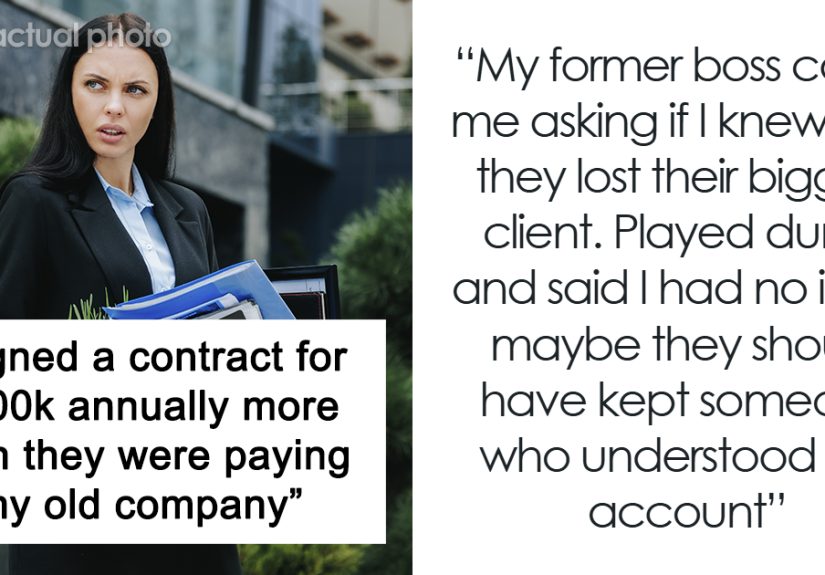
There are few workplace plot twists more delicious than this one: a company lays off an employee, acts like the transition will be smooth, then suddenly realizes the person they cut was not, in fact, an interchangeable office fern. The old boss calls. The panic is audible. The former employee, now safely outside the building and emotionally three inches taller, responds with the corporate equivalent of a shrug: I have no idea.
Petty? Maybe a little. Satisfying? Absolutely. But what makes stories like this hit so hard is that they are not really about revenge. They are about value. More specifically, they are about what happens when a company decides someone is disposable, only to discover that their knowledge, relationships, systems, shortcuts, client trust, and invisible labor were holding the place together with the force of duct tape and caffeine.
That is why the phrase “played dumb” lands like a cymbal crash in modern workplace culture. It is not always about trickery. Sometimes it is just a laid-off worker refusing to perform free emergency heroics for the same leadership team that escorted them out like yesterday’s office pizza.
And honestly, that is the part many bosses still do not understand. Once the layoff is done, the emotional contract is done too. The badge is deactivated. The loyalty evaporates. The handoff everyone assumed would magically happen? That should have been handled before the company lit the match.
Why This Kind of Layoff Story Spreads So Fast
Stories about a fired employee outsmarting an old boss after a layoff travel fast because they tap into a very modern fear: the fear of being told your work matters right up until the moment a spreadsheet says otherwise. Workers have watched companies talk about culture, family, mission, and values, only to swing the cost-cutting axe and act surprised when trust packs its bag too.
That disconnect is why so many people instantly recognize the emotional geometry of this situation. One side thinks, We can replace the person. The other side thinks, You can try.
Research and workplace reporting have hammered this point for years: layoffs may reduce headcount quickly, but they also damage morale, loyalty, knowledge retention, and confidence across the rest of the team. Or, translated into plain English, when you cut people carelessly, you do not just remove salaries from a budget. You remove memory from a business.
And memory matters. It matters when a client needs a weird file from 2023. It matters when a vendor only answers one person’s emails. It matters when the reporting dashboard breaks every second Tuesday because nobody documented the workaround except the employee you let go in a six-minute Zoom call.
The Real Problem Was Never the Employee
In most versions of this story, the former boss makes the same mistake twice.
The first mistake is the layoff itself: leadership assumes a role is redundant because the work looks simple from the outside. The second mistake is the callback: leadership realizes too late that the job was not just a list of tasks. It was a bundle of judgment, context, relationships, instincts, and institutional knowledge that lived inside one human being.
That is where companies get into trouble. They confuse visibility with value. A worker who quietly prevents ten disasters a month can look invisible right up until the moment the disasters arrive on schedule.
In other words, a calm employee can be mistaken for an unnecessary one. That is management malpractice wearing khakis.
Institutional Knowledge Is Expensive to Lose
The most important work in many companies is not glamorous. It is the hidden stuff: knowing which client needs reassurance before they need data, which internal approval always stalls, which campaign needs a backup plan, which system breaks if you touch one mysterious setting nobody has dared touch since the Obama administration.
When that knowledge walks out the door, the company often learns two painful lessons. First, the role was not overstaffed. Second, documentation is not the same thing as understanding. A spreadsheet can tell you what happened. It cannot tell you why that weird workaround existed, why the client hates one particular phrase, or why the launch timeline on paper has never matched reality even once.
That is why the former employee in this kind of story often appears to “outsmart” the old boss without doing anything dramatic. They do not need a grand speech. They do not need a violin soundtrack. They just need to stop donating expertise for free.
Why Some Fired Employees “Play Dumb”
Let’s be fair: sometimes the phrase sounds harsher than the behavior itself. Often, the employee is not lying. They are protecting boundaries. They no longer have access to internal systems. They are no longer responsible for internal outcomes. They are no longer being paid to rescue a company that already decided it could live without them.
That matters, because far too many laid-off workers are quietly expected to perform unpaid transition labor after the fact. A boss sends a quick text. A former coworker pings them for a password clue. Someone asks for “just ten minutes” that somehow turns into an unpaid strategy session, a free training call, and a last-minute save for a client emergency.
Nope. That is not teamwork. That is an invoice wearing a fake mustache.
If a former employer truly needs help, there is a grown-up solution: hire the person back, bring them on as a consultant, or pay them for transition support. Anything else is just nostalgia for free labor.
Boundaries Are Not Bitterness
This is where the conversation gets interesting. People love to say, “Don’t burn bridges.” True. But some bridges are not burning. Some are simply being closed to unpaid traffic.
A laid-off employee can be calm, professional, and still decline to solve problems for nothing. That is not bitterness. That is clarity. It is the adult version of saying, “You ended the arrangement, remember?”
And in many cases, it is also smart. If the former employee gives rushed advice without full access, context, or authority, they could end up blamed for a mess they no longer control. Saying less can be safer than saying more.
What a Smart Employee Should Do After a Layoff
If this story feels familiar, the goal is not to become a cartoon villain with a dramatic swivel chair. The goal is to protect yourself, stabilize your life, and turn a lousy situation into a stronger next move.
1. Get the paperwork before the adrenaline wears off
Ask for everything in writing: your separation date, final pay information, benefits status, severance details if any, return-of-property instructions, and any agreements you are being asked to sign. Federal law does not generally require severance pay, so if it is being offered, read the terms carefully instead of signing while your brain is still buffering.
2. Check your immediate safety net
If you lost your job through no fault of your own, unemployment benefits may be available, but the rules are run by each state. Health coverage matters too. Many former employees can use COBRA to temporarily keep employer-sponsored insurance, though it may be pricey. None of this is glamorous, but it is the difference between chaos and a plan.
3. Know the legal lines
Not every layoff is illegal, but not every firing is clean either. Federal protections still matter. A termination cannot lawfully be based on discrimination or retaliation, and large layoffs may trigger notice obligations under the WARN Act in certain cases. If something about the process feels off, document what happened and get informed before you assume you have no options.
4. Decide whether your old employer gets access to you
If the company reaches out after the layoff, you have choices. You can ignore it. You can answer briefly. You can offer consulting support at a professional rate. You can also say, with full dignity and zero jazz hands, that you are unavailable.
The key is to stop responding like an employee if you are no longer one. Your labor is now a product, not a favor.
5. Turn hidden value into visible value
One of the weird gifts of a layoff is that it exposes what you were really doing all along. Were you the client whisperer? The system fixer? The deadline rescuer? The person who translated leadership chaos into something the team could actually execute? Great. That is your marketable value now. Put it in your resume, portfolio, case studies, and interviews.
What the Old Boss Usually Gets Wrong
When the old boss comes calling, there is usually a script.
First comes confusion: “We just need a quick answer.” Then urgency: “This client is really important.” Then selective nostalgia: “You always knew how to handle these things.” Funny how that insight blooms right after payroll stops.
The real problem is not that the boss needs help. The real problem is that the boss expected continuity without respecting the person who created it.
Free advice is not a transition plan
A company that lays someone off without a real knowledge-transfer process is gambling. Sometimes it wins for a week or two because adrenaline and leftovers carry the team. Then the cracks show. A report is late. A client gets restless. A campaign flops. An internal system nobody understood starts producing what can only be described as haunted numbers.
That is when leadership realizes the employee they cut was not just doing tasks. They were reducing uncertainty. And reducing uncertainty is one of the most valuable jobs in any company, even if nobody thought to list it on the org chart.
Boomerang hires are not always a happy ending
Some companies do hire laid-off employees back. Sometimes that works out. Sometimes it is a sign that the layoff was rushed, poorly analyzed, or based on a hilariously optimistic assumption that “the team can absorb it.” But even when people return, trust does not come back in the same box.
Once a worker has seen how quickly they can be declared expendable, they rarely re-enter the building with fairy-tale innocence. They return wiser, more cautious, and with an internal exit sign permanently lit.
That is not cynicism. That is learning.
If You Are the Boss in This Story, Here Is the Hard Truth
Do not call a former employee in a panic and act shocked that they are not sprinting back to save you. You made a business decision. They are allowed to make one too.
If you truly need their help, respect them enough to structure it professionally. Offer a paid consulting arrangement. Define scope. Set expectations. Pay promptly. Do not frame it as a favor, a loyalty test, or a chance for them to prove they are “still a team player.” That team ship sailed when you kicked them off it.
Better yet, fix the real issue. Build better documentation. Cross-train people. Review who actually owns client relationships. Stop treating the calmest and most competent people like they are somehow the easiest to remove.
Because here is the awkward truth companies hate to admit: the worker who seemed the most replaceable is often the one who made everyone else look more competent than they were.
Experiences Related to This Topic: The Layoff Stories People Rarely Forget
What makes this fired employee story feel so believable is that variations of it happen everywhere. Not always with dramatic revenge. Not always with a triumphant group chat screenshot. But with the same basic rhythm: a company underestimates someone, cuts them loose, and then discovers their absence is louder than their presence ever seemed.
One common version happens in client service roles. A manager assumes any account can be reassigned because all the information is in the CRM. Then the employee leaves, and the company learns the client was staying because of trust, not software. The notes may show what was discussed, but they do not capture tone, history, irritation level, political dynamics, or the one tiny issue that could trigger a contract review. Suddenly, the laid-off employee starts getting messages that sound suspiciously friendly for people who did not fight to keep them.
Another version shows up in operations. There is always one person who knows how invoices really move, which vendor always sends the wrong form, and why the monthly close goes sideways if one approval is missing by noon. Leadership sees a title that sounds administrative and thinks, simple. Then the worker is gone and the process collapses like a folding table at a family reunion. That is when bosses start asking former employees “where things are stored,” as if the answer were a folder instead of ten years of practical knowledge.
Then there is the technology version, and it is almost poetic. A company lays off someone who maintained systems quietly, responsibly, and with very little self-promotion. Their replacement, if there is one, receives some documents, a few half-explained passwords, and a vague blessing. Everything seems fine until one update breaks an old workaround nobody understood. Then the same leaders who praised “efficiency” begin searching the former employee’s name in old email chains like archaeologists at a very expensive dig site.
There is also the emotional version, which people talk about less but remember more. Sometimes the person who gets cut was the unofficial stabilizer. They trained new hires, smoothed over conflicts, handled nervous clients, translated executive nonsense into human language, and quietly prevented team meltdowns. Their measurable output mattered, sure, but their unmeasured impact mattered more. After the layoff, the team does not just lose a worker. It loses a buffer, a translator, and the office equivalent of noise-canceling headphones.
And finally, there is the comeback version. The former employee does not waste energy plotting. They freelance. They job hunt smarter. They reconnect with old contacts. They finally sleep through the night. A few weeks or months later, the same skills that were supposedly expendable become valuable somewhere else, often for better pay and better treatment. That is the part many old bosses miss. The layoff may have been a chapter-ending disaster inside the company, but outside it, it can become a very sharp beginning.
So yes, when a fired employee says, “I had no idea,” it can sound like a clever line. But sometimes it is also a perfect summary of how companies behave during layoffs. They had no idea what that worker really did. They had no idea how fragile their own systems were. And they had no idea that once respect is cut, free labor tends to disappear with it.
Conclusion
The reason this workplace story sticks is simple: it flips the power dynamic. The boss who once held the calendar invite, the access card, and the final decision suddenly needs something. The employee who was treated like a line item suddenly becomes the person with leverage.
That reversal is satisfying, yes, but it is also instructive. A layoff handled badly does more than hurt one worker. It exposes weak leadership, poor planning, lazy succession thinking, and a complete misunderstanding of where value actually lives.
So if you are the employee in this story, remember this: professionalism does not require self-sacrifice. You are allowed to protect your time, your expertise, and your peace. And if you are the boss, remember something even more uncomfortable: when the person you fired seems impossible to replace, the problem was never their attitude. It was your judgment.






 Close
Close