
Table of Contents >> Show >> Hide
If you’re a hobby machinist or a DIY CNC enthusiast, you’ve probably asked yourself at least once: “How do I keep the nasty swarf, dust, and debris away from my precious ball screws?” In the world of homemade CNC routers especially those built in garages and basements chips don’t just fly, they *migrate*. They wriggle into nooks, crannies, and those precisely machined ball screws that are supposed to give you literal microns of positioning accuracy. Enter a clever and low‑cost solution: thin plastic strips acting as telescopic screw protectors. Not sexy? Maybe. Effective? Heck yes!
Why Ball Screw Protection Matters
Ball screws are the workhorses of precision motion systems. They turn rotary motion into linear movement with extremely low friction and high repeatability exactly what you want from a CNC router’s axes. However, with this precision comes sensitivity. Ball screws exposed to debris, coolant splatter, and environmental contaminants will wear out quickly, leading to backlash, skipped steps, and expensive replacements. Protecting them isn’t just about cleanliness it’s about extending performance and machine life. In industrial settings, protective bellows and covers are standard equipment. But what about on a homebrew rig?
Even commercial ball screw covers often made from rubber, silicone, or fabric bellows can cost a pretty penny and may not fit the compact travel range of DIY builds. That’s why innovative hobbyists have taken matters into their own hands.
The Hackaday Inspiration: Plastic Strip Screw Covers
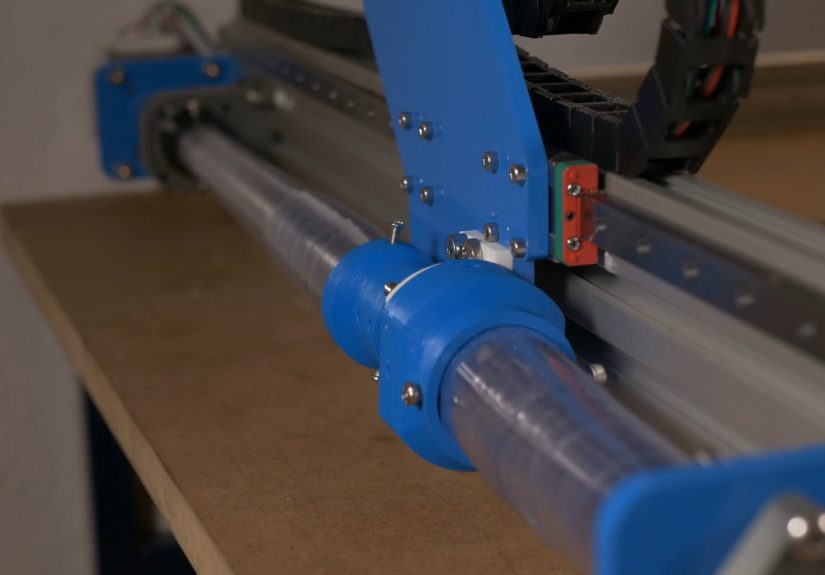
In a fascinating DIY twist, community member Nikodem Bartnik engineered a set of telescoping covers made from coiled plastic strips (more on materials in a minute). Instead of buying expensive commercial bellows, he created a retractable protective sleeve that extends and contracts with the machine’s movement all while keeping dust and chips at bay. The initial version used paper a masterstroke of prototyping ingenuity but the friction was too high. The upgraded version used slick polyester film, which slid smoothly and stayed transparent, so you could *watch* it do its job.
This idea leverages a simple physics principle: if you can enclose the screw in a barrier that travels with it, contaminants have fewer opportunities to settle in. The plastic strips essentially form a “springy” tube that elongates as the axis travels and compresses when it returns. It’s like a homemade bellows, but lighter and tailored to the travel you actually need.
Why DIY Versions Work for Homebrew CNCs
- Custom fit: Hobby CNC builds vary widely. Off‑the‑shelf covers are often too big or too stiff.
- Low friction: Polyester film slides better than thick rubber or fabric, reducing load on the drive system.
- Economical: No need for pricey, industrial‑grade bellows the materials can be sourced cheaply.
- Transparency: Being able to see your screws keeps maintenance easy and satisfying.
Comparing Plastic Strip Covers With Traditional Bellows
Traditional bellows or accordion covers are widely used in industrial machine tools and even recommended in many CNC dust‑protection guides. They’re typically made from elastomers (rubber, silicone) or coated fabrics designed to resist chips, coolant, and abrasion. These covers excel at sealing out contaminants while still allowing rapid movements.
However, not all bellows are created equal. Some designs trap particulates as they expand and contract, while others can generate negative pressure that sucks dust *into* the protected space definitely not what you want. While this effect is less critical on slower motions, it’s something designers of industrial covers pay attention to.
In contrast, the plastic strip method is simple enough that it sidesteps many of these issues. Because the material is lightweight and the design is openly adaptable, you’re not bound by standard sizes or materials. You can tune your solution for travel length, speed, and local dust conditions.
Materials and DIY Build Tips
While Bartnik’s prototype used polyester film, other hobby CNC builders swear by similar DIY materials:
- PET plastic sheets: Slick and easy to shape
- Mylar strips: Stronger than paper and flexible
- Thin polycarbonate: Slightly stiffer but very durable
Key considerations when choosing materials:
- Low coefficient of friction so your axis doesn’t fight the protection.
- Durability against chips especially sharp aluminum swarf.
- A method to anchor the strip at both ends without interfering with the screw’s motion.
Some builders even add internal guides (like PVC tubes or dowels) so the strip doesn’t collapse sideways. Others experiment with sewing a lightweight cloth spine to give structure while maintaining flexibility.
User Experience: Life With and Without Protection
If you’ve ever run a long engraving job on pine or aluminum without any protection, you know what “swarf salad” feels like. The chips work their way into the threads, mix with lubricant, and essentially form an abrasive paste. That’s not good for your precision drive surfaces, and it’s definitely not good for long‑term accuracy.
On the other hand, builders who install even rudimentary covers like taped plastic, accordion shields, or strip‑style protectors almost universally report longer intervals between maintenance, less frequent re‑calibration, and fewer degraded motion artifacts. Even simple PVC shields or brush strips can outperform bare screws.
Real Examples From the Hobby Community
Users on forums like Reddit often describe adding DIY bellows or plastic shields to their axes to great effect, even if the materials are humble. Some have cardboard or paper bellows that have lasted months. Others have wrapped clear plastic sheets along the axis bed to deflect sawdust before it settles on the screw. The common theme? Anything that reduces chip contact helps your longevity.
Maintenance and Best Practices
Protection is only part of the equation. You still need proper lubrication, alignment, and periodic cleaning. Seals inside ball nuts like labyrinth or lip seals remain important for fine particulate exclusion and lubricant retention. Some industrial solutions combine sealing with automatic lubrication.
For homebrew CNCs, inspect your DIY covers during routine machine care, make sure no edges bind or snag, and keep the protective strip supple and supple‑free.
Conclusion
“Plastic Strips Protect Ball Screws On This Homebrew CNC Router” isn’t just a quirky headline it’s a reminder that even clever, low‑budget solutions can make a big difference in machine performance and longevity. Whether you’re milling wood, aluminum, or composite, protecting ball screws from chips and dust pays off. From fancy industrial bellows to homemade plastic strip shields, the goal is the same: cut contamination, cut wear, and keep your CNC running smoothly.
Experience Add‑On: My Time With Homemade Screw Protection
I remember when I first wired up my own CNC router in a cramped garage workshop a tangle of cables, steppers, and dreams. I was so focused on getting motion that I ignored the screws. Big mistake. After a few dozen jobs cutting oak and aluminum, my ball screws looked like sandpaper had been rubbed all over them. My accuracy drifted, backlash emerged, and suddenly I was spending more time fixing motion issues than actually cutting parts.
That’s when I tried my first DIY protection: clear plastic from a local sign shop, cut into strips and taped precariously around the screw. It didn’t look pretty think “duct tape chic” but it kept chips out long enough for me to rediscover why I built the machine in the first place. Later versions involved 3D‑printed end clamps and coiled PET strips that extended and retracted right along with the screw. The improvement was immediate: fewer maintenance sessions, less wear on the screw threads, and better repeatability.
I’d even go so far as to call it fun seeing how creative you can get. Once you start thinking about how to shield a rotating, translating element with homemade materials, you start noticing every way chips sneak into your system. From brush strips to accordion folds to those clever plastic spiral shields, there’s a satisfying engineering challenge in every approach. And trust me: your ball screws will thank you with years of smoother motion.






 Close
Close