
Table of Contents >> Show >> Hide
- Why the 2020 Parade Was So Important
- The New ICBM: The Parade’s Biggest Reveal
- The Pukguksong-4: A New Submarine-Launched Missile Signal
- Conventional Weapons Also Had a Moment
- Kim Jong Un’s Message: Softer Words, Harder Hardware
- How the Parade Fit Into Stalled U.S.-North Korea Diplomacy
- What the Parade Did Not Prove
- Why Military Parades Matter in North Korea
- Regional Security Impact
- Public Reaction and Global Media Attention
- Experience Section: Reading the 2020 Parade Like a News Analyst
- Conclusion: What the 2020 Parade Really Revealed
- SEO Tags
Note: This article is written for public education and news analysis. It discusses publicly reported military displays, not operational instructions, technical guidance, or weapon use.
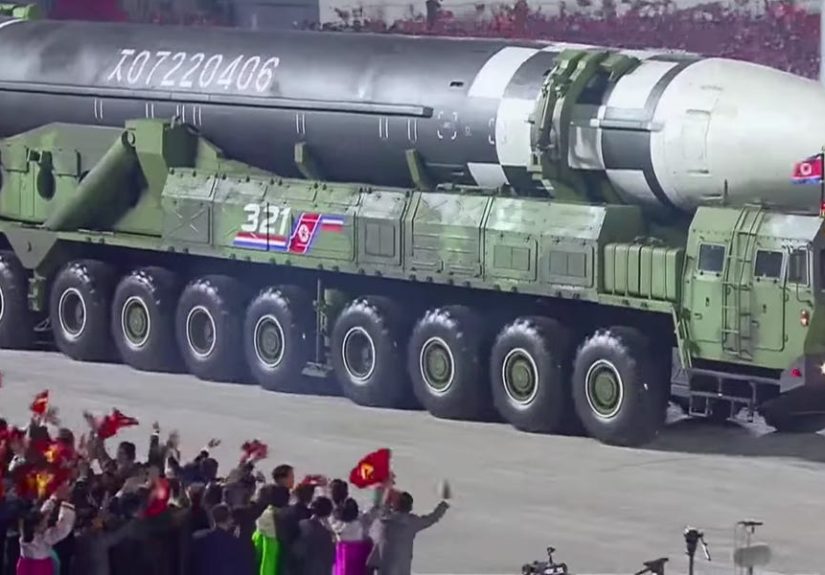
The North Korea Military Parade 2020 was not just a parade. It was theater, messaging, diplomacy, deterrence, domestic propaganda, and a very expensive reminder that Pyongyang knows how to make the world stare at a street in the middle of the night. Held on October 10, 2020, to mark the 75th anniversary of the Workers’ Party of Korea, the event became one of the most closely watched military spectacles of the year because North Korea used it to unveil new weapons and missiles at a time when nuclear diplomacy with the United States had stalled.
The headline attraction was a massive new intercontinental ballistic missile, rolled through Kim Il Sung Square on an enormous transporter vehicle. Analysts quickly nicknamed it a “monster” ICBM, which sounds like something from a sci-fi movie but was, unfortunately, very real. The parade also featured what appeared to be a new submarine-launched ballistic missile, modernized conventional systems, artillery, armored vehicles, air-defense equipment, and a carefully choreographed message from Kim Jong Un: North Korea was under pressure, but it was not standing still.
For readers trying to understand why this parade mattered, the key point is simple: North Korea did not need to test a missile that night to make a strategic statement. It only needed to show one. In international politics, sometimes the float in the parade is the message.
Why the 2020 Parade Was So Important
North Korean military parades are never casual events. Nobody in Pyongyang wakes up and says, “Let’s roll out a few missiles for fun, maybe add fireworks.” These displays are planned with the precision of a national myth-making machine. The 2020 parade was especially significant because it took place during a difficult year for North Korea: international sanctions remained in place, talks with Washington had gone nowhere, natural disasters had damaged parts of the country, and the COVID-19 pandemic had forced North Korea into unusually strict border controls.
Against that backdrop, Kim Jong Un used the parade to project endurance. His speech thanked soldiers and citizens, emphasized national defense, and avoided direct insults toward the United States. That softer tone was striking. The weapons were loud; the words were quieter. It was a diplomatic split-screen: one hand waving, the other hand pointing at a missile the size of a small apartment building.
The New ICBM: The Parade’s Biggest Reveal
The most talked-about weapon of the night was the new, very large road-mobile ICBM. At the time, many analysts referred to it as the Hwasong-16, while later reporting and analysis often connected the system to the Hwasong-17 family. Because North Korea does not publish the kind of tidy product brochure that analysts would love, early identification involved careful comparison of images, launch vehicles, missile shape, and previous North Korean systems.
Why Analysts Paid Attention
The missile appeared larger than the Hwasong-15, the ICBM North Korea had tested in 2017. That alone raised eyebrows. A bigger missile can suggest several possibilities: a larger payload, longer range, more fuel capacity, or the potential to carry multiple warheads or decoys. None of those assumptions could be confirmed from parade footage alone, but the visual signal was obvious. North Korea wanted observers to believe it was advancing beyond its earlier long-range missile designs.
The launcher also mattered. The missile was carried on a very large multi-axle transporter-erector-launcher, which suggested mobility but also raised practical questions. A system that large can look intimidating in a parade, but real-world mobility depends on roads, terrain, logistics, concealment, fueling time, and survivability. In other words, a giant missile is scary, but it also comes with the classic “where do we park this thing?” problem.
Was It Operational?
That was the million-dollar question, though in missile development the bill usually has more zeros. A parade display does not prove a weapon is fully operational. North Korea has historically shown weapons before they are tested, and some systems evolve over time. The 2020 ICBM reveal was therefore best understood as a strategic preview: Pyongyang was showing what it wanted adversaries to plan against, even if outside experts could not yet verify every capability.
The uncertainty was part of the point. Deterrence does not always require complete transparency. Sometimes ambiguity itself becomes a tool. By displaying a huge ICBM, North Korea created a problem for U.S. and allied planners: even if the missile was not fully proven, it could not be ignored.
The Pukguksong-4: A New Submarine-Launched Missile Signal
The parade also featured what appeared to be a new submarine-launched ballistic missile, widely identified as the Pukguksong-4. This was another major reveal because submarine-launched missiles represent a different kind of strategic challenge. Land-based missiles can be monitored, targeted, or tracked more easily than weapons launched from submarines. A reliable sea-based launch capability would give North Korea more ways to preserve a retaliatory option.
That said, “displayed in a parade” and “ready for dependable submarine deployment” are not the same thing. North Korea’s submarine program has long attracted expert attention, but building a credible submarine-based nuclear force is technically demanding. It requires not only missiles, but also suitable submarines, launch systems, crew training, communications, command-and-control procedures, and survivability at sea. The parade showed ambition; it did not automatically prove maturity.
Conventional Weapons Also Had a Moment
While the giant ICBM grabbed the spotlight like a celebrity arriving late to a red carpet, the parade also showcased a wider modernization effort. North Korea displayed short-range systems, artillery, armored vehicles, air-defense weapons, and other equipment that suggested it was trying to upgrade both strategic and battlefield capabilities.
This matters because North Korea’s military strategy is not only about long-range missiles aimed at deterring the United States. It is also about maintaining pressure on South Korea and Japan, complicating U.S. alliance planning, and strengthening the regime’s claim that it can defend itself against external threats. Shorter-range missiles and artillery systems may not make global headlines as easily as an ICBM, but they are central to the security situation on the Korean Peninsula.
Kim Jong Un’s Message: Softer Words, Harder Hardware
One of the most interesting parts of the 2020 parade was the contrast between Kim Jong Un’s speech and the weapons display. He expressed gratitude to the public, acknowledged hardships, and even offered a relatively restrained message toward South Korea. Yet behind him rolled new weapons that carried a very different tone.
This contrast was not accidental. North Korea often uses political theater to speak to multiple audiences at once. To domestic viewers, the parade said: the leadership is strong, the military is modernizing, and the nation is surviving hardship. To South Korea, it said: we may speak politely, but we are not weak. To the United States, it said: diplomacy may be stalled, but our arsenal is not.
How the Parade Fit Into Stalled U.S.-North Korea Diplomacy
The 2020 parade came after a dramatic but ultimately inconclusive period in U.S.-North Korea relations. Kim Jong Un and President Donald Trump had met in Singapore in 2018, Hanoi in 2019, and briefly at the Demilitarized Zone. Those meetings produced historic images but no lasting denuclearization agreement. By 2020, negotiations had stalled, sanctions remained, and North Korea had resumed emphasizing military development.
That made the parade a strategic status update. Pyongyang was effectively saying, “The diplomatic pause did not freeze our weapons programs.” For Washington, Seoul, and Tokyo, the display reinforced the idea that North Korea’s missile development continued even during periods without nuclear or long-range missile tests.
What the Parade Did Not Prove
It is easy to overread military parades. A missile moving through a square looks dramatic, especially under lights, music, flags, and synchronized marching. But analysts are careful because parades can show prototypes, mock-ups, incomplete systems, or weapons still in development.
The 2020 parade did not prove that every displayed system was fully deployed. It did not prove the new ICBM had been successfully flight-tested. It did not prove that North Korea had solved every technical challenge related to reentry vehicles, guidance, survivability, or multiple-warhead deployment. What it did prove was that North Korea wanted the world to believe its strategic weapons program was advancing.
Why Military Parades Matter in North Korea
In many countries, military parades are ceremonial. In North Korea, they are political language. The choreography, timing, weapons, uniforms, camera angles, and speeches all carry meaning. The state uses these events to create a story of unity, sacrifice, strength, and technological achievement.
The 2020 nighttime format added drama. The lighting, fireworks, and edited broadcast made the event feel more cinematic than previous parades. It was not just a display of equipment; it was a stage-managed national performance. Think less “traffic jam with missiles” and more “Broadway production, but with strategic deterrence and very serious consequences.”
Regional Security Impact
For South Korea and Japan, the parade reinforced existing concerns about missile defense, early warning, and alliance coordination with the United States. North Korea’s growing mix of short-range, medium-range, submarine-launched, and intercontinental systems makes defense planning more complex. Different missiles create different challenges, and no single defensive system can answer every threat perfectly.
For the United States, the large ICBM raised questions about homeland missile defense. If North Korea eventually developed reliable missiles capable of carrying larger payloads or multiple warheads, U.S. interceptors would face a more complicated problem. Again, the parade did not prove all of that was ready. But it did show the direction North Korea wanted to go.
Public Reaction and Global Media Attention
International media quickly focused on the giant ICBM, and understandably so. The image was made for headlines. But expert reaction was more measured. Analysts emphasized that the missile’s size was important, yet warned against assuming full operational capability from a parade alone. That distinction is crucial. A military parade can reveal design intent, but testing reveals performance.
The public, meanwhile, saw the event as another reminder that North Korea’s weapons program had not disappeared from the global agenda. In a year dominated by pandemic news, the parade forced security issues back into the conversation. It was Pyongyang’s way of saying, “Remember us?” Subtle? Not exactly. Effective? Definitely.
Experience Section: Reading the 2020 Parade Like a News Analyst
For anyone watching the North Korea Military Parade 2020 from the outside, the experience was a strange mix of spectacle and uncertainty. The visuals were clear, but the meaning required careful interpretation. You could see the missiles. You could see the vehicles. You could see the soldiers marching in perfect formation. But the real story was hidden in what the parade suggested, what it avoided saying, and what outside analysts still could not confirm.
The first experience many viewers had was visual shock. The new ICBM was enormous, and that size was part of its psychological impact. Even people who do not follow missile development could understand the intended message: this was not a routine display. North Korea wanted the world to pause, zoom in, and ask hard questions. In that sense, the parade succeeded before a single analyst opened a spreadsheet.
The second experience was confusion, because North Korean weapons identification is rarely simple. Analysts had to compare the displayed missile with previous systems, estimate its size from parade footage, study the launcher, and debate whether it represented a new design or an enlarged version of an existing family. This is the serious side of open-source analysis: lots of screenshots, lots of careful measuring, and absolutely no dramatic movie music, even though the footage practically begged for it.
The third experience was recognizing how much a parade can communicate without testing anything. In normal product launches, companies show features, prices, and release dates. North Korea’s version is different: it shows a missile, lets the world speculate, and allows uncertainty to do some of the strategic work. That ambiguity can be frustrating, but it is also useful for Pyongyang. If adversaries must plan for the worst-case possibility, the display has already shaped their thinking.
The fourth experience was noticing the emotional layering. Kim Jong Un’s speech included gratitude, hardship, resilience, and national pride. The weapons display added deterrence, pressure, and warning. For domestic audiences, the parade was meant to inspire confidence during a difficult year. For foreign audiences, it was meant to create caution. The same event worked like a mirror: North Koreans were shown strength; outsiders were shown risk.
The fifth experience was understanding that military power is not only about hardware. A missile in a parade is a symbol, but military effectiveness depends on testing, production, deployment, training, maintenance, command systems, and political decision-making. That is why careful observers avoid jumping from “displayed” to “fully operational.” The smartest takeaway from the 2020 parade was not panic. It was attention.
Finally, the parade reminded readers and analysts that North Korea often uses timing as a message. The event came during a U.S. election year, after stalled diplomacy, during global pandemic disruption, and after North Korea had promised continued development of strategic weapons. That timing gave the parade extra weight. It was not random pageantry. It was a carefully placed signal in a crowded international news cycle.
In the end, the experience of studying the 2020 parade was like reading a highly choreographed warning label. The bright lights and marching bands made it look ceremonial, but the strategic message was serious: North Korea wanted to be seen as pressured but unbroken, isolated but advancing, and willing to keep building military leverage even when diplomacy stalled.
Conclusion: What the 2020 Parade Really Revealed
The North Korea Military Parade 2020 revealed more than new weapons and missiles. It revealed a strategy. Pyongyang used the event to show that sanctions, stalled diplomacy, economic stress, and pandemic isolation had not stopped its military modernization. The massive ICBM signaled long-range ambition. The Pukguksong-4 suggested continued interest in sea-based deterrence. The conventional systems showed broader military upgrading. And Kim Jong Un’s speech wrapped the entire display in a message of endurance.
The parade did not answer every technical question. It did not prove every weapon was ready for deployment. But it did change the conversation. It reminded the United States, South Korea, Japan, and the wider world that North Korea’s weapons programs were still moving forward. For a parade held at night, it cast a very long shadow.







 Close
Close