
Table of Contents >> Show >> Hide
- The 10-Second Difference: Where the Blur Happens
- What’s Actually Going On in Your Eye (No Lab Coat Required)
- How to Tell If You’re Nearsighted (Myopia)
- How to Tell If You’re Farsighted (Hyperopia)
- The Plot Twist: When It’s Not Hyperopia, It’s Presbyopia
- The Confusing Cousins: Astigmatism, Dry Eye, and Screen Fatigue
- Safe At-Home Clues (Not a Diagnosis)
- How Eye Doctors Tell (Fast, Painless, and Honestly Kind of Cool)
- What You Can Do About It: Corrections That Actually Work
- Special Topic: Myopia Management (Especially for Kids and Teens)
- When Blur Is a Red Flag (When to Get Checked Promptly)
- Bottom Line: The Best Way to Tell Is Comfort + Clarity + Confirmation
- Extra: Real-Life Experiences With Nearsightedness vs. Farsightedness (About )
If you’ve ever squinted at a street sign like it personally offended you, or held your phone so far away you could
high-five it, welcome to the club of “Wait… is my vision weird, or is this font just rude?”
The good news: the two most common culpritsnearsightedness (myopia) and
farsightedness (hyperopia)are usually easy to correct once you know what you’re dealing with.
The slightly trickier news: they can feel similar in real life, especially when you add screens, headaches,
dim lighting, and the plot twist known as “getting older.”
This guide breaks down exactly how nearsightedness and farsightedness differ, what symptoms to watch for,
why they happen, how eye doctors confirm the diagnosis, and what your options are for seeing clearly againwithout
turning your eyeballs into a science fair project.
The 10-Second Difference: Where the Blur Happens
Here’s the simplest way to tell the two apart:
- Nearsighted (myopia): close-up is clearer; far-away looks blurry.
- Farsighted (hyperopia): far-away may be clearer; close-up may look blurryespecially after a while.
Notice the “may.” Hyperopia can be sneaky because many peopleespecially younger folkscan temporarily “power through”
close-up tasks by focusing harder. That extra effort can show up as eye strain and headaches rather than obvious blur.
Quick Comparison Table
| Feature | Nearsightedness (Myopia) | Farsightedness (Hyperopia) |
|---|---|---|
| What’s blurry? | Distant objects (road signs, board at school, TV captions) | Near objects (reading, phone, crafting), sometimes distance if strong hyperopia |
| Common “tell” | Squinting to see far; sitting closer to screens | Eye strain with reading; “tired eyes” after close work |
| Typical age pattern | Often starts in childhood/teen years and can progress | Often present from birth; may be noticed later when close work increases |
| What helps fast? | Minus (-) lenses in glasses/contacts | Plus (+) lenses in glasses/contacts |
What’s Actually Going On in Your Eye (No Lab Coat Required)
Your eye is basically a camera. Light enters through the cornea and lens and should focus
right on the retina (the light-sensitive layer at the back). If the light focuses in the wrong spot,
you get blur. That’s a refractive error.
Myopia: Light Focuses in Front of the Retina
With nearsightedness, the eyeball is often a bit too long (or the cornea is too curved), so light focuses
in front of the retina. Up close, it’s easier to get a clear image. Far away? Not so much.
That’s why distant details look smudged, like someone lightly erased the world.
Hyperopia: Light Focuses Behind the Retina
With farsightedness, the eyeball is often a bit too short (or the cornea is flatter), so light tends to focus
behind the retina. Your eyes may compensate by working harder to focus, especially when you’re young.
But close-up tasks can become blurry or uncomfortablethink “my eyes are tired” even when you’re fully awake.
How to Tell If You’re Nearsighted (Myopia)
Myopia usually announces itself pretty loudly, because distance vision is part of daily life: driving, classrooms,
sports, concerts, or just trying to identify a friend waving from across the street.
Common Signs
- Blurry distance vision: road signs, whiteboards, subtitles, faces across a room.
- Squinting to see far away: squinting temporarily changes how light enters the eye, which can sharpen things a bit.
- Sitting closer: moving toward the TV, the stage, or the presentation screen like you’re trying to merge with it.
- Eyestrain or headaches: especially after trying to see distant details for a long time.
- Night driving feels harder: glare and halos can feel more annoying when you’re under-corrected.
Real-Life Example
You can read a text message without any trouble. But you can’t read the menu board behind the counter unless you
step forward like you’re about to place an order for the entire building. That patternnear clear, far blurryfits myopia.
Kids and Teens: Clues Adults Often Miss
Kids don’t always say “I can’t see,” because they assume everyone sees like they do. Instead, you might notice:
sitting very close to screens, holding books very near, missing balls in sports, or struggling to see the board at school.
Regular vision checks matter because myopia often starts and progresses during school years.
How to Tell If You’re Farsighted (Hyperopia)
Hyperopia can be more subtle because your eyes may “work overtime” to keep things clearuntil they can’t, or until
the effort starts producing symptoms that feel like “stress” rather than “vision.”
Common Signs
- Blur with close-up tasks: reading, crafting, computer work, phone scrolling.
- Eye strain and fatigue: your eyes feel worn out after close work, even if the text looked mostly readable.
- Headaches after near work: especially in the forehead or around the eyes.
- Difficulty focusing up close: things may go in and out of focus, or you need breaks more often.
- In kids: some may have no symptoms; others may show crossed eyes or trouble with near tasks if hyperopia is significant.
Real-Life Example
You can see the TV across the room fairly well, but reading a paperback makes your eyes feel like they ran a marathon.
You keep rubbing your eyes, you lose your place, and you suddenly need “better lighting” for print that used to be easy.
That patternnear work causes blur/strainoften points toward hyperopia (or another near-vision issue).
Important: Hyperopia Can Affect Kids Differently
Mild farsightedness is common in young children and may not require correction if they can focus comfortably.
But higher hyperopia can cause blurry vision or eye crossing, and it can increase the risk of “lazy eye” (amblyopia)
if not addressed in childhood. That’s one reason pediatric eye care providers take significant hyperopia seriously.
The Plot Twist: When It’s Not Hyperopia, It’s Presbyopia
If you’re thinking, “Okay, near blur… that must be farsightedness,” here’s the twist:
presbyopia is a separate, age-related focusing issue that typically begins in midlife.
It happens because the lens becomes less flexible over time, making it harder to focus up close.
People often describe it as suddenly needing “longer arms” to read.
Presbyopia can stack on top of myopia or hyperopia. So you can be nearsighted and still struggle with close-up vision
once presbyopia arrivesespecially if you’re wearing distance correction. And if you’re already farsighted, presbyopia
can make close-up tasks feel harder sooner.
The Confusing Cousins: Astigmatism, Dry Eye, and Screen Fatigue
Not every blur fits neatly into “near vs. far.” A few common look-alikes:
Astigmatism
Astigmatism means the cornea or lens has an irregular shape, which can make vision blurry or distorted at both near and far.
It can also make night vision harder (hello, starburst headlights).
Dry Eye and Irritation
Dry eye can cause fluctuating blurespecially with screensbecause a smooth tear film helps your eye focus light properly.
If your vision goes “clear… blurry… clear” while staring at a laptop, dryness may be part of the story.
Computer Vision Syndrome (a.k.a. “I Blinked… Yesterday”)
Long screen sessions can cause eye strain, headaches, and focus fatigue even in people with perfect prescriptions.
Uncorrected refractive errors make this worse, but the symptoms can overlap.
Safe At-Home Clues (Not a Diagnosis)
A real diagnosis comes from an eye exam, but you can collect helpful clues before you go.
Think of this as “giving your eye doctor a head start,” not “becoming your own optometrist.”
Clue #1: Which distance annoys you first?
- If far is consistently worse (signs, board, TV captions): myopia is more likely.
- If near tasks are the problem (reading, phone, computer) and you get strain/headaches: hyperopia or presbyopia is more likely.
Clue #2: Do you squint for clarity?
Squinting often helps distance blur more than near blur. If squinting makes far-away text pop into focus (even briefly),
that’s a classic myopia vibe.
Clue #3: Does taking breaks help?
If your close-up blur and headaches improve after rest, hyperopia (extra focusing effort) or screen fatigue may be involved.
If distance is blurry all day, breaks won’t magically sharpen road signs.
Clue #4: Try one eye at a time
Cover one eye, then the other, and compare. If one eye is much blurrier, you might have different prescriptions in each eye
(anisometropia). That matters because uneven vision can cause headaches and, in children, can contribute to amblyopia risk.
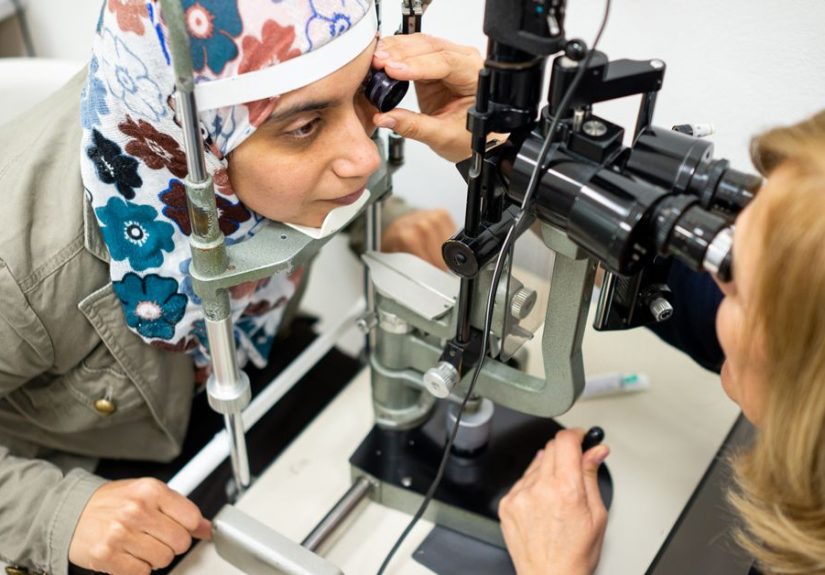
How Eye Doctors Tell (Fast, Painless, and Honestly Kind of Cool)
Eye exams aren’t a test you pass or failthey’re more like measuring your shoe size, except for your eyeballs.
Common steps include:
Visual Acuity Testing
The classic chart test checks how well you see at distance (and sometimes near). It helps confirm the “where is the blur?” pattern.
Refraction (a.k.a. “Which is better, 1 or 2?”)
This is where the doctor finds the lens power that focuses light properly on your retina. Myopia generally needs minus (-) lenses;
hyperopia generally needs plus (+) lenses.
Eye Health Evaluation
A comprehensive exam can include checking eye alignment, focusing ability, and eye health (sometimes with dilation).
This matters because blur isn’t always “just a prescription,” and because higher myopia can be associated with certain eye risks over time.
What You Can Do About It: Corrections That Actually Work
The goal is simple: get light focusing where it belongson the retinaso your vision is clear and comfortable.
Options depend on your prescription, lifestyle, eye health, and age.
Glasses
Glasses are the easiest, lowest-maintenance fix for many people. They also come with a bonus feature: you can remove them dramatically
when you want to signal “I’m done with today.”
Contact Lenses
Contacts can be great for sports, wider field of view, and convenience (once you learn the routine).
Your eye care professional can help you choose daily, biweekly, or monthly lensesplus options for astigmatism or multifocal needs.
Refractive Surgery (LASIK/PRK and others)
Some people are candidates for laser vision correction or other procedures. Eligibility depends on corneal thickness, prescription stability,
dry eye status, and overall eye health. It’s not “one-size-fits-all,” so a surgical consult is key.
Special Topic: Myopia Management (Especially for Kids and Teens)
Myopia often progresses during childhood and adolescence. Beyond regular glasses, some strategies aim to
slow myopia progression in kidsyour eye care professional can tell you what’s appropriate.
Commonly discussed options include:
- More time outdoors: several studies associate outdoor time with lower myopia risk in kids.
- Special contact lenses: certain multifocal designs may help slow progression for some children.
- Orthokeratology (Ortho-K): specialty overnight lenses that reshape the cornea temporarily.
- Low-dose atropine drops: used in some cases under medical supervision to slow progression.
The key is supervision and personalizationmyopia management isn’t a DIY project. Kids should also have regular eye exams,
especially if a myopia-control approach is being used.
When Blur Is a Red Flag (When to Get Checked Promptly)
Most blur from refractive error is not an emergency. But sudden changes or symptoms that come with pain or major
vision disturbance deserve faster attention. Contact an eye care professional promptly if you notice:
- Sudden, significant vision loss or a major change in vision
- New flashes of light, a sudden shower of floaters, or a curtain-like shadow in your vision
- Severe eye pain, intense redness, or light sensitivity
- Headaches with neurologic symptoms (like weakness or confusion)
Also, if you have high myopia, your eye doctor may recommend monitoring for certain eye conditions over time.
This isn’t meant to scare youit’s meant to protect your vision with smart follow-up.
Bottom Line: The Best Way to Tell Is Comfort + Clarity + Confirmation
If distance is blurry, myopia is a strong suspect. If near tasks cause blur and fatigue, hyperopia or presbyopia moves up the list.
If everything is blurryor blurry in a “warped” wayastigmatism may be involved. And if your eyes feel tired after screens,
your vision might be fine but your habits (and blinking) need an intervention.
The most reliable way to tell is a comprehensive eye exam. The payoff is huge: clearer vision, fewer headaches,
less squinting, and the ability to read signs without leaning forward like a confused meerkat.
Extra: Real-Life Experiences With Nearsightedness vs. Farsightedness (About )
People often expect vision problems to feel like flipping a switchone day you see perfectly, the next day it’s all blur.
In reality, nearsightedness and farsightedness can creep in like a slow-loading webpage: you don’t notice the problem
until you compare it to how things used to look.
With nearsightedness, a classic “aha” moment happens in places that demand distance vision. Students might realize the board
is readable only from the first few rows. Someone at a concert might discover that the “tiny dot” on stage is, in fact,
the headliner. Another common experience is the “TV subtitle shuffle”you keep nudging closer to the screen and blaming
the streaming app, not your eyeballs. Many people describe distance blur as a soft smudge, like the world is slightly out of focus,
and then they’re shocked at how crisp everything becomes the first time they put on glasses. It’s not just “better”it can feel like
upgrading from standard definition to 4K. Small details show up again: individual leaves on trees, texture on signs, faces across a room.
With farsightedness, the experience is often more about effort than blurespecially at first. People might read for 20 minutes
and then feel like their eyes are exhausted, even if the text was mostly clear. They take more breaks without realizing why.
Some describe a nagging forehead ache after working on a laptop, or a “burny” tired feeling that shows up late in the day.
Parents sometimes notice their child avoids coloring, puzzles, or readingnot because they dislike it, but because focusing up close is hard work.
In stronger hyperopia, near blur becomes more obvious: the words won’t stay sharp, or the eyes “fight” to keep things focused.
Then comes the confusing part: lighting. Dim restaurants and low-contrast menus are the great equalizers.
Near tasks often get harder for farsighted people when light is poor, because the focusing system is already working overtime.
And nearsighted people may struggle more at night with distance clarity and glare, especially if they’re under-corrected.
In real life, both conditions can lead to squinting, headaches, and that universal phrase: “My eyes are tired.”
The eye exam experience is another common story. Many people walk in expecting a lecture (“Stop staring at screens!”),
but leave relieved: the answer is often a straightforward prescription. The “Which is better, 1 or 2?” part can feel
like a game show, but it’s also strangely satisfyingbecause for the first time in a while, your eyes get to stop guessing.
Afterward, there’s an adjustment period. Some new glasses wearers notice the floor looks “tilted” for a day or two, or that
everything feels too sharp. Contact lens users often report a learning curve that is 30% technique and 70% confidence.
The best shared experience, though, is simple: clarity is calming. When your eyes aren’t struggling, your brain relaxes.
You read longer, drive more comfortably, and stop squinting at the world like it owes you money.






 Close
Close