
Table of Contents >> Show >> Hide
- What Midcentury Houses Today Is Really About
- Why New Canaan Still Matters
- The Big Themes That Make This Book Worth Reading
- What You Get in the Hardcover
- Specific Examples That Deepen the Story
- Why the Book Feels Timely Right Now
- Who Should Read Midcentury Houses Today?
- What Makes This Better Than a Generic Midcentury Coffee-Table Book
- The Experience of Reading and Living With This Book
- Conclusion
- SEO Tags
Some books sit politely on a coffee table. Others practically straighten the furniture, open the drapes, and whisper, “Let’s talk about architecture.” Midcentury Houses Today (Hardcover) belongs firmly in the second camp. This is not just a pretty book for people who enjoy low rooflines, glass walls, and chairs that look suspiciously smarter than they are. It is a serious, deeply visual look at how midcentury houses survive, change, and keep earning their square footage in the present tense.
Centered on New Canaan, Connecticut, the book revisits one of America’s most important clusters of modern residential architecture. That alone would make it catnip for architecture fans. But what makes this volume especially compelling is that it does not freeze these homes in amber. Instead, it asks a far more interesting question: what happens after the architectural photograph, after the manifesto, after the design movement becomes history? In other words, how do people actually live in these houses today?
The answer is where this hardcover earns its keep. It moves beyond nostalgia and into something richer: preservation, renovation, adaptation, and the tug-of-war between honoring a modernist original and meeting contemporary needs. If you love midcentury modern design, this book gives you the glamour. If you love architectural thinking, it gives you the argument. And if you love houses that are beautiful but also have to survive weather, families, budgets, and changing lifestyles, this book gives you reality with excellent photography.
What Midcentury Houses Today Is Really About
At first glance, the title sounds simple. Midcentury houses. Today. Done. But the genius of the book is that it treats those two time frames as equally important. The “midcentury” part gives the architecture its pedigree: the postwar era, the optimism, the streamlined forms, the open plans, the belief that clean design could improve everyday life. The “today” part gives the book its urgency. These houses are no longer bold newcomers. They are aging works of architecture, many of them cherished, altered, threatened, restored, or carefully updated.
The hardcover format suits that mission beautifully. A subject like this needs room to breathe. It needs page space for plans, archival images, contemporary photographs, and the visual before-and-after conversation that defines preservation. A tiny paperback would feel like asking Philip Johnson’s Glass House to wear a winter coat. Technically possible, maybe, but not the point.
This expanded edition revisits the landmark 2014 volume and pushes the conversation forward. Rather than treating midcentury homes as sacred artifacts that must remain untouched forever, it explores how thoughtful interventions can help them remain livable. That makes the book feel current in a way many design monographs do not. It understands that preservation is not simply about stopping time. It is about extending the life of great design without turning the house into a fragile museum diorama where nobody can set down a coffee mug.
Why New Canaan Still Matters
New Canaan is not just a scenic Connecticut town with enviable trees and expensive taste. It is one of the defining sites of American residential modernism. In the years after World War II, the town became a remarkable proving ground for modern architecture. Architects associated with the so-called Harvard Five, along with other influential designers, helped shape a landscape where experimentation was not a side hobby but a serious cultural project.
That context matters because Midcentury Houses Today is not a random assortment of stylish homes. It is rooted in a concentrated, historically important architectural ecosystem. The houses associated with Marcel Breuer, Eliot Noyes, Philip Johnson, John Black Lee, Edward Durell Stone, and others are part of a broader story about postwar American life: suburban growth, new materials, changing family patterns, modern art influence, and the growing idea that a house could be open, light-filled, and connected to the landscape rather than boxed into a series of fussy rooms.
New Canaan’s enduring importance also explains why preservation conversations here feel so intense. These are not ordinary old houses. They are design landmarks with ongoing cultural value. Yet they are also homes, which means they must handle kitchens, insulation, maintenance, additions, privacy concerns, and the universal truth that every family eventually owns too many charging cords. The book captures that friction well. It makes clear that the real drama of modern architecture is not just in how a house is born, but in how it survives.
The Big Themes That Make This Book Worth Reading
1. Preservation Without Fossilization
One of the smartest things about the book is that it resists a simplistic preservation mindset. A less interesting book would divide the world into heroes who never touch anything and villains who replace original cabinetry. This one takes a more nuanced view. It suggests that preservation can include change, as long as the change is informed, respectful, and architecturally coherent.
That approach reflects a broader reality in architecture today. Reuse and rehabilitation are increasingly understood as sustainable strategies, not just sentimental ones. Midcentury houses often contain generous sites, durable ideas, and remarkable spatial intelligence. Updating them thoughtfully can preserve embodied value while avoiding the waste of demolition and total replacement. Put differently: the greenest building may indeed be the one already built, especially if it also happens to have great clerestory windows.
2. The House as a Living Organism
The book’s use of timelines, plans, and layered photography reveals something many glossy design books gloss over: houses evolve. Families expand. Owners change. Codes shift. Tastes move. Roofs age. Additions happen. Mechanical systems demand attention. The best midcentury houses are not those that somehow avoided time, but those that met time intelligently.
This makes the featured homes feel alive rather than embalmed. Some were sensitively restored. Others were reimagined with new wings or revised interiors. In each case, the question becomes less “Is it original?” and more “Is it still true to the spirit of the architecture?” That is a much harder and more rewarding standard.
3. Modernism With Human Warmth
Midcentury modern architecture sometimes gets caricatured as chilly, severe, and emotionally unavailable, like a beautiful person at a party who only discusses chair joinery. But Midcentury Houses Today makes a persuasive case that these homes can be both rigorous and inviting. Their openness to light, landscape, and flexible living remains strikingly contemporary.
The book also reminds readers that warmth in architecture does not always come from ornament. Sometimes it comes from proportion, material honesty, sunlight, and the rhythm of spaces that flow naturally from one to another. A stone wall, a run of built-ins, a long horizontal sightline, or a carefully framed grove of trees can create more emotional resonance than an entire truckload of decorative throw pillows.
What You Get in the Hardcover
For readers wondering whether this is simply another “pretty architecture book,” the answer is yes and no. Yes, it is visually handsome. That is part of the appeal. The photography is a major strength, giving the homes a luminous clarity that highlights both their original ideals and their later transformations. But no, it is not only decorative. The book is organized to show architectural change over time through plans, chronology, and visual documentation.
That combination matters. Beautiful images may draw readers in, but plans and timelines are what give the book substance. They allow the reader to understand not just what a house looks like, but how it works and how it has been altered. This makes the volume useful for more than casual browsing. It becomes valuable to architects, preservationists, students, homeowners, real-estate obsessives, and design readers who want evidence rather than atmosphere alone.
The physical object also contributes to the reading experience. In hardcover, the book feels substantial, which is exactly right for a subject about lasting form and material legacy. A well-made architecture book should feel like something you return to, not something you accidentally fold into a beach bag next to sunscreen and regret.
Specific Examples That Deepen the Story
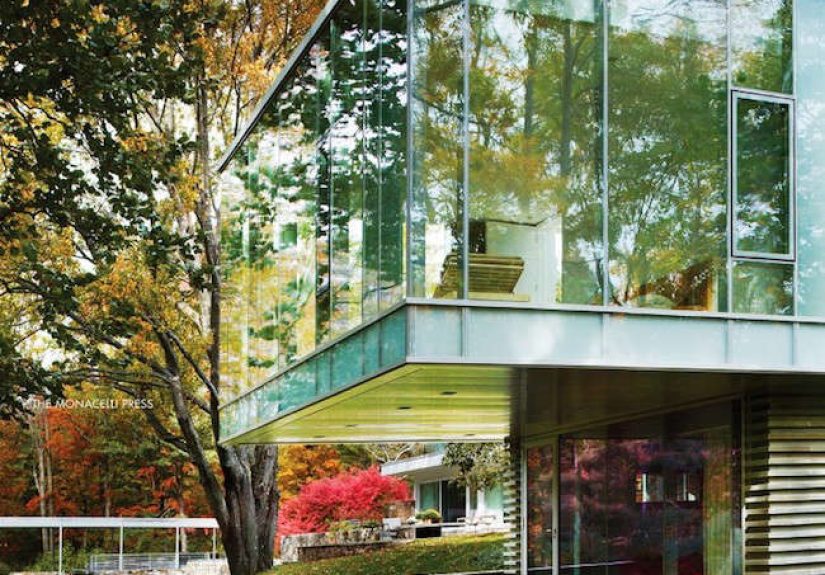
One of the most compelling aspects of the book’s reputation is its attention to houses that have not simply stayed pristine but have been reworked with care. Marcel Breuer’s work looms large in any discussion of New Canaan, and the image of Breuer House 2 has become emblematic of the book itself. That house, along with other featured homes, helps illustrate a broader point: restoration is rarely a matter of pressing rewind. It is usually a conversation between original intent and present necessity.
The same is true of the larger New Canaan modern landscape. Philip Johnson’s Glass House may be the most famous site in the area, but its visibility can overshadow the quieter brilliance of other homes that remained private, practical, and adaptable. Midcentury Houses Today helps correct that imbalance. It pays attention to houses that continued to be used, modified, and interpreted over decades rather than simply canonized.
That editorial choice is important. It makes the book less about architectural celebrity and more about architectural life. It asks readers to think not only about masterworks, but about stewardship. Who kept these houses standing? Who repaired them? Who decided what to preserve, what to upgrade, and what to add? Those are the real protagonists of the modern-house afterlife.
Why the Book Feels Timely Right Now
Midcentury modern style has been popular for years, but popularity is not the same thing as understanding. A lot of people love the look: the walnut sideboards, the sunken living rooms, the post-and-beam drama, the indoor-outdoor swagger. But Midcentury Houses Today goes deeper than style consumption. It arrives at a moment when architecture and real estate are both wrestling with reuse, sustainability, and cultural memory.
Across the design world, adaptive reuse has moved from niche concern to mainstream strategy. That shift makes this book especially relevant. It shows that preserving a modern house is not merely a sentimental tribute to a fashionable era. It can also be a disciplined design act with environmental, cultural, and practical value.
The book also speaks to a subtle change in how readers engage with architecture. Today’s audience is less interested in perfection for its own sake and more interested in process, continuity, and responsible transformation. Readers want to know how a great house ages. They want to know what happens when the original glazing fails, when a family needs more space, when a house must meet present-day comfort expectations. This book does not pretend those questions are unromantic. It shows that they are the romance now.
Who Should Read Midcentury Houses Today?
This hardcover will appeal to several kinds of readers. Architecture enthusiasts will appreciate the historical depth and the concentration on an unusually important design community. Preservation professionals will value the way the book frames adaptation as part of stewardship. Homeowners and renovators will find something equally useful: proof that great design does not have to be locked in the past to remain great.
It is also an excellent book for readers who think they do not care about architecture books. That may sound bold, but the subject has wide appeal. These houses tell a larger American story about postwar ambition, suburban identity, material experimentation, and changing domestic life. You do not need an architecture degree to understand the allure of a home that feels open to the landscape, efficient in plan, and still surprisingly modern decades later.
In fact, the book may be most effective for readers caught between admiration and intimidation. Midcentury modern houses can seem impossibly iconic from a distance, as if one must whisper near them and never place a backpack on the floor. This book brings them back into human scale. It shows that even important houses are lived in, worked on, argued over, and occasionally saved from terrible decisions. That is comforting. Also educational. Mostly educational. But still comforting.
What Makes This Better Than a Generic Midcentury Coffee-Table Book
There is no shortage of books that package midcentury modernism as a mood board. Many are lovely. Some are useful. But Midcentury Houses Today stands apart because it is anchored in a specific place, a specific architectural legacy, and a specific problem: how to carry important modern houses into the future without draining them of identity.
That focus gives the book more intellectual weight than a trend-driven overview. It avoids vague admiration and instead offers case-based evidence. The homes are not presented as abstract ideals floating in design heaven. They are presented as real structures with histories, owners, alterations, and consequences. That grounded perspective makes the book more credible and more memorable.
It also means the book has replay value. Readers can return to it for inspiration, but also for methodology. How do you read a house across time? How do you judge a renovation? How do you tell whether an addition is sympathetic, timid, or gloriously wrong? Books that encourage better looking are rare. This one does.
The Experience of Reading and Living With This Book
Spending time with Midcentury Houses Today is a bit like walking through a beautifully restored modern home on a cool fall afternoon. You notice the big gestures first: the glass, the horizontality, the calm. Then the quieter things start working on you. A sightline that makes the landscape feel curated. A wall plane that guides movement without shouting. A material palette that seems restrained until you realize how much emotional atmosphere it creates. The book rewards slow attention in exactly that way.
It is also the kind of hardcover that changes the tempo of reading. You do not race through it the way you might sprint through an airport thriller or a bad group chat. You linger. You compare one spread to another. You trace the original plan, then the updated version, and suddenly find yourself thinking not just about architecture but about time, stewardship, and what people owe the places they inherit. That is a surprisingly intimate experience for a design book.
For readers who love houses, the emotional pull is strong. Midcentury homes often promise a particular fantasy of living: more light, less clutter, a stronger relationship to nature, and rooms that feel open without becoming chaotic. This book shows why that fantasy still has power. It also shows the labor behind it. Keeping such homes alive takes maintenance, money, discernment, and restraint. The result is inspiring precisely because it is not effortless.
There is another pleasure here too: the book helps train the eye. After reading it, many ordinary houses start to look different. You begin to notice proportions, rooflines, glazing, siting, circulation, and how a home meets the land. You may even find yourself peering at a suburban ranch and wondering whether someone once had a very elegant original built-in that later got replaced by something tragic from a discount showroom. This is the occupational hazard of a good architecture book: it makes the world harder to ignore.
As a physical object, the hardcover encourages return visits. You leave it on a table, someone picks it up, and suddenly the room is having a smarter conversation. Guests may start with the cover and end up debating whether a faithful restoration is better than a bold contemporary addition. They may ask why certain houses age so gracefully while others become victims of fashion, neglect, or over-renovation. That conversational quality is part of the book’s value. It is not passive decor. It is an invitation to think.
Most of all, the experience of this book is hopeful. It suggests that design history is not over, that architecture can remain alive through care, and that old houses do not need to become relics to stay relevant. In an era obsessed with the new, that message lands with unusual force. Midcentury Houses Today reminds readers that the future of architecture is often hidden inside the best parts of the past, waiting for someone wise enough not to bulldoze them.
Conclusion
Midcentury Houses Today (Hardcover) succeeds because it does more than admire modern houses. It studies how they endure. By focusing on New Canaan’s extraordinary residential legacy and framing preservation as an active, contemporary design practice, the book becomes more than an architectural souvenir. It becomes a meditation on continuity, adaptation, and the long life of good ideas.
For readers who want a visually rich architecture book with real substance, this is a strong choice. For readers interested in midcentury modern design, preservation, adaptive reuse, or American residential history, it is even stronger. It captures the elegance of these houses, yes, but also their vulnerability and resilience. That balance is what gives the book staying power.
In the end, the best thing about Midcentury Houses Today may be that it refuses to treat architecture as frozen perfection. It shows that the most meaningful houses are the ones that keep living, keep changing, and keep teaching us how design can remain relevant across generations. Not bad for a hardcover. Some books decorate a room. This one argues with itin the most stylish way possible.






 Close
Close