
Table of Contents >> Show >> Hide
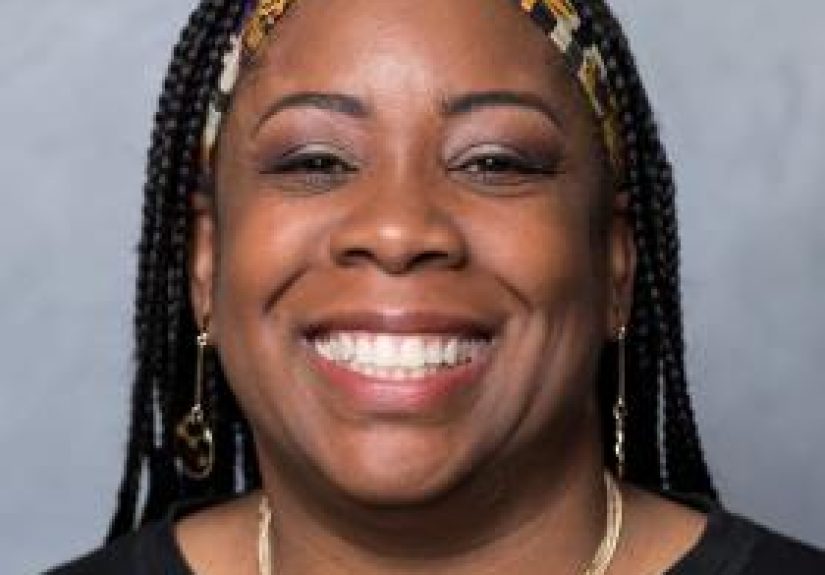
Some people build a career. Michele Lamons-Raiford seems to have built a full ecosystem: educator, advocate, writer, mentor, and author, all wrapped into one public body of work that keeps circling back to the same big idea: people learn best when they feel seen. That sounds simple, but in education, “simple” is often just code for “wildly difficult and absolutely worth doing.”
From her public educator profiles and published essays, Michele Lamons-Raiford emerges as the kind of teacher who does not treat inclusion like a poster on the wall or a sentence in a school improvement plan. She treats it like daily practice. Her work spans American Sign Language, English instruction, educational equity, student belonging, neurodiversity, culturally affirming classrooms, and books designed to make children and families feel less alone. In other words, she is not just teaching content. She is teaching access, dignity, and perspective.
Who Is Michele Lamons-Raiford?
Michele Lamons-Raiford is best known publicly as a Northern California educator who has taught both American Sign Language and English for more than two decades. She has also served as an adjunct English instructor at Solano Community College, giving her a professional footprint that reaches across both high school and higher education. That dual role matters. It suggests a teacher who understands the long arc of student growth, from the anxious teen years all the way to adult learners finding their footing, coffee, and perhaps their comma usage at the same time.
Her academic background in English, paired with credentials in both English and ASL, helps explain the through-line in her work. Language is not merely a subject in her public writing. It is a gateway to identity, access, belonging, and power. Whether she is writing about captioning, culturally responsive classroom design, deaf identity, or the emotional realities of teaching, the message is steady: communication shapes opportunity.
A Career Built on Access, Belonging, and Voice
Access Is Not an Extra
One of the clearest themes in Michele Lamons-Raiford’s published work is that accessibility should never be treated like an afterthought. In her education writing, she argues for practical supports that widen participation rather than isolate students. A perfect example is her emphasis on captioning. On paper, video captions can look like a small technical feature. In real classrooms, they can be the difference between participation and exclusion, clarity and confusion, connection and silence.
What makes that perspective especially compelling is its breadth. Captioning helps deaf and hard-of-hearing students, of course, but it also supports multilingual learners, students processing dense information, students in noisy environments, and honestly just about anyone who has ever tried to learn something while the world was being loud on purpose. Michele Lamons-Raiford’s public stance is refreshingly clear: good teaching design should not wait for students to beg for access.
Belonging Should Be Visible
Another powerful strand in her work is the idea that classrooms communicate before the teacher even says hello. In her published reflections on classroom walls and belonging, Michele Lamons-Raiford shows that visual space matters. A room can quietly tell students, “You belong here,” or just as quietly suggest the opposite. Posters, images, cultural references, historic figures, and affirming materials are not decorative fluff. They are signals. They tell students whose stories matter, whose futures are imaginable, and whose identities are welcome.
That approach helps explain why her work resonates beyond a single subject area. She is not just talking about teaching ASL or teaching English. She is talking about constructing environments where students can recognize themselves without waiting for a special month, a special unit, or a special apology. That is thoughtful pedagogy with its shoes on.
Teaching Beyond the Bell
Public award materials and community coverage also highlight how active Michele Lamons-Raiford has been outside the narrow boundaries of a class period. She has been recognized not only for classroom teaching, but also for mentoring, supporting student organizations, coaching speech and debate, and contributing to school culture in broader ways. That kind of involvement matters because it reveals a public professional identity rooted in relationship-building, not just lesson delivery.
Her recognition as an NSHSS Educator of the Year finalist and a Follow Your Bliss award recipient reflects this wider impact. These honors point to a teacher who has been noticed for creativity, leadership, and commitment to students as whole people. One public description even highlights her “Music as Poetry” course, which says a lot about her style. It suggests she sees learning as interconnected rather than boxed into tidy little academic drawers labeled “Do Not Mix.” Good call, frankly.
The Writer Behind the Teacher
Michele Lamons-Raiford is also a prolific education writer. Her essays and articles show a willingness to engage difficult topics directly: racial trauma in education, the experiences of Black educators, teacher guilt, student identity, diversity in classrooms, and the emotional strain of working in systems that often ask teachers to be miracle workers with a printer that jams every six minutes.
What stands out in this writing is her tone. She does not write like someone performing expertise from a mountaintop. She writes like someone in the room, in the work, in the tension. That gives her essays a grounded quality. The arguments are thoughtful, but they are also human. She is interested in what policy feels like when it lands on real people, what inclusion looks like in an actual classroom, and what teaching asks of educators who are also parents, advocates, caregivers, and community members.
This is part of why her public profile feels substantial. Michele Lamons-Raiford is not only doing educational work; she is documenting it, analyzing it, and translating it for wider audiences. In a crowded digital world full of generic advice and suspiciously cheerful bullet points, that kind of specificity is valuable.
From Articles to Books
Her publishing work expands that same mission. Michele Lamons-Raiford’s official author materials and public book listings show a portfolio that includes both adult nonfiction and children’s books. On the adult side, The Education Pandemic: Chronicles of a Black Teacher in America gathers essays and reflections on teaching, systemic challenges, identity, and the lived realities of education. It positions her not just as a commentator on schools, but as a chronicler of what teaching has felt like in a turbulent era.
On the children’s side, her “Mike’s Adventures” titles move into stories about autism, friendship, change, family, and everyday experiences. Books such as He’s My Friend, That’s All, Change is OK, Sometimes, First Field Trip Adventures, Mike and Grandpa’s Red Rocking Chair, and Mike and the Car Wash Adventures! suggest a strong interest in inclusive children’s literature. These are not random detours from her teaching identity. They feel like extensions of it.
That is perhaps one of the most admirable things about Michele Lamons-Raiford’s public body of work: it is coherent. The books, the essays, the advocacy, and the teaching all point in the same direction. She appears to care deeply about helping people understand one another, especially in areas where misunderstanding tends to do real harm.
More recently, The Gullah Chronicles broadens her literary range again, moving toward cultural reflection and heritage-centered writing. Public descriptions of the book frame it as a reflective, place-rooted work inspired by a writers’ retreat in Hilton Head and focused on the legacy of the Gullah-Geechee people. That shift matters. It shows Michele Lamons-Raiford as an author willing to move across genres while staying committed to history, identity, and overlooked voices.
What Makes Michele Lamons-Raiford’s Work Distinct?
She Connects Equity to Everyday Practice
Plenty of people can say the word “equity.” Michele Lamons-Raiford’s public work is more interesting because it shows what equity looks like in ordinary choices: using captions, selecting classroom images carefully, honoring deaf culture, supporting students with special needs, creating affirming literature, and mentoring students beyond the minimum job description. That practical emphasis makes her work usable, not just admirable.
She Writes Across Audiences Without Losing Her Voice
Another reason her profile stands out is range. She writes for educators, for families, for children, and for readers interested in culture and identity. Many writers lose clarity when they shift audiences. Michele Lamons-Raiford’s public materials suggest the opposite. Her central concerns stay intact even as the format changes. The lesson remains: language can isolate people, or it can welcome them in.
She Understands That Representation Is Emotional, Not Cosmetic
Representation in education is often reduced to optics, as if a diverse image on a wall automatically solves everything. Michele Lamons-Raiford’s writing pushes past that shallow version. In her work, representation is tied to emotional safety, academic engagement, and identity development. It is not window dressing. It is a condition for deeper learning.
Why Her Story Matters Right Now
Michele Lamons-Raiford matters because the issues she writes and teaches around are not side conversations anymore. Accessibility, inclusive curriculum, neurodiversity, racial equity, student belonging, and educator wellness are now central to how families and schools think about learning. Her public work sits right in the middle of those conversations.
She also represents something the internet does not always reward enough: substance. Not noise. Not trendy jargon. Not “ten hacks to transform your classroom before lunch.” Substance. The kind built from years in schools, years with students, years thinking about communication, and years turning those experiences into articles and books that other people can use.
Experiences Related to Michele Lamons-Raiford’s Work
To understand the appeal of Michele Lamons-Raiford’s work, it helps to think about the kinds of real-world experiences surrounding the themes she returns to again and again. Imagine a student sitting in class watching a video without captions. Everyone else seems to move on just fine, but that student misses half the meaning and all the confidence. Now imagine the same student in a room where access was built in from the start. That is not a tiny upgrade. That is the difference between feeling like a visitor and feeling like a member of the class.
Or picture a child on the autism spectrum being discussed by adults who mean well but do not know how to explain difference to peers with kindness and clarity. Inclusive children’s books exist for moments exactly like that. A good story can do what lectures often cannot: lower defenses, create empathy, and make understanding feel natural rather than forced. Michele Lamons-Raiford’s children’s titles appear designed for those lived moments, the ordinary but emotionally loaded situations where a child wants friendship, routine, patience, and room to be themselves.
Then there is the teacher experience. Many educators know what it feels like to care about equity while working inside systems that are rushed, underfunded, and forever one email away from a new initiative. Michele Lamons-Raiford’s writing speaks to that tension. Her public essays suggest the experience of wanting to do right by students while also carrying the emotional weight of institutions that do not always make right action easy. That is a familiar feeling for teachers across the country: deeply committed, frequently exhausted, and somehow still showing up with lesson plans and a functioning dry-erase marker if fortune smiles.
Parents can likely find themselves in her work too. Public author bios note her perspective as a parent of a neurodiverse child, and that lens appears to strengthen her attention to inclusion. Families looking for stories that help children understand difference, change, friendship, and support may see her books as more than entertainment. They may see them as tools for conversation. Sometimes the biggest relief for a parent is not finding a perfect answer. It is finding language that helps everyone breathe and talk honestly.
There is also a broader cultural experience woven through her writing: the search for identity and belonging in spaces that do not always reflect the full range of human stories. Her work on classroom decor, diversity, and heritage-based reflection suggests that people need more than access to information. They need access to themselves. They need to see that their language, culture, history, family structure, and way of moving through the world are not footnotes.
That may be the most useful way to understand Michele Lamons-Raiford’s public impact. Her work meets people at pressure points: when a student feels unseen, when a parent needs a bridge, when a teacher needs language for what they are witnessing, when a school needs practical ways to make belonging visible, and when readers want stories that treat identity with seriousness and care. Those are not abstract experiences. They are daily ones. And daily experiences, repeated often enough, shape lives.
Final Thoughts
Michele Lamons-Raiford’s public career is compelling because it is both expansive and focused. She teaches. She writes. She advocates. She publishes. She mentors. And across all of it, the same values keep surfacing: access, affirmation, communication, and humanity. Her work reminds readers that education is not only about information transfer. It is about whether people can enter the room, hear the message, recognize themselves, and believe they belong in the conversation.
In an era that loves big slogans and quick fixes, Michele Lamons-Raiford’s work feels refreshingly grounded. It suggests that meaningful change happens through deliberate choices made over and over again: a caption turned on, a classroom wall designed with care, a student club supported, a child’s story told with empathy, a hard truth written down instead of ignored. That may not sound flashy, but then again, neither does oxygen, and look how essential that turned out to be.







 Close
Close