
Table of Contents >> Show >> Hide
- What Is an Echocardiogram?
- Does Medicare Cover Echocardiograms?
- How Much Does an Echocardiogram Cost With Medicare?
- Does Medicare Advantage Cover Echocardiograms?
- Does Medigap Help Pay for an Echocardiogram?
- Can Medicare Savings Programs Help?
- What Happens During an Echocardiogram?
- How to Reduce Surprise Costs
- Example Cost Scenarios
- What If Medicare Denies the Echocardiogram?
- Experience-Based Tips for Medicare and Echocardiograms
- Conclusion
An echocardiogram sounds like something a submarine might use to find treasure, but it is actually one of the most common and useful heart tests in modern medicine. Often called an “echo,” this test uses sound waves to create moving pictures of the heart. Doctors use it to check how well the heart pumps, how the valves open and close, whether fluid has collected around the heart, and whether certain symptoms may be linked to a heart condition.
For people with Medicare, the big question is usually simple: Does Medicare cover echocardiograms? The answer is yes, in many cases, but with the classic Medicare footnote: it depends on why the test is ordered, where it is performed, what type of Medicare coverage you have, and whether the provider follows Medicare rules. In other words, Medicare may help pay for the echo, but it will not personally roll out a red carpet and explain the bill in plain English. That part is up to us.
This guide explains Medicare echocardiogram coverage, expected costs, when an echo may be considered medically necessary, how Medicare Advantage may handle the test, and what practical steps can help you avoid surprise charges.
What Is an Echocardiogram?
An echocardiogram is an ultrasound test of the heart. A trained technician, often called a cardiac sonographer, uses a small handheld device called a transducer to send sound waves into the chest. Those waves bounce off heart structures and return as images on a screen. Unlike an X-ray, an echo does not use radiation.
Doctors may order an echocardiogram to evaluate symptoms such as shortness of breath, chest discomfort, swelling in the legs, dizziness, fainting, fatigue, or an unusual heart murmur. It may also be used to monitor known heart problems, such as valve disease, heart failure, cardiomyopathy, pulmonary hypertension, or complications after a heart attack.
Common Types of Echocardiograms
The most common type is a transthoracic echocardiogram, or TTE. This is the standard chest-wall echo. You lie on an exam table, gel is placed on the skin, and the sonographer moves the transducer across the chest to capture images. It is noninvasive, usually painless, and typically does not require major preparation.
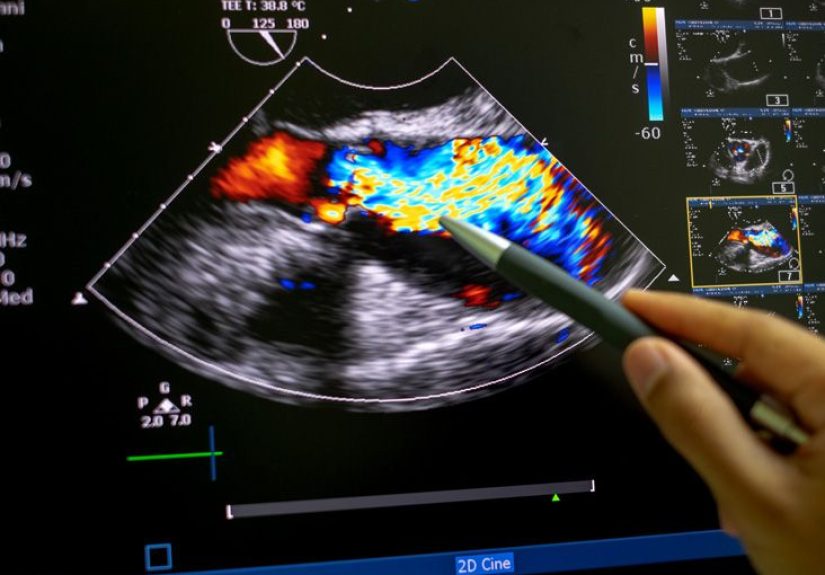
A transesophageal echocardiogram, or TEE, is more involved. In this test, a probe is passed into the esophagus to get closer images of the heart. Because the esophagus sits behind the heart, TEE can provide clearer views of certain valves, clots, infections, or prosthetic heart structures. It often involves sedation and fasting instructions.
A stress echocardiogram combines heart imaging with exercise or medication that makes the heart work harder. This test may help evaluate how the heart performs under stress and whether blood flow problems may be present. A stress echo is more complex than a resting echo, so the cost and billing may also be higher.
Does Medicare Cover Echocardiograms?
Medicare Part B generally covers medically necessary diagnostic echocardiograms when ordered by a doctor or other qualified health care provider. The phrase “medically necessary” is doing a lot of work here. Medicare is not paying for an echo just because someone is curious about their heart’s interior decorating style. There must be a valid medical reason.
Medicare commonly treats echocardiograms as diagnostic non-laboratory tests. That means the test is used to help diagnose, monitor, or rule out a medical condition. If your doctor orders an echo because of symptoms, abnormal exam findings, a known heart condition, or a need to evaluate treatment, Medicare is more likely to consider it covered.
When Medicare May Cover an Echo
Medicare may cover an echocardiogram when it is connected to a documented medical need. Examples may include a new or changing heart murmur, symptoms of heart failure, unexplained shortness of breath, suspected valve disease, chest pain evaluation, follow-up after certain heart procedures, or monitoring of a known heart condition.
Coverage also depends on the specific type of echo. A standard transthoracic echo may be appropriate for many situations. A Doppler or color-flow study may be covered when needed to assess blood flow through valves and chambers. A TEE may be covered when a standard echo does not provide enough information or when a closer view is clinically needed. A stress echo may be covered when the doctor needs to evaluate heart function during exertion or medication-induced stress.
When Medicare May Not Cover an Echo
Medicare generally does not cover echocardiograms done only for screening without a clinical indication. For example, having a family history of heart disease or simply wanting a “checkup echo” may not be enough. Screening can be useful in some medical situations, but Medicare coverage usually requires more than general risk.
Medicare may also deny coverage if the test is repeated too often without a clear reason, if documentation does not support medical necessity, or if extra components are billed routinely without clinical need. Translation: the paperwork matters. The heart may be the star of the show, but the medical record is the backstage manager.
How Much Does an Echocardiogram Cost With Medicare?
With Original Medicare, echocardiograms usually fall under Medicare Part B. After you meet the annual Part B deductible, you generally pay 20% of the Medicare-approved amount for covered diagnostic non-laboratory tests performed in a doctor’s office or independent diagnostic testing facility.
For 2026, the standard Medicare Part B premium is $202.90 per month, and the Part B deductible is $283. These amounts can change each year, and higher-income beneficiaries may pay more for Part B. Once the deductible is met, the usual 20% coinsurance applies to many Part B services, including covered diagnostic testing.
Doctor’s Office vs. Hospital Outpatient Department
Where you get the echocardiogram can affect your out-of-pocket cost. If the test is done in a doctor’s office or independent diagnostic testing facility, your cost is usually the Part B deductible plus 20% coinsurance, assuming the provider accepts Medicare assignment.
If the echo is performed in a hospital outpatient department, you may owe a separate hospital copayment. That copayment can be more than 20% of the Medicare-approved amount, although Medicare places limits on many outpatient copayments. This is one reason two people can have the same test and receive very different bills. Same heart pictures, different billing geography.
Provider Assignment Matters
A provider who accepts Medicare assignment agrees to accept the Medicare-approved amount as full payment. If a provider does not accept assignment, your costs may be higher. Before scheduling an echocardiogram, ask whether the doctor, imaging facility, hospital outpatient department, and interpreting cardiologist all accept Medicare assignment.
This last point is easy to miss. Sometimes the person who performs the test, the facility where it is done, and the physician who reads the images may be billed separately. Asking in advance can save you from the thrilling hobby of decoding medical bills with a magnifying glass and a snack.
Does Medicare Advantage Cover Echocardiograms?
Medicare Advantage plans, also called Part C plans, must cover the same medically necessary services covered by Original Medicare. That means a medically necessary echocardiogram should generally be covered. However, Medicare Advantage plans can use different cost-sharing rules, provider networks, referrals, and prior authorization requirements.
With a Medicare Advantage plan, your cost may be a fixed copay, a percentage of the cost, or another amount listed in your plan’s Evidence of Coverage. You may need to use in-network cardiologists, hospitals, or imaging centers. Some plans may require prior authorization before they will pay for certain diagnostic tests.
Questions to Ask Your Medicare Advantage Plan
Before the appointment, call your plan and ask whether the echocardiogram requires prior authorization, whether the ordering doctor is in network, whether the facility is in network, and what your estimated copay or coinsurance will be. Also ask whether the interpreting cardiologist is in network, because the doctor reading the test may not be the same person who ordered it.
If your plan denies authorization, ask what information is missing and whether your doctor can submit additional documentation. Sometimes a denial is not the end of the story; it is more like Medicare paperwork saying, “Please show your work.”
Does Medigap Help Pay for an Echocardiogram?
If you have Original Medicare and a Medicare Supplement Insurance policy, commonly called Medigap, the Medigap plan may help pay some or all of your share of covered costs. Depending on the Medigap plan, it may help with coinsurance, copayments, and certain deductibles.
Medigap does not make a non-covered test covered. It only helps pay your share of costs for services that Original Medicare covers. So if Medicare denies an echo because it was not medically necessary, Medigap usually will not swoop in like a superhero with a billing cape.
Can Medicare Savings Programs Help?
People with limited income and resources may qualify for a Medicare Savings Program through their state. These programs may help pay Part A and Part B premiums and, in some cases, deductibles, coinsurance, and copayments. If you qualify, this can reduce or eliminate out-of-pocket costs for covered services such as medically necessary diagnostic tests.
Eligibility rules vary by state, and income limits may change each year. Even if you are unsure whether you qualify, applying can be worthwhile. The worst answer may be no; the best answer may be a much smaller medical bill.
What Happens During an Echocardiogram?
For a standard transthoracic echo, you usually change into a gown and lie on an exam table. The sonographer places sticky patches on your chest to monitor heart rhythm, applies gel, and moves the transducer over different areas of the chest. You may be asked to change positions or hold your breath briefly so the technician can get clearer images.
The test often takes about 30 to 60 minutes, though timing varies. The sonographer usually cannot interpret the results for you during the appointment. A cardiologist or qualified physician reviews the images and sends a report to your doctor.
Preparing for the Test
Preparation depends on the type of echo. A standard TTE usually requires little or no preparation. For a TEE, you may need to avoid food or drink for several hours because sedation and throat numbing may be involved. For a stress echo, you may receive instructions about clothing, caffeine, medications, or exercise. Always follow the instructions from your doctor or testing facility.
How to Reduce Surprise Costs
A few practical steps can make Medicare echocardiogram costs easier to manage. First, confirm that the test is medically necessary and that the diagnosis or symptom is documented. Second, ask whether the test will be performed in a doctor’s office, independent testing facility, or hospital outpatient department. Third, ask for the billing codes and estimated out-of-pocket cost.
If you have Original Medicare, confirm that the provider accepts assignment. If you have Medicare Advantage, confirm network status and prior authorization. If you have Medigap, check how your plan handles Part B coinsurance and deductibles. If your income is limited, ask about Medicare Savings Programs or state assistance.
Example Cost Scenarios
Imagine a person with Original Medicare has a medically necessary standard echocardiogram in a cardiology office. If they have already met the Part B deductible, they may owe 20% of the Medicare-approved amount. If they have not met the deductible, they may pay the deductible first and then coinsurance.
Now imagine the same test is done in a hospital outpatient department. The person may still owe Part B cost-sharing, but the hospital setting may add a facility copayment. The bill may look larger even though the test feels the same from the patient’s point of view.
A person with Medicare Advantage might pay a set specialist diagnostic test copay, but only if the plan’s rules are followed. If the test is done out of network or without required authorization, the cost may jump dramatically. This is why checking before the test is not being overly cautious; it is being financially awake.
What If Medicare Denies the Echocardiogram?
If Medicare denies payment, read the Medicare Summary Notice or plan explanation carefully. The denial may involve medical necessity, coding, provider documentation, frequency, or plan authorization rules. Contact the provider’s billing office and ask whether the claim can be corrected or resubmitted with additional documentation.
You also have appeal rights. With Original Medicare, follow the appeal instructions on your Medicare Summary Notice. With Medicare Advantage, follow your plan’s appeal process. Keep copies of doctor notes, test orders, symptoms, prior results, and any authorization records. Paperwork is not glamorous, but neither is paying a bill that should have been covered.
Experience-Based Tips for Medicare and Echocardiograms
From a patient-experience perspective, the biggest lesson about Medicare and echocardiograms is this: the medical part is often easier than the billing part. The test itself is usually calm and straightforward, especially if it is a standard transthoracic echo. You may feel cool gel, light pressure from the probe, and a little awkwardness while turning from one side to another. But most people do not describe the test as painful. The paperwork, however, can feel like it was written by a committee of owls wearing reading glasses.
A smart approach begins before the appointment. When the doctor orders the echo, ask, “What diagnosis or symptom is being used for medical necessity?” This is not rude. It is practical. Medicare coverage often depends on documented medical need, so the order should clearly connect the test to a symptom, abnormal finding, or existing heart condition.
Next, call the testing location. Ask whether the echo will be billed as office-based testing or hospital outpatient testing. Many patients are surprised to learn that a hospital-owned clinic may create a facility charge even when the appointment feels like an ordinary office visit. The building may look harmless, but the billing department knows its ZIP code.
If you have Medicare Advantage, call the plan before the test. Ask whether prior authorization is required and whether every part of the service is in network. That includes the ordering doctor, the testing facility, and the interpreting cardiologist. It may sound repetitive, but “in network” is not always contagious. One provider can be in network while another connected provider is not.
On the day of the test, bring your Medicare card, plan card, referral if needed, medication list, and any instructions from the doctor. Wear comfortable clothing that is easy to remove from the upper body. For a stress echo, wear shoes and clothes suitable for walking unless your doctor says the stress portion will be medication-based.
After the test, do not panic if the sonographer does not explain the results. In many settings, the technician captures the images, but the physician interprets them later. Ask when results will be available and who will discuss them with you. If the report includes terms such as ejection fraction, regurgitation, stenosis, wall motion, or diastolic function, ask your doctor to translate them into plain English. A good question is, “What does this result change about my care?”
Finally, when the bill arrives, compare it with your Medicare Summary Notice or plan explanation. Check whether Medicare or your plan processed the claim, whether the deductible was applied, and whether a facility fee was included. If something looks wrong, call early. Billing problems are easier to fix when they are fresh, before the bill has developed the personality of a houseplant you forgot to water.
Conclusion
Medicare can cover echocardiograms when they are medically necessary diagnostic tests ordered by a qualified health care provider. Under Original Medicare, Part B usually applies, and you typically pay the annual deductible plus 20% coinsurance for covered diagnostic testing. Hospital outpatient settings may involve additional copayments. Medicare Advantage plans must cover medically necessary services but may use networks, copays, and prior authorization rules.
The best way to manage costs is to ask questions before the test: Why is the echo needed? Where will it be performed? Does the provider accept Medicare assignment? Is prior authorization required? What will the estimated out-of-pocket cost be? The echocardiogram may be about your heart, but a little preparation can also protect your wallet.







 Close
Close