
Table of Contents >> Show >> Hide
- What the Mackapär Coat Organizer Actually Is
- Why Entryway Systems Fail (and Why Mackapär Usually Doesn’t)
- Plan First: The 5-Minute “Will This Actually Work Here?” Check
- How to Set Up Mackapär Like You Meant It (Not Like You Gave Up)
- Step 1: Anchor it and place it like it’s in a high-traffic reality show
- Step 2: Use the two hook rows to “assign” behavior
- Step 3: Decide how you’ll use the clothes rail
- Step 4: Make the shoe shelves work for your real shoes (not your fantasy shoes)
- Step 5: Add baskets/boxes so open storage doesn’t turn into open chaos
- Step 6: Create a “drop zone” that prevents the daily scavenger hunt
- Design Tips: Making Mackapär Look Intentional (Not Like a Coat Explosion in a Frame)
- Common Mackapär Problems (and How to Solve Them Without Starting a New Life)
- Who the Mackapär Coat Organizer Is Best For
- Conclusion: A Small Footprint, a Big “Ahhh” Feeling
- Experience Notes (500+ Words): What It’s Like to Live With a Mackapär Setup
The entryway is where your day starts…and where it tries to fall apart. Shoes multiply. Jackets migrate. Keys disappear into a mysterious portal that only opens when you’re already late. If you’ve ever thought, “I don’t need a bigger house, I need a smarter front-door situation,” the IKEA MACKAPÄR coat organizer setup is basically a peace treaty between you and your daily chaos.
In plain English: MACKAPÄR is a slim, hardworking hallway series designed to hold coats, bags, and shoes in a small footprintwithout turning your foyer into a closet explosion. And while it looks simple, it works best when you treat it like a system, not just a piece of furniture you assemble once and then ignore until it becomes a hat pile.
What the Mackapär Coat Organizer Actually Is
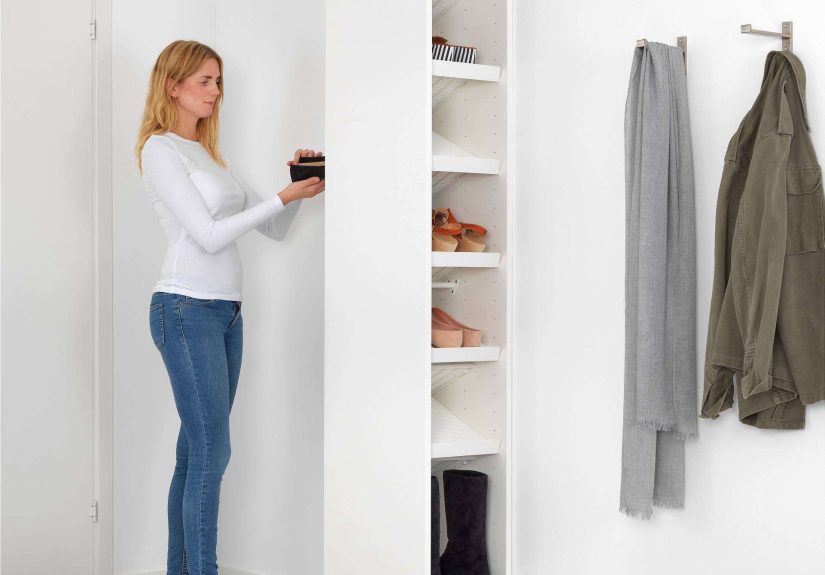
The most popular “all-in-one” piece people mean when they say “Mackapär coat organizer” is the MACKAPÄR coat rack with shoe storage unita tall, narrow hall-tree style organizer that combines:
- 10 hooks (including side hooks) for coats, backpacks, handbags, dog leashes, and that one scarf that’s basically a pet.
- Two rows of hooks, with the lower row easy for kids (or shorter adults who also deserve dignity).
- Open shoe shelves designed for about 6 pairs of shoes (more if you’re storing sandals, fewer if you’re storing “winter boots that could double as canoes”).
- An adjustable clothes rail that can be set toward the front or back depending on whether you prefer hangers or hook-hanging.
- Powder-coated steel that’s built to take daily wear and tear without acting precious about it.
It’s also intentionally slim: about 30 3/4 inches wide, 12 5/8 inches deep, and 78 3/4 inches tall. That depth mattersbecause it’s one of the reasons it plays nicely in small entryways, narrow hallways, and apartment “door opens into the living room” layouts.
One important reality check: this unit is designed to be secured to the wall. That’s not IKEA being dramaticit’s standard safety for tall furniture, especially in high-traffic areas.
Why Entryway Systems Fail (and Why Mackapär Usually Doesn’t)
Most entryways fail for one of three reasons: (1) there’s no obvious place to put things, (2) the storage is annoying to use, or (3) the system holds “everything,” which is a fancy way of saying “nothing has boundaries.”
Professional organizers repeatedly come back to the same fundamentals: use vertical space, create a drop zone for small essentials (keys, wallet, sunglasses), and keep shoe storage accessible so footwear doesn’t become a floor-based art installation. The MACKAPÄR layout supports those basics because it combines vertical hanging + breathable open storage + an easy-to-grab setup.
Plan First: The 5-Minute “Will This Actually Work Here?” Check
Before you commit your entryway to a new regime, do these quick checks. They’ll save you the emotional damage of assembling something only to realize your front door can no longer open fully. (Yes, that’s a real experience people have.)
1) Measure the door swing and walking path
You want enough clearance so the door opens comfortably and you can still walk through without doing the sideways “excuse me” shuffle. Because the unit is only about 12 5/8 inches deep, it’s often a good fit in tighter spotsbut measure anyway. Tape the footprint on the floor if you want to be extra sure. Being extra sure is underrated.
2) Decide what lives by the door (and what absolutely should not)
Your entryway is a transition zone, not long-term storage. The best-looking entryways keep only the essentials in reach: current-season outerwear, daily shoes, one bag per person, and the must-grab items you actually use. Everything elsespare tote bags, out-of-season gear, that broken umbrella you keep “meaning to fix”belongs somewhere else.
3) Set your “shoe policy” like a tiny benevolent dictator
If your household is shoes-off indoors, your entryway shoe storage needs to be ridiculously easy to use. If it’s inconvenient, shoes will end up in a pile. That’s not a moral failure; it’s physics. MACKAPÄR’s open shelves make it easy, but the capacity is finiteso the policy matters.
4) Think in zones, not in furniture
The winning setup usually has: Hang zone (coats, bags), Shoe zone (daily pairs), Small-stuff zone (keys, mail, sunglasses), and Overflow zone (a bin for gloves/hats or a basket for quick toss-in items). MACKAPÄR can handle most of these if you add containers strategically.
How to Set Up Mackapär Like You Meant It (Not Like You Gave Up)
Step 1: Anchor it and place it like it’s in a high-traffic reality show
This is not optional. The unit is tall, it’s in a busy area, and it will be tugged on (especially the hooks). Secure it to the wall using the correct fasteners for your wall type. If you’re renting, look into renter-friendly solutionsbut don’t skip stability. Safety is always more stylish than regret.
Step 2: Use the two hook rows to “assign” behavior
Here’s the secret sauce: the lower hook row is not a design flourishit’s a behavior hack. Put kids’ jackets, backpacks, and everyday grab items on the lower hooks so they can handle their own stuff without needing help. Put adult coats and “don’t crush this” items higher.
Pro tip: designate one hook as the “tomorrow hook.” That’s where you hang the one thing you must remember for the next daygym bag, lunch tote, permission slip, whatever. It’s the closest thing you’ll get to time travel.
Step 3: Decide how you’ll use the clothes rail
The clothes rail can be positioned toward the front or back. If you use hangers (great for coats you don’t want wrinkled), place it where hangers won’t bang into the hooks or block easy access. If you’re mostly hook-hanging jackets and bags, set the rail where it stays out of the wayor use it for longer items like raincoats that you’d rather not fold over a hook.
Step 4: Make the shoe shelves work for your real shoes (not your fantasy shoes)
The unit is designed for about six pairs, but the real-life number depends on shoe size and style. Bulky men’s shoes and boots take more space; slimmer sneakers and flats take less. The practical approach: keep only “frequent flyers” on the shelvesshoes worn daily or several times a week.
If you need more shoe capacity without adding visual clutter, the MACKAPÄR shoe/storage cabinet is a strong companion piece. It has sliding doors (helpful in small spaces), shelves that can be mounted flat or angled for different shoe sizes, and it’s designed to hold about 16 pairs in the standard setup. Some people even stack cabinets for more storage, as designed.
Step 5: Add baskets/boxes so open storage doesn’t turn into open chaos
Open storage is convenient, but it’s also honest. It will reveal exactly how your household behaves. The easiest fix is containment: add matching bins or baskets up top for gloves, hats, pet supplies, sunscreen, and other small stuff that otherwise becomes “the pile.”
If you want the entryway to look more polished, use a simple rule: soft clutter goes in bins, hard clutter goes on hooks, shoe clutter goes behind a boundary. That boundary can be shelves, a cabinet, or even a trayanything that says “shoes live here,” not “shoes live everywhere.”
Step 6: Create a “drop zone” that prevents the daily scavenger hunt
The entryway is where keys go to disappear. Fight back with a small tray, dish, wall pocket, or shallow basket. Your goal is to make the correct behavior the easiest behavior: walk in, drop keys, move on. If you also need to manage mail, a vertical file holder or a small sorting tray can keep paper from spreading like glitter.
Design Tips: Making Mackapär Look Intentional (Not Like a Coat Explosion in a Frame)
The best-looking MACKAPÄR setups usually nail the balance between function and “please don’t let this look like a locker room.” Here’s what helps:
- Limit what’s visible. Keep only the coats in current rotation on hooks. Store off-season gear elsewhere.
- Choose a consistent container style. A few matching bins look calmer than seven unrelated totes living their own lives.
- Add a mirror nearby. Mirrors make small entryways feel larger and help with last-second “do I look normal?” checks.
- Use a washable, grippy rug or runner. It protects floors and visually defines the entry zonejust avoid rugs that curl or slide.
- Don’t block the door with bulky furniture. Slim pieces win in tight entryways; Mackapär’s shallow depth is part of the appeal.
Common Mackapär Problems (and How to Solve Them Without Starting a New Life)
“My shoes don’t fit nicely.”
If your shoes are extra bulky, treat the shelves as a daily-use landing spot, not a full collection. Store overflow in a closed cabinet, a boot tray, or elsewhere. The point is daily efficiency, not housing every shoe you’ve ever loved.
“It looks messy even though it’s ‘organized.’”
That’s usually a sign you need more containment. Add bins for accessories. Group similar items together. And edit down what lives there. Open storage looks tidy when the categories are clear and the volume is controlled.
“The entryway keeps turning into a dumping ground.”
This is where routines matter more than furniture. Try a simple maintenance habit: two minutes at night to reset the hooks and shelves. Also: purge regularly. If you don’t wear it, fix it, return it, or use it, it shouldn’t live by your front door.
Who the Mackapär Coat Organizer Is Best For
- Apartment dwellers with a narrow entry or a “front door opens into the living room” layout.
- Families who want kids to hang up their own stuff (the lower hooks are a cheat code).
- Shoes-off households that need fast, accessible shoe storage at the entry point.
- Busy people who benefit from a repeatable “grab-and-go” station instead of daily searching.
- Small-space organizers who want vertical storage without adding bulky furniture.
Conclusion: A Small Footprint, a Big “Ahhh” Feeling
A great entryway doesn’t have to be hugeit just has to be intentional. The Mackapär coat organizer setup works because it respects real life: it’s slim, it uses vertical space, it keeps frequently used items within reach, and it encourages routines that prevent clutter from taking over.
If you set it up with zones, add a few containers, and keep the “doorway essentials only” rule, you’ll notice something kind of magical: leaving the house starts to feel smoother. Not perfect. Not “I am a serene person who is never late.” But smoother. And honestly? That’s the dream.
Experience Notes (500+ Words): What It’s Like to Live With a Mackapär Setup
People tend to buy entryway organizers during a very specific emotional moment: the moment they trip over a shoe pile for the 400th time and decide they are done negotiating with chaos. In that sense, Mackapär isn’t just furnitureit’s an attempt at peace. And in the most common real-world scenarios, it genuinely helps, as long as you let it do what it’s designed to do (daily organization) instead of forcing it to become a warehouse for everything you own.
In a typical family setup, the lower hooks end up being the MVP. One household-style approach is assigning each kid two hooks: one for a backpack and one for a jacket. That “two-hook limit” becomes a natural boundary: if there’s no hook space left, something has to go to a closet or a bin. The result is less floor clutter and fewer morning meltdowns caused by missing backpacks. The funny part is how quickly kids adapt when the system is easyespecially when they can reach it. Suddenly, hanging a backpack feels less like a chore and more like “I have a spot.” It’s a small psychological win that adds up over time.
In small apartments, Mackapär often replaces the classic wobbly standing coat treethe one that looks charming in photos and then collapses the first time you hang three winter coats and a tote bag full of…something. Because Mackapär is meant to be anchored, it feels sturdier and more predictable. People commonly describe the difference as “my entryway stopped looking like a temporary campsite.” The shallow depth is key here: it doesn’t swallow your hallway, so your space feels more open even though you’re adding storage.
For shoes-off households, the shelves become a daily landing pad rather than a full shoe library. A common experience is realizing that the shoe situation improves dramatically once you set a limit: two pairs per person in the entryway (daily sneakers + one alternate), everything else stored elsewhere. That’s when the shelves start to feel spacious instead of crowded. When people try to store every shoe they own there, the shelves feel like they “don’t work,” but it’s usually the volume, not the design.
Another real-life pattern: the top area becomes either a brilliant command center or a chaotic shelf of doom. The difference is containers. When bins are addedone for winter accessories, one for dog stuff, one for random “grab as you leave” itemsthe shelf stays tidy. Without bins, that area attracts loose gloves, spare keys, receipts, sunglasses, and mystery items that nobody claims. Many people find that labeling bins (even casually) prevents the slow slide into clutter. It’s not glamorous, but it’s effective.
The most satisfying “Mackapär moment” tends to be the day you realize you didn’t have to search for your keys, didn’t step over shoes, and didn’t yank a coat off a chair because there was actually a place for it. It’s not a dramatic transformation like a TV makeover, but it’s the kind that quietly improves your routine. And when a furniture piece helps you leave the house with less stress, it earns its keepno matter how many Allen keys it took to get there.







 Close
Close