
Table of Contents >> Show >> Hide
- First, what exactly is a cuticle (and why does it matter)?
- So… is it ever safe to cut your cuticles?
- Why experts discourage cuticle cutting: the risks (without the scare tactics)
- If you still want neat cuticles, here’s what experts recommend instead
- A safer at-home cuticle routine (that still looks salon-level)
- What about salon manicures? What to ask for (and what to avoid)
- Who should avoid cuticle cutting altogether?
- When to get medical advice
- The bottom line: neat cuticles don’t require cutting
- Experiences: what people notice when they stop cutting cuticles (and what actually helps)
Your cuticles are like the bouncers at a very exclusive club (your nail bed). Their job is not to look cute in tiny
suitsit’s to keep trouble out. So when someone says, “Just snip them off for a cleaner manicure,” experts tend to
react the same way your phone reacts to a sketchy link: absolutely not, please back away slowly.
But real life is messy. Sometimes you’ve got ragged skin, hangnails that catch on sweaters, and a big event where you
want your nails to look polishednot like they’ve been through a paper-shredding accident. So what’s the truth:
is it ever safe to cut your cuticles? Let’s break down what dermatology and hygiene guidance
consistently recommends, what “safe-ish” really means, and how to get that neat manicure look without inviting
bacteria to move in rent-free.
First, what exactly is a cuticle (and why does it matter)?
Part of the confusion comes from the fact that “cuticle” gets used as a catch-all term for the skin around the base
of your nail. In everyday nail talk, it includes the thin tissue on the nail plate and the living skin at the nail
fold. In anatomy terms, there’s a protective seal at the base of the nail where skin meets nail plate, helping block
germs and irritation.
The key point experts agree on
Whether you call it cuticle, proximal nail fold, or the “please don’t slice me” zone, the skin at the base of your
nail plays defense. When it’s cut too aggressively, you can create tiny openingsbasically a welcome mat for
irritation and infection. That’s why many medical and public health sources advise not to cut or remove cuticles as a
routine beauty step.
So… is it ever safe to cut your cuticles?
The most accurate expert answer is: as a routine habit, no. Cutting or removing cuticles is widely
discouraged because it compromises that protective barrier and can increase the risk of irritation and infection.
Multiple medical sources emphasize leaving cuticles alone whenever possible.
However (because humans are complicated), there’s a narrow, practical exception many pros acknowledge:
trimming only truly dead, loose skinlike a hangnail or a flap that’s already detachedcan be safer
than ripping it, chewing it, or snagging it repeatedly. The goal is not “remove the cuticle.” The goal is “prevent a
small problem from turning into an ongoing tear.”
Translation: what’s “safe-ish” vs. what’s not
-
Safer: carefully trimming a small, loose piece of dead skin that’s already lifted (think: a
hangnail you can gently lift and see it’s detached). -
Riskier: cutting into skin that’s attached, pink, tender, or bleeding-prone, or “cleaning out” the
entire cuticle area for a super-sharp line. -
Extra risky: aggressive cuticle removal techniques that rely on dry cutting or drilling/filing the
cuticle area for a “flawless” finishespecially if the technician isn’t exceptionally skilled or hygiene practices
aren’t perfect.
Why experts discourage cuticle cutting: the risks (without the scare tactics)
You don’t need a horror story to justify being cautiousbasic biology does the job. When you cut protective skin,
you can trigger problems like:
1) Higher risk of nail-fold infections (paronychia)
Paronychia is an infection of the skin around the nail, and it’s commonly associated with irritation, moisture, and
small injurieslike picking, biting, or cutting around the cuticle area. Even minor trauma can create an entry point
for bacteria or other germs.
2) Irritation and inflammation that makes nails look worse, not better
Overcutting can lead to redness, tenderness, swelling, peeling, and repeated cracking. Ironically, people often cut
again to “fix” the roughnesscreating a loop where the skin never fully gets a chance to settle down.
3) Damage to the nail surface (especially with aggressive pushing or scraping)
When cuticles are pushed back too hard or tools scrape the nail plate, you can roughen or thin the nail surface.
That can make polish chip faster and can also contribute to a “washboard” look over time.
4) More problems if you’re prone to dry skin, eczema, or frequent hand-washing
If your hands are already dry from weather, sanitizers, cleaning, or skin conditions, that cuticle seal is doing
overtime. Removing it can lead to more cracking and more hangnails, not fewer.
If you still want neat cuticles, here’s what experts recommend instead
You can absolutely get a clean manicure look without “snip first, ask questions later.” The safer strategy is:
soften, gently nudge, moisturize, and keep tools clean.
Option A: Gently push back (the low-drama approach)
- Soften first: do this after a shower or after washing hands in warm water for a few minutes.
-
Use a gentle pusher: a soft rubber cuticle pusher or an orangewood stick is often less harsh than
sharp metal tools. - Use light pressure: you’re aiming for “tidy,” not “excavation.”
- Stop if it hurts: discomfort is your body’s way of saying “this is living tissue.”
Option B: Cuticle remover products (with smart precautions)
Some cuticle removers use alkaline ingredients to help dissolve dead skin. They can be effective, but they’re not a
“leave it on while you answer emails” product. Follow the label timing, avoid overuse, and rinse well. If you have
sensitive skin, eczema, or tiny cracks around the nail fold, go extra cautiouslyor skip and focus on moisturizing
instead.
Option C: Moisturize like it’s your job
The simplest cuticle upgrade is also the least glamorous: regular moisturizer plus cuticle oil or ointment.
Hydrated skin tears less, catches less, and looks smoothermeaning you feel less tempted to cut anything.
A safer at-home cuticle routine (that still looks salon-level)
Here’s a realistic routine you can do weekly (or twice weekly if you’re very dry). It’s designed to minimize
infection risk while still getting that clean outline around the nail.
Step 1: Clean hands and tools
Wash your hands. Clean your nail tools before use. If you use nippers at all, they should be sharp, clean, and used
only by you (no sharing).
Step 2: Soften the area
Warm water for a few minutes is enough. You don’t need a 30-minute soak. Over-soaking can make nails swell slightly,
which can make polish chip sooner later on.
Step 3: Gently push back
Use a rubber pusher or orangewood stick with light pressure. If there’s stubborn tissue stuck to the nail plate,
don’t scrape aggressivelyapply moisturizer or a small amount of remover per directions, then try again gently.
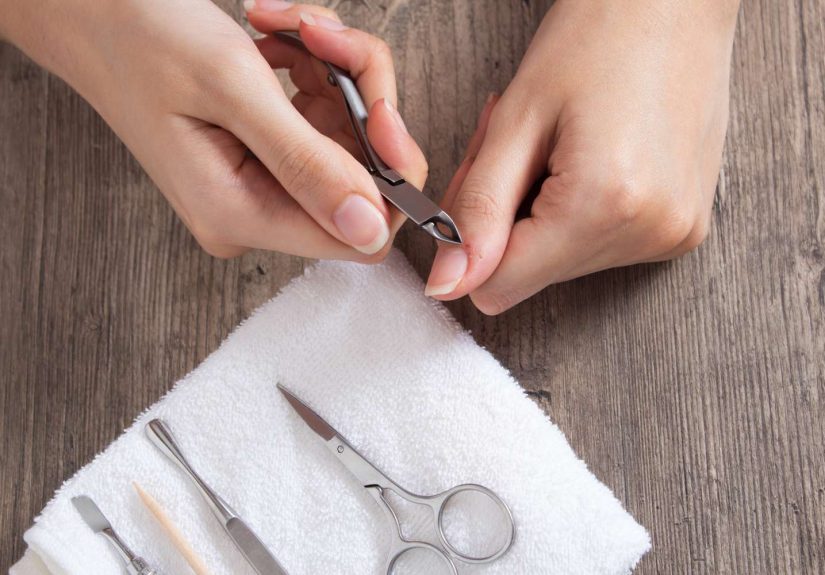
Step 4: Trim only what’s clearly dead and detached (optional)
If you have a hangnail or a loose flap that’s already lifted, you can carefully clip it. Do not “chase” the skin
down into the nail fold. Think of this as pruning a dead leafnot mowing the whole garden.
Step 5: Moisturize and protect
Finish with cuticle oil or an ointment, especially before bed. If you clean a lot, wear gloveswater and detergents
can strip oils fast and trigger more cracking.
What about salon manicures? What to ask for (and what to avoid)
Nail salons range from impeccable to “I’m not sure that’s legally a disinfectant.” If you get professional manicures,
a few questions can seriously lower your risk.
Ask for: “Please don’t cut my cuticles.”
A simple script works: “Can you gently push them back, but no cutting?” If you want minimal
trimming, specify: “Only trim any loose hangnailsnothing attached.”
Be cautious with ultra-close cuticle techniques
Some trending manicure styles focus on removing the cuticle area for a crisp, extended look. Dermatology-focused
guidance often warns these approaches can raise infection risk because they remove that protective seal. If you choose
them anyway, the technician’s skill and hygiene standards matter a lot.
Look for hygiene signals
- Tools that are properly disinfected/sterilized between clients (not just wiped).
- Clean workstations and technicians washing hands or using fresh gloves appropriately.
- Disposable items (like files/buffers) that are new or clearly single-client.
- For pedicures: foot baths that are cleaned and disinfected between clients according to salon protocols.
Who should avoid cuticle cutting altogether?
Some people can get irritated cuticles and bounce back quickly. Others can end up with lingering inflammation from a
tiny nick. If any of these apply to you, experts would generally urge extra caution:
- Diabetes or circulation issues
- Weakened immune system (including certain medications)
- Chronic skin conditions like eczema or psoriasis around the hands
- Healthcare or caregiving work with frequent hand-washing and sanitizer use
- History of nail-fold infections or recurring inflammation
When to get medical advice
If the skin around your nail becomes increasingly painful, swollen, warm, or very red, or you notice drainage or
worsening tenderness after a manicure, it’s worth contacting a clinicianespecially if you have diabetes or are
immunocompromised. Nail-fold infections can escalate if ignored, and early care is usually simpler than waiting it
out.
The bottom line: neat cuticles don’t require cutting
If you remember just one thing, make it this:
Cuticles are protection first, aesthetics second. Most experts discourage cutting or removing them
as routine maintenance. The “safer exception” is small, careful trimming of clearly dead, detached skinusing clean
tools and a light touch.
For most people, the best results come from a boring (but effective) trio: soften, gently push back, and
moisturize. Your nails will look smoother, your skin will tear less, and you’ll spend less time in that
stressful cycle of “I cut them because they looked rough… now they look rough because I cut them.”
Experiences: what people notice when they stop cutting cuticles (and what actually helps)
People who switch from cutting to caring often describe the same surprise: things look a little worse before they
look better. The first week or two can feel like your cuticles are “growing back with an attitude.” That’s usually
because the skin is adjusting after being repeatedly trimmed. Instead of a sharp, freshly-cut edge, you’re seeing
real texturedryness, tiny flakes, and uneven bits that were previously snipped away. The instinct is to grab the
nippers. The better move is to grab moisturizer.
A common experience: winter hits, hands get dry, and suddenly there are hangnails everywhere. Many people assume the
solution is more cutting, but dryness is the real villain. When they start using cuticle oil daily (especially before
bed) and hand cream after washing, the hangnails often drop dramatically over a few weeks. The skin gets more elastic,
so it doesn’t split as easily. The funny part? The nails can look “more manicured” even though nothing is being cut.
Another pattern shows up with frequent hand-washersparents of little kids, healthcare workers, restaurant staff, or
anyone living that sanitizer life. They may notice that pushing cuticles back aggressively makes the skin sting and
peel later, while gentle pushing (or skipping it entirely) plus ointment at night makes the area calmer. Some people
even keep a tiny tube of thick moisturizer by the sink, because if you can make moisturizing as automatic as hand
washing, you’ve basically hacked your cuticles.
Salon regulars often report a “smooth today, angry tomorrow” cycle when cuticles are cut closely. Day-of, everything
looks crisp. Then a day or two later, the nail fold can feel tender or look irritated, and new hangnails pop up as the
skin dries and cracks. When they start asking for “no cuttingjust push back,” the manicure can look slightly less
razor-sharp on day one, but the skin tends to behave better over the next two weeks. Many people say their polish
actually lasts longer because they’re not dealing with sore skin that makes them pick at the edges.
People who love a super-clean cuticle line sometimes try trend-driven techniques that remove more tissue than a
traditional manicure. Some describe the look as “photoshoot perfect,” but they also mention increased sensitivity and
more frequent dryness afterwardespecially if they don’t keep up with hydration. The most successful “I want it neat”
crowd tends to be the ones who pair gentle salon work with consistent home maintenance: oil, cream, and careful
clipping of only true hangnails. It’s less dramatic, but it’s more sustainable.
And then there’s the most relatable experience of all: the snag. You feel a tiny rough edge, you absentmindedly pull
it, and suddenly you’re in a full-on battle with your own fingertip. People who get ahead of this usually keep a small
pair of personal nail nippers (cleaned and used only by them) and clip the snag instead of ripping it. That single
habitclip, don’t tearcan be the difference between “minor annoyance” and “why does my finger hate me this week?”
The takeaway from all these real-world patterns is pretty simple: most cuticle “problems” are really
dryness + friction + overhandling. When people reduce cutting and increase hydration, the skin
typically becomes smoother, less likely to snag, and easier to maintain. It’s not as instantly satisfying as a fresh
snip, but it’s the kind of boring routine that quietly wins.







 Close
Close