
Table of Contents >> Show >> Hide
- What Is an Ingrown Hair?
- Why Ingrown Hairs Happen
- Common Symptoms of an Ingrown Hair
- How to Treat an Ingrown Hair Safely
- What Not to Do
- How to Prevent Ingrown Hairs
- Area-by-Area Prevention Tips
- When to See a Doctor
- Common Experiences With Ingrown Hair: What People Usually Learn the Hard Way
- Final Thoughts
Ingrown hairs are small, annoying, and weirdly talented at ruining your mood before breakfast. One minute you are shaving, waxing, or tweezing with hope in your heart. The next minute, your skin has produced a tender red bump that feels personally offended. An ingrown hair happens when a hair curls back or grows sideways into the skin instead of rising up and out like a polite citizen.
The good news is that most ingrown hairs are manageable, preventable, and far less dramatic than they look. The better news is that you do not need to declare war on your face, legs, underarms, or bikini line to deal with them. With the right skin care habits, smarter hair removal techniques, and a little patience, you can calm existing bumps and lower the odds of getting new ones.
This guide breaks down what causes ingrown hairs, how to treat them safely, how to prevent repeat flare-ups, and when it is time to stop guessing and call a medical professional. Think of it as your practical, no-nonsense field guide to a very stubborn little skin issue.
What Is an Ingrown Hair?
An ingrown hair forms when a hair gets trapped beneath the skin or re-enters the skin after hair removal. Instead of growing outward, it curves back into the skin and triggers irritation. The result is usually a small bump that may look red, flesh-colored, or darker than the surrounding skin. It can itch, feel tender, or develop a tiny visible loop of hair in the center.
Dermatologists often use the term pseudofolliculitis for razor bumps, especially in the beard area. That is the official medical phrase, but “ingrown hair” is the name most people actually use, mostly because it sounds less like a villain from a science-fiction movie.
Why Ingrown Hairs Happen
Hair removal is the usual suspect
Shaving, waxing, and tweezing can all set the stage for ingrown hairs. Shaving too close to the skin creates a short, sharp hair tip that can curve back into the skin. Waxing and tweezing may remove hair in a way that changes how it grows back, especially if the new hair struggles to break through the surface.
Curly or coarse hair has a tougher job
People with tightly curled, coarse, or wiry hair are more likely to get ingrown hairs because curved hair naturally has a greater chance of looping back into the skin. That does not mean straight-haired people are magically exempt. It just means curly hair often plays this irritating game on a higher difficulty setting.
Friction makes everything worse
Tight clothing, sweaty workout gear, rough collars, and constant rubbing can trap hairs and irritate the follicles. That is why ingrown hairs often show up on the neck, underarms, thighs, buttocks, and bikini line.
Dead skin can block the exit
When dead skin cells build up over a follicle, the hair may not be able to grow outward. Instead, it gets stuck below the surface. Gentle exfoliation can help, but the key word is gentle. Scrubbing your skin like you are sanding a deck is not a skincare strategy.
Common Symptoms of an Ingrown Hair
Ingrown hairs usually appear as:
- Small red, pink, brown, or flesh-colored bumps
- Itching or tenderness
- A visible hair trapped under the skin
- Dark marks left behind after the bump fades
- Pus-filled bumps in more inflamed cases
In some cases, an ingrown hair can resemble acne, folliculitis, or a small cyst. If the area becomes increasingly painful, warm, swollen, or filled with pus, you may be dealing with an infection or a different skin problem that needs medical attention.
How to Treat an Ingrown Hair Safely
1. Pause the hair removal
The first move is often the least exciting one: stop shaving, waxing, or tweezing the area for a while. Continuing to remove hair from already irritated skin can keep the cycle going. Giving the follicle time to recover is often more effective than adding five new products and a desperate pep talk.
2. Use a warm compress
Hold a warm, damp washcloth on the area for several minutes. This can soften the skin and encourage the trapped hair to move closer to the surface. It also feels soothing, which is helpful when your skin has decided to become dramatic.
3. Clean the area gently
Wash with a mild cleanser and lukewarm water. Harsh soaps, heavy scrubbing, and alcohol-heavy toners can increase irritation. Your goal is to calm the skin, not challenge it to a duel.
4. Try gentle exfoliation
A soft washcloth, a mild chemical exfoliant, or a product with ingredients like salicylic acid or glycolic acid may help free trapped hairs and reduce buildup around the follicle. Go slowly and avoid overdoing it. Irritated skin does not need “extra motivation.”
5. Do not dig
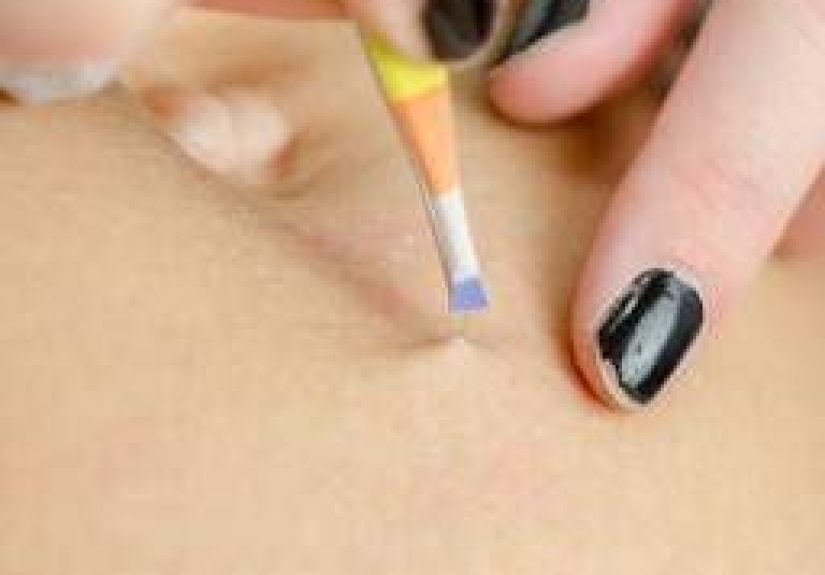
This is the rule many people break and then immediately regret. Do not pick, squeeze, or dig into the skin with fingernails, needles, or tweezers. If the tip of the hair is clearly above the surface, you may be able to gently lift it out with clean tweezers. But if the hair is buried, leave it alone. Turning a tiny bump into a wound is a very bad trade.
6. Soothe inflammation
A bland moisturizer can reduce dryness and friction. In some cases, a clinician may recommend products that reduce inflammation or keep pores and follicles from getting clogged. If you get recurrent razor bumps, prescription treatments may be more useful than trial-and-error shelf surfing.
7. Watch for infection
If the bump becomes more painful, hot, swollen, or starts draining pus, it may be infected. That is when home care should stop being the main plan.
What Not to Do
- Do not keep shaving over active bumps
- Do not scratch or squeeze them
- Do not use rough exfoliating tools on irritated skin
- Do not share razors
- Do not apply heavily fragranced products to sensitive areas
- Do not assume every bump is “just an ingrown hair” if it keeps coming back
How to Prevent Ingrown Hairs
Rethink your shaving routine
Prevention often comes down to better technique. Wet the skin first, use a lubricating shaving gel or cream, and shave in the direction of hair growth rather than against it. Use light pressure. Repeated passes over the same area increase irritation and can cut the hair too short.
A clean, sharp razor matters. Dull blades pull at the hair and irritate the skin. For people who get frequent ingrown hairs, a single- or double-blade razor may be less irritating than a multi-blade razor that shaves too closely. An electric trimmer that leaves a tiny bit of stubble can also be a game changer.
Do not stretch the skin tight
Pulling the skin taut can make the hair retract below the surface after shaving, which raises the chance that it will get trapped as it grows back. It may feel like you are getting a “closer” shave, but your follicles may file a formal complaint later.
Exfoliate regularly, but gently
Regular gentle exfoliation can reduce dead skin buildup and help hairs grow outward. The trick is consistency, not aggression. Once or a few times a week is often enough, depending on your skin type.
Reduce friction
Choose looser, breathable clothing when possible, especially after shaving or waxing. This is particularly helpful for the bikini area, thighs, buttocks, and underarms. Skin likes airflow more than it likes compression leggings that fit like a second opinion.
Consider other hair removal methods
If shaving always leads to bumps, you may do better with an electric clipper, a depilatory cream that your skin tolerates well, or professional laser hair removal. Laser treatment is especially worth discussing if ingrown hairs are chronic, painful, or leaving behind dark marks or scars.
Area-by-Area Prevention Tips
Face and neck
Beard-area ingrown hairs are common, especially on the neck. Shave less closely, map the direction your hair grows, and avoid stretching the skin. If a clean-shaven look keeps triggering bumps, trimming instead of shaving may be kinder to your skin.
Underarms
Underarm skin is warm, moist, and easily irritated. Use a sharp razor, shave carefully, and avoid deodorants or products that sting immediately after shaving. If solid products seem to worsen bumps, switching formulas may help.
Legs
Dry shaving is practically an invitation to irritation. Shave after a shower when hair is softer, use plenty of lubrication, and moisturize afterward. Tight jeans right after shaving are not doing your follicles any favors.
Bikini line and pubic area
This area is extra prone to friction and inflammation. Trim rather than shave very closely if you are bump-prone, wear breathable underwear, and avoid picking at bumps. Repeated painful lesions in this region deserve medical evaluation because not every bump is an ingrown hair.
When to See a Doctor
Most ingrown hairs improve with conservative care, but medical help makes sense when:
- The area looks infected
- You have severe pain, swelling, or spreading redness
- The bumps keep coming back
- You are getting scars or dark marks
- You have large tender lumps in the underarms, groin, or buttocks
- You are not sure whether it is an ingrown hair, folliculitis, acne, or another skin condition
A clinician may suggest prescription creams, better-targeted anti-inflammatory treatment, or a different hair removal plan. Sometimes the smartest skincare move is not another scrub. It is getting the correct diagnosis.
Common Experiences With Ingrown Hair: What People Usually Learn the Hard Way
One of the most common experiences with ingrown hairs is the “I thought it was just a pimple” phase. People notice a bump after shaving and treat it like acne. They squeeze it, scrub it, and attack it with random spot treatments. Unfortunately, ingrown hairs do not always respond well to that approach. Instead of improving, the bump often becomes more inflamed, darker, and more noticeable. The lesson many people learn is that skin irritation does not always need more force. Sometimes it needs less.
Another common pattern happens with the daily shaver. Someone shaves every morning for work, school, or personal preference, especially around the beard or neck, and keeps getting the same cluster of bumps in the same spots. At first it feels mysterious. Then they realize the problem is not bad luck. It is repetition. Shaving too closely, using too many passes, or shaving against the grain creates a loop where the hair never gets a fair chance to grow outward. For many people, the breakthrough comes when they switch from a close razor shave to electric trimming, or when they stop chasing that ultra-smooth finish for a while.
In the bikini line and underarm area, people often describe a cycle of hair removal followed by tenderness, friction, and regret. They shave, then exercise, then spend the day in tight clothing, and the area gets irritated fast. The bumps feel worse because the skin is already warm and moist. The thing that often helps is surprisingly unglamorous: looser clothes, breathable fabric, less friction, and a little patience. It is not flashy advice, but skin tends to love boring, gentle routines.
People with curly or coarse hair often report that ingrown hairs are not just an occasional nuisance. They are a recurring event. That experience can be especially frustrating because the bumps may leave behind dark marks long after the irritation settles down. In those cases, prevention usually matters more than heroic treatment after the fact. Better shaving habits, fewer close shaves, and early care for inflammation often make a bigger difference than trying to fix everything later.
A lot of people also learn that tweezers can be both friend and enemy. When the hair tip is already visible, gently lifting it can help. But when the hair is buried, tweezers tend to turn a small problem into a larger one. The skin gets broken, bacteria move in, and the area takes longer to heal. It is one of those classic “this felt productive for thirty seconds” moments.
The most successful long-term experiences usually come from small adjustments rather than one miracle product. People find a shaving method their skin tolerates, exfoliate gently instead of aggressively, replace dull blades, moisturize more, and stop picking. In other words, the solution is often less about winning a battle and more about ending a ridiculous feud between your hair and your skin.
Final Thoughts
Ingrown hairs are common, but they do not have to be a permanent side effect of grooming. Most cases improve when you reduce irritation, stop digging at the skin, and use a prevention strategy that matches your hair type and lifestyle. If your skin keeps reacting the same way every time you shave or wax, that is useful information. Listen to it.
In the end, preventing ingrown hairs is not about perfection. It is about making your routine a little gentler, a little smarter, and a lot less likely to leave your follicles plotting revenge.






 Close
Close