
Table of Contents >> Show >> Hide
- Why the Old Streets of Hong Kong Feel So Cinematic
- The 24 Pictures: A Walk Through Light, Stone, Steam, and Memory
- 1. Pottinger Street After Rain
- 2. A Neon Sign Flickering Above a Narrow Lane
- 3. Man Mo Temple on Hollywood Road
- 4. A Red Taxi Turning Through Central
- 5. Tong Lau Balconies in Wan Chai
- 6. The Blue House on Stone Nullah Lane
- 7. A Wet Market Before Breakfast
- 8. A Tram Passing Through the Island
- 9. A Staircase Between Two Apartment Blocks
- 10. Temple Street Warming Up for the Night
- 11. Mahjong Players in a Public Space
- 12. A Dai Pai Dong Kitchen at Full Steam
- 13. Laundry Hanging Above the Street
- 14. A Pawn Shop Sign
- 15. A Shopkeeper Closing for the Evening
- 16. Hollywood Road’s Antique Shops
- 17. PMQ and the New Life of Old Buildings
- 18. A Quiet Alley in Sheung Wan
- 19. Sham Shui Po’s Street-Level Energy
- 20. A Mini Bus Under Fluorescent Light
- 21. Incense Smoke Curling Into the Street
- 22. Old Signboards Over New Cafes
- 23. A Rainy Crossing in Mong Kok
- 24. The Last Light on an Old Street Corner
- What Makes Hong Kong Street Photography So Powerful?
- Old Hong Kong Is Not GoneBut It Is Changing
- Photography Tips for Capturing the Old Streets of Hong Kong
- Why These 24 Pics Speak to Travelers, Locals, and Dreamers
- My Experience Photographing the Old Streets of Hong Kong
- Conclusion: The Beauty of Old Hong Kong Lives in the Details
Hong Kong is the kind of city that refuses to sit still for a portrait. Blink, and a tram glides through the frame. Turn around, and a shopkeeper is pulling down a metal shutter with the dramatic timing of a movie scene. Look up, and the neon signs, laundry poles, air conditioners, bamboo scaffolding, and apartment windows are holding a very serious architectural meeting above your head.
That is exactly why the old streets of Hong Kong are so irresistible to photograph. They are not polished in the museum sense. They are alive. They smell like roast chestnuts, rain on concrete, incense smoke, hot wok oil, and the faint electrical buzz of signs that have seen more late nights than most of us. In a city famous for glass towers and postcard-perfect harbor views, the older streets offer something even better: texture, memory, and a little bit of beautiful chaos.
This 24-picture journey through Hong Kong street photography is about more than charming alleyways and glowing signs. It is about the city’s layered identity: colonial-era roads, Cantonese shopfronts, tong lau buildings, temple courtyards, wet markets, tram tracks, hillside staircases, and everyday people moving through spaces that have survived decades of change. The result is a portrait of “old Hong Kong” that is moody, cinematic, human, and wonderfully stubborn.
Why the Old Streets of Hong Kong Feel So Cinematic
Hong Kong has a natural talent for drama. The streets are narrow, the hills are steep, the shadows are deep, and the lights seem to have signed a contract with every camera lens in town. Even an ordinary walk through Central, Sheung Wan, Wan Chai, Yau Ma Tei, or Sham Shui Po can feel like stepping into a film still.
The magic comes from contrast. In Old Town Central, century-old temples sit within walking distance of design studios, galleries, coffee shops, antique stores, and modern apartment towers. On Hollywood Road, one minute you may be admiring traditional incense coils at Man Mo Temple, and the next you are passing a sleek boutique with a minimalist logo that looks like it charges extra for oxygen. Somehow, it works.
That blend of old and new is what gives Hong Kong street photography its emotional pull. The city is not frozen in nostalgia. It is constantly negotiating with it. A weathered signboard hangs above a luxury car. A fruit seller arranges oranges beneath a wall of skyscrapers. A red taxi slides past a staircase that has been climbed by generations of office workers, aunties, students, tourists, and people who forgot just how steep Hong Kong can be until it was too late.
The 24 Pictures: A Walk Through Light, Stone, Steam, and Memory
These 24 imagined scenes capture the spirit of old Hong Kong streets: not as a checklist, but as a visual diary. Each picture is a small invitation to slow down and notice what the city is saying when it is not trying to impress anyone.
1. Pottinger Street After Rain
Pottinger Street, also known as Stone Slabs Street, is one of Hong Kong’s most photogenic historic streets. Its uneven granite steps climb through Central like an old spine holding the neighborhood together. After rain, the stones shine beautifully, reflecting umbrellas, shop lights, and the quick feet of people who know exactly where they are going.
2. A Neon Sign Flickering Above a Narrow Lane
Hong Kong’s neon signs became famous in the mid-20th century, when restaurants, pawn shops, cinemas, nightclubs, and department stores competed for attention in glowing Cantonese characters. Many of those signs have disappeared because of safety rules, redevelopment, and changing technology, but the remaining glow still carries a powerful sense of place.
3. Man Mo Temple on Hollywood Road
Built between the 1840s and 1860s, Man Mo Temple in Sheung Wan is one of the most atmospheric places in old Hong Kong. Photographing its entrance from the street captures the city’s contrast perfectly: incense and devotion inside, traffic and takeout coffee outside. The temple does not shout. It simply endures.
4. A Red Taxi Turning Through Central
Few objects say “Hong Kong” faster than a red taxi. Put one against a background of old shop signs, steep streets, and pedestrians weaving through traffic, and the image immediately feels alive. The taxi becomes a moving punctuation mark in the sentence of the city.
5. Tong Lau Balconies in Wan Chai
Tong lau buildings, Hong Kong’s old mixed-use shophouses, often placed businesses on the ground floor and homes above. Their balconies, narrow windows, and weathered facades tell stories of dense urban living, family businesses, and neighborhoods built around daily necessity rather than luxury branding.
6. The Blue House on Stone Nullah Lane
The Blue House in Wan Chai is one of the city’s best-known surviving prewar tong lau buildings. Its bright exterior makes it almost impossible to ignore, like the building woke up one morning and decided beige was not emotionally available. Beyond the color, it represents heritage conservation and the rare effort to preserve not only architecture but community life.
7. A Wet Market Before Breakfast
Early morning markets are a masterclass in street photography. Vendors stack vegetables, fishmongers rinse their stalls, customers inspect produce with professional seriousness, and plastic bags rustle like tiny weather systems. The colors are rich, the gestures are quick, and nobody is posing. Perfect.
8. A Tram Passing Through the Island
Hong Kong’s “ding ding” trams have been running since 1904, making them one of the city’s most beloved transportation icons. Photographing a tram on a busy street captures old Hong Kong in motion: affordable, slow, charming, and proudly unfashionable in the best possible way.
9. A Staircase Between Two Apartment Blocks
Because Hong Kong is built on hills and pressure, stairs are everywhere. They cut between buildings, connect hidden corners, and turn shortcuts into accidental workouts. A staircase framed by old walls and overhead wires can say more about the city’s vertical life than a skyline ever could.
10. Temple Street Warming Up for the Night
Temple Street Night Market in Yau Ma Tei has long been associated with bargain stalls, street food, fortune tellers, music, and evening crowds. Photograph it just before full darkness, when vendors are setting up and the lights begin to bloom, and the street feels like a stage before the curtain rises.
11. Mahjong Players in a Public Space
One of the most beautiful things about old neighborhoods is how social life spills outward. A table, a few stools, a clatter of tiles, and suddenly the street becomes a living room. These scenes reveal Hong Kong not as a financial center, but as a place where community still finds space between schedules.
12. A Dai Pai Dong Kitchen at Full Steam
Dai pai dong food stalls are part of Hong Kong’s grassroots dining culture. Smoke, steam, metal stools, plastic tableware, and the sound of a wok working harder than a motivational speaker all come together in images that feel warm, noisy, and deeply local.
13. Laundry Hanging Above the Street
Laundry poles are not always treated as heritage, but they are visual poetry. Shirts, towels, and sheets stretch out from apartment windows like flags of ordinary life. They remind viewers that old streets are not just backdrops. People live here, argue here, cook here, grow old here, and sometimes lose one sock here, because that is universal law.
14. A Pawn Shop Sign
Traditional pawn shop signs are among the most recognizable visual symbols in Hong Kong. Their bold shapes and old-school lettering bring history into the frame, especially when surrounded by newer signs and modern storefronts. They are graphic design before graphic design got invited to strategy meetings.
15. A Shopkeeper Closing for the Evening
The metal shutter is an underrated photographic subject. When a shopkeeper pulls it down, the action marks the end of a working day, the rhythm of small business, and the quiet transition from commerce to rest. It is not flashy, but it is honest.
16. Hollywood Road’s Antique Shops
Hollywood Road has long been known for antiques, art, and historic atmosphere. A photograph of porcelain, wooden furniture, old posters, or carved figures behind glass can feel like a conversation between memory and merchandise. Some objects look as if they know more than they are willing to say.
17. PMQ and the New Life of Old Buildings
PMQ, the former Police Married Quarters on Hollywood Road, shows how heritage spaces can be adapted for creative use. Once residential quarters, it is now associated with design, exhibitions, shops, and cultural events. It is a reminder that preservation does not always mean putting the past behind velvet ropes.
18. A Quiet Alley in Sheung Wan
Some of Hong Kong’s most powerful images are found away from the obvious attractions. A quiet alley with faded walls, pipes, handwritten notices, and a single shaft of light can feel more intimate than any skyline shot. The city whispers there.
19. Sham Shui Po’s Street-Level Energy
Sham Shui Po is a paradise for photographers who love details: fabric shops, electronics stalls, old signs, food vendors, aging apartment blocks, and relentless street life. It is practical, crowded, colorful, and gloriously unbothered by anyone trying to make it look “curated.”
20. A Mini Bus Under Fluorescent Light
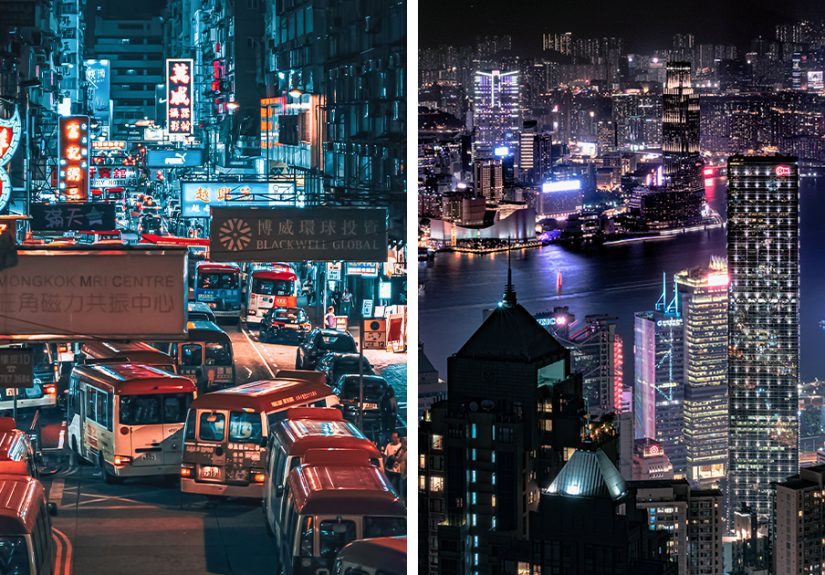
Green minibuses are another everyday Hong Kong icon. At night, under fluorescent light, they look almost cinematic: practical transportation transformed into a moving character. The destination signs, reflections, and passengers create layers that reward patient framing.
21. Incense Smoke Curling Into the Street
Photographing incense smoke near a temple doorway creates atmosphere instantly. The smoke softens harsh lines, catches light, and adds a sense of time passing slowly in a city famous for moving quickly. It is the visual equivalent of taking a deep breath.
22. Old Signboards Over New Cafes
Hong Kong’s older districts often pair traditional signboards with trendy new businesses. A coffee shop may sit beside a dried seafood store; a design studio may face a noodle stall. This is the city’s genius: it layers eras without asking them to match.
23. A Rainy Crossing in Mong Kok
Mong Kok in the rain is a gift to photographers. Umbrellas, buses, signs, puddles, and crowds create a moving puzzle of reflections. It is also a reminder to protect your camera, your shoes, and your dignity, usually in that order.
24. The Last Light on an Old Street Corner
The final picture is simple: a corner building, a fading sign, warm light in an upstairs window, and pedestrians passing below. It captures the feeling that old Hong Kong is not just a place. It is a mood: resilient, layered, hardworking, and quietly luminous.
What Makes Hong Kong Street Photography So Powerful?
Great street photography depends on tension, timing, and truth. Hong Kong offers all three in generous amounts. The city is visually dense, but that density is not random. It comes from geography, history, migration, trade, housing needs, public transportation, and the intense creativity of people making small spaces work.
The older streets are especially powerful because they reveal the human scale of Hong Kong. Skyscrapers show ambition. Old streets show adaptation. A tong lau facade may tell a story about postwar housing pressure. A tram line tells a story about public movement. A dai pai dong tells a story about working-class food culture. A temple tells a story about belief, community, and continuity.
For photographers, these streets are full of layers: foreground steam, midground pedestrians, background signs, and overhead architecture. You do not need to manufacture drama. You just need to wait for the right person to enter the frame, preferably someone carrying groceries, wearing a raincoat, or walking with the confidence of a local who has never once checked Google Maps on that street.
Old Hong Kong Is Not GoneBut It Is Changing
It is tempting to talk about old Hong Kong as if it exists only in memory. That would be too simple. Many historic streets, buildings, shops, markets, and rituals are still part of daily life. But they are changing under pressure from redevelopment, rising rents, safety regulations, shifting consumer habits, and the natural churn of a global city.
That is why photography matters. A picture cannot stop time, but it can make people pay attention. It can preserve the mood of a corner before the sign comes down, the color of a facade before renovation, or the routine of a shop before a family business closes. Sometimes a photograph becomes valuable not because the subject is rare in the moment, but because it becomes rare later.
Old streets are easy to overlook when they are part of everyday life. The noodle shop, the staircase, the red mailbox, the tram stop, the patched wall, the handwritten signthese things do not always announce themselves as heritage. Yet together, they form the emotional architecture of the city.
Photography Tips for Capturing the Old Streets of Hong Kong
Walk Slowly, Then Walk Slower
Hong Kong moves fast, but photographers should not. The best images often appear after you stop chasing scenes and start observing patterns: who pauses at a corner, where the light falls, when the tram arrives, how people cross a narrow lane.
Use Reflections and Rain
Rain can turn an ordinary street into a mirror. Wet stone, taxi windows, shop glass, and puddles multiply light and color. Bring a weatherproof bag, because Hong Kong rain likes to arrive with the confidence of an unpaid invoice.
Look Up, But Also Look Down
Many visitors look up at signs and towers, which is wise. But the ground tells stories too: old tiles, tram tracks, stone steps, market stains, and worn thresholds. Street texture gives photographs a sense of place.
Respect People and Private Space
Old neighborhoods are not outdoor studios. They are homes and workplaces. Photograph with patience and respect. Avoid blocking vendors, intruding on worshippers, or treating residents like props. A good street photo should feel observant, not invasive.
Shoot During Blue Hour
The blue hour after sunset is perfect for Hong Kong’s older streets. The sky cools down, shop lights warm up, and the city’s famous contrast becomes easier to capture. Neon, LED signs, tram windows, and wet pavement all work together like they secretly attended lighting school.
Why These 24 Pics Speak to Travelers, Locals, and Dreamers
The old streets of Hong Kong appeal to different people for different reasons. Travelers see atmosphere. Locals see memory. Architects see density and adaptation. Food lovers see dai pai dong tables and noodle shop counters. Photographers see light behaving dramatically in public again.
But underneath all of that, these streets speak because they feel human. They remind us that cities are not only built by planners and developers. They are built by habits: the morning tea order, the shortcut staircase, the shop sign repaired instead of replaced, the auntie who knows which stall has the freshest greens, the tram ride taken a thousand times.
That is the emotional force behind old Hong Kong photography. It is not just nostalgia. It is recognition. Even if you have never lived there, you can feel the tenderness of ordinary places trying to survive extraordinary change.
My Experience Photographing the Old Streets of Hong Kong
Walking through the old streets of Hong Kong with a camera felt less like sightseeing and more like listening. The city has a rhythm that reveals itself slowly. At first, everything competes for attention: signs, buses, trams, people, steam, reflections, stairs, scooters, umbrellas, and storefronts packed so tightly they seem to be sharing secrets. My first instinct was to photograph everything. This is also known as the “tourist with a full memory card and no plan” method.
After a while, I realized the better pictures came when I stopped rushing. On Pottinger Street, I waited as people climbed the stone steps one by one. Some moved quickly, some carefully, some with shopping bags, some with phones in hand. The same staircase became many different stories depending on who crossed it. That is the beauty of old Hong Kong: the background is historic, but the subject is always the present moment.
In Sheung Wan, the light changed constantly. A temple doorway glowed gold, then a cloud passed and everything softened. Incense smoke drifted into the street and briefly wrapped the scene in a dreamlike haze. Nearby, a modern cafe buzzed with laptops and iced drinks. The contrast could have felt strange, but in Hong Kong it felt completely natural. The city does not separate eras neatly. It stacks them, the way it stacks apartments, signs, roads, and lives.
One of my favorite experiences was photographing small shops near closing time. There is something deeply moving about that hour. A vendor counts cash. A shutter rattles down. A customer tries to buy one last item with the urgency of someone negotiating with destiny over fish balls. The street becomes quieter, but not empty. It simply changes costume.
Night photography brought a different mood. In Mong Kok and Yau Ma Tei, the reflections on wet streets made everything look cinematic. Red taxis became streaks of color. Shop signs glowed against dark facades. People moved through the frame like characters in separate films that happened to share the same sidewalk. The challenge was not finding beauty; it was deciding which beauty to leave out.
What stayed with me most was the feeling of home embedded in public space. The old streets are not perfect, polished, or quiet. They are crowded, practical, noisy, and sometimes visually overwhelming. But they are also warm. They hold routines, memories, family businesses, neighborhood gossip, quick meals, slow walks, and tiny acts of endurance. Taking these 24 pictures taught me that Hong Kong’s old streets are not valuable because they look vintage. They are valuable because they are alive.
Conclusion: The Beauty of Old Hong Kong Lives in the Details
The old streets of Hong Kong are more than a backdrop for beautiful pictures. They are a living archive of culture, architecture, food, movement, and memory. From Pottinger Street’s granite steps to Sheung Wan’s temples, from Wan Chai’s tong lau buildings to Yau Ma Tei’s night market glow, every corner offers a reminder that cities are made meaningful by the people who use them every day.
A 24-picture series can only capture fragments, but fragments matter. A sign, a staircase, a tram, a bowl of noodles, a blue wall, a rainy crossingeach one preserves a small piece of Hong Kong’s identity. And in a city that changes as quickly as this one, noticing those pieces is not just photography. It is a form of care.
Note: This original article is written for web publication and is based on real Hong Kong street culture, heritage districts, historic buildings, public transportation, markets, and photography themes.







 Close
Close