
Table of Contents >> Show >> Hide
- The Ring Wasn’t the Real ProblemThe Message Was
- What Does a Hallmark Actually Tell You?
- Cheap vs. Thoughtful: There Is a Huge Difference
- The Three-Month Salary Rule Needs to Retire
- Why Engagement Rings Carry So Much Emotional Weight
- How Couples Should Talk About Ring Expectations
- What If You Hate Your Engagement Ring?
- When a “Cheap” Ring May Be a Red Flag
- When a Modest Ring Is Actually the Smartest Choice
- What Buyers Should Know Before Choosing an Engagement Ring
- The Bigger Lesson: Talk About Money Before Marriage
- Experiences Related to the Topic: What Real Couples Can Learn From This Ring Drama
- Conclusion
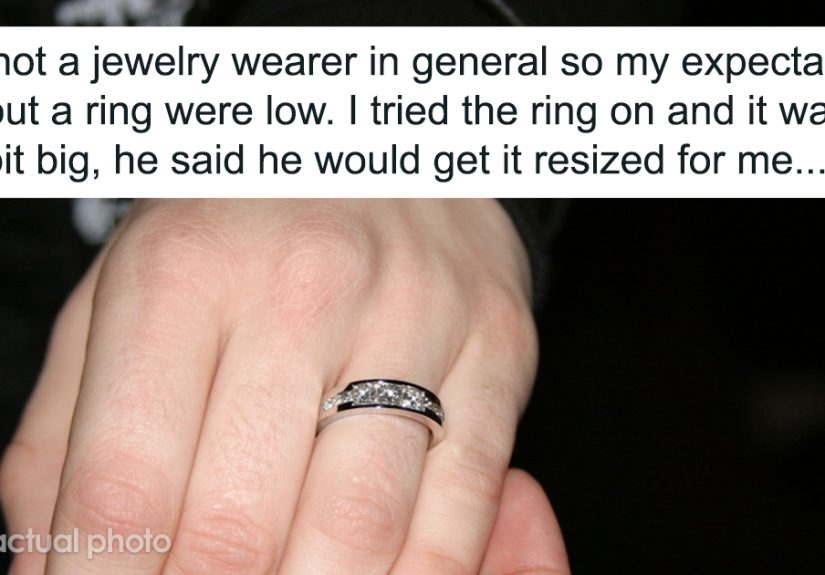
An engagement ring is tiny enough to disappear under a sofa cushion, yet powerful enough to start a family debate, a group chat investigation, and, occasionally, a full-blown internet courtroom. That is exactly what happened when a woman looked closer at her engagement ring’s hallmark and discovered it was not the meaningful fine-jewelry piece she expected, but a sterling silver ring with cubic zirconia stones.
Her disappointment was not simply about sparkle. According to the viral discussion, she said her fiancé could afford much more and was generous when spending on himself. The ring was also too big, and the promised resizing never seemed to happen. Suddenly, the issue was no longer just “Is this ring cheap?” It became: “What does this say about effort, priorities, generosity, and the future marriage?”
And that is why the story traveled so far. People love engagement ring drama because it sits at the messy intersection of romance, money, tradition, taste, and ego. It is a diamond-shaped emotional spreadsheet, and nobody can resist opening it.
The Ring Wasn’t the Real ProblemThe Message Was
At first glance, complaining about an engagement ring can sound shallow. After all, love is not measured in carats, and a proposal does not come with a receipt stapled to the romance. Many happy couples get engaged with vintage rings, modest bands, family heirlooms, lab-grown diamonds, moissanite, colored gemstones, or even no ring at all.
But in this case, the woman’s frustration appeared to come from context. She said she was not a major jewelry person and did not have sky-high expectations. Her issue was that the ring looked like costume jewelry, did not fit, and seemed inconsistent with her fiancé’s financial habits. If someone happily spends lavishly on personal luxuries but chooses the lowest-effort option for a partner’s once-in-a-lifetime symbol, the partner may reasonably wonder whether the ring is a preview of future priorities.
That is the part many online commenters focused on. A low-cost ring can be beautiful when it is thoughtful. A modest ring can be deeply romantic when it reflects the couple’s shared values. But a cheap-looking, ill-fitting ring that was not discussed beforehand can feel less like financial prudence and more like emotional corner-cutting.
What Does a Hallmark Actually Tell You?
A jewelry hallmark is a small stamp that can indicate metal content, purity, maker information, or other identifying details. In everyday shopping, people often look for marks like “925” for sterling silver, “10K,” “14K,” or “18K” for gold, and “PT950” for platinum. These marks are not romantic poetry, but they are useful. They help buyers understand what the piece is made of and whether the seller’s description matches the item.
In the viral story, the woman reportedly discovered that the ring was sterling silver with cubic zirconia. Sterling silver is not fake; it is a real precious metal. Cubic zirconia is also a legitimate gemstone substitute. The problem is expectation. A sterling silver cubic zirconia ring is generally far less expensive than a gold or platinum ring set with a diamond, sapphire, moissanite, or high-quality lab-grown diamond.
That does not automatically make it “bad.” A silver CZ ring can be pretty, affordable, and perfectly fine for fashion jewelry. But engagement rings are worn daily for years, which means durability matters. Silver is softer than gold or platinum and can tarnish. Cubic zirconia can look bright at first but may scratch and lose brilliance faster than diamond or moissanite. For a ring intended to survive handwashing, office keyboards, grocery bags, winter gloves, and the occasional dramatic hand gesture, materials matter.
Cheap vs. Thoughtful: There Is a Huge Difference
The internet often turns every disagreement into two extreme teams: “She is ungrateful” versus “He is a walking red flag in human form.” Real life is usually messier. A partner may buy an inexpensive ring for many reasons: limited budget, lack of jewelry knowledge, fear of choosing wrong, a plan to upgrade later, or a belief that the proposal matters more than the object.
But thoughtfulness has receipts that money does not. A thoughtful inexpensive ring might match her style, fit her finger, use a birthstone she loves, come from a meaningful place, or include a plan like, “This is a placeholder so we can choose your forever ring together.” That kind of explanation can turn a $100 ring into a sweet memory.
On the other hand, a ring that is the wrong size, never repaired, and not aligned with the wearer’s taste can feel careless even if it costs more. A $6,000 ring chosen with zero attention can still be a shiny little misunderstanding. A $500 ring chosen with love, research, and honest conversation can be priceless. The magic ingredient is not the price tag. It is care.
The Three-Month Salary Rule Needs to Retire
For decades, people repeated the so-called rule that an engagement ring should cost one, two, or three months of salary. It sounds official, like it was handed down by a council of ancient jewelers wearing velvet robes. In reality, modern couples increasingly treat ring budgets as personal financial decisions rather than moral tests.
Recent engagement ring cost surveys show that many buyers spend several thousand dollars on average, but averages are not instructions. Some couples spend much less because they are saving for a home, paying off debt, building a business, or simply refusing to let a tiny circular object bully their bank account. Others spend more because jewelry is meaningful to them and they can do so comfortably.
The healthiest question is not “How much should a man spend?” It is “What budget makes sense for our life, our values, and our future?” If a couple is planning a marriage, they are also planning rent or mortgage payments, emergency savings, healthcare costs, travel, children, pets, retirement, and the mysterious household category known as “Why did we spend $80 at Target?”
Why Engagement Rings Carry So Much Emotional Weight
An engagement ring is not just jewelry. It is public symbolism. It is the object people ask to see after the proposal. It appears in photos, family announcements, office conversations, and social media posts. For some people, it becomes a daily reminder that their partner saw them, valued them, and made an effort.
That is why disappointment can feel embarrassing. Many people worry that admitting disappointment makes them materialistic. But emotional honesty is not the same thing as greed. A person can believe marriage is about love and still feel hurt by a ring that seems careless. Those two ideas can coexist, just like a wedding cake can be beautiful and still taste like sweet drywall.
In the viral case, the woman seemed to be asking whether she was wrong to care. The more useful question might be: what exactly does she care about? If she cares about social status alone, that deserves reflection. If she cares because the ring suggests a lack of consideration, unequal spending habits, or poor communication, then the ring has exposed something important.
How Couples Should Talk About Ring Expectations
The best time to discuss engagement ring expectations is before anyone is kneeling with sweaty palms and a velvet box. That does not mean the proposal has to be spoiled. Couples can talk broadly about preferences: metal color, gemstone type, ethical sourcing, budget comfort, whether a placeholder ring is acceptable, and whether the wearer wants to help choose the final design.
A helpful conversation might sound like this: “I do not need anything huge, but I would love a durable ring in yellow gold,” or “I care more about saving for a house than a diamond,” or “Please do not surprise me with a ring I will wear every day forever unless you have checked my taste with extreme seriousness.”
These conversations are not unromantic. They are practical. Marriage is full of decisions that require shared expectations: where to live, how to spend, how to save, how to split chores, how to handle family boundaries, and what temperature the thermostat should be set at before one person secretly changes it at 2 a.m.
What If You Hate Your Engagement Ring?
If you dislike your engagement ring, the first step is to understand why. Is it the style? The size? The metal? The stone? The cost? The lack of effort? Or the feeling that your partner did not listen? Naming the real issue prevents a conversation about jewelry from turning into a vague argument about love.
Next, approach the discussion with kindness but clarity. Instead of saying, “This ring is cheap,” try: “I feel uncomfortable because the ring does not fit, and I was hoping for something more durable for everyday wear. Can we talk about choosing something together?” That gives the conversation a path forward instead of throwing it directly into a volcano.
If the concern is budget, couples can compromise. They might resize the ring, replace the setting, choose a different stone, upgrade later, use a family stone, buy vintage, select moissanite, or choose a lab-grown diamond. A ring does not need to financially injure anyone to be meaningful. But it should feel intentional.
When a “Cheap” Ring May Be a Red Flag
A low-cost ring is not automatically a red flag. A dismissive attitude can be. If a partner refuses to discuss the issue, mocks your feelings, spends freely on themselves while minimizing your needs, or treats your disappointment as proof that you are selfish, the ring may be pointing to a deeper imbalance.
Marriage requires mutual respect. If one person’s desires are always “reasonable” while the other person’s desires are “too much,” resentment will move in, unpack its bags, and start choosing curtains. The problem is rarely one purchase. It is the pattern behind the purchase.
In this story, the woman’s strongest argument was not that she deserved a diamond palace for her finger. It was that the ring seemed inconsistent with her fiancé’s own spending. That difference can feel painful because it suggests hierarchy: his wants are worth investing in, while her symbol of commitment was handled on clearance.
When a Modest Ring Is Actually the Smartest Choice
There is also another side. Some couples actively reject expensive engagement rings, and that can be healthy. They may prefer to spend money on a honeymoon, home down payment, debt payoff, education, or emergency fund. Others simply do not attach emotional meaning to jewelry. A practical couple choosing a modest ring together is not settling; they are aligning.
Modern engagement ring shopping offers more options than ever. Lab-grown diamonds can provide a larger look for less money than many natural diamonds. Moissanite offers impressive sparkle and durability. Sapphires are classic and strong. Vintage rings can offer character, craftsmanship, and sustainability. A simple gold band can be elegant, timeless, and refreshingly low-maintenance.
The key is agreement. A modest ring chosen together says, “We know what matters to us.” A disappointing ring chosen without care says, “I guessed, and the guess landed in a ditch.” Same price range, very different emotional result.
What Buyers Should Know Before Choosing an Engagement Ring
Anyone buying an engagement ring should understand the basics before walking into a jewelry store or clicking “add to cart” at midnight. For diamonds, the 4Cscut, color, clarity, and carathelp explain quality and price. Cut is especially important because it affects sparkle. A smaller well-cut stone can look more beautiful than a larger dull one.
Metal choice also matters. Platinum is durable and naturally white, but usually more expensive. Gold is popular and comes in yellow, white, and rose tones. Fourteen-karat gold is often a practical choice for daily wear because it balances durability and gold content. Sterling silver is common in fashion jewelry, but it is generally not the top recommendation for a long-term engagement ring that will be worn every day.
Buyers should also think about lifestyle. Someone who works with their hands may need a lower setting, stronger prongs, or a more protective design. Someone who dislikes maintenance may not want a delicate band or soft gemstone. The most romantic ring is not always the biggest one. Sometimes it is the one that does not snag sweaters, scratch easily, or require a tiny insurance prayer every time you wash dishes.
The Bigger Lesson: Talk About Money Before Marriage
Engagement ring drama is rarely only about jewelry. It often reveals how couples handle money, expectations, disappointment, and repair. Those are marriage-level topics. If a couple cannot discuss a ring without spiraling, they may need more practice before discussing mortgages, childcare, retirement, or whose turn it is to replace the suspiciously empty toilet paper roll.
Healthy couples talk about financial values, not just financial logistics. One person may see spending as love. Another may see saving as security. One may value experiences, while the other values heirlooms. None of these views is automatically wrong, but they need to be understood. Otherwise, both partners end up speaking different emotional languages with the same bank account.
The engagement ring conversation can become a useful test. Can both people listen? Can they validate feelings without surrendering their own? Can they find a solution? Can they talk about money without shame, defensiveness, or scorekeeping? If yes, the relationship may come out stronger. If no, the ring may have done its job by revealing an issue early.
Experiences Related to the Topic: What Real Couples Can Learn From This Ring Drama
Many couples have experienced some version of this story, even if the details are different. One person imagines a classic solitaire in gold; the other buys a trendy ring in silver. One person wants a surprise; the other secretly hates surprises involving permanent accessories. One person assumes “affordable” means smart; the other hears “cheap” and feels undervalued. Nobody intended disaster, but suddenly the proposal glow has been replaced by awkward silence and emergency texting.
A common experience is the placeholder ring. This can work beautifully when explained clearly. For example, a partner might propose with a simple temporary ring and say, “I wanted the moment to be a surprise, but I want us to choose the forever ring together.” That approach respects both romance and personal taste. The wearer gets the emotional proposal and the practical freedom to choose something they will actually love.
Another common experience involves family heirlooms. A ring inherited from a grandmother may not match modern trends, but it can carry emotional value that no store-bought ring can match. However, even heirlooms require conversation. The wearer may want to reset the stone, resize the band, or preserve the original ring and choose a separate everyday piece. Sentiment should not become a trap where one partner is forced to wear something uncomfortable forever because “Grandma liked it in 1952.”
Budget mismatch is also familiar. Some people grew up believing engagement rings should be expensive. Others see expensive rings as wasteful. If these beliefs are not discussed, both partners can feel judged. The spender may feel accused of being shallow. The saver may feel accused of being stingy. A better path is to create a shared budget. For instance, a couple might agree that the ring should be beautiful, durable, and paid in cash, with a maximum budget that does not harm their savings goals.
There are also stories where the ring disappointment reveals a deeper truth. Maybe one partner repeatedly ignores preferences. Maybe they make big purchases for themselves but resist spending on shared milestones. Maybe they dismiss feelings instead of repairing hurt. In those cases, the ring is not the villain. It is the flashlight. It shines on a pattern that was already there.
On the happier side, many couples look back and laugh at ring mishaps. A wrong size becomes a funny memory. A first ring gets upgraded on an anniversary. A modest ring becomes beloved because it represents a young couple building a life from scratch. The difference is usually communication. When partners treat each other’s feelings as important, even a mistake can become part of the love story.
The biggest practical lesson is simple: do not make assumptions about symbols. Engagement rings carry different meanings for different people. For one person, the ring is just jewelry. For another, it is a daily symbol of being chosen. For one couple, a $200 ring is perfect. For another, saving for a fine-jewelry piece is important. Neither couple is wrong. Problems begin when one person decides what should matter to both people without asking.
So, was the woman wrong to feel disappointed? Not necessarily. Feelings are information. They tell us where expectations, values, and reality are colliding. The more important question is what she and her fiancé do next. If they can talk honestly, understand each other, and choose a solution together, the ring drama may become a useful turning point. If he dismisses her entirely, the issue may be much bigger than sterling silver and cubic zirconia.
Conclusion
The viral engagement ring story resonates because it is not really about demanding luxury. It is about the emotional meaning behind a symbolic gift. A “cheap” ring can be romantic when it is thoughtful, honest, and aligned with shared values. An expensive ring can feel hollow when it ignores the wearer’s taste or hides financial recklessness. The best engagement ring is not the one that impresses strangers online. It is the one that reflects care, communication, and a future both partners are excited to build.
Before marriage, couples should talk openly about money, expectations, and what commitment looks like in daily life. The ring may sit on one finger, but the conversation around it touches the entire relationship. Sparkle is lovely. Respect lasts longer.






 Close
Close