
Table of Contents >> Show >> Hide
- They Would Start With Data, Not Steel
- Yes, They Would Still Choose a Suspension Bridge
- The Biggest Modern Upgrade Would Be Seismic Design
- Construction Would Be Faster in Some Places and Slower in Others
- Worker Safety Would Be Unrecognizable by 1930s Standards
- It Would Probably Look Familiar on Purpose
- So, How Would They Build It Today?
- Experience the Rebuild: What It Would Feel Like If You Watched It Happen Today
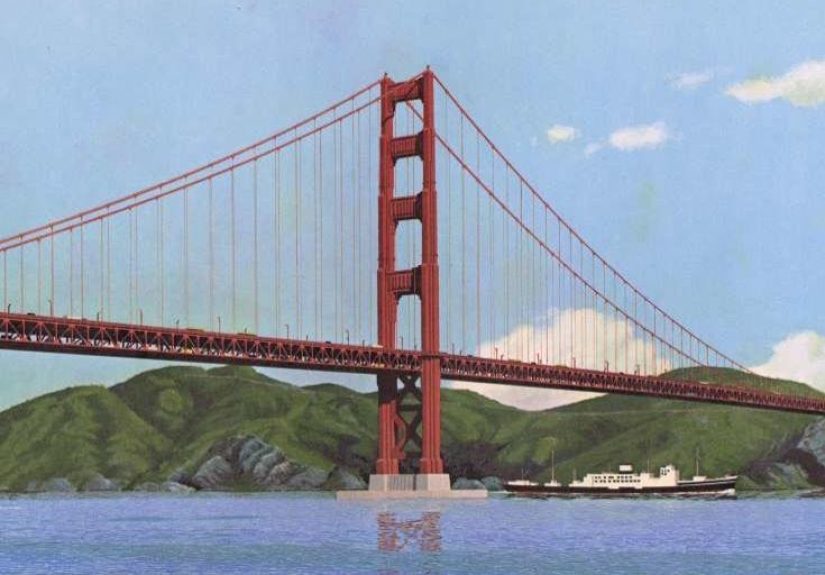
If engineers had to build the Golden Gate Bridge today, the funny part is that the bridge itself might not be the scariest challenge. The paperwork would be. The hearings would be. The modeling would be. The simulations would be. And somewhere in the middle of that giant modern tangle of permits, public scrutiny, seismic analysis, marine logistics, and budget panic, a very familiar idea would quietly survive: yes, it would still almost certainly be a suspension bridge.
That is because the site has not gotten any less dramatic with age. The crossing is still wide, windy, salty, seismically active, and deeply important to navigation. The original bridge solved a brutally hard problem with elegant geometry, and that basic geometry still makes sense. What would change today is almost everything else. The bridge would be designed with far more data, built with tighter tolerances, monitored in real time, and wrapped inside layers of safety and environmental oversight that would make a 1930s engineer blink twice and loosen his tie.
In other words, if the Golden Gate Bridge had to be built now, it would still look like a masterpiece. It would just arrive with more software, more sensors, more seismic muscle, and fewer moments of “let’s see what happens when we put 10,000 tons there.”
They Would Start With Data, Not Steel
In the 1930s, building the Golden Gate Bridge required extraordinary surveying, bold calculations, and a heroic tolerance for uncertainty. Today, uncertainty is treated like a rude guest that gets escorted out early. Before anyone even talked seriously about tower steel or main cables, the project team would create a digital picture of the site so detailed it would feel borderline obsessive.
Crews would map the strait with drones, LiDAR, sonar, and dense geotechnical exploration. Engineers would model bedrock, fault behavior, wind patterns, vessel traffic, salt exposure, fog, drainage, emergency access, and long-term maintenance pathways before a single permanent element was ordered. The project would likely be designed inside a sophisticated BIM environment with a living digital twin or twin-like workflow that follows the bridge from planning through construction and into operations.
That matters because modern bridge building is not just about getting the structure to stand up on opening day. It is about proving how it will behave for decades. A rebuild today would be judged on inspectability, resilience, repair strategy, corrosion protection, traffic management, and post-earthquake recovery almost as much as on raw strength.
The Permit Stack Would Be Taller Than a Tower Office Desk
A modern Golden Gate project would also begin with a long front-end phase of environmental review and interagency coordination. Since the crossing is a navigable waterway, the bridge would have to move through the Coast Guard’s bridge permitting process. Any construction in or over navigable waters would raise federal review issues, and dredging or fill work could trigger additional water permits. In California, environmental review would be serious business, not a box-checking side quest.
This is the part nobody puts on postcards. The public would want answers about marine habitat, construction noise, visual character, traffic staging, bicycle access, emergency response, and the effect of a giant project on one of America’s most recognizable landscapes. And honestly, fair enough. A bridge like this is not just transportation. It is civic identity wearing steel.
Yes, They Would Still Choose a Suspension Bridge
If you strip away the romance and just look at the crossing like an engineer, a suspension bridge still makes enormous sense. The Golden Gate requires a long main span, high navigational clearance, and a structural system that can leap across deep, difficult water without planting a forest of supports in the channel. That is suspension-bridge territory.
So no, today’s engineers would not suddenly replace it with some flashy novelty shape just because computers exist and PowerPoint animations are cheaper than coffee. The basic concept would survive because the site still demands a long, efficient span.
What they would debate is the exact deck system, the stiffness strategy, the seismic detailing, the cable protection system, and the balance between aesthetics and maintenance. They would ask a very modern question: how do we preserve the soul of the bridge while giving it a 21st-century skeleton?
Lighter, Smarter Materials Would Do More of the Heavy Lifting
The rebuilt bridge would almost certainly still rely on steel for the main suspended structure, because long spans hate unnecessary weight. Modern engineers would look hard at high-performance steel, refined fabrication tolerances, advanced coatings, and possibly a lighter deck strategy to cut dead load and improve seismic behavior. A lightweight orthotropic or otherwise weight-efficient steel deck would be an obvious conversation because in long-span bridge design, every pound you save in the deck echoes through the hangers, main cables, towers, anchorages, and foundations.
But “lighter” would not mean “delicate.” In a marine environment like the Golden Gate, steel has to survive wind, salt, moisture, and maintenance realities. Modern coatings, corrosion protection systems, drainage detailing, and access planning would be designed from day one. Nobody would want a glamorous bridge that turns into a giant rust management hobby.
The Biggest Modern Upgrade Would Be Seismic Design
If there is one category where a modern Golden Gate rebuild would differ dramatically from the original, it is earthquake engineering. California bridge design today is shaped by decades of research, painful lessons from major earthquakes, and a far more performance-based approach to how structures are expected to behave. The question is not simply, “Will it stand?” The question is, “How badly can it be shaken, what yields first, what stays elastic, what is replaceable, and how quickly can traffic return?”
That shift would affect nearly every major decision. Tower legs, bearings, expansion joints, foundations, anchorages, and approach structures would all be detailed with seismic behavior in mind. Engineers would likely build intentional ductility and controlled damage paths into the system so that the bridge could absorb energy without suffering catastrophic failure. Replaceable fuse-like components, isolation strategies, or carefully detailed sacrificial elements would be part of the conversation.
The irony is that the existing Golden Gate Bridge already tells us how central this issue has become. Its ongoing seismic retrofit history is a reminder that today’s standards are not a luxury add-on. In the Bay Area, they are the main event.
Wind Would Get the Full High-Tech Treatment Too
Earthquakes may steal the headlines in California, but wind would still get a starring role. A rebuilt Golden Gate Bridge would be studied extensively for aerodynamic stability, deck flutter resistance, cable behavior, and user comfort. Engineers would not rely on intuition and optimism. They would model the bridge numerically, test it physically, and compare how the deck, towers, and cables respond under a range of wind conditions.
The bridge would likely be tuned not only for structural survival, but for serviceability. That means reducing annoying motion, limiting fatigue, protecting details, and making sure the bridge feels stable to the people crossing it. Modern design is not satisfied with “technically safe but weirdly wobbly.” If the structure moves in a way that scares drivers, cyclists, or maintenance crews, it has a problem whether or not the math says it is fine.
Construction Would Be Faster in Some Places and Slower in Others
A lot of people imagine modern construction means you press a button, summon a giant crane, and the bridge politely assembles itself like a luxury watch. Real life is meaner than that. Some parts of a rebuilt Golden Gate Bridge would absolutely move faster today. Other parts would take longer because modern quality assurance, environmental controls, and safety practices are more demanding.
Approach structures, access roads, utilities, maintenance facilities, and selected subcomponents could benefit from prefabricated bridge elements and accelerated bridge construction methods. Offsite fabrication would reduce some on-water work, improve quality control, and shrink certain closures or disruptions. But the main suspended span itself would still require a lot of major field operations. There is no magical warehouse where you can fully prefab “iconic bridge over difficult strait” and then slide it into place over a long weekend.
The Foundations Would Be an Epic Marine Operation
The foundations and tower supports would still be among the nastiest parts of the job. Modern marine equipment would be more precise, and underwater surveying would be vastly better, but that does not make tides, currents, waves, and logistics polite. Temporary works would likely be more efficient and less invasive than the historical approach, yet the job would still demand large marine plants, heavy lift operations, strict environmental controls, and around-the-clock coordination.
Crews would use GPS-guided equipment, digital inspection records, remote monitoring, and tighter fabrication tolerances than the original builders could dream of. Even so, this would remain the kind of construction problem that humbles people for a living.
The Towers and Deck Would Be Fabricated Like Precision Machines
Once the substructures were ready, the vertical and suspended steel would go up with a combination of heavy prefabrication and meticulous field assembly. Tower components would likely arrive as large fabricated units with modern welding, coatings, and quality documentation already built in. Segment erection would be guided by digital geometry control, and field teams would use sensors and surveying systems to verify alignment constantly.
The main cables would still be one of the defining acts of the project. Even with modern equipment, cable work on a suspension bridge remains part engineering, part choreography, part controlled nerves. The difference today is that cable spinning or strand placement would be tracked with far more instrumentation, better quality verification, and better weather intelligence. Engineers would know more, sooner, and with less guesswork.
Worker Safety Would Be Unrecognizable by 1930s Standards
The original Golden Gate Bridge was famously safer than many projects of its era, but a rebuild today would operate in another universe entirely. Modern OSHA rules, fall-protection systems, rescue planning, access control, training, inspection protocols, and documentation requirements would shape the job every day.
Safety nets would still be part of the visual memory because bridges and heights remain stubbornly dramatic, but the modern safety package would be much broader: personal fall arrest systems, guardrails, engineered access platforms, monitored lifts, exclusion zones, fatigue management, better weather thresholds, and live communication systems. If the original bridge was an engineering marvel, the modern version would also be a safety-management marathon.
That would raise costs, yes. It would also save lives, which is the sort of trade a civilized society should be able to make without acting shocked.
It Would Probably Look Familiar on Purpose
Here is the part people outside engineering often understand best: if the Golden Gate Bridge had to be rebuilt today, the public would not want a random new shape. They would want the Golden Gate Bridge. That means the visual identity would matter almost as much as the structural system.
The famous towers, the spare Art Deco lines, the long suspended curve, and the International Orange character would all be fiercely protected in the design process. Engineers might refine proportions for performance, maintenance, or fabrication reasons, but they would not casually swap the bridge’s face for something that looked like an airport jetway crossed with a spreadsheet.
In fact, the genius of a modern rebuild would be making the bridge safer, tougher, and smarter while keeping the improvements almost invisible to casual users. The best compliment would be someone crossing it and saying, “It still feels like the Golden Gate,” without realizing how much extra science is quietly holding up the magic.
So, How Would They Build It Today?
They would build it with the same boldness, but less gambling. They would begin with digital models, massive surveying campaigns, and years of environmental review. They would still choose a suspension bridge because the site still rewards that choice. They would use lighter, smarter steel strategies; more robust corrosion protection; and a deck and support system tuned for modern loads, wind, and maintenance.
They would design the bridge around earthquakes from the first sketch, not retrofit seismic wisdom after the fact. They would use alternative project delivery methods to bring builders, designers, and owners together earlier. They would prefabricate what made sense, monitor everything that moved, and document the bridge as a digital asset before the paint dried.
Most of all, they would build a bridge that is less about conquering nature than negotiating with it intelligently. That is the real modern difference. The 1930s Golden Gate Bridge was a declaration. A 21st-century Golden Gate Bridge would still be bold, but it would also be conversational. It would ask the wind what it intends to do. It would ask the faults what they are capable of. It would ask the ocean how long the coatings will last. And then, after getting all those grim answers, it would be designed to stand there anyway.
Experience the Rebuild: What It Would Feel Like If You Watched It Happen Today
Imagine standing on the shoreline during a modern rebuild and realizing that the first signs of construction are not deafening rivet guns, but survey crews, marine sensors, drone flights, and teams staring at tablets like they are trying to outsmart the planet. The project would feel less like a single spectacular event and more like a giant intelligence operation. Before the public saw real steel in the sky, engineers would already be arguing over digital models, load paths, marine windows, fabrication packages, and emergency access routes. It would look strangely calm at first, which is usually how complicated things begin.
Then the site would start to thicken with purpose. Barges would move in. Temporary platforms would appear. Equipment would line up with the kind of confidence that says someone has simulated this exact maneuver 500 times already. You would see cranes swinging through fog, marine crews working around tides, and inspectors checking details that seem microscopic compared with the size of the crossing. The whole thing would feel both enormous and incredibly fussy. That is modern infrastructure in a nutshell: giant objects assembled by people obsessing over millimeters.
The towers would be the first moment when the public would really feel the scale. As steel and concrete climbed, San Francisco would get a front-row seat to a lesson engineers already know by heart: vertical things look normal until they get very, very tall, and then suddenly your neck becomes part of the experience. A modern tower erection would seem almost theatrical in fog breaks, with crews secured by advanced safety systems and components moving into place with precision that makes the operation look calmer than it really is. Underneath that calm would be hundreds of checklists, weather calls, approvals, and contingency plans.
The cable work would probably capture the imagination most. Even now, there is something slightly unbelievable about the idea that a bridge can hang so much of its destiny from elegant curves in the sky. Watching a modern team handle that phase would be like watching old-world bridge drama translated into a digital language. The romance would still be there, but now it would share the stage with sensors, alignment systems, and nonstop data verification. Engineers would be tracking tension, geometry, and wind behavior while the public just stared upward and thought, “Well, that seems impossible.” A good bridge project is one where the impossible-looking parts are actually the most controlled.
And then there would be the emotional side, which is harder to model and impossible to fabricate offsite. People would argue about traffic, cost, beauty, bicycle access, construction noise, and whether the bridge should remain exactly the same or become a symbol of a newer California. But when the structure finally started to read as one complete line across the water, most of those arguments would soften into awe. Great bridges tend to do that. They turn opinion into perspective.
By the time the project finished, the experience of watching it would leave you with a strange conclusion. Modern engineers would not build the Golden Gate Bridge with less courage than the original team. They would just spread that courage across different tools. In the 1930s, bravery often meant building farther into the unknown. Today, bravery means refusing to be casual with risk, complexity, or public trust. That may look less cinematic in the early stages, but in the end it produces something just as impressive: a bridge that still feels poetic, even after passing through a century of harder questions.







 Close
Close