
Table of Contents >> Show >> Hide
- Before You Start: The 60-Second Safety & Setup Checklist
- Know Your Outboard’s Starting Style
- How to Start an Outboard Motor (Manual Start / Pull Cord)
- How to Start an Outboard Motor (Electric Start)
- Cold Starts, Warm Starts, and “It Sat All Winter” Starts
- Troubleshooting: Diagnose Like a Pro (Without the Pro Invoice)
- Quick Reference: Outboard Starting Cheat Sheet
- Keep It Starting Easy: Small Maintenance Habits That Matter
- Real-World Starting Experiences (So You Don’t Learn the Hard Way)
- Conclusion
Starting an outboard motor is a little like making coffee at a campsite: if you skip one tiny step, you’ll spend the next ten minutes pressing buttons (or yanking rope) while your friends politely pretend they’re not watching. The good news? Whether your outboard uses a pull cord (manual start) or a key/button (electric start), the process is predictable once you know what the engine is “waiting for.”
This guide breaks it down in plain American English, with real-world checks, cold-start tricks, and troubleshooting that won’t make you feel like you need an engineering degree… or a therapist.
Before You Start: The 60-Second Safety & Setup Checklist
Outboards usually refuse to start for the same handful of reasons: no fuel, no spark, or a safety switch saying, “Absolutely not.” Run these quick checks firstespecially if you’re on a ramp with a line of trucks behind you.
1) Make sure the engine can safely run
- Cooling water: The lower unit water intakes must be submerged (or connected to a proper flush device) before running.
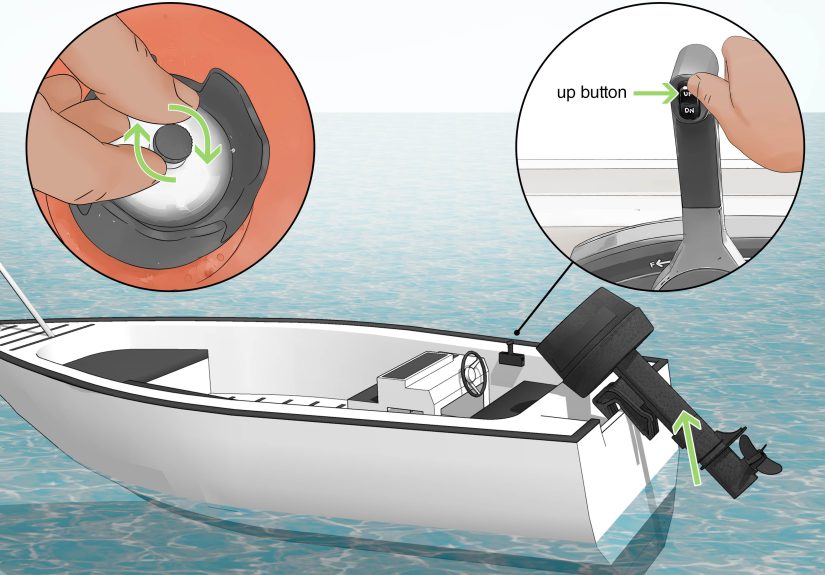
- Motor position: Trim/tilt the outboard down to a normal running positionmany engines don’t like starting while sky-pointing.
- Area clear: Keep hands, ropes, and clothing away from the prop. (Props don’t do “second chances.”)
2) Confirm fuel is actually available
- Tank vent open: Portable tanks often have a vent knob/screwclosed vent = vacuum lock = no fuel delivery.
- Fuel line connected: Quick-connect fittings should click and stay seated.
- Primer bulb: If your setup uses one, it should firm up when squeezed.
- Fresh fuel: If the boat’s been sitting, old or water-contaminated gas can turn “start day” into “tow day.”
3) Engage the safety systems (the “Why won’t it crank?” stuff)
- Kill switch / lanyard clip installed: Many outboards won’t start (or won’t spark) without it.
- In neutral: Outboards typically have start-in-gear protection; if it’s in forward or reverse, the starter may be blocked.
- Battery switch ON (electric start): If you have a battery selector, confirm it’s fully engaged.
Pro tip: If you do only one thing from this list, check the kill switch lanyard. It’s the boating equivalent of trying to start a car with the steering wheel lockedtechnically possible only in your imagination.
Know Your Outboard’s Starting Style
Not all outboards start the same way. The steps below cover the common patterns, but your exact controls may vary by brand, horsepower, and whether the motor is carbureted or fuel-injected.
Manual start (recoil / pull cord)
You’re physically spinning the flywheel fast enough for ignition. Technique matters: smooth engagement, then a brisk pull. If you “rip it like a Beyblade” from the first inch, you’re more likely to tangle the rope or wear the starter mechanism.
Electric start (key or push-button)
The starter motor does the spinning. Your job is making sure the engine has fuel, correct idle/neutral settings, and good battery voltage. If it cranks but won’t catch, the issue is rarely “press the key harder.”
Carbureted vs. fuel-injected (why cold starts feel different)
- Carbureted outboards: Often use a manual choke knob or fast-idle lever to enrich the mixture for cold starts.
- EFI outboards: Typically self-manage enrichment, but still need proper priming and battery power.
How to Start an Outboard Motor (Manual Start / Pull Cord)
This is the classic: a portable tiller outboard on a jon boat, skiff, tender, or small fishing rig. It’s simple, reliable, and doubles as a workout plan.
Step-by-step manual start procedure
- Lower the motor & check water intake: Trim down so the water intakes can supply cooling water once it fires.
- Open the fuel vent (portable tank): If your tank has a vent knob/screw, open it. Closed vent = fuel starvation.
- Connect the fuel line: Ensure quick-connect fittings are fully seated.
- Prime the fuel system: Squeeze the primer bulb until it feels firm (if equipped). Keep the bulb oriented so fuel can flow correctly.
- Install the kill switch clip: Clip in the safety lanyard and attach the cord to your PFD or belt loop.
- Shift to neutral: Many outboards won’t allow starting while in gear.
- Set throttle/fast idle: On many tiller motors, use the start/fast-idle setting or slightly advance the throttle per your manual. Don’t go full sendstarting is not a drag race.
- Use choke/enrichment if cold: Pull the choke knob or engage the choke/fast-idle lever for a cold engine.
- Pull the starter correctly: Pull slowly until you feel resistance, then pull briskly. Let the handle return gentlydon’t let it snap back.
- As it starts, reduce choke gradually: Once it catches and runs, ease the choke off as the engine warms so it doesn’t load up or stall.
- Verify “pee stream” (telltale): Look for a steady stream from the indicator. No stream or steam = shut down and investigate.
If it won’t start in 3–5 pulls, do this instead of “pull faster”
- Re-check the kill switch clip: It’s the #1 “it ran yesterday” culprit.
- Prime again: Bulb should firm up; if it stays soft, you may have an air leak or blocked line.
- Adjust choke: Too much choke can flood; too little can prevent cold start.
- Throttle back to start position: Some motors need a specific start setting, not “wherever the handle ended up.”
Flooded engine? Here’s the not-dramatic fix
If you smell strong fuel, see wet plugs, or the engine sputters then quits, you may be flooded. Common approach: reduce or remove choke, set throttle to allow more air (varies by model), and pull/start again. If you have a manual, follow the manufacturer’s “clearing a flooded engine” procedurebecause every brand has its own opinion on how much throttle is “helpful” versus “please stop.”
How to Start an Outboard Motor (Electric Start)
Electric start feels effortless… right up until it isn’t. The secret: electric start is still “manual start,” except your arms are replaced by a battery, cables, and a starter motor that hates low voltage.
Step-by-step electric start procedure
- Motor down, cooling water ready: Ensure the cooling water intake is submerged before starting.
- Battery & connections: Battery switch ON (if installed). Terminals tight and corrosion-free. Low voltage can cause weak cranking.
- Fuel vent open + fuel line connected: Open the tank vent if applicable; confirm the fuel line quick-connect is seated.
- Prime the bulb: Squeeze until firm if your system uses a primer bulb.
- Kill switch lanyard in place: Don’t skip thismany engines will crank but won’t spark without it.
- Neutral: Place the control lever in neutral. Many controls won’t start in gear.
- Cold start enrichment: If your engine has a choke/fast idle lever, set it for cold start. EFI engines often handle this automatically.
- Crank in short bursts: Turn the key or press the start button. If it doesn’t start quickly, pause before trying again to avoid overheating the starter.
- After it starts: Return the key to ON, reduce fast idle/choke gradually, and confirm a steady telltale stream.
Electric start “cranks but won’t start” checklist
- No fuel delivery: Tank vent closed, empty tank, bulb never firms up, clogged filter, air leak.
- No spark: Kill switch not engaged, lanyard clip missing, safety interlocks, ignition issue.
- Weak cranking: Battery under load, corroded terminals, loose ground, failing cables.
Electric start “clicks” or does nothing
A click with no crank often points to battery voltage drop, dirty/loose connections, or starter relay issues. Start at the battery: clean terminals, tighten connections, check ground, and confirm the battery switch isn’t half-on (yes, that’s a thing).
Cold Starts, Warm Starts, and “It Sat All Winter” Starts
Cold start tips (first start of the morning)
- Prime until firm: Especially after the boat sits overnight and fuel drains back.
- Use choke/fast idle as needed: Cold air needs a richer mixture on many carbureted outboards.
- Don’t hammer the throttle: Start at recommended fast idle; too much throttle can flood or overshoot the right mixture.
- Warm up gently: Let it stabilize at idle before shifting into gear.
Warm start tips (quick stop at the dock)
Warm engines usually need little or no choke. If you choke a warm engine like it’s 20°F out, it may stumble, load up, and make you look suspiciously like you’re “new to boating.” (No shame. We’ve all been there.)
After storage (weeks or months)
- Expect extra priming: Fuel lines can drain and filters can dry out.
- Old fuel causes drama: Stale gas and ethanol-related water absorption can create hard starts and rough idle.
- Check basics first: Battery charge, clean terminals, fuel condition, and the kill switch clip.
Troubleshooting: Diagnose Like a Pro (Without the Pro Invoice)
Most “outboard won’t start” problems fall into three buckets. Identify the bucket, then fix the bucket. (This is the only bucket strategy that improves your life.)
Bucket #1: No crank (electric start)
- Battery switch OFF or weak battery
- Corrosion/loose terminals causing voltage drop
- Neutral safety switch not satisfied (control not fully in neutral)
- Blown fuse or tripped breaker
Bucket #2: Cranks but won’t fire
- Kill switch clip missing (cranks but no spark on many engines)
- No fuel to engine (closed vent, unprimed bulb, leak, clogged filter)
- Flooded engine (too much choke, repeated start attempts)
Bucket #3: Starts then dies
- Choke left on too long (rich mixture loads up)
- Fuel restriction (vent closed, kinked line, clogged filter)
- Idle too low for cold engine (needs warm-up/fast idle)
When to stop and not “just try one more time”
If you don’t see cooling water discharge, or you see steam, shut down immediately and check for intake blockage or cooling system issues. Overheating an outboard is a fast way to turn a small problem into a budget meeting.
Quick Reference: Outboard Starting Cheat Sheet
Bookmark this section in your brain (or literally print it and tape it inside a hatchcaptains have done worse).
Manual start (pull cord)
- Motor down, intakes in water
- Fuel vent open
- Fuel line connected
- Prime bulb until firm
- Kill switch clip installed
- Neutral
- Choke/fast idle if cold
- Pull: slow to resistance, then brisk
- Ease off choke as it warms
- Confirm telltale stream
Electric start (key/button)
- Motor down, intakes in water
- Battery switch ON, terminals clean/tight
- Fuel vent open
- Prime bulb until firm
- Kill switch clip installed
- Neutral
- Start in short bursts; rest between attempts
- Ease off choke/fast idle
- Confirm telltale stream
Keep It Starting Easy: Small Maintenance Habits That Matter
The easiest outboard to start is the one you didn’t slowly sabotage with neglect. A few habits dramatically reduce hard-start mornings.
- Watch the primer bulb and fuel hoses: Cracked hoses and leaking fittings pull air into the system.
- Use clean fuel practices: Keep water out, replace filters as needed, and don’t store questionable fuel for long periods.
- Protect the battery: Keep terminals clean and charge the battery properly, especially before trips.
- Confirm cooling water flow: A telltale stream check should be automatic every start.
- Follow your owner’s manual: Starting procedures and throttle/choke settings varymanufacturers write them for a reason.
Real-World Starting Experiences (So You Don’t Learn the Hard Way)
Below are common “on-the-water” scenarios boaters run intobasically a greatest-hits album of outboard starting mistakes. Think of this as borrowed wisdom, collected from docks, ramps, and the kind of group chats where someone always says, “Did you check the lanyard?” and they’re always right.
The Ramp Panic: “It Ran Fine at Home!”
A classic: the engine started perfectly in the driveway with earmuffs, but at the ramp it won’t even cough. Ninety percent of the time, the cause is something you didn’t have to think about at homelike the fuel tank vent being closed, the fuel line not fully snapped in, or the kill switch clip sitting politely on the seat instead of in the switch. The lesson: do the same pre-start ritual every time, even when you’re “sure.” Confidence is great; procedures are better.
The “Soft Primer Bulb” Mystery
You squeeze the primer bulb and it never firms up. People will blame everything from carburetors to cosmic alignment, but the usual suspects are simpler: a loose hose clamp, a cracked fuel line, a bad quick-connect fitting, or a primer bulb/check valve that’s worn out. Many boaters learn (after a few frustrating starts) to keep a spare primer bulb assembly on boardbecause it’s a relatively cheap part that can ruin an entire day if it fails.
The Over-Choke Olympics
Cold morning, you pull the choke and the engine fires… then dies… then you pull more choke… then it refuses to start at all. That’s usually flooding. The fix is almost never “more choke.” Instead, ease off enrichment, let the engine get more air, and try again with fewer variables. Boaters who master this stop “starting the engine” and start “tuning the mixture for the moment,” which is a fancy way of saying: don’t treat every start like it’s the coldest day in Antarctica.
The Battery That “Looks Fine”
Electric-start outboards reveal a harsh truth: a battery can show decent voltage at rest and still collapse under load. That’s why you might get lights, a beep, maybe even a click… but not enough cranking speed to start. Experienced boaters keep terminals clean, carry a small tool kit, and take voltage drop seriously. It’s not glamorous, but neither is paddling back while explaining how your battery was “totally fine.”
The Neutral That Isn’t Neutral
Remote controls and neutral safety switches can be picky. Sometimes the lever looks centered, but it’s not fully in neutral, or the switch is slightly misaligned. Boaters learn the subtle “wiggle test”: bring the control firmly to neutral, then try starting. If it still won’t crank, move the lever slightly while turning the key (gentlythis is not a wrestling match). When it works, you’ll feel equal parts relief and mild annoyance that the solution was a two-millimeter lever movement.
The “No Pee Stream” Scare
Few things spike your heart rate like an engine that starts but doesn’t show cooling water discharge. Veteran boaters shut it down fast. Often it’s a clogged telltale outlet (mud, salt, tiny debris), but it can also signal a blocked intake or water pump issue. The takeaway is simple and worth repeating: the telltale stream check is not optional. It’s the outboard’s way of saying, “I’m cool,” and you want that status update every single start.
The Best Experience of All: When Your Routine Just Works
The happiest boaters aren’t the ones with the fanciest enginesthey’re the ones with a consistent, boring, effective routine: vent open, fuel connected, bulb firm, lanyard on, neutral confirmed, start, then confirm cooling water. It’s not dramatic, but it’s dependable. And on the water, dependable is the closest thing we have to magic.
Conclusion
Starting an outboard motormanual or electriccomes down to a few repeatable truths: give it fuel, give it spark, satisfy the safety interlocks, and don’t ignore cooling water flow. Manual start rewards good pull technique and smart choke use. Electric start rewards battery health and clean connections. Once you build a consistent pre-start routine, most “won’t start” moments shrink from “disaster” to “oh… the vent was closed.”







 Close
Close